


Most finance leaders are trained to manage numbers. Few are taught how to lead across cultures, drive real transformation, and build teams that actually want to follow them.
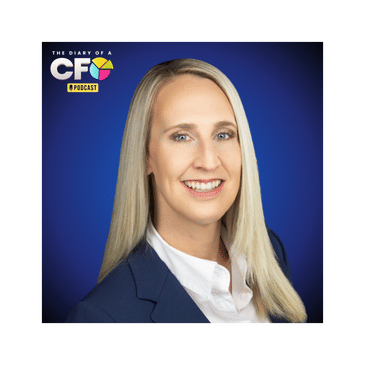
In this episode of the Diary of a CFO podcast, I sit down with Jenny Fuss, CFO of Crowley Maritime. Jenny has led finance across three continents, including Germany, China, and the United States, and is known for her evolutionary mindset and her belief that finance is not reactive, but a force for transformation and growth. She now leads both finance and procurement at Crowley, giving her a true end-to-end view of value creation.
We dig into how working across three continents reshaped her leadership style, the feedback approach that backfired in China and what she learned from it, how to drive digital finance transformation that goes beyond reducing headcount, her customer-centric approach to finance, and why "follow the money" is the best first-month playbook for any new CFO.
If you lead a finance team, are stepping into a CFO seat, or are navigating change in your organization, this conversation is a masterclass in modern, human-centered finance leadership.
What You Will Learn
How curiosity led Jenny from the shop floor of a German manufacturing company to global CFO
Why leading procurement alongside finance unlocks a true end-to-end view of value creation
The lessons learned from leading teams in Germany, China, and the United States
The feedback approach that backfired in China and the leadership lesson behind it
How to build resilient finance teams in uncertain times
Why clarity is the foundation of resilience for any finance leader
The mindset shift required to lead digital finance transformation
How to bring a customer-centric mindset into the finance function
How to cut through dashboard overload and focus on KPIs that actually drive decisions
The right way to approach the first 30 to 90 days as a new CFO
How to evaluate new technology investments without falling for vendor pitches
Why "stay curious" and "don't wait for perfect" are the two pieces of advice that shaped her career
Inside the Conversation
From a tiny German village to global CFO
Jenny opens by sharing that she grew up in a village of just 900 people in Germany. Never in her wildest dreams did she imagine she would one day lead global teams and navigate boardrooms in China and the United States. Her career started on the shop floor in manufacturing, where she raised her hand to connect with operations before she ever looked at the numbers. That early instinct to understand the business from the inside out shaped the way she approaches finance to this day.
Why she now leads procurement alongside finance
At Crowley Maritime, Jenny took on both finance and procurement, which she sees as a powerful combination. She believes procurement is too often viewed as a cost center when it is actually a performance engine with critical levers to drive results, shape strategy, and fuel growth. Combining the two functions gives her a true end-to-end view of value creation that most CFOs do not have access to.
How three continents shaped her leadership style
Jenny leans into stereotypes carefully to make a point. Germany values structure and rules. China values relationships above all. The United States values speed and bold moves. Her biggest leadership takeaway is that great leadership is not one size fits all. The real superpower is the awareness to adjust your lens to the team, the culture, and the moment in front of you.
The feedback approach that backfired in China
When Jenny first started leading her team in China, she defaulted to the direct, no-sugar-coating feedback style she learned in Germany. It did not land. In Chinese workplace culture, direct criticism can feel disrespectful, even when it is intended to help. She adjusted by amplifying what her team was already doing well, and what she found was magical. The areas she had been worried about started lifting on their own. It became a defining moment in her growth as a leader.
Building resilient finance teams in uncertain times
Jenny believes the foundation of resilience is clarity. With change coming by the hour, finance teams cannot afford to operate in a fog. She emphasizes the importance of being a better listener, leading with empathy, avoiding assumptions, welcoming debate, and looking at situations through multiple lenses. She also reminds her team that even when much of the environment feels out of control, the response is always a choice. That framing has helped her team stay grounded through ongoing uncertainty.
Why digital finance transformation is not a technical project
Jenny pushes back hard on the view that digital finance transformation is about technology or headcount reduction. For her, technology is just the tool. The magic happens when finance teams can stop spending 60 to 75 percent of their time gathering and cleaning data and start asking better questions, challenging assumptions, and enabling faster decisions. Transformation, in her view, is an enrichment of how people work, not a threat to their jobs.
How to bring a customer-centric mindset into finance
Jenny believes finance leaders should think about their internal stakeholders the way the business thinks about external customers. Every recurring report should be challenged. If a dashboard is not actionable, it should not exist. Her favorite question to ask her business partners is simple: "What are you doing with this information?" If they cannot answer, the report gets killed. That kind of conversation is what turns finance into a true business partner.
Cutting through dashboard overload
When Jenny stepped into Crowley, she found a familiar pattern: hundreds of dashboards, many of them generating no action. Her approach is to formalize a decision board for dashboards and KPIs, ensuring the landscape does not grow wildly. Her vision is a single, customized morning dashboard with four KPIs for each user. A salesperson needs different information than a ship captain. That kind of clarity makes finance more effective and the rest of the business more decisive.
The first 30 to 90 days as a new CFO
Jenny's advice for new CFOs is simple and grounded. Yes, "The First 90 Days" is a good guide, but the reality is no one waits for you to finish your listening tour before pulling you into the weeds. Her first-month playbook is to follow the money, because the money will teach you the business. Combined with deliberate conversations across the organization, that approach gives a new CFO both context and credibility quickly.
How to evaluate technology vendors as a new CFO
Within hours of being announced as Crowley's new CFO, Jenny's inbox was flooded with vendor pitches. Her response sets a useful tone: do not call a CFO based on an assumption. Identify the problem statement first. Many companies already have technology that is underused or poorly connected. Before adding more, ask what problem actually needs solving. She also points out that companies that pitch CFOs the wrong way are revealing more about their own customer-centric mindset than about their product.
Why training your existing team matters more than buying new tools
Jenny is leading by example at Crowley. The leadership team is actively using Copilot, in part to model the behavior they want from the rest of the organization. She loves the cultural shift that happens when employees see their CEO using new technology, including when leaders openly share what is not working. That spirit of experimentation, paired with intentional problem-solving, is what makes transformation real.
The trend most finance leaders are not paying enough attention to
Jenny believes the biggest blind spot in finance leadership today is the mindset shift required for digital transformation. It is not just about reducing cost. It is about creating a future workplace where finance professionals feel fulfilled and impactful. That, in turn, makes companies more competitive in attracting top talent. The companies that win the talent war will be the ones that treat technology as an enabler, not as a bandaid or a cure-all.
Her personal "board of directors"
Jenny credits her growth to her personal board, which includes mentors, former bosses, a coach, friends in other industries, and even her fitness coach. Some of the most pivotal advice she ever received came over dinner when she was hesitating to take on a CFO role in China. Her mentors reminded her: you will never be 100 percent ready for the next role. You have the ingredients, and the rest comes once you start swimming.
Why "everything is figureoutable"
Jenny lives by the belief that nearly anything can be figured out. A saying that has followed her across companies and continents: "You can throw Jenny into ice-cold water and she will start swimming." It is a mindset she encourages in the next generation of finance leaders. Be fearless. Start swimming. And be just as comfortable failing, reflecting, and trying again.
Key Quotes
"Procurement isn't a cost center. It's a performance engine."
"Great leadership isn't one size fits all. The superpower is adjusting your lens to the team, the culture, and the moment."
"In your first month as CFO, follow the money. You'll learn the business."
"If a dashboard isn't actionable, stop producing it."
"You'll never be 100 percent ready for your next role. You have the ingredients. The rest comes once you start swimming."
"Stay curious. Don't wait for perfect. Lean in and learn as you go."
About Jenny Fuss
Jenny Fuss is the CFO of Crowley Maritime, where she leads finance and procurement as a strategic partner to the business. She has led finance across three continents, including Germany, China, and the United States, and across industries and company sizes. She is known for her evolutionary mindset, her passion for digital finance transformation, and her belief that finance is a force for growth, not a reactive function. Outside of work, Jenny cycles to clear her head, lifts weights to stay grounded, cooks with her husband (he is the chef, she is the sous chef), dances to EDM music, and walks her dogs on the beach.
About the Diary of a CFO Podcast
The Diary of a CFO is a podcast about modern finance leadership, hosted by award-winning CFO Wassia Kamon. The show is for current CFOs, emerging finance leaders, FP&A professionals, and founders who work closely with finance teams.
Each episode explores how CFOs and senior finance executives build high-performing finance and FP&A teams, partner with CEOs, boards, and capital providers (banks, PE/VC, and impact lenders), and navigate growth, regulation, and transformation without burning out.
Submit questions to ask@thediaryofacfo.com or visit thediaryofacfo.com.
Topics and Keywords
CFO leadership across cultures, leading finance teams in Germany, leading finance teams in China, leading finance teams in the US, digital finance transformation, customer-centric finance, finance dashboards and KPIs, procurement as a value driver, Crowley Maritime CFO, female CFO leadership, building resilience in finance, first 90 days as CFO, finance team transformation, mentorship for finance leaders, Copilot in finance, evaluating finance technology vendors, talent in finance, future of finance work.
Full Transcript:
[00:00:00] Welcome back to the Diary of a CFO Podcast, the podcast where finance leaders share the lessons, challenges, and wins that shaped their careers as well as their organizations. I'm your host for Wassia Kamon, and today I'm super delighted to have with me Jenny Fuss. She is the CFO of Crowley Maritime, where she drives finance forwards as a strategic partner.
[00:00:24] Over the course of her career, she has led finance across different continents, industries, and company sizes. She's known for her evolutionary mindset and passion for finance and digital transformations. She's always curious and challenges conventional thinking and sharing. Finance is not just reactive, but is a force for transformation and growth.
[00:00:44] Welcome to the show. Thank you for having me. I was waiting for a long time for it. I know I had to reschedule it once. That was so much looking forward. I'm a big fan of you and how you see you work in life. That so resonate [00:01:00] with me. So excited to have some quality time with you today. Oh, thank you so much, Jenny.
[00:01:06] I really appreciate it. I've been following you too, so super excited. We could finally make it. 'cause I know as CFOs time is interesting, right? Yes it is. So let's just start with your career journey, your fascinating career over different continents, industries. So I wanted, uh, to start with what drew you to finance and accounting in the first place, and then moving on to where you are now.
[00:01:31] I think there's one ingredient that sticks out for me is that I'm a very curious person and wanna understand how, how business works, right? How decisions are made, how we can make them better. And so for me, finance is is the lens where you have to understand the full picture and you also get access to it.
[00:01:52] So my journey literally started. On the shop floor. Of course, I was going through a very financial apprenticeship, but I [00:02:00] was working in a manufacturing environment, so I raised my hand, let me get to the shop floor where the real things are happening, and it was wonderful to connect with the operations and then being able to connect to numbers and over time, right?
[00:02:16] I realized that that's my passion to help others to grind. I call it a different set of. Sunglasses, right? Getting different perspectives and, um, why? I think that will help to create clarity. I'm able to bring the right data for decision making, and I think that really carried me throughout my journey, right?
[00:02:39] I'm German. It's probably very clear because of my accent. I lived in China, I'm now in the us. I'm now leading as CFO Crawley. I'm also super excited that in this role I'm also taking procurement in my scope, and that is, you know, when you have the true end-to-end view of the [00:03:00] entire value creation. That's great.
[00:03:02] And I've worked before in in procurement as a finance professional that I truly think we have to elevate that people see procurement as a cost center and really understand that's the performance engine, right? Where we have critical levers to drive results, shape the strategy, and then fuel basically.
[00:03:23] And all companies are going through a transformation and we have very uncertain times right now, but. I'm just inspired being in finance. Yeah. Sitting at the table and shaping the future. Oh, that's awesome. And for me, when I, when I was thinking about you and seeing how you went from Germany to China, then to the us that's like a cultural crash course.
[00:03:45] So how would you say working in different parts have shaped the way you lead today? First of all, I feel truly gifted to have had the opportunity to live and work across three [00:04:00] continents, considering that I grew up in a very tiny village of 900 Al somewhere and nowhere in Germany. Sometimes have this reflection, like never in my wildest dreams back then I would have imagined that I lead a global team, navigate in board rooms in China and in the us.
[00:04:20] And I think that, uh, those experiences have really deeply shaped me. I think it's, um, taught me about being. Humility and the power of listening. Let's go a little bit in stereotyping or generalizing it right In Germany. Um-huh. Structure rules. Okay. In China, relationships is everything. In the US it's all about speed and fault moves and.
[00:04:47] I think great leadership isn't just one size fits all. It's all about having that awareness to adjust your lenses to the team, to the culture, and [00:05:00] to the moment, and I think that's the superpower that carries me every day. Oh, that's amazing. Amazing. I, I wanted to go back and maybe share with us a specific example of something that maybe worked great in Germany, but then in another country didn't work well, or vice versa.
[00:05:18] Just think about teams and feedback. The dreams are now to be very straightforward, and I admire that because there's also no bs. You are saying it was intent to help, but in a different culture that may not be perceived that way, that can perceive be very disrespectful. So when I started leading my team in China, I, I first started like what I had learned in my environment.
[00:05:42] If something is not to the expectations, you go, say it as it is. No sugar coating, okay? Uh, just very straight from the heart that did not sell good in China. So I had to adjust that and I had to learn that if I want them [00:06:00] to do and see the right things, I have to take a different avenue to still give them feedback, but in a very different way.
[00:06:08] And what was, for me, the magic there by me amplifying what they all were doing great and good, suddenly the areas that where I felt like. Behind expectations just got lifted and that was a beautiful experience for me in my personal growth and how I lead. Oh, that's awesome. So today, how do you help your finance team go through transformation regardless of, like you said, the state, where you found them, the culture, or what are some of the things that you notice that as CFOs we should be mindful of as we're trying to build up our teams?
[00:06:47] It's not magical, but I think it really starts also with creating the awareness we all have about ourself, how we show up in the world. I always like to encourage people to work on becoming a better listener, [00:07:00] not just to listen, but to understand adding. Mm-hmm. Empathy to the leadership style and then.
[00:07:10] What we all wanna, you know, expect from, from our peers, you know, also from my operational peers is like thinking together around the edges. I would also say that start with don't make assumptions. Always invite for a debate. Welcome different perspectives, right? And particular right now I will say like, really look through the multiple lenses.
[00:07:36] We live right now in even more uncertain times. I mean, changes are coming by the hour. You don't wanna burn your team, right? You have to show up and build the resilience. And uh, the other point to the resilience, I think, is the clarity. So I'd rather have that people have like, okay, what, what does it mean now?
[00:07:56] And let's thrive through it. What is the short [00:08:00] term and what's the long term? And always remind us. It's our decision how we respond. And I feel like that's particularly in the last few weeks, super important. Yeah. That I think is the, the framework blending into my team right now. Not to be subject to that.
[00:08:20] We feel so much out of control and um, I think that's. Also makes me really proud of how the team is responding to it and approaching it open-minded and sharing their thoughts. And we can weather through this. It's, yes, it's also how we do it, right? Without going too crazy, let's put it that way. Without going too crazy.
[00:08:46] I love it. Yes, you, you're right. Because even in uncertainty, something are more certain than others. Right. And if you have the right foundations, you, you really set you setting yourself up for success regardless of what, what it [00:09:00] looks like on the other end. I love how you said clarity. When you think about the finance function, sometimes we are focused on many deadlines at the same time, maybe we forget about how the work that we do aligns with the overall strategy of the company.
[00:09:18] Can you speak a bit about that and how the CFO can be a strategic architect in all this? I think what always kicks in for me is to what end. So why are we doing this? What's the short-term outcome? Because that's maybe the deadline driven, but what's in the long run? In the long game to what end we are doing that.
[00:09:38] I approached this like was really enabling everyone to be aware of that mindset shift. You know, when we think about, mm-hmm We wanna drive digital finance transformation, for example, and I feel still a lot of people see that as a technical project. It's more because it's, it's a tool for [00:10:00] us. It is where then the magic will ha will happen when we can start asking that questions, challenging assumptions and enabling faster decisions.
[00:10:10] But what I also always like to, as a second point lent, is it's not just, you know, first of all, it's not just about finance. I mean, we are all working in an ecosystem together. Collaboration with operation, with sales, everything is super important. But having that more customer centric mindset, you know, how can we leverage ai, how if we can build our digital capabilities, and I mean, simplifying it in a way like that, doing business, it's just easy.
[00:10:42] Okay. And then when I blend back to, you know, maybe science and procurement, I think if we really use the new technology in that. Powerful, complementary way. We will reduce the mental work. We have more capacity to do the brain work and [00:11:00] consequentially have better outcomes. You see that many companies have their slogan customers first, but then you also to have to act like that and you have to enable your organization to do that because same for us, right?
[00:11:14] In logistics and shipping. Our big differentiator is that we are DA and uh, can offer customized solutions, and that starts really with having this customer centric mindset, understanding how they perceive our services and how easy it is working with us. Oh, I love it. I love it. I love how you say easy to make business with us.
[00:11:40] 'cause sometimes I feel like we saw in the numbers we forget that the ease of doing business is a strategic advantage. So how do you get to understand that customer perspective? Like do you go out on service call? Like what do you do for you or for your team to really understand how the customers [00:12:00] view your services?
[00:12:01] So we are switching here to the internal lens, right? Like how finance or procurement is supporting the business. Also, there, it's, it's very simple. It's initiating a conversation. It's also about maybe bringing forward, you asked, asked to do all of this. What are you doing with that? Right? Because all the time, you know, we, we have that all particular on fp and a.
[00:12:26] Once upon a time somebody needed a report on something and then we keep. Generating that report and asking that open question like, you got this report, is it actionable? Is it just a nice to have? Or is there anything else you really, truly need and we are not addressing? It always comes back to understanding from the fp and a perspective and accounting what the business does, but I think just this conversation, and we are having that right now.
[00:12:54] Do you want us doing this? And if we do, I will ask the question, what are you. [00:13:00] Doing based on that information. I have moved in the past few years through different companies, you know, and everyone is at a different stage of, call it digital finance transformation. As a result, sometimes you enter an organization and you have hundreds of dashboards that we do not meet, hundreds of dashboards, we don't, and it's time to narrow it down what we truly need and focus on.
[00:13:26] What are we, so, you know, when I look at the dashboard and I'm like, so what? What is the action here? What are we going to do about that? And if the dashboard is not telling me that, then we should stop producing that. Nice. I love it. And I'm sure your teams are loving that too, because there's a lot of things we keep doing because that's the way we've always done it, right?
[00:13:49] The phrase we all do not like to hear. So for you, how do you help trim down maybe the dashboards and the KPIs for people? Like how do you [00:14:00] balance maybe operational versus financial KPIs? How do you help people come together to understand the numbers better? So yeah, how I help my team, you know, my team is just also getting to know me.
[00:14:12] I just started a few weeks back. But what I have is established is that we have an open conversation about it, not only within the sinus team, but also you know, connecting with our sales commercial teams and operations to narrow down what we really need. Because we are in a situation, we have a lot of dashboards.
[00:14:30] A lot of them, there's no action from it. So just by initiating that clarity and direction, I can see already the early wins on it. Obviously we need to formalize that better. So I'm, I'm about forming like a, a decision board, like what are the dashboards? So it's not just a wild growing grass landscape.
[00:14:52] With the intent really to provide that clarity. I hope with that, that makes us also more effective and efficient Instead of like, [00:15:00] you know, browsing through hundreds of dashboards, there should be probably just one in the morning with four KPIs and you know, customized to the area. My salespeople need something different than maybe the captain of a ship.
[00:15:14] I'm really excited about what we have ahead of us and where we can have much better influence. That's awesome and I like that. I, I'm, I'm catching you right now in your exploration phase, but this is your second CFO role, so you're probably doing things better. You learn from all the years in your career.
[00:15:32] So what would you say a CFO stepping in to doing the first 90 days or six months from your experience? Really connecting with the people and understanding the business. As simple as that. And I know, you know, everyone is referring to the first 90 days book and it's a good guidance. Reality is very different as A CFO.
[00:15:54] Nobody waits until you have 30 days and met everyone until you have 60 [00:16:00] days and you got all the business in. Because when you come in, you will be immediately in the weeds. Right? And balancing that, yes. But take that also as a journey. That's part of it. I would say for me in the first month, it's just like, follow the money and you will learn about the business.
[00:16:18] Ooh, I love it. I love it. End to end. Love it. Great advice. Thank you for sharing. But what would you say have helped you throughout your career? Was it mentors like, because I can only imagine moving across different companies, industry continents, like what are some of the things that kept you grounded and growing throughout?
[00:16:40] I definitely would say it is, you know, my personal board, let's put it maybe that way. And that is consistent of mentors, former bosses, a coach, friends who are working in a very different industry, and, um. I'm very proud of my board, [00:17:00] you know, does also include my fitness coach by the way. And that's very important to me.
[00:17:05] 'cause you, you get, you get to the point where like, I'm on the right trace here. Like you, you know, challenging myself and having a good sounding board is just excellent because I think most remarkable, and it goes back when I became CFO of a joint venture in China, so moving across the country as well. I felt very insecure.
[00:17:28] I'm like, can I do this actually? And there were mentors and bosses around me. They just took me out for dinner and we had a conversation and they were sharing like how they were growing up in the corporate world and taking on new adventures and encouraged me like. You never will be a hundred percent ready for your next role that you have the ingredients and the rest will come once you start swimming in your new role.
[00:17:58] And that's a very, [00:18:00] very true advice they gave to me and that absolutely kept me going. And interesting enough, I moved through different, you know, companies, but also within companies different. Divisions where always culture is a little different and you kind of like start not from zero in your network, but kind of like a bit of reset.
[00:18:19] But it's interesting that there's always a saying that kind of like got attached to me no matter where I went. You know, very early somebody said about Jenny, you can throw her an ice cold water and she will start swimming and that nice is always coming back and I'm very proud of that. And saying that just to encourage, you know.
[00:18:41] The next generation of professionals, um, or of those who are at the stage and thinking about what next is, uh, go in, no fear, be fearless, and then just start swimming. It works. Oh, I love it for two reasons. One, you work for a company called [00:19:00] Crowley Mary Team, so you in the water, literally in your role. And two, because it reminds me of something you said on LinkedIn about be everything being figureoutable.
[00:19:11] I think of what do you do when you faced with the situation and you don't know where to start? And that confidence, that mantra of you can figure it out. That is so empowering. And also be really okay and embrace to fail. It's kind of like fail, and then there's of course an end, right? Fail, reflect and try again.
[00:19:35] Nice. That is amazing. And so, and it leads me to another, another part of digital transformation 'cause I see you posting a lot about digital transformation and leading team. What's your approach to that? 'cause I know earlier you mentioned it's not just the technical part, it's also the collaboration. So how do you lead people like the change leadership part of [00:20:00] We going to Change?
[00:20:01] How do you help people? How you get their buy-in and also stay engaged during the whole journey to the end. Yeah, I think it really starts also, we, again, leaning in on the conversation, providing the clarity. The clarity to what end we are doing it. And that's a long, longer vision, right? Because I feel a lot of people take the shortcut and say, ah, it's just reducing head count.
[00:20:27] That. It's more than that. Right. I see. It's also, for me, digital transformation is an enrichment of how we work and, um, because based on what I have seen over the last few years, a lot of companies spending probably between 60 and 70 or 5% on data gathering, taking the data, people getting into their spreadsheets, cleaning the data, adjusting it.
[00:20:52] I mean, in my world. That's no fun, right? It is maybe doing it once to drill in as a good experience to understand where [00:21:00] data are coming from, but we don't need to repeat that, right? We are smart people, so shifting from less manual work to you know, actually seeing it and then having the time to talk with your.
[00:21:15] Counter partner, be it in sales, be it in the operations, right? Be it in procurement to drive where you can have impact. I think that's much more fascinating than just having a job where you spend six, seven hours a day and just trying to get the data together and make some sort of sense. And I hope I will learn with my team now that they get inspired by that idea that their work is.
[00:21:42] Forward much more valuable and much more impactful, and I will learn if I'm doing a good job on that, because I'm also a feedback seeker. But yeah, I just love to inspire them that yes, we are in a change or call it evolution, that it is [00:22:00] to a better right. To better, mm-hmm. Setting as finance or procurement at the table.
[00:22:07] Is awesome. That is awesome. And yes, I mean, anybody I know in Fantasy County will say yes. Don't want to copy paste all day numbers from one part to the other, to do the same thing 3, 4, 5 times. But what I've also noticed is with so many technology or tools out there, it's difficult to find what solution will fit what you need.
[00:22:31] And sometimes we end up with 3, 4, 5 different software that solve 3, 4, 5 different things, different ways. Have you experienced it too? Like how do you deal with it moving forward? Yes, and I think we have to realize we are all in that, right? It's happening. The way I found best to prove that we are making the right decision is what is the problem statement we like to solve.
[00:22:57] Very often I think there's not yet [00:23:00] clarity what we are trying to solve. Right? And I'm just going through that phase right now. You know, it was announced, I'm the new CFO of Crawley. I get call from vendors, you know, and I literally saying like, thanks for reaching out and making, we aware that you do exist.
[00:23:18] But the way I do, my business works the other way around. I need to identify the promise statement. Because then I can better define what is what we need and the scope, and then I can go out and maybe see what is the capabilities of those tools, right? That's number one. Number two is, first of all, we do have already a lot of technology, so either people are not yet trained on how to really powerful use it.
[00:23:48] Or there is not, there's one connection in all those, you know, always complex landscape that's not connected yet. Well, but it also starts with teaching your people how to use it. [00:24:00] And I mean, we are just doing that. Our leadership team is using co-pilot and we do that to lead first, to encourage our people to do the same.
[00:24:10] Right. And I love it because, you know, I, and when you see your CEO using copilot, how cool is that? Even like, you know, also that openness sharing, like, you know, sometimes we fail in using that new technology, but that share is very important one. So I just love that we have this mindset of let's try, try certain things, but also be cautious of we cannot, you know, just add all the fancy tools just to have them.
[00:24:40] We have to think through what problem we need to solve and then find the right technology. And I laugh when you said on LinkedIn as soon as it was written, I was a CFO man. Like the email starting flooding, the text messaging. I know you are looking into a new system for this and I'm like, no, I know [00:25:00] you're looking into this.
[00:25:00] So what would you say are some maybe advice to people when they're trying to sell something to a new CFO? Like, don't, it goes back to, for me, that is, you know, if I would be the CFO of those companies. Their sales performance must suck because it goes back to have a customer centric mindset. Don't call me based on an assumption.
[00:25:25] It won't work. It's wasting your time. Right. I have one company that has, I would, you know, probably I will write to the CEO or CFO, I mean, whatever they're using as CRM tool if they're using it, but they really suck that company until now. Eight different people. Approaching me. I keep saying, take me off your call list.
[00:25:48] Oh my, just take me off your call list. And you know, I'm just seeing it like, you know, watching out in terms of like, because maybe they don't have the right leadership, maybe they don't [00:26:00] have the right guidance. Right. And secondly is people have to do their homework first. If you call your customer better have done your homework right.
[00:26:09] Or you are prepared to ask the question that lead you to the insights on how you can serve that customer. That I'm not giving a contract to somebody just because they called me. Yes, absolutely. I 1,001 million times agree. Thank you so much. But it's interesting how we all go through the same thing and, and you know, when you think about your first.
[00:26:34] 90 days or first six months in the CFO it is so overwhelming and it's definitely a pressure that you don't wanna have in addition of all the things you're trying to learn, the the, the new people. 'cause I like how you said earlier, even within the same company, if you are deputy CO in this area and you switch, it's a different culture.
[00:26:52] It's, yeah. That you have to adapt to. Yeah. Awesome. So. One of my last questions [00:27:00] is, what would you say is a, is a recent trend or shift that you think leaders are not paying attention to enough? Is there something that you, you see maybe in the news or in how you see new you finance talent? Like is this something that as finance leaders we should be paying extra attention to right now?
[00:27:20] That's a good question. That's about thinking around the edges here. Uh, love it. I think it is around that example, like the digital finance transformation that really requires a mindset shift. It's not just about reducing cost or anything, it's really also creating a future workplace and opportunities in jobs to make people fulfilled.
[00:27:46] Mm-hmm. Because I strongly believe that that will drive also much better performance of a company. When people have the sense that what they're doing is valued and has impact and, uh, is [00:28:00] not seen as an AT burden or something like that. I think that sounds maybe very rosy, but I think going forward that will be so important that as a company or to attract the right talents, we are still talking about talent war, right?
[00:28:16] To, to get those people attracted to the company who have that sense. For, yeah, being an influential, impactful contributor and just seeing, you know, technology as an enabler and not as the cue to everything. I love it. 'cause I think sometime we use technology as a bandaid. Yeah. Thank you. Thank you so much for sharing.
[00:28:40] So, last two questions. What is the best career advice you've ever received? Encouragement was to hear, like, stay curious, because I'm known to ask a lot of questions. And obviously sometimes I was not sure if that's really accepted. So stay curious and then combined with, don't [00:29:00] wait for perfect. Lean in and learn as you go.
[00:29:04] Because also in my, you know, you and I are CFOs and sometimes people may expect that we know it all. No, we don't always need to know everything upfront. It's more important that we are courage enough. To ask question and stay open. What is the answer that's coming to you? Right. Don't uhhuh expect the answer you like to hear?
[00:29:27] Yeah. I think that that served me always very good to challenge also myself, right? When people give me an answer and I'm like, that was not what I expected. So let's unpack that even more. Yes, love it. And my last question, what's your favorite thing to do outside work? I'm cycling to clear my head. I'm doing weight lifting to grout me.
[00:29:49] I like to spend, uh, time with my husband in the evening. He is the chef. I'm the sous chef and I love that. Nice. We have, have really great conversations over dinner [00:30:00] as well. And then as a CEO, yes, I do also dance to EDM music. I like that. And, uh, obviously now with just, you know, moving to beach sites, I take my dogs and go for a walk and enjoy the breeze and, uh, best thing to unwind and stay present.
[00:30:21] Yes, yes. Wow. Thank you so much, Jenny. This was so, so helpful, so grateful to have you on the show. Thanks for having me and I was really looking forward to it. Yeah, I also wish you all the best in your role and I can't, uh, wait to see all your successes being shared going forward. And that's it for today's episode of the Diary of A CFO.
[00:30:45] Thank you so much for tuning in. If you enjoy the show, don't forget to like, review, subscribe, and share with others. Our website is the diary of a cfo.com. That's where you can find. All the episodes, access all the [00:31:00] guest profiles, see their bios and the social media links. It is also the place where you can apply to be a guest on the podcast and have information about how you can sponsor the show.
[00:31:11] As always, if there is any topic you would like me to cover in the future, just email me at ask at the diary of a cfo.com. Again, the email is ask at the diary of a cfo.com. See you soon.