

Episode Summary
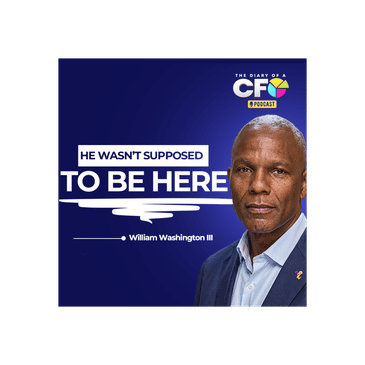
William Washington III dropped out of high school, raised a child as a single father, and started his career at a cottonseed company. Today he is the Global CFO of Baker McKenzie, overseeing $3 billion in annual revenue across 76 offices in 45 countries.
In this episode of the Diary of a CFO podcast, William breaks down what it actually takes to lead a global finance function, the executive coaching moment that rewired his leadership style, why Lean Six Sigma was the pivot point of his career, and how he leads at scale as a self-described introvert. He also shares his framework for lifelong learning, including the three books every finance professional should be reading right now.
This conversation is for finance leaders growing into the CFO seat, sitting CFOs scaling globally, and anyone building resilience through a hard chapter.
What You Will Learn
What a Global CFO actually does day to day and why the role is mostly leadership, not spreadsheets
How to evaluate a finance organization in your first 90 days as CFO
How to build trust with a team that includes people who applied for your role
How Lean Six Sigma training transforms a finance career
The executive coaching insight that took William from director to CFO in one year
How to lead and communicate across 47 countries, multiple languages, and different cultures
How introverts can lead at the executive level without burning out
Why finance training alone can hold leaders back from becoming effective CFOs
How board service sharpens decision-making and executive presence
The three-book reading framework that builds well-rounded finance leaders
Inside the Conversation
What the Global CFO role actually looks like day to day
William describes the Global CFO role as primarily a leadership role, not a spreadsheet role. The job is about leading teams, developing people, earning a seat at the executive table, and aligning financial data with company strategy. Technical finance skills are the baseline. The real work is leading a global organization and influencing decisions across functions like marketing, IT, HR, and operations.
How William evaluates a finance team in his first 90 days
William's approach is to listen before acting. He starts by speaking with his number two and number three direct reports, then works through the broader team. New CFOs get a short window where people are unusually forthcoming, so the first 90 days should be spent asking questions and identifying what is working and what needs to change. He also recommends reading "The First 90 Days" by Michael Watkins.
Building trust with a team that includes people who wanted your role
William builds trust by being transparent that he is a new leader with a different style, not a replacement for the previous CFO. He tells teams directly not to compare him to past leaders. He builds trust by showing trust first, learning each direct report's communication style, and adapting his own approach to match. Trust is a two-way street, and authenticity accelerates it.
Why Lean Six Sigma became the pivot point of his career
Lean Six Sigma gave William an operational understanding of the business that pure finance roles do not provide. At Fannie Mae, the certification required him to read policies and procedures, process map operations, and identify risks and opportunities inside workflows. That operational lens, combined with his finance background, gave him a holistic view of the business and made him significantly more effective as a CFO.
The biggest difference between being a finance director and being a CFO
William hired executive coach Gideon Coleman at K Street Coaching to answer this exact question. The insight from his 360 review was that the skills that made him a great director, fast execution, driving deadlines, and tactical delivery, were not the skills required to be a CFO. CFO-level leadership requires integrity, authentic relationship-building, communication adaptation, and the ability to lead people rather than tasks.
How he made the jump from director to CFO in one year
William moved from director to CFO in one year by hiring an executive coach who conducted a 360 review with his team and leadership. The review revealed leadership gaps he could not see on his own, particularly around integrity and team connection. He rebuilt his approach around authentic communication, started meetings by asking how people were doing, and developed the executive presence required for the CFO seat.
Why he went back to school for a Master's in Law Firm Management
When William transitioned from financial services into the legal industry, he knew he would not be a lawyer but needed to deeply understand the business he was leading. He enrolled in a two-year Master's in Law Firm Management program at George Washington University, on top of his existing undergraduate degree and MBA, to learn the legal industry from the inside.
How introverts can succeed in executive leadership
Introverts succeed at the executive level by protecting recharge time. William defines introversion as needing alone time to recharge, not as being shy or quiet. He blocks pockets of solo time in his calendar, uses mornings and weekends to recover, and shows up at full battery when it is time to lead. He notes that many world-class leaders are introverts that most people would never identify as such.
Leading a finance team across 45 countries
William leads globally through constant communication, including monthly videos, town halls, and office visits. He adapts his communication style to account for cultural and language differences. He asks his direct reports to surface team wins and challenges so he can recognize people across the organization. He emphasizes that leadership at scale is about being someone people want to follow, not just someone they report to.
The three books every finance professional should be reading
William recommends reading three books at a time. One for spiritual or personal development, one for your profession or career, and one purely for enjoyment. The third book builds the reading muscle in a context you actually enjoy. He also specifically recommends "The First 90 Days" by Michael Watkins for any new leader.
Key Quotes
"I'll only go as far as my team can take me."
"Don't try to compare me to the prior CFOs. We weren't raised by the same parents."
"The skills that got me ready for the CFO weren't the skills I needed to be a CFO."
"University and school is about proving that you're teachable."
"There's really not much that life can throw at me that I can't handle."
"Read three books. One for your spirit, one for your profession, and one just for fun."
About William Washington III
William McKinley Washington III is the Global CFO of Baker McKenzie. He has held senior finance and operations roles at Hogan Lovells, Accenture, and Fannie Mae. He holds an undergraduate degree, an MBA, and a Master's in Law Firm Management from George Washington University. He is a Lean Six Sigma Master Black Belt and a Bloomberg New Voice on the Future of Finance. He also serves on multiple boards.
Connect with William on LinkedIn by searching "William McKinley Washington III."
About the Diary of a CFO Podcast
The Diary of a CFO is a podcast about modern finance leadership, hosted by award‑winning CFO Wassia Kamon. The show is for current CFOs, emerging finance leaders, FP&A professionals, and founders who work closely with finance teams.
Each episode explores how CFOs and senior finance executives build high‑performing finance and FP&A teams, partner with CEOs, boards, and capital providers (banks, PE/VC, and impact lenders), and navigate growth, regulation, and transformation without burning out.
Submit questions to ask@thediaryofacfo.com or visit thediaryofacfo.com.
Topics and Keywords
Global CFO role, CFO career path, finance leadership, manager to CFO transition, director to CFO promotion, Lean Six Sigma finance, executive coaching for CFOs, 360 review leadership, introvert CFO, leading finance teams globally, Baker McKenzie CFO, law firm CFO, finance team building, first 90 days as CFO, board service for finance executives, lifelong learning for CFOs, resilience in finance careers, finance career advice.
00:00:00 --> 00:00:02 Welcome back to the Diary of a CFO podcast. I'm
00:00:02 --> 00:00:05 your host, Wasea Kamon, a sitting CFO with a
00:00:05 --> 00:00:07 background in accounting and FTNA. And I started
00:00:07 --> 00:00:09 this show because I believe the way companies
00:00:09 --> 00:00:11 build and lead their finance function determines
00:00:11 --> 00:00:14 whether they scale or fall apart. Each week,
00:00:14 --> 00:00:16 I sit down with CFOs, CEOs, and strategic business
00:00:16 --> 00:00:19 partners to talk about what that actually looks
00:00:19 --> 00:00:22 like in reality. Building the right teams, getting
00:00:22 --> 00:00:24 systems and controls in place, partnering with
00:00:24 --> 00:00:26 the business, and doing all without burning out.
00:00:27 --> 00:00:29 Today, I'm super excited to have with me William
00:00:29 --> 00:00:33 Washington III. He's a global CFO at Baker McKenzie,
00:00:34 --> 00:00:37 one of the world's largest global law firms working
00:00:37 --> 00:00:39 with major companies around the world. Think
00:00:39 --> 00:00:41 Baker McKenzie as a big four -scale firm, but
00:00:41 --> 00:00:44 on the legal side. William oversees $3 billion
00:00:44 --> 00:00:48 in annual revenue across 76 offices in 45 countries
00:00:48 --> 00:00:51 and brings a rare combination of financial acumen
00:00:51 --> 00:00:54 and operational expertise shaped by senior roles
00:00:54 --> 00:00:57 he held at Hogan Lovells, Accenture, and Fannie
00:00:57 --> 00:01:01 Mae. He's a certified Lean Six Sigma Master Black
00:01:01 --> 00:01:03 Belt and a Bloomberg New Voice on the Future
00:01:03 --> 00:01:06 of Finance. Welcome to the show, William. Thank
00:01:06 --> 00:01:08 you, and thank you for having me. What a great
00:01:08 --> 00:01:12 introduction. Oh, thank you. It's only a partial
00:01:12 --> 00:01:15 intro. I didn't mention how you were on the board
00:01:15 --> 00:01:18 of the EFP and all that good stuff. Yes, yes.
00:01:18 --> 00:01:22 We have busy lives these days. Awesome. Well,
00:01:22 --> 00:01:24 that's the right busy life. And, you know, when
00:01:24 --> 00:01:27 people hear the term global CFO, it sounds impressive,
00:01:27 --> 00:01:30 but sometimes it's unclear in simple terms. What
00:01:30 --> 00:01:33 would you say the job actually looks like day
00:01:33 --> 00:01:35 to day? And where do you spend most of your time
00:01:35 --> 00:01:39 and attention? Yeah. Well, first of all, thank
00:01:39 --> 00:01:41 you for having me here. I'm always excited to
00:01:41 --> 00:01:45 give back and to share my experiences. When I
00:01:45 --> 00:01:48 think about the role of global CFO, I think about
00:01:48 --> 00:01:51 a role that's mostly about leadership. You know,
00:01:51 --> 00:01:54 I've spent most of my career doing spreadsheets,
00:01:54 --> 00:01:57 doing analysis of spreadsheets and, you know,
00:01:57 --> 00:02:00 at some point starting to lead teams. But really,
00:02:00 --> 00:02:03 when you move into the role of global CFO. It's
00:02:03 --> 00:02:06 about the ability to lead a team, to be able
00:02:06 --> 00:02:09 to develop people and to make sure that you have
00:02:09 --> 00:02:11 a seat at the table and that your voice is heard
00:02:11 --> 00:02:13 so that you can take the numbers and align them
00:02:13 --> 00:02:18 with the strategy. Wow. And so when you became
00:02:18 --> 00:02:21 global CFO at an organization that's in more
00:02:21 --> 00:02:25 than 40 countries, how did you first evaluate
00:02:25 --> 00:02:26 the finance organization? Like what were the
00:02:26 --> 00:02:29 first thing you looked at? at, for example, or
00:02:29 --> 00:02:32 people you spoke to, to understand what was working
00:02:32 --> 00:02:35 well and what needed to improve? Well, that's
00:02:35 --> 00:02:37 the first thing is you have to go around and
00:02:37 --> 00:02:39 speak to people. But more importantly, you have
00:02:39 --> 00:02:41 to go around and listen. You know, you have to
00:02:41 --> 00:02:45 ask questions and then just sit back. And the
00:02:45 --> 00:02:49 experiences that I've had, people are very forthcoming,
00:02:49 --> 00:02:51 especially when you're new, you know, and it
00:02:51 --> 00:02:53 gives you a great opportunity to get in there
00:02:53 --> 00:02:56 and find out what's working and what's not working.
00:02:57 --> 00:02:59 And for me, it starts with my leadership team.
00:02:59 --> 00:03:02 Most importantly, my number two and number three
00:03:02 --> 00:03:06 direct reports. You know, they really help to
00:03:06 --> 00:03:09 drive the strategy and drive the execution. And
00:03:09 --> 00:03:11 if you don't have the right people sitting in
00:03:11 --> 00:03:14 those seats, you know, you're almost set up for
00:03:14 --> 00:03:17 failure. And a lot of times those are the same
00:03:17 --> 00:03:19 people who also apply for your role prior to
00:03:19 --> 00:03:22 you getting there. So you really want to let
00:03:22 --> 00:03:24 them know that that you want their success. You
00:03:24 --> 00:03:27 want the team success to align with their success
00:03:27 --> 00:03:29 and the overall success of the organization.
00:03:30 --> 00:03:33 Because as global CFO, I'll only go as far as
00:03:33 --> 00:03:36 my team can take me. Very true. And you brought
00:03:36 --> 00:03:38 up such a good point, right? You're number two
00:03:38 --> 00:03:40 and you're number three. So I'm assuming you're
00:03:40 --> 00:03:42 probably mentioning your controller in your head
00:03:42 --> 00:03:47 or FPNA? Yeah, you know, when you have an organization
00:03:47 --> 00:03:51 the size of mine, it's a lot of... different
00:03:51 --> 00:03:55 direct reports and I don't like to separate who's
00:03:55 --> 00:03:58 actually the number two and number three. But
00:03:58 --> 00:04:02 also I've found it also helpful to have someone
00:04:02 --> 00:04:05 who may have a unique title. For me, it's my
00:04:05 --> 00:04:09 director of global finance administration who
00:04:09 --> 00:04:12 really steps in a gap when I'm unavailable, when
00:04:12 --> 00:04:14 I sit in all day meetings or all day conferences
00:04:14 --> 00:04:19 or otherwise not available. Someone who can think
00:04:19 --> 00:04:22 like I think and execute like I execute is a
00:04:22 --> 00:04:28 really key member of the team. And so when you
00:04:28 --> 00:04:31 start, when you step into a leadership role like
00:04:31 --> 00:04:32 that, like you mentioned, especially when you
00:04:32 --> 00:04:34 had people who probably applied for your role
00:04:34 --> 00:04:36 and you get there, how do you start building
00:04:36 --> 00:04:39 trust and alignment, especially with those that
00:04:39 --> 00:04:42 were there long before you got there? Yeah, well,
00:04:42 --> 00:04:46 that trust goes both ways, right? You know, I'm
00:04:46 --> 00:04:49 coming in new. I know I'm new. One of the things
00:04:49 --> 00:04:52 I say to teams as soon as I start is, you know,
00:04:52 --> 00:04:56 don't try to compare me to the prior CFOs because
00:04:56 --> 00:04:59 we weren't raised by the same parents. We didn't
00:04:59 --> 00:05:01 work at the same jobs. We don't have the same
00:05:01 --> 00:05:04 innate personalities and we may be completely
00:05:04 --> 00:05:08 100 % different. And so I really try to come
00:05:08 --> 00:05:11 in early on and share with people who I am as
00:05:11 --> 00:05:14 a person and how I lead and build trust in them
00:05:14 --> 00:05:17 by showing trust, allowing them to do what they
00:05:17 --> 00:05:20 do best and figuring out what those things are.
00:05:20 --> 00:05:23 One of the first things that I learned when I
00:05:23 --> 00:05:26 went into a leadership position was. I'm going
00:05:26 --> 00:05:29 to have five, six, seven different direct reports
00:05:29 --> 00:05:31 and their communication styles are going to be
00:05:31 --> 00:05:34 different. How they want to work is going to
00:05:34 --> 00:05:36 be different. What their home lives are going
00:05:36 --> 00:05:39 to be different. And to allow for that and for
00:05:39 --> 00:05:42 me to be able to adapt to them as much as they're
00:05:42 --> 00:05:45 adapting to me really allows your team to be
00:05:45 --> 00:05:49 to operate at its full capacity. And so I really
00:05:49 --> 00:05:52 I've really worked hard. at changing my communication
00:05:52 --> 00:05:55 style, depending on which one of my direct reports
00:05:55 --> 00:05:59 I'm working with or speaking with. Wow. And would
00:05:59 --> 00:06:01 you say you also apply the same thing with people,
00:06:01 --> 00:06:04 with your peers, right? Also on the executive
00:06:04 --> 00:06:05 leadership team, like when you get there, how
00:06:05 --> 00:06:08 do you typically build that trust and alignment,
00:06:09 --> 00:06:11 whether it's the CEO or with your other peers?
00:06:11 --> 00:06:13 Oh, absolutely. I mean, it's probably even more
00:06:13 --> 00:06:16 important with them because we don't tend to
00:06:16 --> 00:06:19 work together every single day. And they have
00:06:19 --> 00:06:22 their strategic priorities and finance has theirs.
00:06:22 --> 00:06:25 And a lot of times finance overlaps with every
00:06:25 --> 00:06:27 other function, right? Because we build the budgets
00:06:27 --> 00:06:32 and they operate and they have to operate in
00:06:32 --> 00:06:34 line with those budgets. So when I'm working
00:06:34 --> 00:06:37 with the CEO or the head of HR or the head of
00:06:37 --> 00:06:40 marketing or the head of IT who's executing a
00:06:40 --> 00:06:43 lot of my technology projects, you know, it's
00:06:43 --> 00:06:46 really important to understand. not just how
00:06:46 --> 00:06:49 they communicate, but also their stress points
00:06:49 --> 00:06:54 and how to make time to be available for them
00:06:54 --> 00:06:57 and have them be available to me. And really
00:06:57 --> 00:07:00 to also make sure you take time to get to know
00:07:00 --> 00:07:03 them as people, you know, because I think once
00:07:03 --> 00:07:05 you have a relationship, it makes the work go
00:07:05 --> 00:07:10 a lot smoother. At Baker McKenzie, I inherited
00:07:10 --> 00:07:13 or came in with a great team of leaders. And
00:07:13 --> 00:07:16 over time, we've been able to both work hard
00:07:16 --> 00:07:19 together and also find ways to, you know, share
00:07:19 --> 00:07:23 a good meal or go on a great run or a walk or
00:07:23 --> 00:07:25 do other things to get to know them personally.
00:07:26 --> 00:07:29 Wow. That's very enlightening because sometimes
00:07:29 --> 00:07:31 we don't, at least when I became a CFO, I didn't
00:07:31 --> 00:07:34 realize how much time I would spend outside of
00:07:34 --> 00:07:38 finance versus. in finance i don't know if you
00:07:38 --> 00:07:41 feel the same sometimes yeah i mean you probably
00:07:41 --> 00:07:44 areas you know i think when i was like a manager
00:07:44 --> 00:07:47 of finance you know i just got emails from the
00:07:47 --> 00:07:52 hr to like do my annual reviews and comp increases
00:07:52 --> 00:07:54 and things like that it was very uh functional
00:07:54 --> 00:07:57 and tactical in a way that we operated now we
00:07:57 --> 00:07:59 almost have to operate like like brothers and
00:07:59 --> 00:08:02 sisters or you know colleagues we have to move
00:08:02 --> 00:08:06 together in a in a way that helps the organization
00:08:06 --> 00:08:08 to be successful. And I think that's also where
00:08:08 --> 00:08:11 my Lean Six Sigma, my operational background
00:08:11 --> 00:08:16 come into play. I really do think every day I
00:08:16 --> 00:08:19 wake up with a focus on how the pieces all fit
00:08:19 --> 00:08:22 together, right? How marketing may be helping
00:08:22 --> 00:08:25 to drive demand for our business and how people
00:08:25 --> 00:08:27 may be supporting a talent that's going to deliver
00:08:27 --> 00:08:31 on that business and how IT underpins everything.
00:08:32 --> 00:08:33 You know, when you really start to look at the
00:08:33 --> 00:08:36 organization as a whole and as everyone's a piece
00:08:36 --> 00:08:39 of that whole organization, then you really get
00:08:39 --> 00:08:41 a feel for why teamwork and working together
00:08:41 --> 00:08:46 is so critical and important. Wow. And I'm also
00:08:46 --> 00:08:49 I was always curious, like what led you to go
00:08:49 --> 00:08:52 for the Lean Six Sigma all the way to master
00:08:52 --> 00:08:54 Black Belt, especially with a finance background?
00:08:54 --> 00:08:57 First of all, I'm a geek. So, you know, like.
00:08:58 --> 00:09:00 Someone says something to me like Lean Six Sigma
00:09:00 --> 00:09:02 and I immediately think, oh, my gosh, you know,
00:09:02 --> 00:09:05 I need to learn about that. To be honest, it
00:09:05 --> 00:09:09 was a pivot moment in my career. I was working
00:09:09 --> 00:09:13 at Fannie Mae. I was doing finance the way I've
00:09:13 --> 00:09:16 been doing it for 15 years. And someone told
00:09:16 --> 00:09:19 me that we were forming a new Lean Six Sigma
00:09:19 --> 00:09:21 department and they needed a finance person to
00:09:21 --> 00:09:24 come in and almost be like the CFO of the Lean
00:09:24 --> 00:09:27 Six Sigma department. and calculate how much
00:09:27 --> 00:09:30 the firm was saving through this new initiative.
00:09:30 --> 00:09:33 And when I joined, it was the early days of their
00:09:33 --> 00:09:35 Lean Six Sigma program. So there was nothing
00:09:35 --> 00:09:38 to calculate. There wasn't a single member who
00:09:38 --> 00:09:41 had been trained. There wasn't any ongoing projects.
00:09:42 --> 00:09:44 And it was just me and the leader of the Lean
00:09:44 --> 00:09:48 Six Sigma department. And so as we started training
00:09:48 --> 00:09:51 employees at Fannie Mae, I started sitting in
00:09:51 --> 00:09:54 on a training. And that training gets you to
00:09:54 --> 00:09:56 the first stage. And once I was through the first
00:09:56 --> 00:09:59 stage, I then started helping people execute
00:09:59 --> 00:10:02 their projects because we still hadn't saved
00:10:02 --> 00:10:05 any money. And that almost takes you to the second
00:10:05 --> 00:10:08 stage where you're helping develop projects.
00:10:08 --> 00:10:12 And then it was just this evolution where even
00:10:12 --> 00:10:14 the team members that we had hired needed to
00:10:14 --> 00:10:17 get the Black Belt certification. So I volunteered
00:10:17 --> 00:10:21 to go take black belt training at the university.
00:10:22 --> 00:10:24 Then I would come back and teach the team what
00:10:24 --> 00:10:28 I was learning in the classroom. And then from
00:10:28 --> 00:10:31 there, I just I can never stop. If there's another
00:10:31 --> 00:10:34 level to attain, which was the master black belt
00:10:34 --> 00:10:38 certification that required me to take a lot
00:10:38 --> 00:10:41 of statistics classes. I was not a statistics
00:10:41 --> 00:10:44 fan, but I was determined to get that master
00:10:44 --> 00:10:47 black belt. And I just kept working at it. And
00:10:47 --> 00:10:50 so I did both jobs. I worked on the finance portion,
00:10:50 --> 00:10:53 but I also worked on the implementation programs
00:10:53 --> 00:10:56 at Fannie Mae. That's amazing. And you mentioned
00:10:56 --> 00:10:59 it was a pivotal moment in your career. So what
00:10:59 --> 00:11:02 would you say that perspective, that background
00:11:02 --> 00:11:04 have helped you since as a finance executive?
00:11:05 --> 00:11:08 Oh, my gosh, that was everything for me to make
00:11:08 --> 00:11:11 it to the level of being a CFO, because it gave
00:11:11 --> 00:11:14 me. an understanding of the operations of the
00:11:14 --> 00:11:18 business. Up until then, I was a finance manager
00:11:18 --> 00:11:22 level person who received the numbers, who made
00:11:22 --> 00:11:25 sure that they ticked and they tied and sent
00:11:25 --> 00:11:28 out reports and analysis. And I had never really
00:11:28 --> 00:11:31 sat in the business. And when I did the Lean
00:11:31 --> 00:11:34 Six Sigma role, it required me to really get
00:11:34 --> 00:11:36 a strong understanding of the business. I had
00:11:36 --> 00:11:40 to read policies and procedures. I had to learn
00:11:40 --> 00:11:42 how to process map the business. I had to be
00:11:42 --> 00:11:45 able to identify opportunities and risks on a
00:11:45 --> 00:11:48 process map. And that operational experience
00:11:48 --> 00:11:52 tied to my background in numbers really gave
00:11:52 --> 00:11:55 me a holistic view of the business that I think
00:11:55 --> 00:11:58 everyone would benefit from. And I often teach
00:11:58 --> 00:12:01 my team to think about the business and put yourself
00:12:01 --> 00:12:08 in the boat and in the seat of the business owners.
00:12:08 --> 00:12:10 When you start sharing with them the numbers,
00:12:10 --> 00:12:13 because that's when they start being responsive
00:12:13 --> 00:12:15 to what you're trying to communicate to them.
00:12:16 --> 00:12:19 Yeah. And I think, you know, now the mandate
00:12:19 --> 00:12:23 is for everybody to be a strategic business partner.
00:12:23 --> 00:12:26 Right. So it's like everybody, accounting, finance,
00:12:26 --> 00:12:28 tax, whoever is there, you are going to be a
00:12:28 --> 00:12:31 strategic business partner. So I'm curious for
00:12:31 --> 00:12:34 you leading an organization that spends thousands
00:12:34 --> 00:12:37 of countries and hundreds of people. It's impossible
00:12:37 --> 00:12:40 to work directly with everyone. So how do you
00:12:40 --> 00:12:42 ensure your team is performing at the level you
00:12:42 --> 00:12:46 expect? That's a great question. I mean, I think,
00:12:46 --> 00:12:50 you know, when I think about leaders, the first
00:12:50 --> 00:12:52 thing I think about is being someone people want
00:12:52 --> 00:12:57 to follow. You know, you really have to be. someone
00:12:57 --> 00:12:59 who cares enough about the team. And when I say
00:12:59 --> 00:13:02 the team, it's not just my direct reports. It's
00:13:02 --> 00:13:05 my direct reports, reports, or as I often say
00:13:05 --> 00:13:08 to people, I'm often thinking about that young
00:13:08 --> 00:13:12 person who's in their first day on the job because
00:13:12 --> 00:13:15 when you're in your first day of your first job
00:13:15 --> 00:13:19 out of college, you often look to the CFOs for
00:13:19 --> 00:13:23 the culture and the tone. and the inspiration
00:13:23 --> 00:13:26 to go further in your career. And so I think
00:13:26 --> 00:13:29 that's what it takes to be a leader. And for
00:13:29 --> 00:13:32 me to be able to get my message out to people
00:13:32 --> 00:13:36 in 47 different countries who have language differences,
00:13:36 --> 00:13:38 right? Like one of the things I do is I produce
00:13:38 --> 00:13:42 a monthly video and I also do town halls, but
00:13:42 --> 00:13:45 I can sometimes tell by people's reactions that
00:13:45 --> 00:13:49 My jokes aren't landing or the nuance that I'm
00:13:49 --> 00:13:51 saying isn't landing. So it's really important
00:13:51 --> 00:13:55 to be able to figure out how to touch every member
00:13:55 --> 00:13:57 of your organization, which requires constant
00:13:57 --> 00:14:01 communication, the ability to reach out in different
00:14:01 --> 00:14:04 ways, whether it's visiting an office or visiting
00:14:04 --> 00:14:07 a country or sending out a message or making
00:14:07 --> 00:14:15 sure I say things to my team like, get me. Help
00:14:15 --> 00:14:17 me to recognize members of your team by sharing
00:14:17 --> 00:14:20 with me the successes and failures. And then
00:14:20 --> 00:14:22 let's make sure we get that out to the whole
00:14:22 --> 00:14:25 team so we can set the culture around a high
00:14:25 --> 00:14:29 performance team that recognizes our top employees
00:14:29 --> 00:14:33 and also builds a dynamic where there's a back
00:14:33 --> 00:14:35 and forth communication between them and me.
00:14:35 --> 00:14:37 And I learned that early in my career where I
00:14:37 --> 00:14:40 was a member of like a special committee that
00:14:40 --> 00:14:43 advised the CEO at Fannie Mae. He would bring
00:14:43 --> 00:14:47 us in once a month. I was a low level manager.
00:14:47 --> 00:14:50 And just having access to leadership gives you
00:14:50 --> 00:14:54 a feel for the pulse of the organization or gives
00:14:54 --> 00:14:56 them a feel for the pulse of the organization.
00:14:57 --> 00:14:59 Oh, yeah. And it's also a great way to to learn.
00:15:00 --> 00:15:02 Right. Because I feel like the more time you
00:15:02 --> 00:15:04 spend with the executive, especially if you're
00:15:04 --> 00:15:06 on that executive journey, the better off you
00:15:06 --> 00:15:10 are. Right. Iron sharpens iron. Yeah. And we
00:15:10 --> 00:15:13 get excited by the young people. You know, I've
00:15:13 --> 00:15:17 been doing finance now for 30 years. The numbers
00:15:17 --> 00:15:19 are the numbers. The business is the business.
00:15:19 --> 00:15:22 It's really all about the people, you know, and
00:15:22 --> 00:15:24 the legal industry. It's a people business to
00:15:24 --> 00:15:27 begin with. But also, I think when you're the
00:15:27 --> 00:15:29 leader of a finance organization, if you can
00:15:29 --> 00:15:32 make it about the people, then you can have a
00:15:32 --> 00:15:35 much stronger team based organization and the
00:15:35 --> 00:15:39 numbers will take care of themselves. Yes, that's
00:15:39 --> 00:15:41 such a great way to see that. And I'm curious
00:15:41 --> 00:15:43 to hear how was your transition from being in
00:15:43 --> 00:15:45 the financial industry to being in the legal
00:15:45 --> 00:15:48 industry? What was that transition like and what
00:15:48 --> 00:15:50 did you learn in the process? What maybe you
00:15:50 --> 00:15:53 had to shift maybe in your thinking or some of
00:15:53 --> 00:15:55 the things that applied? Well, transitions have
00:15:55 --> 00:15:57 been part of my journey. You know, I started
00:15:57 --> 00:16:01 my career at a cottonseed company. From there,
00:16:01 --> 00:16:03 I went to a real estate investment trust. From
00:16:03 --> 00:16:06 there, I went to Accenture and professional services,
00:16:06 --> 00:16:10 Panty May, and now into the legal industry. So
00:16:10 --> 00:16:13 multiple transitions throughout my career. And
00:16:13 --> 00:16:16 each of those transitions required a different
00:16:16 --> 00:16:23 kind of... adaptation or learning of the business.
00:16:23 --> 00:16:25 And there's a good book out there called The
00:16:25 --> 00:16:28 First 90 Days that most people know about and
00:16:28 --> 00:16:31 they still don't read it. But like I told you
00:16:31 --> 00:16:34 earlier, I'm a geek. Tell me that the most important
00:16:34 --> 00:16:36 thing is to understand an organization. When
00:16:36 --> 00:16:38 I go in, I'm going to read a book that's going
00:16:38 --> 00:16:41 to help me to understand an organization and
00:16:41 --> 00:16:44 reading about the first 90 days, really doing
00:16:44 --> 00:16:47 your research and being prepared. And one of
00:16:47 --> 00:16:51 those mentors I had. When I was in Lean Six Sigma,
00:16:51 --> 00:16:54 Lean Six Sigma required you to go into every
00:16:54 --> 00:16:56 part of the business and learn about that part
00:16:56 --> 00:16:59 of business and be as smart as the people who
00:16:59 --> 00:17:01 may be in that part of business for 30 years.
00:17:01 --> 00:17:04 And that just takes preparation and work. So
00:17:04 --> 00:17:08 when I was in the Lean Six Sigma area, I would
00:17:08 --> 00:17:11 read all those policies and procedures. I would
00:17:11 --> 00:17:14 try to learn as much about the business. that
00:17:14 --> 00:17:17 i was helping and those skills helped me as i
00:17:17 --> 00:17:20 transitioned to industries so when i came into
00:17:20 --> 00:17:23 the legal industry i knew i had to learn it i
00:17:23 --> 00:17:26 knew i wasn't going to be a lawyer and so um
00:17:26 --> 00:17:28 one of the things i did was i took a class at
00:17:28 --> 00:17:32 george washington university uh it was a master's
00:17:32 --> 00:17:35 in law firm management and in that program they
00:17:35 --> 00:17:38 walked you through every part of the legal industry
00:17:38 --> 00:17:41 it was a two -year program i had already gotten
00:17:41 --> 00:17:44 my undergrad and mba It was an additional master's.
00:17:44 --> 00:17:48 But like I said, I'm a geek. And I want to be
00:17:48 --> 00:17:51 successful. And to be successful, you have to
00:17:51 --> 00:17:55 be able to transition when the business changes
00:17:55 --> 00:17:58 or your industry changes. Wow. And I like that
00:17:58 --> 00:18:02 you are literally that living testimony of lifelong
00:18:02 --> 00:18:06 learning, like from being a black belt and now
00:18:06 --> 00:18:09 going to a master in law management to learn
00:18:09 --> 00:18:12 the business. Because I saw a study that was
00:18:12 --> 00:18:14 saying that one of the skills that will still
00:18:14 --> 00:18:19 be there, despite AI, is lifelong learning. And
00:18:19 --> 00:18:21 that we have to continuously learn. Yeah, absolutely.
00:18:21 --> 00:18:24 And when I say I'm a geek, it's only because
00:18:24 --> 00:18:27 that's what my... resume or life skills says.
00:18:27 --> 00:18:30 When I was a teenager, I was like any young man.
00:18:31 --> 00:18:34 I wanted to play football and basketball and
00:18:34 --> 00:18:37 be outside. And if a teacher gave me a book to
00:18:37 --> 00:18:40 read, the thicker it was, the more I was like,
00:18:40 --> 00:18:45 oh, no. But as I got older, I realized it's a
00:18:45 --> 00:18:48 necessary habit to build. Just like practicing
00:18:48 --> 00:18:51 my jump shot or practicing my golf swing, I have
00:18:51 --> 00:18:55 to practice my mental acumen. Practice being
00:18:55 --> 00:18:58 a professional finance person. And if that takes
00:18:58 --> 00:19:01 reading a big, thick book, I may not read the
00:19:01 --> 00:19:04 whole thing, but I have to go after my career
00:19:04 --> 00:19:07 and my profession the same way I go after anything
00:19:07 --> 00:19:11 else I pursue in life. getting mentally prepared,
00:19:11 --> 00:19:14 preparing my mind. I can tell you about a hundred
00:19:14 --> 00:19:17 different things I've done over my career in
00:19:17 --> 00:19:19 order to make sure I was ready for that next
00:19:19 --> 00:19:23 opportunity. And I encourage everyone, every
00:19:23 --> 00:19:26 young person I ever meet. Read three books, you
00:19:26 --> 00:19:29 know, read a book that helps with your mental
00:19:29 --> 00:19:32 health or your spiritual development. Read a
00:19:32 --> 00:19:35 book that helps with your profession and the
00:19:35 --> 00:19:38 thing that you care about the most in terms of
00:19:38 --> 00:19:41 your career. And then read a book just for enjoyment,
00:19:41 --> 00:19:43 just so you can practice the muscle of reading.
00:19:43 --> 00:19:47 in an environment where you enjoy the topic you're
00:19:47 --> 00:19:49 reading about. So I may be reading a book about
00:19:49 --> 00:19:52 Seth Curry, and then I may be reading a book
00:19:52 --> 00:19:55 about the financial markets. Then I may be reading
00:19:55 --> 00:19:58 my Bible or a book about being a good husband
00:19:58 --> 00:20:02 on a spiritual side. And all three of those things
00:20:02 --> 00:20:06 combine to make me a more well -rounded person
00:20:06 --> 00:20:10 and be better at my job. Wow. I'm definitely
00:20:10 --> 00:20:14 stealing that. Because it's true to have that
00:20:14 --> 00:20:16 balance, right? It doesn't have to be all boring,
00:20:16 --> 00:20:19 quote unquote, all about learning. But yeah,
00:20:19 --> 00:20:22 the Steph Curry book, yes, for sure. Thank you
00:20:22 --> 00:20:24 so much for sharing that. I appreciate it. And
00:20:24 --> 00:20:26 thinking about you being a well -rounded executive,
00:20:27 --> 00:20:29 you are also sitting on different boards. So
00:20:29 --> 00:20:35 I'm curious, how does these board roles... really
00:20:35 --> 00:20:39 probably improved you as a CFO or a finance executive?
00:20:39 --> 00:20:41 Because I'm always curious to see, because I
00:20:41 --> 00:20:43 feel like all these experiences we accumulate
00:20:43 --> 00:20:46 outside of work tend to make us better at work.
00:20:47 --> 00:20:49 So curious to hear how that the board experience
00:20:49 --> 00:20:52 may have helped you. Yeah, I think sometimes
00:20:52 --> 00:20:55 when people look at board roles, they look at
00:20:55 --> 00:21:00 it for prestige or or some ulterior motive. But
00:21:00 --> 00:21:03 for me, board service is really about the opportunity
00:21:03 --> 00:21:06 to give back. It also gives me a chance to sharpen
00:21:06 --> 00:21:10 my skill sets in ways that my day -to -day job
00:21:10 --> 00:21:13 may not. So by sitting on different boards, I
00:21:13 --> 00:21:17 have a seat at the table with insights to the
00:21:17 --> 00:21:20 challenges that other businesses may face. And
00:21:20 --> 00:21:23 as a board member, I get all those challenges
00:21:23 --> 00:21:26 that you talked about earlier. I'll hear about
00:21:26 --> 00:21:29 their IT challenges. I'll hear about their marketing
00:21:29 --> 00:21:33 challenges. I'll hear about the CEO and what
00:21:33 --> 00:21:37 challenges he or she is facing. And by sitting
00:21:37 --> 00:21:40 at the board seat and being asked to make decisions
00:21:40 --> 00:21:44 quickly, I sharpen another skill set in terms
00:21:44 --> 00:21:47 of leadership and executive presence and things
00:21:47 --> 00:21:50 I need to know in order to be a leader. And quite
00:21:50 --> 00:21:53 frankly, the organization that's giving to me
00:21:54 --> 00:21:59 is also getting me, in some sense for free, getting
00:21:59 --> 00:22:03 my 30 years plus experience in finance in order
00:22:03 --> 00:22:06 to help them to make better decisions as well.
00:22:06 --> 00:22:10 So I see it as a two -way street. It allows me
00:22:10 --> 00:22:12 to give back. It also gives something to me in
00:22:12 --> 00:22:15 the process. And they generally tend to be with
00:22:15 --> 00:22:20 organizations. that inspire me or that I respect
00:22:20 --> 00:22:22 what they're doing. And I feel like I'm blessed
00:22:22 --> 00:22:25 to have the opportunity to even have a seat at
00:22:25 --> 00:22:28 that table. And I continue to look and seek new
00:22:28 --> 00:22:34 ways to get back through that medium. Wow. Again,
00:22:34 --> 00:22:37 on that flow of being well -rounded, thank you
00:22:37 --> 00:22:39 so much for sharing that because all these experiences
00:22:39 --> 00:22:43 end at the end of the day. And when you think
00:22:43 --> 00:22:46 about how we are trained from a finance background,
00:22:46 --> 00:22:49 right, we think about precision, control, risk
00:22:49 --> 00:22:52 management. Do you think that that training by
00:22:52 --> 00:22:55 itself sometimes holds finance leaders back from
00:22:55 --> 00:22:57 being effective leaders? Well, I definitely think
00:22:57 --> 00:23:01 that. There are different facets to finance and
00:23:01 --> 00:23:05 most people see it as just numbers and they get
00:23:05 --> 00:23:07 that numbers training. And especially on the
00:23:07 --> 00:23:10 accounting side, I don't have an accounting background.
00:23:10 --> 00:23:13 I have an FP &A background and I intentionally
00:23:13 --> 00:23:16 steered away from accounting because it was too
00:23:16 --> 00:23:22 structured, too numbers focused. And to me, it
00:23:22 --> 00:23:25 was pencils down and not heads up. And I always
00:23:25 --> 00:23:28 want to be heads up in understanding the business.
00:23:28 --> 00:23:31 So I do believe that finance training can sometimes
00:23:31 --> 00:23:34 be an inhibitor. And in particular, when you're
00:23:34 --> 00:23:39 going through school, you know, to me, university
00:23:39 --> 00:23:41 and school is about proving that you're teachable.
00:23:42 --> 00:23:45 When I came into the business world, the skill
00:23:45 --> 00:23:48 sets I needed were different depending on which
00:23:48 --> 00:23:50 company I was working with and what the role
00:23:50 --> 00:23:53 was. And when I went back to my university for
00:23:53 --> 00:23:55 the first time and I went to my favorite professor,
00:23:55 --> 00:23:57 the one who had taught me, who seemed like the
00:23:57 --> 00:24:00 smartest and had taught me the most things. And
00:24:00 --> 00:24:02 I said, I remember telling him I have this job
00:24:02 --> 00:24:07 at Fannie Mae and I'm doing X, Y and Z. And then
00:24:07 --> 00:24:10 he said something. And for the first time, I
00:24:10 --> 00:24:13 realized he's never worked in a company. He has
00:24:13 --> 00:24:16 no idea what I do at Fannie Mae on a day to day
00:24:16 --> 00:24:19 basis. He's not a manager who also teaches a
00:24:19 --> 00:24:22 class. He's a teacher who teaches book knowledge.
00:24:22 --> 00:24:25 So I do think that the training that they give
00:24:25 --> 00:24:28 you in school is super, super important. It gives
00:24:28 --> 00:24:31 you a way of thinking about problems and challenges
00:24:31 --> 00:24:34 and finding solutions to those problems and challenges.
00:24:34 --> 00:24:38 But transferring that to the workplace is a whole
00:24:38 --> 00:24:45 different skill set. I don't know if I was always
00:24:45 --> 00:24:48 the smartest person in a classroom, but for some
00:24:48 --> 00:24:51 reason, I believe my ability to really be a problem
00:24:51 --> 00:24:55 solver in a workplace is what's helped me to
00:24:55 --> 00:24:59 reach the levels that I reached. Yes, I I remember
00:24:59 --> 00:25:03 after school and I because I graduated in accounting
00:25:03 --> 00:25:05 from Georgia State and I remember going into
00:25:05 --> 00:25:08 my first internship at PWC and I almost wanted
00:25:08 --> 00:25:10 to go back and say I want my money back because
00:25:10 --> 00:25:16 I was not ready. It is hard. It's a big transition.
00:25:16 --> 00:25:21 Yes, it is. And even the transition from, you
00:25:21 --> 00:25:23 know, being a manager or director to the CFO
00:25:23 --> 00:25:26 role, that's a brutal transition, too. It is.
00:25:26 --> 00:25:30 It is. And and it's interesting as I watch people
00:25:30 --> 00:25:34 interviewed to make that move and I watch the
00:25:34 --> 00:25:37 interviewees try to assess who's ready. You know,
00:25:37 --> 00:25:42 it really is a unique transition that you really.
00:25:43 --> 00:25:45 need to be prepared for so one of the things
00:25:45 --> 00:25:48 i did i remember when i was ready to be a cfo
00:25:48 --> 00:25:51 i talked to my then cfo i was a director and
00:25:51 --> 00:25:54 he said i think you'll be ready to be a cfo and
00:25:54 --> 00:25:56 i want to help you get ready and i think it'll
00:25:56 --> 00:25:59 be about five years out and i was like oh no
00:25:59 --> 00:26:03 i plan to be a cfo in a year not five years and
00:26:03 --> 00:26:06 i need to understand what it is that that's holding
00:26:06 --> 00:26:09 you back or me back from being seen as someone
00:26:09 --> 00:26:12 who can be in that role. So I hired an executive
00:26:12 --> 00:26:17 coach. And boy, let me tell you, his name is
00:26:17 --> 00:26:20 Gideon Coleman. He's with K Street Coaching.
00:26:21 --> 00:26:23 His approach and the things he showed me about
00:26:23 --> 00:26:29 myself were career altering, life changing, developmental
00:26:29 --> 00:26:34 things that I had no idea. weren't present. So
00:26:34 --> 00:26:38 to simplify, what I learned was the skills that
00:26:38 --> 00:26:41 got me to be ready for the CFO weren't the skills
00:26:41 --> 00:26:47 I needed to be a CFO. And he had this will where
00:26:47 --> 00:26:50 he showed me all my strengths, my ability to
00:26:50 --> 00:26:53 get the job done, my ability to do all these
00:26:53 --> 00:26:56 tactical things. And what I really needed to
00:26:56 --> 00:26:59 do was to build these leadership traits that
00:26:59 --> 00:27:02 were on the top of the will. And in essence,
00:27:02 --> 00:27:04 he was like, we're going to have to pull the
00:27:04 --> 00:27:08 skills up into the top half of the chart. And
00:27:08 --> 00:27:11 we spent time working on each piece of the pie.
00:27:11 --> 00:27:16 And needless to say, a year later, I was a CFO
00:27:16 --> 00:27:20 and I attribute the work that he and I did. And
00:27:20 --> 00:27:24 in particular, his approach that really changed
00:27:24 --> 00:27:28 that trajectory for me. Yeah. Now I want to hear
00:27:28 --> 00:27:33 all about it. Give us one or two examples. Well,
00:27:33 --> 00:27:37 at one point he put the wheel on the ground.
00:27:37 --> 00:27:40 He had this big rollout, like kind of, I call
00:27:40 --> 00:27:43 it like a twister mat. And we had to take our
00:27:43 --> 00:27:46 shoes off and like almost do the twister mat.
00:27:46 --> 00:27:50 But really one of the key things was, was integrity
00:27:50 --> 00:27:54 and working with my team. When he showed me he
00:27:54 --> 00:27:57 had done a 360 with my team and the leadership
00:27:57 --> 00:28:00 of the firm I was working for. And when he showed
00:28:00 --> 00:28:04 me where I was on integrity, it was much lower
00:28:04 --> 00:28:07 than I still don't even like talking about it
00:28:07 --> 00:28:11 because it was very humbling to read. But it
00:28:11 --> 00:28:14 was the reason the score was low was because
00:28:14 --> 00:28:17 I was a type of leader who would come in and
00:28:17 --> 00:28:19 be like, leadership has asked us to do this by
00:28:19 --> 00:28:22 next week. We need to get it done. This is your
00:28:22 --> 00:28:24 part. This is my part. Everybody understand?
00:28:24 --> 00:28:28 Go. You know, and I was and I was good at delivering
00:28:28 --> 00:28:30 because I was good at understanding the deadline
00:28:30 --> 00:28:35 and being driven to get it done. But for my team,
00:28:35 --> 00:28:38 they were like, well, it just comes in and just
00:28:38 --> 00:28:41 like that was all they knew was these were the
00:28:41 --> 00:28:45 requirements and this is a job. Instead, I now
00:28:45 --> 00:28:48 come in in a different way. I generally start
00:28:48 --> 00:28:52 my meetings with how are you doing? Because how
00:28:52 --> 00:28:55 are you doing and where you're currently at is
00:28:55 --> 00:28:58 going to determine how we meet that deadline
00:28:58 --> 00:29:01 much more than I can send out bullet points as
00:29:01 --> 00:29:04 to what we need to do. But it's the how we do
00:29:04 --> 00:29:06 it and doing it together that makes a difference.
00:29:06 --> 00:29:09 So now when I come in and I start with a share,
00:29:09 --> 00:29:12 oh my gosh, I had a rough morning. My daughter
00:29:12 --> 00:29:15 didn't want to get up for school and my coffee
00:29:15 --> 00:29:18 was cold. You know, how are you doing? Now I'm
00:29:18 --> 00:29:20 starting to build integrity with my team because
00:29:20 --> 00:29:23 I'm authentic and I'm building relationship and
00:29:23 --> 00:29:25 they want to follow me and they want to work
00:29:25 --> 00:29:27 with me in order to deliver on this deadline.
00:29:28 --> 00:29:30 And it's a beautiful thing to see when you have
00:29:30 --> 00:29:33 a team that's ready to go to war together because
00:29:33 --> 00:29:37 you have that dynamic in play. And I had to learn
00:29:37 --> 00:29:39 that before I thought I just needed to drive,
00:29:39 --> 00:29:41 drive, drive. And it did help me to get from
00:29:41 --> 00:29:44 manager to director, but it wasn't going to help
00:29:44 --> 00:29:49 me be a CFO. Yeah. And you are an introvert,
00:29:49 --> 00:29:51 so I can only imagine how hard that could be,
00:29:51 --> 00:29:54 too, to be in those chit -chat, these meetings
00:29:54 --> 00:29:57 and all those things, because I know you've spoken
00:29:57 --> 00:29:59 openly about being an introvert while working
00:29:59 --> 00:30:02 at these high levels of leadership. What would
00:30:02 --> 00:30:05 you say something that are some of the things
00:30:05 --> 00:30:08 that are helping you in that, like showing up
00:30:08 --> 00:30:10 as an effective leader and yet being an introvert?
00:30:10 --> 00:30:12 Because people tend to think it's easier when
00:30:12 --> 00:30:15 an extrovert to do those things. Maybe it doesn't
00:30:15 --> 00:30:18 apply to me if I'm an introvert. Yeah, I think
00:30:18 --> 00:30:21 people get introverts confused, you know, and
00:30:21 --> 00:30:25 at the very basic level, I say introverts are
00:30:25 --> 00:30:29 people who need to be alone to recharge and get
00:30:29 --> 00:30:32 their batteries to the highest level. You know,
00:30:32 --> 00:30:34 when we look at people who are great leaders,
00:30:34 --> 00:30:37 you know, you can't tell who's an introvert or
00:30:37 --> 00:30:40 extrovert. You know, is Barack Obama an introvert
00:30:40 --> 00:30:43 or extrovert? He speaks so eloquently, you know,
00:30:43 --> 00:30:47 or pick another person. And you really can't
00:30:47 --> 00:30:51 tell by just seeing someone present. When I stand
00:30:51 --> 00:30:54 up to present to a large audience, my battery
00:30:54 --> 00:30:56 is at the highest level. I'm going to bring the
00:30:56 --> 00:30:59 energy. I'm going to work with the team. I'm
00:30:59 --> 00:31:04 going to be one of the best versions of myself
00:31:04 --> 00:31:09 when I'm asked to perform. But the way I recharge
00:31:09 --> 00:31:13 for that is by spending time by myself. And I
00:31:13 --> 00:31:16 use the weekends or I use my time off or I use
00:31:16 --> 00:31:20 the mornings in order to get that recharging.
00:31:20 --> 00:31:23 Other people that are extroverts may recharge
00:31:23 --> 00:31:26 differently. They may get recharged by getting
00:31:26 --> 00:31:29 with a group of friends and singing kumbaya or
00:31:29 --> 00:31:32 whatever they may do. And they get their energy
00:31:32 --> 00:31:35 through different sources. So for me, the most
00:31:35 --> 00:31:38 important part of that understanding of being
00:31:38 --> 00:31:41 an introvert is making sure that my calendar
00:31:41 --> 00:31:46 and my schedule and my boundaries are set appropriately
00:31:46 --> 00:31:51 so I have time to recharge. I cannot be in meetings
00:31:51 --> 00:31:55 all day from 7 a .m. to 6 p .m., go to dinner
00:31:55 --> 00:31:59 from 7 p .m. to 11 p .m., get in bed, do it all
00:31:59 --> 00:32:02 over again. I will quickly burn out and you will
00:32:02 --> 00:32:05 see a guy whose skin looks different, whose smile
00:32:05 --> 00:32:08 isn't quite as bright, and who isn't ready for
00:32:08 --> 00:32:10 work the next day in order to deliver. So what
00:32:10 --> 00:32:13 I do is I put in pockets of time, whether it's
00:32:13 --> 00:32:16 in the middle of a meeting schedule or just to
00:32:16 --> 00:32:20 meet in my regular schedule. to make sure I'm
00:32:20 --> 00:32:24 alone, I can meditate, I can read my book, I
00:32:24 --> 00:32:27 can talk to my kids, you know, or do the other
00:32:27 --> 00:32:29 things that are important to me. And then when
00:32:29 --> 00:32:32 I show up, I'm ready to go. I love working with
00:32:32 --> 00:32:36 teams. I love being a leader, but I also need
00:32:36 --> 00:32:38 to recharge and be ready in order to do that.
00:32:38 --> 00:32:41 And I think it helps my teammates because I'm
00:32:41 --> 00:32:45 ready for them. Yeah. And you're not grumpy or.
00:32:46 --> 00:32:49 I mean, we've all had those people who explode
00:32:49 --> 00:32:52 or this. Yeah. You know, we all know there's
00:32:52 --> 00:32:55 people who need to use alternative substances
00:32:55 --> 00:32:58 in order to keep their energy levels up. You
00:32:58 --> 00:33:02 know, you know, I say, you know, I don't drink,
00:33:02 --> 00:33:06 I don't smoke and I don't do anything illicit
00:33:06 --> 00:33:09 in order to get my energy levels up. I exercise
00:33:09 --> 00:33:13 and I eat right and I meditate and I pray. And
00:33:13 --> 00:33:15 I spend time with people that are important to
00:33:15 --> 00:33:18 me. That's how I get my energy level up. And
00:33:18 --> 00:33:21 I go on a nice ride on my motorcycle and take
00:33:21 --> 00:33:24 this long road out the backside of my house.
00:33:24 --> 00:33:27 And when I come back, I'm ready to rock and roll.
00:33:27 --> 00:33:31 So we all do it differently. And I do think some
00:33:31 --> 00:33:35 of the best leaders in the world have been introverts,
00:33:35 --> 00:33:37 but you just may not know it. That's very true.
00:33:37 --> 00:33:39 But I'm curious, you know, growing up, were there
00:33:39 --> 00:33:42 maybe a moment where you realized that being
00:33:42 --> 00:33:45 an introvert could actually help you lead instead
00:33:45 --> 00:33:49 of holding you back? I think two things. One
00:33:49 --> 00:33:54 is. I wouldn't say at 13, 14, 17, maybe even
00:33:54 --> 00:33:57 21 that I knew what an introvert was. Okay. I
00:33:57 --> 00:34:01 think I knew I liked to spend time alone. I would
00:34:01 --> 00:34:04 often take long walks, you know, whether it was
00:34:04 --> 00:34:07 to school or football practice or just around.
00:34:07 --> 00:34:13 I took really, really long bike rides. But I
00:34:13 --> 00:34:16 was trying to figure out. Who I was, which is
00:34:16 --> 00:34:19 one of the reasons I speak so openly about being
00:34:19 --> 00:34:22 authentic, being an introvert, because I believe
00:34:22 --> 00:34:24 there's someone in their career who needs to
00:34:24 --> 00:34:27 hear it and who needs to have permission to set
00:34:27 --> 00:34:30 boundaries, because I didn't always set boundaries
00:34:30 --> 00:34:33 in my career. And sometimes even now, when I
00:34:33 --> 00:34:35 speak to young adults, they say, well, you're
00:34:35 --> 00:34:37 the CFO. You could set boundaries. You know,
00:34:37 --> 00:34:43 all I can say is if you're in a lower level position.
00:34:44 --> 00:34:46 And you're working for an organization or in
00:34:46 --> 00:34:49 a role that doesn't allow you to set boundaries,
00:34:49 --> 00:34:52 doesn't allow you time to recharge and be your
00:34:52 --> 00:34:56 best version of yourself. Then you should consider,
00:34:56 --> 00:35:01 is that the right role for you? Or and or you
00:35:01 --> 00:35:04 should be able to take time, not in a busy moment,
00:35:04 --> 00:35:06 not when your boss is coming to you asking for
00:35:06 --> 00:35:10 something right away. In the pause time to speak
00:35:10 --> 00:35:14 to your leader or your manager openly about how
00:35:14 --> 00:35:17 you recharge and how your best version shows
00:35:17 --> 00:35:20 up. And I think a good leader will receive it,
00:35:21 --> 00:35:23 you know, because I told you earlier and it was
00:35:23 --> 00:35:26 through executive coaching that I've learned
00:35:26 --> 00:35:29 to deal with my direct reports differently depending
00:35:29 --> 00:35:32 on who they are. And to me, that's what good
00:35:32 --> 00:35:35 leadership can do. If you expect everybody to
00:35:35 --> 00:35:37 be the same personality, well, that doesn't allow
00:35:37 --> 00:35:41 for diversity and for the best results for a
00:35:41 --> 00:35:45 team. True, true. And, you know, I'm so inspired
00:35:45 --> 00:35:48 by your own story, right? Because you also openly
00:35:48 --> 00:35:51 share that you were a high school dropout. At
00:35:51 --> 00:35:54 some point, you were a single father. Now you're
00:35:54 --> 00:35:56 a global CFO. You sit on so many boards. You
00:35:56 --> 00:35:58 mentor so many people. So grateful to have you
00:35:58 --> 00:36:01 on my podcast. But when you look back on your
00:36:01 --> 00:36:04 journey, what would you say are some of the moments
00:36:04 --> 00:36:06 that helped you really through those transition?
00:36:06 --> 00:36:09 Like at what point did you, like you said, matured
00:36:09 --> 00:36:11 or what are the things that helped you, you know,
00:36:11 --> 00:36:16 grow to be at that level? Yeah, look, to me.
00:36:17 --> 00:36:21 During the dark days or the hard times, it seemed
00:36:21 --> 00:36:24 dark and it seemed hard and it was hard to keep
00:36:24 --> 00:36:28 hope and be optimistic because at those points
00:36:28 --> 00:36:31 in time, I didn't know where things were going
00:36:31 --> 00:36:35 to go. You know, now looking back, I realize
00:36:35 --> 00:36:39 that those dark times and those hard times created
00:36:39 --> 00:36:42 a resilience in me that you won't see in most
00:36:42 --> 00:36:46 people. You know, I can walk 100 miles if I have
00:36:46 --> 00:36:50 to in the dark with no shoes on. And I wouldn't
00:36:50 --> 00:36:53 even be upset about it because I've walked 100
00:36:53 --> 00:36:58 miles in the dark with no shoes on before. You
00:36:58 --> 00:37:01 know, and whether it started with my paper route
00:37:01 --> 00:37:04 early on as a kid or whether it was during those
00:37:04 --> 00:37:07 times where my financial situation or being a
00:37:07 --> 00:37:12 single parent was testing my resilience. All
00:37:12 --> 00:37:14 of those things have built in me a muscle and
00:37:14 --> 00:37:18 a gene that I appreciate and that I welcome now.
00:37:19 --> 00:37:22 I even welcome hard times now because, you know,
00:37:22 --> 00:37:25 when I go through hard times in my career now,
00:37:25 --> 00:37:28 part of me says run for the hills, like go find
00:37:28 --> 00:37:30 a different opportunity, go do something different,
00:37:30 --> 00:37:33 like escape, escape, escape. Part of me says
00:37:33 --> 00:37:36 when I get to the other side of this, I'm going
00:37:36 --> 00:37:39 to be even badder than I was before. So watch
00:37:39 --> 00:37:43 out, you know. And I realize now through prayer
00:37:43 --> 00:37:47 and meditation and other things that, you know,
00:37:47 --> 00:37:50 there's really not much that life can throw at
00:37:50 --> 00:37:53 me that I can't handle. You know, you know, it's
00:37:53 --> 00:37:56 just God's given me the skills and the qualities
00:37:56 --> 00:37:59 in order to get through it. And, you know, because
00:37:59 --> 00:38:02 I have an almighty God and that's my faith, you
00:38:02 --> 00:38:05 know, I'm able to know that that there's something
00:38:05 --> 00:38:09 bigger and better than just this moment in time.
00:38:10 --> 00:38:13 Wow. I love that perspective. For me, one of
00:38:13 --> 00:38:15 the biggest thing for me was coming to the U
00:38:15 --> 00:38:19 .S. from West Africa. And that was a big transition
00:38:19 --> 00:38:23 as well. And you tend to it tends to build resilience
00:38:23 --> 00:38:25 in you because like if I could do this, like
00:38:25 --> 00:38:29 if I could slay the bear and the lion, like I
00:38:29 --> 00:38:31 can do this. Like it gives you that perspective.
00:38:32 --> 00:38:36 But then I wonder how as leader or even parents,
00:38:36 --> 00:38:38 can we instill that to our kids? Right. Because
00:38:38 --> 00:38:40 I look at my kids and I'm like. Like I'm doing
00:38:40 --> 00:38:43 everything to help them or I look at my team
00:38:43 --> 00:38:45 and I'm doing everything to help them. How do
00:38:45 --> 00:38:48 you build that resilience in the next generation?
00:38:48 --> 00:38:51 Yeah, I mean, it's a very tough task because,
00:38:51 --> 00:38:54 you know, here I am sitting here fortunate to
00:38:54 --> 00:38:58 be in my role and ability to provide for my kids.
00:38:58 --> 00:39:00 They don't necessarily have to work a paper route
00:39:00 --> 00:39:04 or do some of the hard things I did. And surely
00:39:04 --> 00:39:07 being a father of four. including three amazing
00:39:07 --> 00:39:11 daughters and an amazing son, you know, I don't
00:39:11 --> 00:39:13 want to have to see them struggle, you know,
00:39:13 --> 00:39:17 but I think for me, one of the things that's
00:39:17 --> 00:39:21 been most helpful is, you know, you may not have
00:39:21 --> 00:39:24 to struggle like I did, you know, but at least
00:39:24 --> 00:39:28 sit down and listen, you know, let me share my
00:39:28 --> 00:39:31 story with you. Let me share with you some of
00:39:31 --> 00:39:33 the challenges I've overcome and how I've overcame
00:39:33 --> 00:39:37 them. And then you have a choice as the next
00:39:37 --> 00:39:40 generation or as a young person. You can follow
00:39:40 --> 00:39:43 the path that I follow or you can follow the
00:39:43 --> 00:39:46 path that, you know, you know, and I'll use examples
00:39:46 --> 00:39:50 for my children and they get to choose, you know,
00:39:50 --> 00:39:54 and sometimes my daughter, you know, says. You
00:39:54 --> 00:39:56 know, like they know I get up at 5 a .m. or before
00:39:56 --> 00:39:59 every morning and my daughter tries to do it.
00:39:59 --> 00:40:01 My 25 year old daughter tries to do it. And then
00:40:01 --> 00:40:03 she goes, Dad, you know, do I need to get up
00:40:03 --> 00:40:07 at 5 a .m. on Saturday, too? You know, I'm like,
00:40:07 --> 00:40:09 well, you don't have to. But I am, you know,
00:40:09 --> 00:40:13 you know, you don't have to show up every single
00:40:13 --> 00:40:17 day, but I am. And so it's just living that living
00:40:17 --> 00:40:21 by way of example. And being able to really share
00:40:21 --> 00:40:26 authentically and realistically with the people
00:40:26 --> 00:40:29 you care about. And same thing with my team.
00:40:29 --> 00:40:33 You know, trust me, when some of my direct reports
00:40:33 --> 00:40:37 come to me and they say, oh, I need to recharge.
00:40:37 --> 00:40:40 I'm taking off the next seven days. The first
00:40:40 --> 00:40:42 thing that raises up in me is this anxiety like,
00:40:42 --> 00:40:44 oh, my gosh, what am I going to do without this
00:40:44 --> 00:40:48 key person for seven days? You know, but I often
00:40:48 --> 00:40:51 think back to what I need in terms of boundaries,
00:40:51 --> 00:40:54 what I need to recharge. And I realize everything's
00:40:54 --> 00:40:57 going to be OK. So if someone sends me a long
00:40:57 --> 00:41:00 vacation request or a long request for a time
00:41:00 --> 00:41:03 off, I just click the button because I know everything
00:41:03 --> 00:41:05 is going to be OK. You know, and if I think too
00:41:05 --> 00:41:08 hard, I'll try to say, oh, but we got this, you
00:41:08 --> 00:41:12 know. And and so, you know, it's about being
00:41:12 --> 00:41:16 authentic, being real, telling people. uh about
00:41:16 --> 00:41:19 some of your struggles everyone does not have
00:41:19 --> 00:41:23 to immigrate over from another country in order
00:41:23 --> 00:41:26 to build resilience they will have challenges
00:41:26 --> 00:41:29 in life trust me we don't have to give them to
00:41:29 --> 00:41:32 them we don't have to give them to them the world
00:41:32 --> 00:41:35 the world will knock them down and beat down
00:41:35 --> 00:41:37 on them and they just need to know it's okay
00:41:37 --> 00:41:41 you're going to be okay and you just have to
00:41:41 --> 00:41:45 keep getting back up Wow, that is so true. And
00:41:45 --> 00:41:50 I'm also curious, how do you stay grounded? How
00:41:50 --> 00:41:52 do you build, I don't know if it's a community
00:41:52 --> 00:41:56 or people around you to support you in what you're
00:41:56 --> 00:42:00 doing or maybe clean up your surroundings? No,
00:42:00 --> 00:42:02 I mean, it's important to people that you have
00:42:02 --> 00:42:07 around you. And over time, that community changes
00:42:07 --> 00:42:11 a little bit, right? And I saw it with my parents.
00:42:12 --> 00:42:15 And it's happened in my life. I mean, when I
00:42:15 --> 00:42:18 was, you know, doing one thing in life, my group
00:42:18 --> 00:42:21 of circle of friends was one thing. When I moved
00:42:21 --> 00:42:24 to being a CFO, the circle of people around me
00:42:24 --> 00:42:29 is different, you know. And what you want are
00:42:29 --> 00:42:33 the right balance of friendships, relationships,
00:42:33 --> 00:42:36 resources that you can draw upon. For me, I'm
00:42:36 --> 00:42:40 always reaching up. but I'm also always reaching
00:42:40 --> 00:42:44 back down to lift up, you know, and I get the
00:42:44 --> 00:42:47 most gratitude reaching down, but I never stopped
00:42:47 --> 00:42:51 reaching up, you know, and everybody that I reached
00:42:51 --> 00:42:54 down for can't come up and everybody that I reach
00:42:54 --> 00:42:58 up to won't receive me. And, and I'm okay with
00:42:58 --> 00:43:01 that. You know, I'm okay with that. You know,
00:43:01 --> 00:43:06 I, I have a wonderful, amazing wife. four amazing
00:43:06 --> 00:43:08 children, five, if you include my daughter -in
00:43:08 --> 00:43:11 -law, which I do, you know, I have a grandchild
00:43:11 --> 00:43:15 that I'm, that I'm happy with. And I have friends
00:43:15 --> 00:43:19 who both support me and friends that need me.
00:43:19 --> 00:43:21 And I'm happy with the balance of that, that
00:43:21 --> 00:43:26 balance in life. And I set my own balance. Like
00:43:26 --> 00:43:30 I'm an introvert. So if I had nobody, you know,
00:43:30 --> 00:43:32 I mean, unfortunately I would be fine. That may
00:43:32 --> 00:43:35 not work for everyone. You know, I have, I have
00:43:35 --> 00:43:38 the one thing in my home that my wife let me
00:43:38 --> 00:43:41 design, which is my basketball hoop. It's outside
00:43:41 --> 00:43:43 the house. Everything inside the house she designed.
00:43:44 --> 00:43:47 Boundaries. I see the basketball hoop. And like
00:43:47 --> 00:43:50 I said earlier, I have a motorcycle in my garage
00:43:50 --> 00:43:53 that in D .C. you don't get to ride every day.
00:43:53 --> 00:43:57 But just seeing it there, it's one of my sources
00:43:57 --> 00:44:00 of joy. And it brings joy to me just to pull
00:44:00 --> 00:44:03 in and see it. Oh, yeah. Oh, that is so amazing.
00:44:04 --> 00:44:06 So I'm always like to end with like, what's your
00:44:06 --> 00:44:08 favorite thing to do outside of work? I know
00:44:08 --> 00:44:10 you mentioned your motorcycle, your basketball.
00:44:11 --> 00:44:13 What are other things that you enjoy doing besides
00:44:13 --> 00:44:16 work? Yeah. So I need to start with saying I
00:44:16 --> 00:44:19 like to exercise, you know, which is super important
00:44:19 --> 00:44:22 to me for my physical health and mental health
00:44:22 --> 00:44:25 and emotional health. You know, but I also like
00:44:25 --> 00:44:28 my coffee and donuts. So I didn't want to start
00:44:28 --> 00:44:31 with coffee and donuts. But I love a good cup
00:44:31 --> 00:44:36 of coffee to start the day. I do almost the same
00:44:36 --> 00:44:39 routine. I get a cup of coffee. I read my Bible.
00:44:40 --> 00:44:44 I do a Peloton meditation. I exercise. And if
00:44:44 --> 00:44:49 I can get two or three of those four things in
00:44:49 --> 00:44:52 in the morning, then it starts my day off right.
00:44:53 --> 00:44:57 And then I like to experience life and whatever
00:44:57 --> 00:45:00 life may do. I say I'm not one of those people
00:45:00 --> 00:45:03 who does the same thing every day. I mean, sometimes
00:45:03 --> 00:45:06 I play basketball. Sometimes I play golf. Sometimes
00:45:06 --> 00:45:08 I play tennis with my middle school friend. You
00:45:08 --> 00:45:10 know, sometimes I go for a walk. Sometimes I
00:45:10 --> 00:45:12 go for a run. Sometimes I ride a bike. Sometimes
00:45:12 --> 00:45:15 I ride my motorcycle. So what you'll see in me
00:45:15 --> 00:45:19 is someone who does like the decathlon of life.
00:45:19 --> 00:45:23 I keep moving. I keep moving, you know, and everything
00:45:23 --> 00:45:26 pivots around this career and life that I've
00:45:26 --> 00:45:31 built. in terms of the job I have. And I never
00:45:31 --> 00:45:35 forget where I came from so that when 5 a .m.
00:45:35 --> 00:45:38 hits, I'm happy to get out my bed. You know,
00:45:38 --> 00:45:40 I'm still the first one in the office because
00:45:40 --> 00:45:43 I'm still thankful for my job. During COVID,
00:45:43 --> 00:45:46 when people wanted to stay home, I went into
00:45:46 --> 00:45:49 the office every day. I was like, I worked hard
00:45:49 --> 00:45:52 for this office. I'm going to go in. And now
00:45:52 --> 00:45:55 I have the whole office because nobody else is
00:45:55 --> 00:45:59 here. And I walked in there and made the coffee
00:45:59 --> 00:46:02 every morning and saw the one or two people that
00:46:02 --> 00:46:05 were in there because I have an extreme amount
00:46:05 --> 00:46:09 of gratitude. I do not take for granted the opportunity
00:46:09 --> 00:46:12 to be the global CFO of the largest law firm
00:46:12 --> 00:46:16 in the world. It's a blessing and I'm thankful
00:46:16 --> 00:46:20 for it. Wow. Thank you so much for being on the
00:46:20 --> 00:46:25 show. Your story, your work ethic. Oh, thank
00:46:25 --> 00:46:29 you so much. Thank you. Thank you. It's a pleasure.
00:46:29 --> 00:46:32 And like I said to anyone who wants to follow
00:46:32 --> 00:46:35 me on LinkedIn, please look me up. I'm William
00:46:35 --> 00:46:39 McKinley Washington III. For a couple parting
00:46:39 --> 00:46:42 words, I did mention that, you know, making sure
00:46:42 --> 00:46:45 you have those three books that you read. you
00:46:45 --> 00:46:48 know, a spiritual one, a one on your profession
00:46:48 --> 00:46:52 and one just for fun is probably the best tip
00:46:52 --> 00:46:55 that I can leave everyone with. Thank you so
00:46:55 --> 00:46:59 much. Thank you. Thank you for your time. And
00:46:59 --> 00:47:01 that's all for today's episode of the Diary of
00:47:01 --> 00:47:04 a CFO podcast. I hope it was as insightful and
00:47:04 --> 00:47:08 enjoyable as it was for me. If so, please leave
00:47:08 --> 00:47:11 a review and subscribe on whatever platform you
00:47:11 --> 00:47:13 are listening on. It really helps this conversation
00:47:13 --> 00:47:16 reach other financiers who need them. As always,
00:47:16 --> 00:47:18 if you have any questions or want to go deeper
00:47:18 --> 00:47:21 on anything, reach out at ask at thediaryofacfo
00:47:21 --> 00:47:25 .com or visit thediaryofacfo .com. Thanks for
00:47:25 --> 00:47:26 tuning in and I'll see you in the next one.