
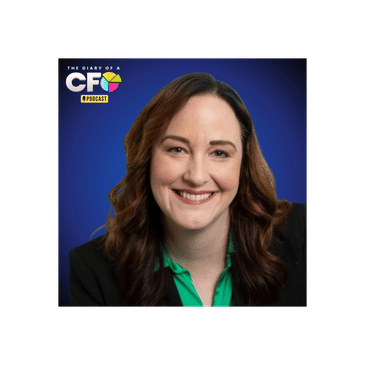


In this episode of The Diary of a CFO, we examine how finance leaders move from technical accounting careers into enterprise leadership roles. Andrea Hecht shares her journey from Big Four audit to controller to CFO, unpacking what it takes to run complex finance organizations, manage regulatory pressure, and earn trust at the executive and board level.
How Can You Successfully Transition from Big Four Auditor to Controller to CFO?
Building a successful CFO career requires far more than technical accounting excellence. As finance organizations expand in scope and complexity, today’s CFOs must oversee planning, audit, investments, tax, regulatory compliance, and enterprise risk while partnering closely with CEOs and boards.
In this episode of The Diary of a CFO, Wassia Kamon speaks with Andrea Hecht about leading full scale finance organizations after decades in public accounting and industry roles. Andrea currently heads the finance division with responsibility for accounting, FP&A, audit, investments, and tax. She reflects on her time as a managing director at BKD, her twelve years at Ernst and Young, and how those experiences prepared her to operate at the highest levels of financial leadership.
This episode is for controllers preparing for the CFO seat, finance leaders managing regulated environments, and executives building large multi function finance teams. Listeners will leave with practical insight into career progression, governance discipline, and how to expand from technical expert to enterprise wide leader.
Why This Episode Matters
If you are moving from audit or controllership into broader leadership, this episode shows how to expand your executive scope.
If you operate in highly regulated industries, it explains how CFOs balance compliance with strategic partnership.
If you want to build credibility with boards and regulators, it highlights the experiences that matter most.
Key Takeaways
Big Four experience provides technical discipline, but moving to industry requires learning commercial operations and executive decision-making.
Controllers prepare for the C-suite by shifting from tactical reporting to strategic thinking and deeply understanding the competitive landscape.
Technical mastery of regulatory standards and reporting builds the credibility needed to effectively challenge or support peer leadership.
Career progression depends on adaptability across industries and nurturing professional relationships to capitalize on opportunities when they arise.
Questions This Episode Answers
How does a Big Four auditor transition into a CFO role?
What skills must controllers develop to become enterprise leaders?
How should CFOs manage compliance while driving strategy?
What experiences prepare finance leaders for board level accountability?
How Big Four Audit Experience Shapes CFO Leadership
Andrea explains how years in public accounting built technical rigor, independence, and professional skepticism. Those skills remain foundational, especially in regulated sectors such as insurance and financial services.
She also discusses the mindset shift required when moving into industry roles where CFOs must balance precision with speed, judgment, and commercial impact.
What Controllers Must Learn Before Stepping Into the CFO Seat
Controller roles often focus on reporting accuracy and internal controls. Andrea outlines why aspiring CFOs need to add exposure to investments, tax strategy, capital decisions, and enterprise disbursements.
She emphasizes the importance of understanding how money moves across the organization and how financial decisions affect long term value creation.
How CFOs Lead in Highly Regulated Industries
With deep experience in property and casualty insurance, life and health companies, and SEC regulated environments, Andrea shares how CFOs maintain governance discipline without slowing the business.
She describes how strong audit relationships, SOX compliance programs, and regulatory communication frameworks protect both the organization and leadership team.
How Can Finance Leaders Build Executive Credibility?
Andrea reflects on the career moves that shaped her leadership, from Ernst and Young to BKD to industry roles. She stresses the value of professional networks, continuing education, and professional affiliations such as the American Institute of CPAs.
Her message is clear. Long term CFO success comes from stacking diverse experiences, embracing expanding responsibility, and continuously developing beyond technical credentials.
Resources Mentioned
Guest: Andrea Hecht, CPA
Organizations: Ernst and Young, BKD LLP, American Institute of CPAs
Topics: US GAAP, Statutory Accounting, SEC Filings, SOX 404 Compliance
Education: Ohio State University, Accounting Degree
Subscribe to the Finance Executive Track newsletter for actionable insights to become the obvious choice for top finance roles and thrive once you get there
https://the-finance-executive-track.kit.com/signup
Download the free guide on AI prompts every finance leader needs:
https://www.wassiakamon.com/prompts
If you liked this episode, listen next to:
Learn more about Wassia Kamon and The Diary of a CFO at thediaryofacfo.com.
About The Diary of a CFO
The Diary of a CFO is a podcast about modern finance leadership, hosted by award‑winning CFO Wassia Kamon. The show is for current CFOs, emerging finance leaders, FP&A professionals, and founders who work closely with finance teams.
Each episode explores how CFOs and senior finance executives build high‑performing finance and FP&A teams, partner with CEOs, boards, and capital providers (banks, PE/VC, and impact lenders), and navigate growth, regulation, and transformation without burning out.
[00:00:00] Welcome back to the Diary of a CFO Podcast, the podcast where finest leaders share the lessons, challenges, and wins. That shaped their careers as well as their organizations. I'm your host CIA Kaman, and today I'm super delighted to have with me Andrea Hedge. Andrea is the Executive Vice President and Chief Financial Officer at CSAA Insurance group.
[00:00:32] Prior to joining the company in 2017, she was a managing director in the insurance practice at B-K-D-L-L-P, and spent 12 years at Ernst and Young providing accounting services to clients in property and casualty insurance financial services. Retail and manufacturing industries. Welcome to the show, Andrea.
[00:00:51] Thank you for having me. Of course. You have such an amazing career. Also a dream career for a lot of college grad, going to [00:01:00] accounting, public accounting in particular, and saying, okay, maybe I'll do some time in public accounting and then transfer to industry become CFO one time, and you did it. So I'm curious to hear from you, what drew you to public accounting in the first place, and was being a CFO always something you had in mind?
[00:01:17] Yeah, it's interesting what, what I've wanted has actually very much evolved over time, and I am one of those people who just kind of, I feel like kept falling into things a little bit. So I went to college, uh, at Ohio State between 1999 and 2003. And if you think back on that time, there was a lot of upheaval going on.
[00:01:37] Um, you, you know, you had September 11th, which was in my junior year of college, and then you had the collapse of Enron and Arthur Anderson and the subsequent. Economic turmoil that that caused. And you know, I initially started school with the intention I wanted to be a lawyer. You know, I have been saying since I was four or five years old that I was going to be a lawyer, but I knew I needed a degree, an undergraduate [00:02:00] degree, obviously, and I wanted to do something that if that path didn't work out, I would have, you know, a solid work path going forward.
[00:02:08] So I chose business school with zero idea of what I thought I was actually going to major in. In my sophomore year at Ohio State, I started the honors accounting program. And it's not because I intended upon majoring in accounting, but because actually one of my roommates was doing it and I was said, oh, well you know this some, this sounds like a really good opportunity.
[00:02:29] We'll see if I like it. And I actually ended up loving accounting and finance and everything to do with both, both of those subjects. And so kind of fell into the accounting thing. And then my junior year. I did what you're supposed to do in that program. I did a winter internship and I happened to do it with EY and I actually ended up really liking it and I got a job offer out of it.
[00:02:50] And that was, you know, back during a time where some of my classmates had job offers from Anderson and they left school one day and came back the next and, and they [00:03:00] didn't have a job anymore. So I felt really, really fortunate at the time to even have an offer from a, a big four public law at the time, big four slash five public accounting firm.
[00:03:11] And so, and I was good at it, so I said, you know what? We will put law school on hold for now. I can do that someday if I wanted to. And because I'm, I guess, a frugal accountant, I was not necessarily thrilled about incurring three years of, uh, graduate school student loans. Um, and so I just ended up sticking with public accounting and loved it for a long time.
[00:03:32] Oh, that's awesome. And so what were the things you liked in public accounting versus the thing you didn't? So as you enter public accounting, you worked at ey, what are some things you really liked overall about public accounting and what are some of the things you just didn't, but you still went through?
[00:03:48] I loved the variety and so, and I loved the people that I worked with. When I was looking at the teams that I was on, I really enjoyed all of those people and, and actually ended up kind of [00:04:00] getting a career path out of it because I ended up choosing an industry in public accounting to work in purely because I liked the team that I was on.
[00:04:08] You know, I was 22 at the time and, and didn't think I was gonna work in insurance my entire career, but here I am. And so I really liked that variety. I liked how it challenged you. I felt like they expected a lot out of you, which I liked. And I liked how there was this defined career path where you were just gonna keep moving up and, um, you know, I had a partner tell me once, you know, public accounting is like being on an elevator and everyone else is taking the stairs.
[00:04:34] That really, really resonated with me. Um, and you know, some of the things obviously that are challenging is just, you know, managing the stress of public accounting. The hours are extremely long and, you know, at some point. Your life becomes a little bit, not your own, particularly during those busy times.
[00:04:51] And so those were, I would say, the challenges, but I felt for a long time that the positives definitely outweighed some of those negatives. Nice. And at what [00:05:00] point did you say that it was time for you to move on from public accounting? 'cause you stayed in public accounting for a while. Well, actually I, I moved on twice, but I came back once and so about four, yeah, about four years.
[00:05:14] And you know, that was one of those things where the, the shelf life of a public accounting is pretty short. And a lot of people leave after they've been a senior for a couple years because they've got that experience of managing an engagement and you've done the people, uh, management thing. And so about four years in, I actually left.
[00:05:31] And went and worked in industry in a financial SEC reporting role at a local company. And I was kind of like, oh, you know, this is a, a good jump and it's. Better hours, you're still getting some variety of work. But what I realized is I really didn't like the monotony of the day to day, and I also didn't really fit in with the culture of the company that I had gone to.
[00:05:56] I missed being challenged at ey. I missed that [00:06:00] constant, you know, expectations of you, like you were expected to do a lot. And that really drove and challenged me. And so I actually, I left, I came back after 10 months. And then I, I always say too, if I hadn't done it, then I probably would've left when I was a manager and I'm not sure I would've come back at that point.
[00:06:19] But because I kind of had that break in there four years in, you know, it made me really appreciate what I had at EY and how much I liked the things that I liked. And so that's kind of what really led me to staying Islamist. I did. My second departure, so I had been at EY for 12 years and. It was really, I think, wearing on me and I actually had been passed over for partner and I wasn't feeling that it was really the place for me anymore, but I really still liked the idea of public accounting, and I think part of it was that was really all I had ever known.
[00:06:57] So I ended up going to [00:07:00] BKD, which is now four of us, and it was a smaller firm, and so it was a little bit more entrepreneurial. They were really looking at trying to grow their insurance practice. I was in Columbus, Ohio at the time and there's a lot of insurance companies in Columbus, and so I, I knew a lot of people.
[00:07:16] Um, and so they, they said, Hey, why don't you come on over? And it was a connection that I had had over the years from an industry conference that I went to every year. Just this wonderful, wonderful mentor of mine, um, who just retired actually. Uh, so I was, I was sad to see him go, but he had left PWC to head the insurance practice there, and he had been, you know, kind of really trying to convince me to come over for a long time.
[00:07:41] And so I actually ended up leaving and going to BKD for a year. What's interesting about that is, so I had left in May and in November I got a text message from an old boss at EY who had left ey. He had had a couple other stops, but he was the CFO of CSAA. [00:08:00] At the time and he texted me and said, Hey, you wanna meet for a drink?
[00:08:03] You know when, when I'm in town I have something I wanna talk to you about? And I can remember at the time thinking, oh, he is gonna ask me to interview for a job.
[00:08:19] Wow. There's so many things I wanna unpack here, because in both time, whether it was your transition to BKG, which which is now four of us, and then you becoming controller, and then CFO where you are, it was allies. That you had was networking. You mentioned an industry conference, a prior boss. So can you please dive a little deeper on how these relationship helped you?
[00:08:46] Because I feel like when you are in a technical field like we are. At first, yes. You know, technical work and knowledge works and then you have to get into those softer skill you need to get into building those relationships. So what was it like for you? 'cause you seem [00:09:00] to have worked very well for you. I think a lot of it is a, a, a little bit of luck.
[00:09:05] I actually just read a book by Ina Garden called Be Ready When the Luck Happens. And so I, that title really resonated with me when I saw the book and I was smiling every time she said it. Uh, but it was, you know, I had a. Partner that I worked with quite closely for a period of time at ey. And I remember, you know, him telling me, he was like, what do you wanna do with your career?
[00:09:26] And I said, well, I think I wanna be a partner. Like, this is a hundred percent for me. This is the, the thing that I love to do. And he is like, you have to tell people that. And I said, well, what do you mean? You know, I'm, I'm just coming to work and I'm doing my job and I am doing a good job. Doing, getting well rated.
[00:09:42] He's like, he's like, it's not just about that. He is like, you have to go tell people what you want and you have to find people that are gonna help you along your journey. He is like, 'cause so much of it. The work part is only a portion. He's like, you have to find those [00:10:00] people that are really gonna help you along your way.
[00:10:02] And I would say for the person who helped me go from EY to to BKD, that was just something I saw him every year. He was in town a lot and he was he that this man is the ultimate networker. And so I will actually give him credit for that relationship with me. But he was just a wonderful person that I gravitated towards because he was so genuine in how he wanted to help people.
[00:10:25] And so. He and I just had a great rapport with each other, you know, from my, my, my second ally that I talked about. You know, I think a lot of that was just, he had worked with me very closely. He saw how hard I worked and he knew that he needed somebody to come in and kind of, I would say, do a little bit different leadership style in that role.
[00:10:47] And so he and I had just, you know, kind of texted a little bit over the years or ran into each other at things. And so I think it's just. You know, going to places and being open to those connections and those relationships and [00:11:00] fostering and nurturing those, it's, it's hard to do because we have so much else going on in our lives.
[00:11:06] You've got your job, you know, I've got a kid now. I didn't at the time. You know, you've got your hobbies, you've got all those things that you wanna do, and it's just one more thing. But it's such an important thing because you never know when those connections are gonna help. Yeah. When the luck will happen, right?
[00:11:23] That's right. One thing too, when you, when you talked about the partner, you had mentioned earlier that you were passed over for a partner. Did you feel like that advice came in too late for you? You know, I don't think so. I, I look back now and I, I'm a true believer of everything happens for a reason. And if I hadn't, you know, maybe I'd still be a partner in public accounting and I wouldn't have the life that I have now.
[00:11:46] So I didn't start my career with aspiration of being a CFO. I think most of it was I wanted to get to the top level of where whatever I was in. And so when I left, you know, for a [00:12:00] long time I wanted to be a partner. And when I left public accounting, I said, well. What's that equivalent? That's just pure, pure ambition.
[00:12:08] And I think, you know, a little bit of hubris probably. I actually ended up really liking my current job and, and my role, I think a little bit more by luck than by engineering. Yeah. I love it. I love it. And when you say, now you in corporate, so the first time you went to C to industry right? You didn't like it.
[00:12:30] But then the second time, you obviously liked it 'cause you went from controller to CFO. So what did, what changed in between do you think, and what may be something you had to unlearn when you left public accounting? Yeah. I think the differences between the two times are. Are twofold. You know, obviously it's a very different level and it's a very different position than being, you know, a senior analyst in something versus being the controller.
[00:12:55] But I think more than anything, and and I've learned this as I've, I've as I've [00:13:00] progressed in my career, it's very much less about the work and more about the culture. And I can remember, and for me, coming to CSAA was a move. I, I had to move from Ohio to California, which is a big move, and I was. Single at the time.
[00:13:15] And so it can be a little daunting thinking about just that whole thing. And I remember when I first interviewed for the controller position, first of all, I didn't think I'd get it. And then second of all, I didn't think I'd move if I got it, but I thought, you know, you only get so many opportunities to go through this type of interview process.
[00:13:37] Which anytime, you know, you get to go through an interview process at a VP or a, or a C, you know, C-suite level. Those are good experiences to have and maybe they'll help you later on. And you know, I said, oh, what's the worst thing that can happen? You get it and you say, no. I remember walking through the doors at CSAA [00:14:00] and the culture was just so strong and it was just so welcoming and inclusive and it, it just resonated with me, and that to this day is why I still work here.
[00:14:11] And so I think. More seasoned Andrea and her career, I don't wanna say older, but more seasoned, recognizes the importance of culture and how that makes you feel when you're at work versus maybe, you know, 25-year-old Andrea who was just blind ambition. I think it was both of those things. It was the right role, but it was the right company too.
[00:14:33] Okay. No, that's amazing. Good for you. Good for you. Absolutely. But I like what you said about interviewing at the VPC suite level. It's quite different than at the senior level. 'cause I didn't realize it was the case like probably many people, because the kind of questions you are asking, how you answer really makes a difference.
[00:14:53] Can you speak a little bit more about that? Yeah, it, it, it's interesting, you know, when you are interviewing at, [00:15:00] at those higher levels too, first of all, you're going through what's typically a very established recruiting firm, external recruiting firm, and these people are, are completely different than interviewing for an entry level position.
[00:15:13] You know, when I interviewed for the controller position, a lot of the things were tilted towards. I obviously needed the technical expertise, but they were looking for a very specific type of leader. And so there was a lot of. Probing questions with that. It was a little bit eye popping to me when I actually interviewed for the CFO position because I was going from a very technical role and very tactical role to a much more strategic thinking role, which I hadn't necessarily had to flex that muscle as much.
[00:15:43] And so going through. That process and, and hearing, you know, tell me what you think about the company's strategy and really probing on that and how finance was gonna support all of those things. That was just a completely different experience for me, and [00:16:00] I think really got me in the right mindset to, to take on the position when I got it.
[00:16:05] Wow, from moving from controller to CFO seems like a small step on someone's resumes. Oh, it's that. It's that like, again, what are some of the things you have to unlearn or learn or have to position yourself better? Because a lot of controllers are stuck because it feels like it's the natural next step.
[00:16:25] Of course, they're gonna take me and then they pose a position and you're like, what the heck? I have to fight for this. Yeah, I think one of the biggest things is really deeply understanding the business and competitive landscape that you're in, and thinking about the how linked finance is with strategy.
[00:16:45] It's funny, I actually, earlier this week, we do a mid-year check-in with all of our, our leaders in the company. So we've got around 300 people and we're talking about. How things are going when we're halfway through the year and I literally started my presentation, which was the [00:17:00] last one by saying, you know, I always talk to you about how inextricably linked strategy and finance are, because if they're not, both will fail.
[00:17:09] You'll either have bad financial results because you don't have that, that finance lens on the strategy. Or you could have, okay, financial results, but they're not supporting the strategic pillars of the company. And so I think when you are. You are taking on that change in level, you really have to just, everything's gotta be guided by strategy and strategic thinking, and I think that's daunting to some people.
[00:17:37] And I don't know if I really necessarily had that skillset when I first took over the role as CFO, but I think it's something that everybody can actually develop. It's just a different way of looking at things and having that. Those strategic pillars of your company really be the guiding principle for the decisions that you make.
[00:17:58] I think the other thing [00:18:00] when I, when I look at the leap from controller to CFO that you've just, you've gotta be so focused on, is you at some level have to be a subject matter expert. I'm using that term loosely. 'cause you're never gonna be as skilled as your peers at that level. But you have to know enough to be able to either question or support.
[00:18:21] Your peers that are heading up product or it, or whatever it is. You've gotta be able to challenge people and get them thinking about things from the financial lens. And so if I don't have at least a basic understanding of underwriting or the differences between how the cost support structure for a cloud-based product and it versus on-prem, if you don't understand those things, you're not gonna be able to truly help facilitate good business outcomes.
[00:18:52] And so I, I always tell everybody below me. And I always tell any of the, the younger people I talk to, like, [00:19:00] it's so important to be so curious about what other people are doing, but also don't just accept decisions, ask why, even if it's a decision that you agree with, because it'll help you at least hear the thought process behind what happened, and it'll help you really apply that and understand how it's linked to a strategy.
[00:19:22] While, while when I was controlled, I interviewed for a VP role and I went in and I thought, I aced the, the, the interview. But then the recruiter was like, eh, cia, they didn't really hear the strategic portion of what you said, so I'm gonna ask. You. 'cause now you, you've been a controller and a CFO. So when marketing comes in and say, oh, we, we really wanna, we're gonna have a new product line as a controller, how would you think about it?
[00:19:50] And as a CFO, how do you think about these kind of things now? Oh, that's a great question. You know, when you're a controller, you're thinking, oh gosh, how am I gonna, you know, I [00:20:00] gotta set up a new allocation process and I'm gonna have to maybe set up new reporting, and how am I gonna account for these startup costs and, oh, do I need an extra person to help support closing the books for that?
[00:20:12] Whereas from a CFO seat, you know, I'm asking, well, how does that, what, how does that support the strategy? You know, how do you think about the payback period? How does this serve our current customers and delight them and, and make them happy? How is this going to improve our retention with our current customers?
[00:20:31] And it's, it's just a completely different shift from tactical to strategic. It's funny now it what resonated with me. I can remember when I was the controller. I always laugh and I say accounting and fp and a tend to fight like cats and dogs a little bit. Like, you know, they're, they're not necessarily the happiest of marriages at every, at every company.
[00:20:51] Although I will say, I think my departments worked together pretty well, but I can remember the head of fp and a at the time when I was the controller. Told me, he's [00:21:00] like, well, the accountants look backwards and the finance people look in the future. And I was offended. I was like, well, aren't you just so special?
[00:21:07] Like, you know, but to some extent he's right. He was right. And, you know, that was a little bit of a, a mind shift for me to think about. You know, you get, you get so caught up in like, you gotta close the books every month and then you're dealing with an audit and or another compliance issue or, and, and you're just, you've got this set schedule every single month that you're very focused on delivering.
[00:21:33] And I think it's kind of getting out of that mindset and really getting more deeply steeped in the business. Nice. Nice. And thank you so much for sharing that, because I'm always curious, right? Because I did some controllership, then I did FPNA, and so it, I felt like it was easier to become a CFO for me.
[00:21:51] But you went from controller and you headed fp NA. Please tell me more about, um, what was that transition like? Like coming [00:22:00] straight from accounting and then at a CFO level when you haven't done fp and a, but now you are overseeing fp and a and doing other things. I'm not sure I recommend it necessarily.
[00:22:10] I, I do think that uh, if you have the chance to do both, you will certainly be much better skilled, and this is where probably spending 12 or 13 years in public accounting helped because I could pick things up quickly. I was also extremely, I benefited from having somebody who had been in the fp and a role for a very long time and he, he and I, you know, knew each other and respected each other and he helped me a lot.
[00:22:37] I learned a lot from him. But I think, you know, one of the things. We have a tendency to do sometimes is to not admit when we don't know something. And that can be one of the biggest mistakes you can do, especially when you're transitioning from that controller to CFO level. 'cause there's gonna be a lot of stuff you don't know.
[00:22:58] Just like when I walked in [00:23:00] from public accounting to being a controller, I had never. Closed books, like I had just written memos and done auditing and things of that nature. And so you have to be comfortable enough to admit what you don't know. That is so true. And it, it takes a bit of being vulnerable.
[00:23:20] Right. So when you crossed again from audit to controllership, like you said, I feel like when you're coming from public accounting, you know, people used to listen to you and then when you're an insider, it's like. No
[00:23:35] surprise you most on being on the other side of the audit when you are a controller. Now dealing with auditor. I'm gonna be universally hated by all auditors when I say this, but I've, I've said it multiple times. The things that I very deeply cared about at EY didn't even cross my mind. You know, you got all your forms to fill out and, you know, we were going through a lot of my career was going [00:24:00] through the results of P-C-A-O-B audits and, you know, you get those things pushed down to you at the firm, and they're all really important.
[00:24:08] Things, but they're not necessarily, when you get into the other side of the aisle, the things that keep you up at night, they are not those things. And so it was interesting to me just how much, none of those things actually crossed into my day-to-day life as much. And then the other thing that I, I, that just kind of blew me away, I mean, I.
[00:24:31] I'd only ever worked in public accounting. Basically. You know, I had 10 months elsewhere, but you know, that was early on and I think I had forgotten what that experience was like. I can remember like popping my head out of my office at, you know, five 30 or six and I was the last one left and I was like, oh, this is what they mean when they talk about work life balance.
[00:24:51] You actually leave and you go do other things. I was like, I better go find some hobbies.[00:25:00]
[00:25:00] That's definitely some perks there. And I like when you said the kind of things that keep you up at night when you're in audit are different, and when you're a controller, but also when you're a controller versus A CFO. So what would you say are those, those different things? What keeps you up at night when you're a CFO versus what keeps you at night when you're a controller?
[00:25:18] You know, when I was a controller, you know, it's if we found an issue, you know, something like that's gonna keep me up at night. An error that we made of working through a big complex transaction and thinking about how we're going to account at account for it. You know, as CFO, I feel deeply responsible for the 4,000 people that work in my company and, and our almost 3 million policy holders.
[00:25:41] And so that's really what keeps me up at night at the 10,000 foot level. You know, I'm thinking about. Capital, how we're deploying capital, how can we serve more AAA members? I'm thinking about, you know, expense structure and how the decisions that I make are gonna affect our employees. And [00:26:00] so I would say it's, it's a little bit heavier burden.
[00:26:03] It's really interesting work that really delights me. So I, I enjoy it, but it is, it can be a little mentally tiring at times for sure. Oh yeah, I am feeling it. I mean, I'm in my year one of being a CFO. So curious to hear what's your good habit or routine to stay sharp or, you know, keep your insanity, however you wanna describe how.
[00:26:29] I actually, I love traveling. You know, I, when I started this job, when I moved to California, I was single and didn't have a family. I'm now married with four year olds, so he demands my attention. So, and, and you know, it, you know it when, um, there's no putting him off. He doesn't understand, and he doesn't care.
[00:26:48] You know, for me, I, I like working out. It, it helps me get good mental clarity and it's some time for myself. And, you know, that's something we really talk about with our employees is making sure that you're taking care of yourself [00:27:00] mentally and physically. So I certainly, that's something I definitely try to focus on every day.
[00:27:05] Like I said, I love traveling. We like to cook, so there's all sorts of, you know, you just have to kind of leave it behind and, and go do those things that bring you joy. But yeah, the 4-year-old will definitely, um, he'll, he'll snap you right out of it. I remember those days. My kids are 11 and 10, but yes, at that age, work life balance is imposed.
[00:27:25] Is like Exactly. That's right. I like that. I'm gonna use that. Now back to your transition, you know, 'cause you had such amazing transitions, right? From audit to controller to then CFO. How do you help your team with what you learn now? Become more strategic because I feel like it's easier when everyone, whether it is in accounting or fp and a wherever, think more strategically so the burden doesn't just stay on the CFO's shoulders.
[00:27:53] Yeah, I would say it's, it's two things. So I'm. I'm one of those people and. Try as [00:28:00] I might, you know what I'm thinking When you see the look on my face, I'm not somebody who's going to be that way and then stand up and, and not be super direct about why we made decisions or how I feel about something. I try to be very honest and forthcoming with people.
[00:28:16] But also I think one of the things I've really focused on in my, I guess it's four and a half years now in this role, is that I took for granted, you know, we, we, in finance and accounting, we really understand financial statements and that's like, well, thank you. That's super obvious, Andrea, but we take for granted how easy that comes to us and how much we actually understand it.
[00:28:42] And so. I really try to, to drive it into people to some extent, all 4,000 people that work here, how the decisions that they make every day are tied to our financial statements and how that impacts our members, [00:29:00] our policy holders, and them. And, and even if it's just like the most baseline understanding. I mean, you know, one of the, the things we talk about the most in the insurance industry is our combined ratio.
[00:29:10] It's the health of our insurance operations. You know, I just assumed when I started, everybody knew what that was. And they didn't, you know, and, and you know, obviously people at the higher levels understand it, but people a few levels down may not. And so, you know, they would do something. I would say, well, why'd you do that?
[00:29:28] And they would explain it to me. I said, well, you understand, like this is how it kind of manifests itself in the financial statements. And they would say, I have no idea. I had no idea. And so really trying to kind of, to drive in that financial acumen into people is something that I've really, really focused on.
[00:29:45] And I think. You know, it's, it's an ever never ending journey, but I think it, it helps and I think everybody's better off for it. Oh, definitely. And also means that you, somewhere along the line, how to learn to translate those [00:30:00] complex things that are like not, we say accrual. We say those things that are easier for us to say in finance and accounting, but not necessarily for our business partners.
[00:30:10] So I'm curious to hear how do you get even your accounting and fp and a team to work better together? Right? Because like you said earlier, you know, one is looking backwards, the other one is here, but we also use different technical terms and we also driven by different deadlines or reporting. So how do you even get your internal team to, to get that point of being strategic and working better together?
[00:30:32] Yeah, I'm, I'm really fortunate. I have a pretty strategic controller right now, but I would say it, it, it was interesting and I hope neither of them listen to this, so I have obviously vacated my role. So I had a new controller and he was an internal promotion. And then about a year into my tenure as CFO, you know, it was during the height of the pandemic and, you know, we had offered an early retirement program through the company and we had actually turned over.
[00:30:58] Almost half of accounting and [00:31:00] almost half of fp and a, including the head of fp and a. So I had a new head of fp and a coming in, and she was an external hire, and so those two did not necessarily get along, I would say right out of the gates, but it was being very direct with strong expectations that this is how it's going to be.
[00:31:17] You will figure it out. And there's obviously always some bumps along the road. I think one of the nice. Things is that in fp and a, we have a couple people that have deep accounting backgrounds, like they're, you know, reformed accountants almost, and their CPAs. So these people actually really, really deeply understand accounting.
[00:31:36] And then we've kind of tried to bounce some fp and a people over to accounting where we can. And so I think if you've got some opportunities to have that, that skillset cross over and, and those people can kind of help bring it back to the teams and say, well, they're gonna be concerned about this. Or, you know, the accountants are gonna care about that.
[00:31:56] I know you don't. I think that helps a lot. I [00:32:00] spend most of my time now dealing with more fp and a like topics, but obviously it's still very much speak accounting. Clearly I'm still a CPA, and so I think it's helpful, you know, as a CFO, if you don't have that accounting background, it's gonna be really, really challenging for you.
[00:32:18] And so I think at some levels it's just really ensuring that everyone's aligned and that you have some people who have hopefully done both. Nice. Nice. I love it. And it speaks so well to, as A CFO, you cannot do it all. And there's so much of, you can only do so much. Right. And so I love your idea of cross training so everyone understand what's going on in the other function and have more empathy.
[00:32:44] Empathy, uh, a term not used by many finance people, but an important term. Yes, indeed. So what would you say, um, especially when we hear about AI and all the things that can happen and you feel like the [00:33:00] world is crumbling at, at any point you've gone through, like you said, an undergrad, there was nine 11, there was Enron collapse and Big five becoming big four.
[00:33:11] So have you've seen in your lifetime crisis and chaos. What would you say are some things that we should stop worrying about or maybe start focusing on more as we hear about AI and what's going on now? That's a great question. It's interesting because I can remember when I first started at CSAA, you know, one of the big things was autonomous vehicles are coming and they will be here by 20 24, 20 25.
[00:33:38] We're gonna lose a ton of our revenue because we write a lot of auto insurance, and you know, theoretically these cars will be safer. We have to replace that revenue. We were actually successful. In replacing the revenue and growing, but you know, I don't know about you. I'm not getting into my autonomous car when I drive to work in the mornings.
[00:33:57] Although I have done Waymo in San Francisco and it is actually [00:34:00] really fun. If you've never done it no matter where you are or at, at a point in time, there's always going to be something that's coming and so you can worry about it or you can figure out how to embrace it and. Figure out the way that it works for you.
[00:34:15] When I think about Gen ai, I'm, I'm excited about the opportunities and I don't think it's going to replace jobs per se. I think it's actually just gonna make people have more time to focus on the things that matter. I think from my seat right now, what I'm trying to do is kind of wrangle people in and say, you know, you probably shouldn't buy like.
[00:34:36] 50 different tools or you know, like not every Gen AI project is, is worth fi worth following. And so it's really focusing people on the places where you're gonna get the biggest ROI on your investment. You never wanna be the CFO that says we shouldn't do that. And then it comes and it's like everyone else adopts it and suddenly you're behind.
[00:34:58] But I think it's, it's. [00:35:00] From my seat, I'm trying to get people to think about how are your people gonna use this? How is this gonna make them more effective and efficient? How does Gen AI support our four strategic pillars? Like where are we gonna get the most return and still be responsible with its usage?
[00:35:16] And so it's, no one's figured it out. It's definitely a push pull. But I think people just, when you see something like that, you get this like, am I behind? Am I behind? And I wanna rush to catch up. And it's like, I don't think anybody's necessarily behind at this point. I think we're all kind starting down the path, but we gotta figure out how to do it responsibly and in places where it makes the most sense.
[00:35:41] Wow. And it was so eye-opening when you said, when you talked about autonomous vehicle and what it means in your industry. So definitely wanna take a little more, a little more time to dive into what does it mean if. We have cars that are driving themselves. And you are a auto insurer. [00:36:00] Yeah. I mean, cars are still gonna need insurance.
[00:36:03] You're, they're still gonna be accidents. It's the question of, you know, are they safer? Which I think they are. You know, obviously if you look at cars of today, they're much safer than cars of yesterday. As the Chief Frugal accountant finally gave up, you know, my car, that was a 2013, about eight months ago, and finally got a.
[00:36:26] Well, you know, the funny thing, I don't drive that much. And so we, you know, I was like, okay, I am finally gonna bite the bullet, but I'm looking at this new car that I bought and it's an all electric and it's, you know, it's got all these cameras on it and I'm like, oh my God, this is amazing. Like, how did I live without this thing?
[00:36:42] Right? But then, you know, of course the insurance person in me looks at it and says, but oh my God, if somebody like. Runs into, you know, a fender bender. My old 2013 would be a lot cheaper to fix. And obviously like I know that 'cause I see costs associated with things, but I think [00:37:00] that, you know, no matter what, there's always gonna be auto insurance.
[00:37:02] At some point, you know, we will have the flying cars in the future. Everybody will be in a Waymo. But you know, that time is, is far from now and I think it's something that we're still thinking about from my seat. What we're. We're actually more, much more focused on is, you know, we're a California homeowners company, and so we are.
[00:37:23] Deeply concerned about, you know, wildfire and how do you manage capital and the home business. And no matter what, where you live, if you are an insurance company that writes homeowners insurance, you're concerned about big catastrophes that could happen in your book. So, you know, we're kind of embracing the autonomous vehicle thing.
[00:37:43] We have a a, a commercial auto arm called Mobil and, and we are deeply. Steeped in that mobility space. And so part of that is focusing on, you know, the companies that write or that have that type of business. But I think, you know, my, my [00:38:00] singular biggest concern is just balancing the risk of homeowners and, and being able to still have a really healthy, strong capital base for our company.
[00:38:10] Thank you so much for sharing. That was so, so helpful. My last question for you, I know you mentioned traveling, but what's your favorite thing to do outside of work? Like if I was catching you, you know, you were on an off day, where would I find you? So I am, I'm one of those people I'm in. I am obnoxious Californian that I love to be outside and so when I moved, you know, I went from Ohio and never hiking.
[00:38:35] And, you know, there's lots of great things about every part of this country, but you know, we don't exactly have like mountains to climb or waterfalls to see. And so when I moved to California, I saw the cost of living here versus where I was at. I said, okay, you're gonna make this worth what you're paying.
[00:38:53] And so. My boss jokes with me because he is, he's lived in California since college, so he is been here a long [00:39:00] time. He is like, I have never seen somebody get around California like you do. And I was like, it's not worth living here if you, if you don't. So we're, we're always outside. It is a beautiful state.
[00:39:11] I love the Western United States. So. We're actually on a quest right now. I wanna get my 4-year-old to all 63 national parks before he is 18. And so we're, that's like a, a big focus of our trips and, and spending that time together as a family outdoors. Oh, good for you. Wow. And I love the accountant in you that keeps showing up.
[00:39:31] Like, I'm gonna make it. I know. I love it. Thank you. Thank you so much for being on the show, Andre. It was such a pleasure to have you on. Thank you so much for having me. And that's it for today's episode of The Diary of A CFO. Thank you so much for tuning in. If you enjoy the show, don't forget to like, review, subscribe, and share with others.
[00:39:55] Our website is the diary of a cfo.com. That's where you can find [00:40:00] all the episodes, access all the guest profiles, see their bios and their social media links. It is also the place where you can apply to be a guest on the podcast and have information about how you can sponsor the show. As always, if there is any topic you would like me to cover in the future, just email me.
[00:40:19] At Ask at the diary of a cfo.com. Again, the email is ask at the diary of a cfo.com. See you soon.