
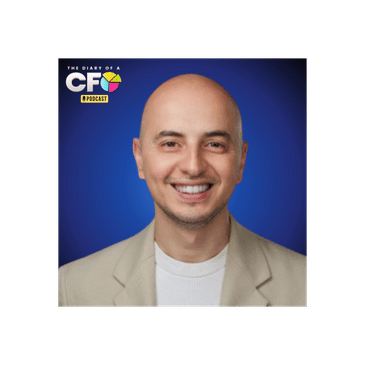


Not every CFO starts as a controller or FP&A lead. Axel Talout shares how banking and private equity shaped his journey, why your “different” background can be your edge, and how to intentionally build a team that fills your blind spots.
Brought to you by insightsoftware. Register for our upcoming webinar:
If becoming a CFO is part of your goals, get your CFO readiness score here: https://thecfo.scoreapp.com/
00:00:12 --> 00:00:16 Today's episode is brought to you by Inside Software,
00:00:16 --> 00:00:19 which provides AI -powered financial reporting
00:00:19 --> 00:00:22 solutions that can save you from spreadsheet
00:00:22 --> 00:00:24 sludge and give you time back for weekend fun
00:00:24 --> 00:00:27 with Spreadsheet Server. You can spot trends
00:00:27 --> 00:00:30 in your data before they become problems and
00:00:30 --> 00:00:34 make faster, smarter decisions. Visit Insightsoftware
00:00:34 --> 00:00:38 .com slash reporting to see how it works. Again,
00:00:38 --> 00:00:40 that's Insightsoftware .com slash reporting.
00:00:40 --> 00:00:42 I will drop the link in the show notes. Back
00:00:42 --> 00:00:45 to the episode. Welcome back to the Diary of
00:00:45 --> 00:00:47 a CFO podcast. The podcast where finance leaders
00:00:47 --> 00:00:50 share the lessons, challenges, and wins that
00:00:50 --> 00:00:52 shape their careers as well as their organizations.
00:00:53 --> 00:00:55 I'm your host, Waseea Kamane, and today I'm super
00:00:55 --> 00:00:58 delighted to have with me Axel Talou. Axel is
00:00:58 --> 00:01:00 a seasoned finance executive with nearly two
00:01:00 --> 00:01:03 decades of experience in banking, private equity,
00:01:03 --> 00:01:07 and finance. As a strategic CFO at a rapidly
00:01:07 --> 00:01:10 scaling e -commerce brand, Axel bridges the gap
00:01:10 --> 00:01:12 between vision and execution, helping companies
00:01:12 --> 00:01:16 think bigger and scale smarter. is also the founder
00:01:16 --> 00:01:19 of the CFO Effect, a vibrant community helping
00:01:19 --> 00:01:22 finance leaders position their finance team as
00:01:22 --> 00:01:25 a strategic partner. Welcome to the show, Axel.
00:01:25 --> 00:01:27 Thank you, Osea. Thank you for the invitation.
00:01:27 --> 00:01:29 I'm so excited to be part of this show. I am
00:01:29 --> 00:01:32 one of your listeners, so I'm glad that I get
00:01:32 --> 00:01:36 to be one of your guests today. Awesome. Awesome.
00:01:36 --> 00:01:38 I'm also excited to have you on because I love
00:01:38 --> 00:01:41 your challenging and sometimes controversial
00:01:41 --> 00:01:45 posts on LinkedIn. So before we get into that,
00:01:45 --> 00:01:47 why don't you tell us about your journey and
00:01:47 --> 00:01:50 the story that you find yourself now as CFO,
00:01:51 --> 00:01:54 knowing that you didn't start in corporate finance.
00:01:54 --> 00:01:57 So it all started when I watched an episode of
00:01:57 --> 00:01:59 Dragon's Den, which is the equivalent of Shark
00:01:59 --> 00:02:02 Tank here in Canada. and I saw the founders of
00:02:02 --> 00:02:05 Transformer Table pitch their product. So something
00:02:05 --> 00:02:08 immediately clicked. I felt inspired by their
00:02:08 --> 00:02:11 passion and vision. And at that time I was a
00:02:11 --> 00:02:14 banker and these were exactly the kind of entrepreneurs
00:02:14 --> 00:02:19 that I wanted to finance. So we met and we instantly
00:02:19 --> 00:02:22 connected. The good news is they were looking
00:02:22 --> 00:02:25 for financing. So they were looking to increase
00:02:25 --> 00:02:28 their financing actually. So I crafted a tailored
00:02:28 --> 00:02:30 financing proposal that perfectly matched their
00:02:30 --> 00:02:34 needs. And I thought it was a done deal. But
00:02:34 --> 00:02:37 instead, they rejected my offer, surprising me
00:02:37 --> 00:02:41 with a counter offer to join their team as chief
00:02:41 --> 00:02:43 strategy officer, not a CFO at that point at
00:02:43 --> 00:02:47 that time. And to be honest, like I never seriously
00:02:47 --> 00:02:50 considered leaving banking, I had previous offers
00:02:50 --> 00:02:54 from clients, but It didn't excite me because
00:02:54 --> 00:02:56 those businesses were weren't growth oriented.
00:02:57 --> 00:02:59 They were lifestyle businesses focused mainly
00:02:59 --> 00:03:04 on dividends. But Transformer Table was different.
00:03:04 --> 00:03:07 Their ambition to scale to a billion dollar company
00:03:07 --> 00:03:11 deeply resonated with me. So I took the leap
00:03:11 --> 00:03:13 of faith and decided to join the company. And
00:03:13 --> 00:03:16 it was my first time working for a small business.
00:03:16 --> 00:03:20 I always worked for big corporations. So. two
00:03:20 --> 00:03:23 weeks in and they handed me the responsibility
00:03:23 --> 00:03:24 for the finance department and said hey do you
00:03:24 --> 00:03:27 want to build our finance department and at that
00:03:27 --> 00:03:30 time the business was pretty small so it was
00:03:30 --> 00:03:33 25 million dollar revenue and they had eight
00:03:33 --> 00:03:36 people in the finance department which in my
00:03:36 --> 00:03:40 opinion was far too many people especially given
00:03:40 --> 00:03:43 the inefficiency of that department it's crazy
00:03:43 --> 00:03:46 but it took 45 to 60 days to close the books
00:03:47 --> 00:03:50 And the data was unreliable and constantly changing.
00:03:51 --> 00:03:54 So it was like driving a car, but looking at
00:03:54 --> 00:03:58 the rear view mirror. On my side, I'd never been
00:03:58 --> 00:04:01 a CFO, and I knew that would be a big challenge,
00:04:01 --> 00:04:05 but I had a clear vision. And my vision was that
00:04:05 --> 00:04:09 the finest department should be the intelligence
00:04:09 --> 00:04:12 hub of the company where we gather data in the
00:04:12 --> 00:04:15 most accurate way and the most reliable way.
00:04:15 --> 00:04:19 And we transform that data into insights. So
00:04:19 --> 00:04:22 we help other departments take better decision
00:04:22 --> 00:04:25 or at least more informed decision. And to execute
00:04:25 --> 00:04:29 on that vision, I simplified my strategy around
00:04:29 --> 00:04:33 three levers. So people, skills and systems.
00:04:33 --> 00:04:39 First, I hired a corporate controller and The
00:04:39 --> 00:04:43 point of that was to anchor the team around a
00:04:43 --> 00:04:46 solid, seasoned professional and immediately
00:04:46 --> 00:04:50 creating a talent flywheel, where when you hire
00:04:50 --> 00:04:53 talent, it attracts other talent. The second
00:04:53 --> 00:04:55 lever was skills, upgrading skills, not just
00:04:55 --> 00:04:59 hiring data entry staff, but analytical thinkers
00:04:59 --> 00:05:02 capable of spotting anomalies and driving real
00:05:02 --> 00:05:06 value. Finally, we revamped our systems. And
00:05:06 --> 00:05:09 when I talk about system, most people think I
00:05:09 --> 00:05:12 am talking about the ERP system, but systems,
00:05:13 --> 00:05:17 in my view, is not only the ERP. Yes, we've implemented
00:05:17 --> 00:05:20 a new ERP system, a new FPNA tool so that we
00:05:20 --> 00:05:25 could... spend more time analyzing data instead
00:05:25 --> 00:05:30 of filtering and cleaning data, but it also processes
00:05:30 --> 00:05:33 and reviewing your chart of account and designing
00:05:33 --> 00:05:38 that into a strategic chart of account and having
00:05:38 --> 00:05:42 internal controls to make sure that the processes
00:05:42 --> 00:05:45 are followed by the rest of the company because
00:05:45 --> 00:05:49 your systems, I mean your software is only as
00:05:49 --> 00:05:53 good as the people using it. Fast forward three
00:05:53 --> 00:05:57 and a half years later, we have quadrupled in
00:05:57 --> 00:06:01 revenue. We have increased the number of products
00:06:01 --> 00:06:04 that we have. We have more channels. We're in
00:06:04 --> 00:06:07 multiple countries right now. So we've increased
00:06:07 --> 00:06:11 the. complexity of the business, but we kept
00:06:11 --> 00:06:14 the same number of people. So we still eight
00:06:14 --> 00:06:17 in the finance department and we close not in
00:06:17 --> 00:06:21 60 days like we used to, but in only five days.
00:06:21 --> 00:06:24 And that has been eight that and we have been
00:06:24 --> 00:06:27 able to do this and to absorb this growth and
00:06:27 --> 00:06:30 complexity just by improving the processes, bring
00:06:30 --> 00:06:33 the right kind of people and having automation
00:06:33 --> 00:06:38 embedded in the finance department. But Most
00:06:38 --> 00:06:41 importantly for me is that finance evolved from
00:06:41 --> 00:06:45 an overlooked back office function to the strategic
00:06:45 --> 00:06:48 core of our business, where now we have people
00:06:48 --> 00:06:51 proactively seeking our insights and asking us,
00:06:51 --> 00:06:54 what does finance think about this? Can we build
00:06:54 --> 00:06:57 a model to validate this? Which is something
00:06:57 --> 00:07:00 that never happened before. And this shows me
00:07:00 --> 00:07:04 that it is possible when finance plays a the
00:07:04 --> 00:07:07 role of the strategic partner that finance becomes
00:07:07 --> 00:07:12 an invaluable player at the heart of value creation.
00:07:13 --> 00:07:16 So when you started, you started as chief strategic
00:07:16 --> 00:07:20 officer. So at which point did you become CFO?
00:07:20 --> 00:07:23 Was it after those two weeks? Was it after you
00:07:23 --> 00:07:26 actually revamped the team? When did you officially
00:07:26 --> 00:07:30 become a CFO and how were you still also handling
00:07:30 --> 00:07:33 strategy? Yeah, so I'm still handling strategy
00:07:33 --> 00:07:36 and the CFO role. And what we did is that we
00:07:36 --> 00:07:40 mixed them together because the CFO role is also
00:07:40 --> 00:07:44 a strategic role or they have a role to play
00:07:44 --> 00:07:47 in the strategy. It was after two weeks, really
00:07:47 --> 00:07:50 after they said, yeah, they said, hey, by the
00:07:50 --> 00:07:52 way, like, we want to improve our finance department.
00:07:53 --> 00:07:55 Do you want a? build the finance department from
00:07:55 --> 00:07:57 scratch. And I was like, okay, I'm on to the
00:07:57 --> 00:08:01 challenge. Oh, wow. Okay. So when you came in
00:08:01 --> 00:08:05 at this high growth stage company, what made
00:08:05 --> 00:08:08 your investment banking and P background the
00:08:08 --> 00:08:11 right fit for them? Because initially, they had
00:08:11 --> 00:08:13 you a strategy. But what do you think helped
00:08:13 --> 00:08:17 them say you can also ramp up the finance department
00:08:17 --> 00:08:20 and take over that? Yeah, so You know, people
00:08:20 --> 00:08:23 often lump banking and private equity together,
00:08:23 --> 00:08:26 but the truth is they're fundamentally different
00:08:26 --> 00:08:29 lenses. When you look at the business from a
00:08:29 --> 00:08:32 banker perspective, you focus heavily on cash
00:08:32 --> 00:08:35 flows, which is great. OK, but your goal is to
00:08:35 --> 00:08:37 ensure that business generate enough cash to
00:08:37 --> 00:08:42 repay its debt. The mindset. is protective and
00:08:42 --> 00:08:46 risk focused. But private equity looks beyond
00:08:46 --> 00:08:49 just debt repayment. You're constantly thinking,
00:08:49 --> 00:08:52 how can we increase the value of this business
00:08:52 --> 00:08:55 so we can eventually exit at much higher multiple
00:08:55 --> 00:08:59 down the road? Bringing this dual perspective
00:08:59 --> 00:09:02 to Transformer Table was crucial in my opinion.
00:09:03 --> 00:09:05 Thank you, Glens, gave me discipline around cash
00:09:05 --> 00:09:07 flow management, working capital optimization
00:09:07 --> 00:09:11 and financial rigor to ensure that we maintain
00:09:11 --> 00:09:14 a strong, healthy balance sheet. But the private
00:09:14 --> 00:09:18 equity mindset pushed me and my team to consistently
00:09:18 --> 00:09:21 ask, how can finance proactively help other departments
00:09:21 --> 00:09:24 identify opportunities to capture more value?
00:09:24 --> 00:09:27 How can we enhance profitability, efficiency
00:09:27 --> 00:09:32 and strategic growth? So together, These two
00:09:32 --> 00:09:34 perspectives help transform a table, not just
00:09:34 --> 00:09:39 grow rapidly, but also sustainably, which today
00:09:39 --> 00:09:42 make like we have a clean balance sheet, healthy
00:09:42 --> 00:09:45 cash flows and the financial strength to fund
00:09:45 --> 00:09:48 our ambitions, future plan, because you might
00:09:48 --> 00:09:50 want to be a billion dollar company. And then
00:09:50 --> 00:09:53 we all want to go there. And I mean, me, some
00:09:53 --> 00:09:55 people are already there, but. That's where we
00:09:55 --> 00:09:58 want to go. But if you don't have the means for
00:09:58 --> 00:10:01 your ambitions, that becomes only a wishful thinking.
00:10:01 --> 00:10:04 Right. The balance between casual discipline
00:10:04 --> 00:10:08 and strategic value creation is exactly what
00:10:08 --> 00:10:11 I think that dual background was instrumental
00:10:11 --> 00:10:15 to our success as a company. And now now that
00:10:15 --> 00:10:19 you are in the role, you mentioned that the way
00:10:19 --> 00:10:24 you. organize your team was ve because you hired
00:10:24 --> 00:10:29 first a I think is brilliant becaus don't realize
00:10:29 --> 00:10:35 how much t important to the CFO. W for example,
00:10:35 --> 00:10:41 but if you're correct, there goes your that you
00:10:41 --> 00:10:48 were never a con You know, like a lot of people
00:10:48 --> 00:10:51 do the mistake that they want to hire people
00:10:51 --> 00:10:55 who, you know, are similar to them. The way I
00:10:55 --> 00:10:58 look at things is I wanted to hire people who
00:10:58 --> 00:11:02 would complement my skills. And as you said,
00:11:02 --> 00:11:05 I've never been a controller and I don't know,
00:11:05 --> 00:11:07 you know, what they do. But what I know is your
00:11:07 --> 00:11:11 hand, right hand is the controller and everything
00:11:11 --> 00:11:14 starts at the data level. So if your accounting
00:11:14 --> 00:11:17 is wrong, Everything else is wrong. Forget about
00:11:17 --> 00:11:19 your FPNA. Forget about anything else. Like it
00:11:19 --> 00:11:23 does not matter because garbage in, garbage out.
00:11:23 --> 00:11:26 And I know it's cliche to say that, but this
00:11:26 --> 00:11:29 is the most important rule of finance. You know,
00:11:29 --> 00:11:32 like if you start with the wrong data, your output
00:11:32 --> 00:11:34 is going to be wrong. Same thing with your model.
00:11:34 --> 00:11:38 You know, your financial model. How I identify
00:11:38 --> 00:11:41 the controller for me, it was important that
00:11:41 --> 00:11:44 first of all, What's important for me is leadership.
00:11:45 --> 00:11:47 Okay. So what kind of leadership do you bring
00:11:47 --> 00:11:50 to the team? I wanted somebody who is going to
00:11:50 --> 00:11:52 grow the team, nurture the team, and then have
00:11:52 --> 00:11:55 them go to the next level because we're bringing
00:11:55 --> 00:11:58 talented people, skilled people, and I don't
00:11:58 --> 00:12:00 want them to feel like they are numbers. You
00:12:00 --> 00:12:03 know, I want them to grow in their role and to
00:12:03 --> 00:12:05 learn from somebody who has been there, done
00:12:05 --> 00:12:08 that, and has an experience that they want to
00:12:08 --> 00:12:11 share. So that was the first and the most important
00:12:11 --> 00:12:15 factor in my you know, research. And then obviously,
00:12:15 --> 00:12:17 the second one, I wanted somebody who's been
00:12:17 --> 00:12:19 there done that I didn't want to be the guinea
00:12:19 --> 00:12:23 pig of somebody else, you know, and why I was
00:12:23 --> 00:12:26 already a CFO trying, you know, so I didn't need
00:12:26 --> 00:12:29 somebody else to do the same thing. And the person
00:12:29 --> 00:12:32 that I hired is still with us. And he did an
00:12:32 --> 00:12:36 amazing job. Seriously, he built a strong team.
00:12:36 --> 00:12:40 And he's very caring with his team. That was
00:12:40 --> 00:12:44 instrumental in how finance has been able to
00:12:44 --> 00:12:47 increase credibility because going back to that
00:12:47 --> 00:12:52 data, if your data is wrong, nothing would affect
00:12:52 --> 00:12:54 the credibility of finance department. If you
00:12:54 --> 00:12:57 bring in data and then the next day you come
00:12:57 --> 00:13:01 up with a different data and the next day you
00:13:01 --> 00:13:04 come up with another set of data, so that would
00:13:04 --> 00:13:08 ruin the credibility of finance and data is our
00:13:08 --> 00:13:11 gold in finance. Oh, yeah. Oh, yeah. Definitely.
00:13:11 --> 00:13:14 And I like how you said it's good to find people
00:13:14 --> 00:13:17 that are not just similar to you, but they can
00:13:17 --> 00:13:20 really complement you in making the whole function
00:13:20 --> 00:13:24 better. So my question for you now in how you
00:13:24 --> 00:13:27 bring your whole team together is, especially
00:13:27 --> 00:13:30 now that you guys still close in five days, how
00:13:30 --> 00:13:34 would you describe how you bring people in and
00:13:34 --> 00:13:36 get them into that culture? Because sometimes
00:13:36 --> 00:13:38 it can be repetitive, sometimes it can be overwhelming.
00:13:38 --> 00:13:41 How do you keep your staff engaged and still
00:13:41 --> 00:13:46 excited to do the work? There's no secret, to
00:13:46 --> 00:13:49 be honest. So it's intrinsic. So you pick the
00:13:49 --> 00:13:52 right kind of people. So people who have that
00:13:52 --> 00:13:56 passion, who have that willingness to learn and
00:13:56 --> 00:14:00 grow are the ones who are going to continue doing
00:14:00 --> 00:14:03 a good job over the long run. OK, that's the
00:14:03 --> 00:14:06 first thing. So. Find the right kind of people
00:14:06 --> 00:14:09 when it comes to the growth mindset. And this
00:14:09 --> 00:14:12 is the thing that I'm looking for when I, you
00:14:12 --> 00:14:15 know, interview people. I don't care, like if
00:14:15 --> 00:14:18 you did it before for some some roles like at
00:14:18 --> 00:14:21 the junior level, I don't care about your skills.
00:14:21 --> 00:14:24 What I care about is your attitude and your growth
00:14:24 --> 00:14:26 mindset. And are you willing, you know, to grow,
00:14:26 --> 00:14:29 to evolve, especially in a fast growing company
00:14:29 --> 00:14:31 in a fast growing environment? So that's the
00:14:31 --> 00:14:35 first thing. The second thing is to understand
00:14:35 --> 00:14:38 the goals of each and every person in your team.
00:14:38 --> 00:14:41 These are not numbers. These are people with
00:14:41 --> 00:14:45 aspirations, with goals. So how can we align
00:14:45 --> 00:14:49 the goal of that person with the goal of the
00:14:49 --> 00:14:52 company? And this is where you find the best
00:14:52 --> 00:14:54 synergies, where one plus one does not create
00:14:54 --> 00:14:57 two, but three, four, five, you know? So this
00:14:57 --> 00:15:00 is what I like to do with the people. want to
00:15:00 --> 00:15:02 know them. I want to know, you know, what makes
00:15:02 --> 00:15:07 them thrive and what inspires them. So that's
00:15:07 --> 00:15:10 on, you know, more of the leadership level and,
00:15:10 --> 00:15:13 you know, hiring level, I would say. And what
00:15:13 --> 00:15:17 we do every month, I have what I call the the
00:15:17 --> 00:15:19 value pyramid. OK, the finest value pyramid.
00:15:20 --> 00:15:22 I came up with this name. It's not a real name,
00:15:22 --> 00:15:26 but what it is, it shows them. Like, how do we
00:15:26 --> 00:15:29 go from reporting, which is the base of the pyramid,
00:15:30 --> 00:15:32 again, going back to the data and the importance
00:15:32 --> 00:15:35 of the accounting to the top of the pyramid,
00:15:35 --> 00:15:38 which is influencing strategy. And there are
00:15:38 --> 00:15:41 multiple layers. And we discussed this with the
00:15:41 --> 00:15:45 team. How are we doing when it comes to the value
00:15:45 --> 00:15:48 pyramid? Are we in the reporting? Are we in this
00:15:48 --> 00:15:52 space? And it is an iterative circle where it's
00:15:52 --> 00:15:55 not like, hey, you build that base and you're
00:15:55 --> 00:15:57 good to go because even when you clean the data,
00:15:58 --> 00:16:01 even when you have the right information coming
00:16:01 --> 00:16:04 into your system, it's consistently you need
00:16:04 --> 00:16:08 to protect that integrity. You need to make sure
00:16:08 --> 00:16:11 that. You know, the new people coming in, in
00:16:11 --> 00:16:14 the company, not only your department, because
00:16:14 --> 00:16:17 the data is flowing from the different departments,
00:16:17 --> 00:16:20 but you need to make sure that everybody is following
00:16:20 --> 00:16:23 the processes, that you still understand the
00:16:23 --> 00:16:24 data, you still understand where it's coming
00:16:24 --> 00:16:28 from and its meaning, especially in a fast growing
00:16:28 --> 00:16:31 company, because we're adding new products, new
00:16:31 --> 00:16:35 channel, new market. So how are... our partners
00:16:35 --> 00:16:38 internally, you know, bringing in the data and
00:16:38 --> 00:16:40 how are we, you know, transforming, cleaning
00:16:40 --> 00:16:42 this data and then converting it into insights
00:16:42 --> 00:16:46 for the rest of the company. So this is something
00:16:46 --> 00:16:49 that I spend a lot of time discussing with my
00:16:49 --> 00:16:52 team and explaining to them what is the value
00:16:52 --> 00:16:55 that finance brings to the table. So I make sure
00:16:55 --> 00:16:58 that my vision is clear and that we're all rowing
00:16:58 --> 00:17:00 in the same direction and at the same speed.
00:17:01 --> 00:17:03 Now let's take a quick break to talk about a
00:17:03 --> 00:17:06 problem most finance teams face. You spend hours
00:17:06 --> 00:17:08 wrestling with data from different systems, building
00:17:08 --> 00:17:11 reports manually, and by the time you are done,
00:17:11 --> 00:17:14 the insights are already outdated. That's where
00:17:14 --> 00:17:17 today's sponsor comes in. Insight Software gives
00:17:17 --> 00:17:20 you a financing AI power tools that automatically
00:17:20 --> 00:17:23 pull data together and deliver super fast insight.
00:17:24 --> 00:17:26 Don't leave your team stuck in spreadsheets.
00:17:26 --> 00:17:29 Let them flex their talents as strategic advisors
00:17:29 --> 00:17:33 who guide smart business decisions. I'm hosting
00:17:33 --> 00:17:36 a webinar in partnership with Inside Software
00:17:36 --> 00:17:39 this October 15th. It's called Get Out of the
00:17:39 --> 00:17:42 Reporting Rut. So visit insidesoftware .com slash
00:17:42 --> 00:17:46 October to register and transform how your finance
00:17:46 --> 00:17:49 team operates. I'll also drop the link in the
00:17:49 --> 00:17:52 show note. Love it. Now I want to hear all the
00:17:52 --> 00:17:54 component of that pyramid. Like how did you came
00:17:54 --> 00:17:56 up with it? What are the different components?
00:17:56 --> 00:17:59 So, you know, for our listeners and viewers,
00:17:59 --> 00:18:02 how can I also bring it to their companies? Okay.
00:18:02 --> 00:18:04 So that's a good question. I did not come up
00:18:04 --> 00:18:08 with that pyramid. Okay. So I, I followed the
00:18:08 --> 00:18:12 secret CFO or CFO secrets. I don't know. Secret
00:18:12 --> 00:18:15 CFO. Yes. I want to pay tribute to the person
00:18:15 --> 00:18:18 who shared this pyramid and it's Andrew Lynch.
00:18:18 --> 00:18:22 on Twitter. So the base of the pyramid is transaction
00:18:22 --> 00:18:25 processing. Okay, so how are you bringing your
00:18:25 --> 00:18:29 APs and your AR? And then it's reporting, budgeting
00:18:29 --> 00:18:33 and forecasting, analysis and insight and strategy
00:18:33 --> 00:18:37 at the top of the pyramid. But you can't influence
00:18:37 --> 00:18:40 strategy if you have, you know, a bad transaction
00:18:40 --> 00:18:43 and processing because that means that your reporting
00:18:43 --> 00:18:45 is wrong and you cannot have a good budgeting
00:18:45 --> 00:18:48 and forecasting if your data is wrong. So it
00:18:48 --> 00:18:52 all flows naturally towards the top of the pyramid
00:18:52 --> 00:18:57 and it also helps the create a flywheel for the
00:18:57 --> 00:19:02 finance department where you inspire trust because
00:19:02 --> 00:19:07 your data is consistent and clean. I'm traumatized
00:19:07 --> 00:19:10 by that because when I joined the data was not
00:19:10 --> 00:19:12 clean and was not, you know, you cannot trust
00:19:12 --> 00:19:15 the data. Oh, you're not the only one. Trust
00:19:15 --> 00:19:19 me. One of my first episode on this podcast was
00:19:19 --> 00:19:21 what they don't tell you about being a CFO, right?
00:19:22 --> 00:19:25 So curious to hear from you. What are some of
00:19:25 --> 00:19:28 the things besides, you know, coming in and having
00:19:28 --> 00:19:30 challenged the data, what are the things that
00:19:30 --> 00:19:32 caught you by surprise or that you had to figure
00:19:32 --> 00:19:35 out very fast once you stepped in the CFO role?
00:19:35 --> 00:19:38 When I stepped into the CFO seat, what I had
00:19:38 --> 00:19:42 to learn fast was that finance isn't primarily
00:19:42 --> 00:19:44 about numbers. And I know I spoke a lot about
00:19:44 --> 00:19:48 numbers, but it's about people. I initially thought
00:19:48 --> 00:19:50 my biggest priority would be cleaning up data,
00:19:51 --> 00:19:54 setting processes and upgrading systems. But
00:19:54 --> 00:19:58 what truly became clear was that the success
00:19:58 --> 00:20:01 of these initiatives depended completely on the
00:20:01 --> 00:20:04 people behind them. And also my ability to communicate
00:20:04 --> 00:20:08 effectively with those people. So the first major
00:20:08 --> 00:20:11 challenge was building trust. I came in full
00:20:11 --> 00:20:15 of ambition, big ideas and a clear vision for
00:20:15 --> 00:20:17 turning finance department into the intelligence
00:20:17 --> 00:20:21 hub of the company. But I hadn't earned the internal
00:20:21 --> 00:20:24 credibility yet. Naturally, you know, when you
00:20:24 --> 00:20:27 join in a new organization, people feel threatened
00:20:27 --> 00:20:31 by changes, especially when they don't understand
00:20:31 --> 00:20:35 those changes. and they don't understand what
00:20:35 --> 00:20:38 you're trying to achieve. So I faced a lot of
00:20:38 --> 00:20:43 unexpected pushback, but in hindsight, I do understand
00:20:43 --> 00:20:47 why there was a pushback at that time. I very
00:20:47 --> 00:20:50 quickly realized that the only way forward was
00:20:50 --> 00:20:54 to actively build relationship, generally listen
00:20:54 --> 00:20:57 to people, and demonstrate that finance was not
00:20:57 --> 00:21:00 there to be a watchdog, but we were there to
00:21:00 --> 00:21:06 be a partner. And the second thing was the importance
00:21:06 --> 00:21:09 of change management. Finance might seem like
00:21:09 --> 00:21:12 a numbers game, but those numbers are just the
00:21:12 --> 00:21:16 outcome of human actions and decisions. naturally
00:21:16 --> 00:21:20 resist change, especially if it's unclear how
00:21:20 --> 00:21:23 it benefits them directly. So I quickly learned
00:21:23 --> 00:21:26 that every initiative needed clear, transparent
00:21:26 --> 00:21:29 communication about why we were making changes
00:21:29 --> 00:21:34 and specifically how these changes would positively
00:21:34 --> 00:21:37 impact the day -to -day life of those people.
00:21:37 --> 00:21:39 And I'm talking about the other departments.
00:21:39 --> 00:21:41 It's easier to bring in changes to your team,
00:21:41 --> 00:21:45 but it's harder to influence other departments.
00:21:45 --> 00:21:49 And this is why influence is one of the most
00:21:49 --> 00:21:51 important skills that you need to learn to become
00:21:51 --> 00:21:56 an effective CFO. The third and last one is,
00:21:56 --> 00:22:00 and maybe the most underestimated one, is you
00:22:00 --> 00:22:02 truly need to understand your audience and craft
00:22:02 --> 00:22:06 your message accordingly. Coming from a banking
00:22:06 --> 00:22:08 background, I was used to speaking the language
00:22:08 --> 00:22:10 of sophisticated financial professional, which
00:22:10 --> 00:22:13 we call jargon, you know, and suddenly, I transfer
00:22:13 --> 00:22:16 my table, I was working with talented people,
00:22:16 --> 00:22:19 smart people, but who simply did not share the
00:22:19 --> 00:22:22 same financial vocabulary or perspective. Initially,
00:22:23 --> 00:22:25 I kept repeating myself and I'm like, why are
00:22:25 --> 00:22:27 they not understanding what I'm saying? It's
00:22:27 --> 00:22:30 so simple and clear, you know, the real breakthrough
00:22:30 --> 00:22:34 came or happened when I shifted my message into
00:22:34 --> 00:22:38 their own language and I started explaining finance
00:22:38 --> 00:22:41 concepts in terms directly relevant to their
00:22:41 --> 00:22:43 specific role, challenges and goals. I give you
00:22:43 --> 00:22:46 an example. So for example, a lot of people don't
00:22:46 --> 00:22:48 understand the balance sheet and it's hard for
00:22:48 --> 00:22:51 them to visualize what's a balance sheet. But
00:22:51 --> 00:22:53 when you bring it down at their level and tell
00:22:53 --> 00:22:55 them, hey, do you have a house? Do you have a
00:22:55 --> 00:22:57 mortgage? OK, your house is your asset and your
00:22:57 --> 00:23:00 mortgage is the liability that you have on your
00:23:00 --> 00:23:03 house. Then they can suddenly relate to what
00:23:03 --> 00:23:06 you're saying. And it speaks to them in a different
00:23:06 --> 00:23:10 level than just repeating your jargon and your
00:23:10 --> 00:23:14 financial terms. So together. These lessons about
00:23:14 --> 00:23:17 trust, change management, and tailored communication
00:23:17 --> 00:23:21 were probably one of the most significant earlier
00:23:21 --> 00:23:24 realizations, but also they are the realizations
00:23:24 --> 00:23:28 that helped me turn the finance department into
00:23:28 --> 00:23:31 a strategic partner. Awesome. Thank you so much
00:23:31 --> 00:23:34 for sharing that. And I know you sometimes describe
00:23:34 --> 00:23:38 yourself as a blended CFO, so operator, strategist,
00:23:39 --> 00:23:42 and innovator, investor, sorry. What does it
00:23:42 --> 00:23:45 look like in your day -to -day to be an operator,
00:23:45 --> 00:23:47 strategist, and investor at the same time? So
00:23:47 --> 00:23:50 it feels like you're blending all your experience
00:23:50 --> 00:23:53 from private equity, from banking, all. How does
00:23:53 --> 00:23:54 it look like in your day -to -day, all in your
00:23:54 --> 00:23:59 week? Yeah, so when I describe myself as blended
00:23:59 --> 00:24:02 CFO, operator, strategist, and investor, what
00:24:02 --> 00:24:05 I'm really talking about is how I approach finance
00:24:05 --> 00:24:08 beyond just numbers on a spreadsheet. So first,
00:24:09 --> 00:24:12 As an operator, I strongly believe that the best
00:24:12 --> 00:24:16 CFOs regularly leave their desk and go actively
00:24:16 --> 00:24:19 discuss with the other departments. So it's not
00:24:19 --> 00:24:21 about spreadsheets. As I said it earlier, it's
00:24:21 --> 00:24:25 about humans. So members are merely the reflection
00:24:25 --> 00:24:27 of the human actions and decision happening on
00:24:27 --> 00:24:32 the ground. If you don't deeply understand the
00:24:32 --> 00:24:35 context behind those actions, it's impossible
00:24:35 --> 00:24:37 to translate number into meaningful insights
00:24:38 --> 00:24:40 or into actionable strategies that are going
00:24:40 --> 00:24:43 to help your internal clients or your internal
00:24:43 --> 00:24:47 partners. So to be clear, I don't want people
00:24:47 --> 00:24:49 to think that I'm saying you need to go and do
00:24:49 --> 00:24:53 the job of the head of operations. What I'm saying,
00:24:54 --> 00:24:57 it's about spending time with people from operations,
00:24:58 --> 00:25:01 marketing, sales, and supply chain to understand
00:25:01 --> 00:25:04 their challenges and the realities firsthand.
00:25:04 --> 00:25:09 in on the ground, not just behind the spreadsheet.
00:25:09 --> 00:25:13 And that's how finance, in my opinion, truly
00:25:13 --> 00:25:17 becomes a trusted business partner. The second
00:25:17 --> 00:25:21 one is strategist. So when I refer to strategist,
00:25:22 --> 00:25:25 it's the responsibility of the CFO is not to
00:25:25 --> 00:25:28 come up with a strategy. The CEO typically own
00:25:28 --> 00:25:32 the vision, but our job is to provide clarity
00:25:32 --> 00:25:36 around the path to achieving that vision. And
00:25:36 --> 00:25:39 we use data to identify opportunities, anticipate
00:25:39 --> 00:25:43 risks, and guide teams towards decisions that
00:25:43 --> 00:25:46 align with the overall strategic objectives.
00:25:46 --> 00:25:50 So we don't just deliver numbers, but we need
00:25:50 --> 00:25:53 to be able to interpret these numbers and help
00:25:53 --> 00:25:57 the business stay on course and adapt proactively
00:25:57 --> 00:26:01 when needed. So the investor role is about capital
00:26:01 --> 00:26:04 allocation and perhaps the single most critical
00:26:04 --> 00:26:08 aspect of being an effective CFO. At its core,
00:26:09 --> 00:26:13 this involves deciding how to best deploy limited
00:26:13 --> 00:26:17 resources towards unlimited opportunities. And
00:26:17 --> 00:26:20 this is where a lot of people miss the boat because
00:26:20 --> 00:26:24 people get tend to be distracted by multiple
00:26:24 --> 00:26:28 opportunities. But we could invest in different
00:26:28 --> 00:26:32 channels and so on and so forth. But we don't
00:26:32 --> 00:26:34 want to spread ourselves thin. What is the channel?
00:26:34 --> 00:26:37 What is the opportunity that will bring the highest
00:26:37 --> 00:26:41 ROI for our team, for our business? And we're
00:26:41 --> 00:26:44 constantly asking, are these investments aligned
00:26:44 --> 00:26:49 with our long -term goals? I often emphasize
00:26:49 --> 00:26:52 that traditional budgeting is outdated because
00:26:52 --> 00:26:57 it's too rigid, in my opinion. And today we live
00:26:57 --> 00:27:00 in a rapidly changing business environment. We've
00:27:00 --> 00:27:02 seen this recently with the tariffs. Nobody was
00:27:02 --> 00:27:05 expecting that. And you have to take that into
00:27:05 --> 00:27:08 account in your business. And you have to understand
00:27:08 --> 00:27:11 rapidly how this is going to affect your business
00:27:11 --> 00:27:14 and what kind of actions are you going to put
00:27:14 --> 00:27:19 in place to keep your business profitable and
00:27:19 --> 00:27:22 to keep generating sustainable cash flows in
00:27:22 --> 00:27:27 the future. So instead of going with rigid budget,
00:27:27 --> 00:27:30 effective CFO should think of budgeting as dynamic
00:27:30 --> 00:27:34 capital allocation. You test, you measure, you
00:27:34 --> 00:27:37 adjust, and you reallocate resources based on
00:27:37 --> 00:27:39 evolving realities and emerging opportunities.
00:27:40 --> 00:27:45 This is where flexibility is crucial. because
00:27:45 --> 00:27:49 we live in a fast moving world. And if you're
00:27:49 --> 00:27:51 locked in rigid plan, then you're guaranteed
00:27:51 --> 00:27:55 to miss the ultimate destination. So this is
00:27:55 --> 00:27:59 the three facets of the strategist, operator
00:27:59 --> 00:28:03 and investor. Thank you for sharing that. And
00:28:03 --> 00:28:05 you know, I'm glad you brought up the fact of
00:28:05 --> 00:28:08 the change, the pace of change we're facing now
00:28:08 --> 00:28:11 and how we have to be agile, how much we need
00:28:11 --> 00:28:14 to be flexible and all that. When you look at
00:28:14 --> 00:28:18 your amazing background in P .E. and in banking,
00:28:19 --> 00:28:21 working at a growing company, what are some of
00:28:21 --> 00:28:24 the things people often missed? Because you mentioned
00:28:24 --> 00:28:26 sometimes you may be focused on the opportunities,
00:28:26 --> 00:28:29 but you tend to forget all the things like the
00:28:29 --> 00:28:33 bankers may look at or private equity or other
00:28:33 --> 00:28:36 things could come into play. What are some of
00:28:36 --> 00:28:38 the things that you think people often missed
00:28:38 --> 00:28:41 and how can we overcome that? What do you mean
00:28:41 --> 00:28:45 by people often miss and in which sense? Sure.
00:28:45 --> 00:28:49 So let's say I'm a small company and I just want
00:28:49 --> 00:28:52 to grow to a billion dollar. Right. So I may
00:28:52 --> 00:28:54 be focused on, oh, let me get more customers.
00:28:54 --> 00:28:57 For example, I may be focused on things other
00:28:57 --> 00:29:01 than my capital stack, or I may be thinking about
00:29:01 --> 00:29:04 my capital stack and be like, OK, maybe I don't
00:29:04 --> 00:29:07 need to take that risk. How do you navigate those
00:29:07 --> 00:29:10 kind of things in a in an environment that's
00:29:10 --> 00:29:13 changing so fast. The most important thing is
00:29:13 --> 00:29:17 to be flexible and have flexible models. A lot
00:29:17 --> 00:29:20 of people think complexity when they build their
00:29:20 --> 00:29:23 financial model, for example, and it's good.
00:29:24 --> 00:29:27 It gives you a good perspective and it takes
00:29:27 --> 00:29:30 all the different aspects of the business. But
00:29:30 --> 00:29:33 how can you simplify that and take it into account?
00:29:34 --> 00:29:36 What are the drivers of your revenue? What are
00:29:36 --> 00:29:39 the drivers of your costs and how can you build
00:29:39 --> 00:29:43 something that is agile and that can help you,
00:29:43 --> 00:29:46 for example, when you have new tariffs, take
00:29:46 --> 00:29:48 that into account and see what is the impact
00:29:48 --> 00:29:52 on your business. So that flexibility is for
00:29:52 --> 00:29:55 me very important to be able to take your business
00:29:55 --> 00:29:57 to the next level in a fast growing environment.
00:29:57 --> 00:30:01 The second thing is start with your goal. You
00:30:01 --> 00:30:04 said, hey, I want to reach the billion dollar
00:30:04 --> 00:30:08 mark and Keep that goal as your North Star. One
00:30:08 --> 00:30:10 thing that I've noticed being a banker and working
00:30:10 --> 00:30:13 with a lot of entrepreneurs and CFOs is they
00:30:13 --> 00:30:15 keep changing. So today their strategy is this,
00:30:15 --> 00:30:18 tomorrow their strategy is that. No, your strategy
00:30:18 --> 00:30:21 should not change. So you have a goal, that's
00:30:21 --> 00:30:23 your destination. Let's say we're going from
00:30:23 --> 00:30:27 New York to Paris and The path could change,
00:30:27 --> 00:30:30 you know, towards that destination based on what's
00:30:30 --> 00:30:32 happening, but the destination stays the same.
00:30:33 --> 00:30:36 And this is the piece that a lot of people miss.
00:30:37 --> 00:30:39 And based on that, what are the resources that
00:30:39 --> 00:30:42 I need to allocate to reach that destination?
00:30:43 --> 00:30:47 Do I have the skills, the capital to be able
00:30:47 --> 00:30:49 to reach that destination? And this is what a
00:30:49 --> 00:30:53 good budgeting does, is you ask the right questions
00:30:53 --> 00:30:58 you challenge the assumptions so that you rework
00:30:58 --> 00:31:01 maybe your goal and then you know what like the
00:31:01 --> 00:31:03 billion dollar is not this year but it's maybe
00:31:03 --> 00:31:06 in three years and this year we could do 200
00:31:06 --> 00:31:09 because this is what we need in terms of human
00:31:09 --> 00:31:12 resources and we've seen it you know like in
00:31:12 --> 00:31:15 the US and in Canada the unemployment rate is
00:31:15 --> 00:31:18 so low that it's very hard to hire people and
00:31:18 --> 00:31:21 what is the capital that I have access to? So
00:31:21 --> 00:31:24 what are the cash flows that are coming in that
00:31:24 --> 00:31:27 I can use to reinvest in my business and take
00:31:27 --> 00:31:31 it to the next level? So this is what a good
00:31:31 --> 00:31:33 CFO could bring to the table, asking the right
00:31:33 --> 00:31:36 question, challenging the assumptions, and then
00:31:36 --> 00:31:39 helping the rest of the executive team build
00:31:39 --> 00:31:42 a plan that makes sense and making sure that
00:31:42 --> 00:31:45 they follow the path towards the destination
00:31:45 --> 00:31:47 and they don't forget about the destination.
00:31:47 --> 00:31:51 I love it. And I think that's exactly what we
00:31:51 --> 00:31:54 often miss is the destination. Because I feel
00:31:54 --> 00:31:57 like even as human beings in social media, for
00:31:57 --> 00:32:00 example, your goals change every day based on
00:32:00 --> 00:32:03 what you may see. And it's so easy to get distracted.
00:32:04 --> 00:32:07 You hear AI. You hear vacation in the Bahamas.
00:32:07 --> 00:32:10 And you're like, OK, what is my goal again? But
00:32:10 --> 00:32:12 your goal was Paris. So I love it. Thank you
00:32:12 --> 00:32:14 so much for sharing that. Well, I'll do the Bahamas
00:32:14 --> 00:32:19 anytime. I know, right? You're in Canada, so
00:32:19 --> 00:32:24 I can see that for sure. So what would you say
00:32:24 --> 00:32:27 is some advice you would give to someone with
00:32:27 --> 00:32:30 a quote -unquote non -traditional background
00:32:30 --> 00:32:34 that is aiming for the CFO seat? So my best advice
00:32:34 --> 00:32:36 for someone with a non -traditional background
00:32:36 --> 00:32:38 and quote unquote, you know, I don't think there's
00:32:38 --> 00:32:40 a traditional or non -traditional, but we're
00:32:40 --> 00:32:42 talking about somebody who's not been a controller
00:32:42 --> 00:32:47 or an FPNA. So is really embrace your difference.
00:32:48 --> 00:32:51 because your difference is your greatest advantage.
00:32:52 --> 00:32:54 And when I joined Transformer Table, I came from
00:32:54 --> 00:32:57 banking, not from traditional accounting or FP
00:32:57 --> 00:33:00 &A background, even though I have a background
00:33:00 --> 00:33:03 in finance, and I've studied accounting. But
00:33:03 --> 00:33:06 initially, some people saw this as a gap, but
00:33:06 --> 00:33:09 I saw it as a unique strength. And I immediately
00:33:09 --> 00:33:11 leveraged my banking experience to negotiate
00:33:11 --> 00:33:14 significantly larger and more flexible financing.
00:33:15 --> 00:33:18 also introduced key strategic partners through
00:33:18 --> 00:33:21 my network and I brought financial rigor and
00:33:21 --> 00:33:24 discipline that only an experienced banker could
00:33:24 --> 00:33:28 implement quickly. And I spent years observing
00:33:28 --> 00:33:32 some of the best CFOs in action and I knew exactly
00:33:32 --> 00:33:35 what worked and what didn't and what kind of
00:33:35 --> 00:33:38 CFO I wanted to become. So I drew from those
00:33:38 --> 00:33:42 lessons and rapidly applied best practices that
00:33:42 --> 00:33:46 I knew would deliver results and quickly because
00:33:46 --> 00:33:50 we were growing fast. But the key was really
00:33:50 --> 00:33:54 aligning my distinct skills with specific goals
00:33:54 --> 00:33:56 and ambitions of Transformer Table. And that's
00:33:56 --> 00:33:58 what I mentioned earlier. How can we align the
00:33:58 --> 00:34:00 goal of the person with the goal of the business
00:34:00 --> 00:34:04 so that it creates synergies? So another thing
00:34:04 --> 00:34:07 that is equally important and often overlooked
00:34:07 --> 00:34:11 is How do you build your team? You must intentionally
00:34:11 --> 00:34:13 surround yourself with people who complement
00:34:13 --> 00:34:16 your skills. A lot of people, as I said earlier,
00:34:16 --> 00:34:20 and I want to repeat myself, but they surround
00:34:20 --> 00:34:22 themselves with people who look like them, who
00:34:22 --> 00:34:25 think like them. And what it does, it creates
00:34:25 --> 00:34:29 echo chambers where it does not cover your blind
00:34:29 --> 00:34:34 spots. So I intentionally surrounded myself with
00:34:34 --> 00:34:38 people who will bring different skills than I
00:34:38 --> 00:34:42 had. And if you look at my team, we're so different
00:34:42 --> 00:34:45 one from another, not only the corporate controller,
00:34:46 --> 00:34:49 but also the rest of the team. They're very different,
00:34:49 --> 00:34:52 but they complement each other and they have
00:34:52 --> 00:34:54 personalities, obviously, that are good fit.
00:34:54 --> 00:34:58 This is also a very important thing. So ultimately,
00:34:59 --> 00:35:01 you need to remember that your team is your strength
00:35:01 --> 00:35:05 and embrace your difference because that's your
00:35:05 --> 00:35:08 strength. Thank you so much for sharing that
00:35:08 --> 00:35:10 and now I'm curious, what is the best career
00:35:10 --> 00:35:15 advice you ever received? The best career advice
00:35:15 --> 00:35:19 I received came from a training program that
00:35:19 --> 00:35:22 I attended. It was 2011, so a few years ago,
00:35:22 --> 00:35:25 and I was working as a corporate banker in Dubai,
00:35:25 --> 00:35:28 so not... not going through the Canadian harsh
00:35:28 --> 00:35:32 winter, and my boss decided to send me to the
00:35:32 --> 00:35:34 director's program in Hong Kong. And at that
00:35:34 --> 00:35:37 time, I was not even a director, but he believed
00:35:37 --> 00:35:39 in me and decided to invest in my growth. And
00:35:39 --> 00:35:44 I truly thank him for that because this completely
00:35:44 --> 00:35:46 changed my perspective and how I see the world.
00:35:47 --> 00:35:51 And the key insight was simple, but very powerful.
00:35:52 --> 00:35:55 So... The message was in a commoditized business
00:35:55 --> 00:35:57 and banking was a highly commoditized business
00:35:57 --> 00:36:00 and still is, the only true way to stand out
00:36:00 --> 00:36:03 is to become a genuine strategic partner to your
00:36:03 --> 00:36:07 clients. It made me realize something fundamental
00:36:07 --> 00:36:11 and every role, every position, every business
00:36:11 --> 00:36:15 has clients, internal or inter -external clients.
00:36:16 --> 00:36:20 And the key to success is always the same. Focus
00:36:20 --> 00:36:22 obsessively on making your clients successful.
00:36:23 --> 00:36:25 Take the time to deeply understand their goals
00:36:25 --> 00:36:29 and challenges. Identify what levers you can
00:36:29 --> 00:36:32 pull and help them achieve those goals. And once
00:36:32 --> 00:36:36 you deliver results consistently, it creates
00:36:36 --> 00:36:40 a virtuous circle. It builds trust with your
00:36:40 --> 00:36:45 partners. And finance becomes a strategic partner,
00:36:45 --> 00:36:51 but it also plays a an active role in value creation
00:36:51 --> 00:36:54 within the business. This advice really shaped
00:36:54 --> 00:36:57 every step of my career, whether when I was in
00:36:57 --> 00:37:01 banking or as a CFO, and it also defined how
00:37:01 --> 00:37:05 I work with external clients and prospects. So
00:37:05 --> 00:37:09 I don't position myself just as a financier,
00:37:09 --> 00:37:12 but want to position myself as a strategic advisor
00:37:12 --> 00:37:16 who understands the business and the goals of
00:37:16 --> 00:37:19 people and help them achieve those goals. The
00:37:19 --> 00:37:23 way I run the finance department today is also
00:37:23 --> 00:37:27 inspired by this kind of philosophy where I look
00:37:27 --> 00:37:31 at it not as a department, but as a business,
00:37:31 --> 00:37:34 as a consulting business dedicated to making
00:37:34 --> 00:37:37 my internal and external stakeholders successful.
00:37:38 --> 00:37:42 And if there isn't a universal truth that I've
00:37:42 --> 00:37:46 learned is that The only sustainable path to
00:37:46 --> 00:37:49 your own success is helping others achieve their
00:37:49 --> 00:37:52 own success. That is so true. And I love how
00:37:52 --> 00:37:56 you said you said it because you learned it in
00:37:56 --> 00:37:59 the banking world, somewhere in Hong Kong, Lord,
00:37:59 --> 00:38:01 we have to talk about that. But it also applies
00:38:01 --> 00:38:05 to where finance as a whole. corporate finance,
00:38:06 --> 00:38:08 corporate accounting, even public accounting,
00:38:08 --> 00:38:12 even in HR and IT, that notion of being a good
00:38:12 --> 00:38:14 business partner. And you summarized it very
00:38:14 --> 00:38:17 well of understanding what's going on so you
00:38:17 --> 00:38:20 can really help them achieve that success. Now,
00:38:20 --> 00:38:23 I'm curious with your international experience,
00:38:23 --> 00:38:25 if you can please give us a snippet of all the
00:38:25 --> 00:38:28 countries you've been to and how that probably
00:38:28 --> 00:38:33 shaped your leadership style today. Yeah, I love
00:38:33 --> 00:38:38 traveling. So I've been to so far 35 countries
00:38:38 --> 00:38:41 and still counting. It's not enough. I know for
00:38:41 --> 00:38:43 some people it's a lot, but for me it's not enough.
00:38:44 --> 00:38:45 But meeting people, and what I like to do when
00:38:45 --> 00:38:48 I go visit country, I don't like to sit in resorts.
00:38:49 --> 00:38:52 Anyway, I'm too hyperactive for that. So what
00:38:52 --> 00:38:55 I like to do is go meet local people, see how
00:38:55 --> 00:38:59 they live. And what it does, it created this
00:38:59 --> 00:39:04 open -minded mindset where if you see my team,
00:39:04 --> 00:39:06 they're all different. I'm not saying they're
00:39:06 --> 00:39:08 all different coming from different countries.
00:39:08 --> 00:39:11 Yes, some of them do, but they're all different
00:39:11 --> 00:39:13 in terms of personality, in terms of skills,
00:39:14 --> 00:39:17 in terms of what they bring to the table. It's
00:39:17 --> 00:39:19 the same thing with Transformer Table. The whole
00:39:19 --> 00:39:22 company is so diverse. And this is what makes
00:39:22 --> 00:39:26 our strength because when we face challenges,
00:39:27 --> 00:39:30 we are so diverse that we think differently and
00:39:30 --> 00:39:33 we tackle them from different perspectives. So
00:39:33 --> 00:39:38 it becomes a strength. And this is what I think
00:39:38 --> 00:39:42 makes us successful as a business today. So this,
00:39:42 --> 00:39:46 you know, how do you say like traveling? And
00:39:46 --> 00:39:49 meeting other people really developed a growth
00:39:49 --> 00:39:53 mindset that is required when you're working
00:39:53 --> 00:39:57 for a hyper growing company. Oh, that's awesome.
00:39:57 --> 00:40:00 And what would you rate out of those 35 countries?
00:40:00 --> 00:40:03 What would be your top five? I'm curious. This
00:40:03 --> 00:40:05 is a question that people ask me is like, what
00:40:05 --> 00:40:08 is the best country you've ever visited? And
00:40:08 --> 00:40:10 I'm like, they're all different. You know, they
00:40:10 --> 00:40:13 all have their charm and they all have, you know,
00:40:13 --> 00:40:17 their pros and cons. But So if I had to retire
00:40:17 --> 00:40:21 someday and live in a country other than Canada,
00:40:21 --> 00:40:25 I would definitely go live in Spain. I love the
00:40:25 --> 00:40:29 water, love the food, love the beaches, the nice
00:40:29 --> 00:40:33 weather. So Spain is definitely in my top list,
00:40:34 --> 00:40:38 but they're all unique, you know? So some countries
00:40:38 --> 00:40:42 I love the food, some countries I met great people,
00:40:42 --> 00:40:45 and even some countries I've been there. you
00:40:45 --> 00:40:47 know, twice or three times. And each time is
00:40:47 --> 00:40:50 different because it depends on the people you
00:40:50 --> 00:40:53 meet. It depends on the traveling with. So that's
00:40:53 --> 00:40:55 why I love about, you know, visiting different
00:40:55 --> 00:41:00 countries and also I'm a foodie. So. Oh, me too.
00:41:00 --> 00:41:02 Too much. But I still want to know your top five.
00:41:03 --> 00:41:06 So number one in Spain. Yes. Number one in Spain.
00:41:06 --> 00:41:09 What will be the other one? Barcelona in Spain.
00:41:09 --> 00:41:14 Love that. Love the vibe. Istanbul was. a great
00:41:14 --> 00:41:18 discovery, to be honest, in Turkey and love the
00:41:18 --> 00:41:21 vibe. They're very open -minded. They have great
00:41:21 --> 00:41:24 food. You want history, you have history. You
00:41:24 --> 00:41:26 want to go, you have clothing. So whatever you
00:41:26 --> 00:41:30 want, you have it there. I loved Singapore in
00:41:30 --> 00:41:33 Asia. I love food. So, you know, Singapore was
00:41:33 --> 00:41:37 great. So clean, so efficient. And, you know,
00:41:37 --> 00:41:40 like people are nice. The food is good. The country
00:41:40 --> 00:41:42 is clean. It's beautiful. It's small. but it
00:41:42 --> 00:41:45 is beautiful and very green. I don't want to
00:41:45 --> 00:41:48 hurt anybody's feeling, but Italy was great for
00:41:48 --> 00:41:51 food, great for everything that you want, you
00:41:51 --> 00:41:54 know, culture, beaches, history, whatever you
00:41:54 --> 00:41:57 want, you have it in Italy. And then I would
00:41:57 --> 00:42:02 close probably with Portugal, small, cute. Very
00:42:02 --> 00:42:07 safe and close to Spain. So, you know, I could
00:42:07 --> 00:42:10 visit when I moved to Spain for my retirement.
00:42:11 --> 00:42:13 Oh, that is awesome. Thank you so much for sharing.
00:42:14 --> 00:42:16 So my last question, what do you like to do outside
00:42:16 --> 00:42:20 of work and traveling and traveling, eating food?
00:42:22 --> 00:42:25 I'm very open minded, but I don't try weird things,
00:42:25 --> 00:42:29 though. I remember I went to Mexico. and they
00:42:29 --> 00:42:32 served us guacamole, you know, and I looked there
00:42:32 --> 00:42:34 was some small stuff and I thought it was it
00:42:34 --> 00:42:38 was bacon. And I get closer and it was crickets.
00:42:38 --> 00:42:42 I was like, OK, I am adventurous, but I have
00:42:42 --> 00:42:46 my limits. OK, so I like to try new things, but
00:42:46 --> 00:42:49 I didn't eat the guacamole. So it was not not
00:42:49 --> 00:42:52 not the crickets. I'm sure they were very crunchy.
00:42:52 --> 00:42:57 You missed out. But I told you Anderson, I would
00:42:57 --> 00:43:01 have done the same thing. So I'm not very adventurous
00:43:01 --> 00:43:04 when it comes to trying weird things, but I love
00:43:04 --> 00:43:07 trying different kinds of food. Yeah. So definitely
00:43:07 --> 00:43:10 food outside of work, outside of traveling. How
00:43:10 --> 00:43:14 about you? What do you like? Oh, food too much
00:43:14 --> 00:43:17 food and food again. Yes. But I wish I could
00:43:17 --> 00:43:19 balance it with something else like fitness.
00:43:19 --> 00:43:22 But right now, yes, I'm all food and Netflix,
00:43:22 --> 00:43:26 which is not a good combination. It's a good
00:43:26 --> 00:43:30 mix, but it is not good long term. It's not sustainable.
00:43:32 --> 00:43:35 Well, thank you. Thank you so much for being
00:43:35 --> 00:43:38 on the show, Axel. This was so super, super,
00:43:38 --> 00:43:41 super helpful. Thank you, Wessia. It was a pleasure
00:43:41 --> 00:43:43 discussing with you and being part of this show.
00:43:44 --> 00:43:47 And that's it for today's episode of the Diary
00:43:47 --> 00:43:50 of a CFO. Thank you so much for tuning in. If
00:43:50 --> 00:43:53 you enjoyed the show, don't forget to like, review,
00:43:53 --> 00:43:56 subscribe and share with others. Our website
00:43:56 --> 00:43:59 is TheDiaryOfACFO .com. That's where you can
00:43:59 --> 00:44:03 find all the episodes, access all the guest profiles,
00:44:03 --> 00:44:06 see their bios and the social media links. It
00:44:06 --> 00:44:09 is also the place where you can apply to be a
00:44:09 --> 00:44:11 guest on the podcast and have information about
00:44:11 --> 00:44:14 how you can sponsor the show. As always, if there
00:44:14 --> 00:44:17 is any topic you'd like me to cover in the future,
00:44:18 --> 00:44:22 just email me. at ask at the diary of a CFO .com.
00:44:22 --> 00:44:25 Again, the email is ask at the diary of a CFO
00:44:25 --> 00:44:26 .com. See you soon.