
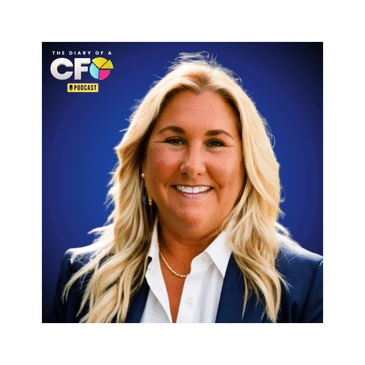


This week on The Diary of a CFO, host Wassia Kamon is joined by Sheryl Shaw, Senior Manager at Bridgepoint Consulting and a former CFO with three decades of experience leading finance teams through transformation.
Sheryl shares her remarkable journey, from starting as an accounting clerk in the 1980s to becoming a CFO 3 times, and now a trusted consultant for companies implementing NetSuite.
She opens up about the lessons learned through chaos, the role of technology in finance, and how to build teams that are ready for change.
In this episode, you’ll learn:
What it really takes to scale a finance team that embraces innovation
How Sheryl built a treasury function from scratch, without formal training
The difference between operational and fundraising CFOs
Her go-to strategies for managing change and gaining team buy-in
The mindset shift needed to lead in today’s tech-driven finance world
Special thanks to FISPAN for sponsoring this episode.
FISPAN is a leading fintech company that seamlessly integrates banks with their clients’ enterprise resource planning (ERP) and accounting systems. For more information, head to www.fispan.com.
Key Takeaways:
From Clerk to CFO: Sheryl’s inspiring journey reveals how mentorship, curiosity, and taking on challenges helped her rise through the ranks in a male-dominated industry.
Finance Transformation Requires Buy-In: Change starts with mindset alignment and cross-functional collaboration. Silos are the enemy of progress.
Build Trusted Advisory Relationships: Success in consulting and finance leadership hinges on trust, empathy, and the courage to speak uncomfortable truths.
Two Types of CFOs: Understand whether you’re operational or fundraising-oriented and why mixing the two skill sets can be detrimental.
Modern CFOs Must Blend Accounting & Analytics: A strong grasp of both financial reporting and strategic forecasting is vital to making impactful decisions.
Leading Change Means Coaching Through Fear: Resistance to innovation often stems from fear. Patience, transparency, and empowerment are key.
Noteworthy Quotes:
“If you've been doing the same thing for two years, you're doing it wrong.” – Sheryl Shaw
“If you don’t like change, you’re really going to dislike irrelevance even more.” – Sheryl Shaw (quoting Eric Shinseki)
“We’re not here to point out the dirty laundry but we can’t leave it in the room.” – Sheryl Shaw
“There’s no chaos? Then I’m not needed. I love stepping into the chaos.” – Sheryl Shaw
“Be authentic. Be honest with yourself and everything you do.” – Sheryl Shaw
Key Timestamps:
00:00 – Trailer & Introduction: From Accounting Clerk to Finance Leader
02:22 – Chasing the CFO Dream Amid Industry Barriers
07:32 – Driving Change Through Team Mindset and Curiosity
09:14 – Coaching Inherited Teams Through Transformation
13:47 – The Two Types of CFOs: Operational vs. Fundraising
16:40 – Critical Skills of Operational CFOs
18:16 – Fundraising CFOs: Economics, Storytelling, and Spin
19:47 – Transitioning from CFO to Consultant
28:07 – A Transformation Success Story with NetSuite
30:42 – Becoming a Trusted Advisor in Consulting and In-House Roles
35:01 – Advice Sheryl Repeats: Stay Authentic and Honest
35:37 – Life Outside Finance: Gardening & Beach Relaxation
📬 Get Involved
Subscribe to the Off the Record Newsletter:
Join the conversation on Substack: https://wassiakamon.substack.com/
Have a question or topic suggestion?
Email: Ask@thediaryofacfo.com
🔗 Connect with Guest Sheryl Shaw on
LinkedIn: https://www.linkedin.com/in/sheryl-shaw-a3184b6/
Websites: https://bridgepointconsulting.com/
🔗 Connect with Host Wassia Kamon on
LinkedIn: https://www.linkedin.com/in/wassiakamon/
Instagram: https://www.instagram.com/wassiakamon/
🔗 Connect with The Diary of a CFO Podcast on
LinkedIn: https://www.linkedin.com/company/the-diary-of-a-cfo-podcast/
YouTube: https://www.youtube.com/@Thediaryofacfopodcast/featured
Website: https://www.thediaryofacfo.com
X (Twitter): https://x.com/thediaryofacfo?
TikTok: https://www.tiktok.com/@csuitestories?
00:00:04 --> 00:00:06 Welcome back to the Diary of a CFO podcast. The
00:00:06 --> 00:00:09 podcast where finance leaders share the lessons,
00:00:09 --> 00:00:12 challenges, and wins that shape their careers
00:00:12 --> 00:00:14 as well as their organizations. Today's episode
00:00:14 --> 00:00:17 is brought to you by FISPAN. By embedding
00:00:17 --> 00:00:20 banking services directly into ERP and accounting
00:00:20 --> 00:00:23 software, FISPAN streamlines financial workflows,
00:00:23 --> 00:00:26 reduces costs, and minimizes manual errors, and
00:00:26 --> 00:00:29 hence, of course, efficiency. or business of
00:00:29 --> 00:00:31 all sizes. I'm your host, Wassia Kamon, and
00:00:31 --> 00:00:34 today I'm super delighted to have with me Sheryl
00:00:34 --> 00:00:37 Shaw. She is a senior manager at Bridgepoint
00:00:37 --> 00:00:41 Next Week Practice, utilizing over 30 years of
00:00:41 --> 00:00:43 experience in global accounting, due diligence,
00:00:44 --> 00:00:47 transfer pricing, and global treasury. She works
00:00:47 --> 00:00:49 with clients who implement and optimize NetSuite.
00:00:49 --> 00:00:53 Now, she completed her first successful implementation
00:00:53 --> 00:00:56 of NetSuite in 2014 and has been a regular user
00:00:56 --> 00:00:59 of the software ever since. Throughout the course
00:00:59 --> 00:01:02 of her career, she has put a hefty focus on building
00:01:02 --> 00:01:05 best practices. And prior to joining Bridgepoint,
00:01:05 --> 00:01:09 she was a CFO for CPG and services companies
00:01:09 --> 00:01:12 in Austin and a senior director for large watch
00:01:12 --> 00:01:15 manufacturer in Dallas, Texas. Welcome to the
00:01:15 --> 00:01:18 show, Sheryl. Hi, welcome. Thank you very much.
00:01:18 --> 00:01:22 I'm excited to be here. Yes, I definitely wanted
00:01:22 --> 00:01:24 us to start with your amazing career journey
00:01:24 --> 00:01:27 and understanding what drew you to finance and
00:01:27 --> 00:01:30 accounting in the first place. Thanks for asking
00:01:30 --> 00:01:34 that. That was kind of an interesting role. I
00:01:34 --> 00:01:38 actually was going to school to be a doctor and
00:01:38 --> 00:01:42 I was putting myself through school. So I was
00:01:42 --> 00:01:45 working for a company and started doing some
00:01:45 --> 00:01:48 things from them from the accounting department
00:01:48 --> 00:01:52 just to get myself through school. So I technically
00:01:52 --> 00:01:58 started my accounting career in 1982 as an accounting
00:01:58 --> 00:02:03 clerk. So I have seen and done everything and
00:02:03 --> 00:02:06 quickly fell in love with accounting and switched
00:02:06 --> 00:02:11 my degree to accounting. Wow. And then from that
00:02:11 --> 00:02:14 point, did you foresee yourself joining and becoming
00:02:14 --> 00:02:17 a CFO one day? It was always a dream. And I'll
00:02:17 --> 00:02:21 be honest, starting out as a clerk, I just looked
00:02:21 --> 00:02:25 for the next step, always. Like always looking
00:02:25 --> 00:02:29 for, you know, okay, I want to be a senior accountant.
00:02:29 --> 00:02:32 I want to be accounting manager. Back in the
00:02:32 --> 00:02:37 80s, a woman as a CFO was highly unlikely. So
00:02:37 --> 00:02:40 it was a dream. but maybe a little bit of a fantasy.
00:02:41 --> 00:02:44 Wow. And how did you land that first CFO role?
00:02:44 --> 00:02:45 Like what do you think are some of the things
00:02:45 --> 00:02:49 that helped you in the process? I think it was
00:02:49 --> 00:02:52 a combination of things. I was blessed with some
00:02:52 --> 00:02:57 really great mentors from a management standpoint.
00:02:57 --> 00:03:00 So over my career, I was able to build some really
00:03:00 --> 00:03:03 great teams and have some people around me. So
00:03:03 --> 00:03:07 I learned how to really manage people, but also
00:03:07 --> 00:03:13 in those roles, those people allowed me to do
00:03:13 --> 00:03:16 things that had never been done. And so they
00:03:16 --> 00:03:19 would put me in situations where it's like, example,
00:03:19 --> 00:03:21 I think you mentioned, you know, that I worked
00:03:21 --> 00:03:25 in treasury was putting together a treasury group.
00:03:25 --> 00:03:28 The company did not have a treasury function.
00:03:28 --> 00:03:31 And they said, we would like you just to figure
00:03:31 --> 00:03:34 that out or to figure out how to whatever it
00:03:34 --> 00:03:37 was, they asked me to figure it out. And I think
00:03:37 --> 00:03:40 those things when it got to the point where I
00:03:40 --> 00:03:44 could step into a role where it was Always roles
00:03:44 --> 00:03:48 where they needed help. I'm not the person To
00:03:48 --> 00:03:52 fill a role just to sit in a seat. I definitely
00:03:52 --> 00:03:56 need some chaos around me I love it. I need some
00:03:56 --> 00:03:59 chaos around me now I would like to go back to
00:03:59 --> 00:04:02 when you said you had to start a treasury group
00:04:02 --> 00:04:05 from from scratch right because treasury something
00:04:05 --> 00:04:07 We don't really learn in school of accounting,
00:04:07 --> 00:04:10 right? You either do accounting or you do finance.
00:04:10 --> 00:04:13 Treasury is somewhere in the midst. So can you
00:04:13 --> 00:04:15 please share a little bit more about that? Yeah,
00:04:16 --> 00:04:19 that's interesting. So, you know, I was trying
00:04:19 --> 00:04:23 to think back. And if you look back just in general
00:04:23 --> 00:04:26 in banking and treasury in the 80s and even the
00:04:26 --> 00:04:30 90s, all you had were checks. You wrote checks,
00:04:30 --> 00:04:35 you know, sometimes you could do wires or ACHs,
00:04:35 --> 00:04:40 you know, actually very rarely. But then as times
00:04:40 --> 00:04:43 progressed in the 90s, they kind of got online
00:04:43 --> 00:04:47 banking. And that was really when people started
00:04:47 --> 00:04:50 building, thinking about treasury groups, right?
00:04:51 --> 00:04:54 I was working in Dallas at the time. We had a
00:04:54 --> 00:04:56 lot of excess cash. We were very profitable.
00:04:57 --> 00:05:01 And so we needed a way to invest money, but also
00:05:01 --> 00:05:06 to move our funds around globally. And so working
00:05:06 --> 00:05:10 closely with a large bank there in Dallas, we
00:05:10 --> 00:05:14 started trying things and we helped them build
00:05:14 --> 00:05:17 their international piece of their business,
00:05:17 --> 00:05:20 as well as building and learning it for ours.
00:05:20 --> 00:05:24 And it was just being patient, asking a lot of
00:05:24 --> 00:05:28 questions. telling them that I don't know. I
00:05:28 --> 00:05:31 don't know what this means or can you help me
00:05:31 --> 00:05:34 through this? And then being patient in return
00:05:34 --> 00:05:37 that we were able to build the treasury function.
00:05:38 --> 00:05:41 And then you look at banking today, we've gone
00:05:41 --> 00:05:45 from literally writing and mailing checks to
00:05:45 --> 00:05:48 no checks. I mean, everything's electronic banking.
00:05:48 --> 00:05:51 And then you have a company like Fispan who works
00:05:51 --> 00:05:56 really nicely in NetSuite. And you can push and
00:05:56 --> 00:06:01 pull transactions all in your ERP. Like, it's
00:06:01 --> 00:06:05 an entirely different world. So, back in the
00:06:05 --> 00:06:08 beginning, you learned the basics, and now we're
00:06:08 --> 00:06:11 like in, you know, kind of like the space age.
00:06:11 --> 00:06:15 And how do you bring people along with you with
00:06:15 --> 00:06:17 those new technology? Because when you said I
00:06:17 --> 00:06:20 was an accountant in the 1980s, I'm like, Excel
00:06:20 --> 00:06:24 was not... Really around and so now we're talking
00:06:24 --> 00:06:26 AI, but I'm assuming human nature is still the
00:06:26 --> 00:06:29 same, right? So what would you say are your go
00:06:29 --> 00:06:32 -to moves or strategy when you're trying to bring
00:06:32 --> 00:06:36 people on board with adopting something? There's
00:06:36 --> 00:06:39 a couple things when I pick team members So one
00:06:39 --> 00:06:42 of the things that anybody that's been on my
00:06:42 --> 00:06:45 team They'll say that I have repeated over and
00:06:45 --> 00:06:48 over if I ask you a question as to you know Why
00:06:48 --> 00:06:51 you're doing this or how you're doing it? If
00:06:51 --> 00:06:54 your response is, that's the way we've done it,
00:06:54 --> 00:06:59 I will lose my mind. So, and the other thing
00:06:59 --> 00:07:03 is, I truly believe no matter what it is, if
00:07:03 --> 00:07:07 you've been doing the same thing for, I would
00:07:07 --> 00:07:10 say 18 months to two years, then you're doing
00:07:10 --> 00:07:13 it wrong. Because there's always something you
00:07:13 --> 00:07:17 can do different and better, whether that's getting
00:07:17 --> 00:07:20 some sort of enhancement. In today's world, there's
00:07:20 --> 00:07:24 so many software opportunities or just rethinking,
00:07:24 --> 00:07:28 you know, bringing somebody in like us that can
00:07:28 --> 00:07:30 look at it from a different side of eyes and
00:07:30 --> 00:07:32 saying, Hey, listen, you know, why don't you
00:07:32 --> 00:07:36 try this and moving it forward? So team members,
00:07:37 --> 00:07:39 people around you, you've really got to have
00:07:39 --> 00:07:42 the right mindset. If they're just wanting to
00:07:42 --> 00:07:45 do their job, then they belong in a different
00:07:45 --> 00:07:49 group. They don't belong in the innovative area.
00:07:49 --> 00:07:53 Okay. So for you, you said, okay, I'm going to
00:07:53 --> 00:07:56 bring, I'm going to bring change and you pick
00:07:56 --> 00:07:58 the right team member. Well, what if you come
00:07:58 --> 00:08:01 in and you just inherited the team? Like how
00:08:01 --> 00:08:04 do you bring those people on board? That's a
00:08:04 --> 00:08:08 tough one. Sometimes patience. Okay. Patience
00:08:08 --> 00:08:12 and taking the time to put them under your wing,
00:08:13 --> 00:08:16 finding those individuals that are excited about
00:08:16 --> 00:08:20 learning. I have a there's a favorite saying
00:08:20 --> 00:08:23 that I love to share and it was was actually
00:08:23 --> 00:08:27 said by Eric and I hope I get his last name right
00:08:27 --> 00:08:30 Shinsiski the chief of staff then he says if
00:08:30 --> 00:08:33 you don't like change You're really gonna dislike
00:08:33 --> 00:08:38 of relevance even more. Oh If you don't like
00:08:38 --> 00:08:42 change you're going to dislike your relevance
00:08:42 --> 00:08:46 even more Because you have to change right? spending
00:08:46 --> 00:08:50 time with those individuals, showing them, because
00:08:50 --> 00:08:53 a lot of times people don't want to change because
00:08:53 --> 00:08:57 they're fearful. They think that if they do something
00:08:57 --> 00:09:00 better and they're not doing it tomorrow, then
00:09:00 --> 00:09:03 you're going to eliminate their position. You
00:09:03 --> 00:09:06 have to get their confidence that doing more
00:09:06 --> 00:09:09 things and new things is going to actually give
00:09:09 --> 00:09:13 them an opportunity to expand. And so having
00:09:13 --> 00:09:17 that trust with your team members and showing
00:09:17 --> 00:09:20 them that, look, I'm even going to do it. I'm
00:09:20 --> 00:09:23 going to give you some of my things. I'm going
00:09:23 --> 00:09:26 to show you how to do some of my things. And
00:09:26 --> 00:09:29 I'm not afraid that they're going to let me go.
00:09:29 --> 00:09:32 They're going to give me more things. And so
00:09:32 --> 00:09:34 that's what I want to do. So let's learn together.
00:09:35 --> 00:09:37 What can you show me that we could do better
00:09:37 --> 00:09:41 and faster and more efficient? Wow. And you are
00:09:41 --> 00:09:43 a CFO and you mentioned, because you've been
00:09:43 --> 00:09:45 a CFO like three times, right? I really want
00:09:45 --> 00:09:49 to dive into each role and understanding one.
00:09:49 --> 00:09:52 Do you feel like from your first CFO to the to
00:09:52 --> 00:09:57 the third one, was it easier as you went from
00:09:57 --> 00:10:00 CFO to CFO role? Was it just as challenging?
00:10:00 --> 00:10:02 Do you think that the CFO role is extra challenging
00:10:02 --> 00:10:04 when you're a woman? Because, you know, when
00:10:04 --> 00:10:06 you became a CFO, there was not a lot of women
00:10:06 --> 00:10:12 CFOs. Yeah, I would say Probably yes. In my case,
00:10:12 --> 00:10:17 I was a little bit lucky in that the men that
00:10:17 --> 00:10:20 were around me were very supportive. They just
00:10:20 --> 00:10:23 saw me as one of them. Now that hasn't been the
00:10:23 --> 00:10:26 case always. So, I mean, but that was so that
00:10:26 --> 00:10:30 that gave me the confidence that I needed to
00:10:30 --> 00:10:34 learn. I did trip and fall many times, you know,
00:10:34 --> 00:10:37 and learn from those experiences. But it also
00:10:37 --> 00:10:42 as my career progressed and maybe became in some
00:10:42 --> 00:10:46 difficult situations. I had the confidence to
00:10:46 --> 00:10:50 stand up for what I believed in and understand
00:10:50 --> 00:10:54 that it wasn't about me. It was about the situation,
00:10:54 --> 00:10:58 you know. And so each one, I learned something
00:10:58 --> 00:11:02 different. Each one had its own challenges and
00:11:02 --> 00:11:05 its own successes. And I wouldn't trade any of
00:11:05 --> 00:11:08 them, even though the second the places that
00:11:08 --> 00:11:10 it was difficult, I wouldn't trade them, because
00:11:10 --> 00:11:14 it made it, made me who I am. Wow. And what would
00:11:14 --> 00:11:16 you say are some of the things, because we see
00:11:16 --> 00:11:19 the CFO world evolving, and again, love talking
00:11:19 --> 00:11:21 to someone like you with so much experience.
00:11:22 --> 00:11:25 What have you seen as being very important to
00:11:25 --> 00:11:28 still be successful, regardless of how the CFO
00:11:28 --> 00:11:31 world is evolving? Because sometimes... At some
00:11:31 --> 00:11:34 point, you know, CFO was accountant and you went
00:11:34 --> 00:11:37 the controller path to CFO. Now you have CFO
00:11:37 --> 00:11:40 from different backgrounds and now CFOs are into
00:11:40 --> 00:11:44 IT and HR and so many other things. What have
00:11:44 --> 00:11:46 you seen that was striking in that evolution
00:11:46 --> 00:11:49 and what do you think is still relevant to be
00:11:49 --> 00:11:53 successful in the role? There are really two
00:11:53 --> 00:11:58 unique CFOs. So there's the CFO that's operational
00:11:58 --> 00:12:01 and running a business. And then there's the
00:12:01 --> 00:12:04 CFO that's really working to help funding. It's
00:12:04 --> 00:12:09 in the beginning. Those are two different types
00:12:09 --> 00:12:13 of CFOs. And that's the first thing to understand
00:12:13 --> 00:12:16 is like, make sure you know what role you're
00:12:16 --> 00:12:20 going into, because I don't think that they can
00:12:20 --> 00:12:24 cross streams. They are two different skill sets
00:12:24 --> 00:12:28 entirely. I'm the operational kind. Like that's
00:12:28 --> 00:12:31 my, you know, running a business, making sure
00:12:31 --> 00:12:35 that those things that were profitable, you know,
00:12:35 --> 00:12:39 that's really my wheelhouse, running teams, working
00:12:39 --> 00:12:42 with the operations side. The other side of the
00:12:42 --> 00:12:45 house, I don't have experience in that area.
00:12:45 --> 00:12:49 I dabbled in it and realized that was not where
00:12:49 --> 00:12:53 I belonged. So from my experience, one of the
00:12:53 --> 00:12:56 things that I think is extremely important. And
00:12:56 --> 00:12:59 I think that you kind of touched on it there
00:12:59 --> 00:13:03 is that you need a combination of accounting
00:13:03 --> 00:13:07 and finance. And so a lot of times people come
00:13:07 --> 00:13:11 in as in the operational sense from their finance
00:13:11 --> 00:13:14 background. And I think that that does a little
00:13:14 --> 00:13:18 bit of a disservice to the operational side.
00:13:18 --> 00:13:21 I think you have to have both pieces. You need
00:13:21 --> 00:13:26 to understand the analytics behind the numbers.
00:13:27 --> 00:13:31 So I've had people do analysis for me, right?
00:13:31 --> 00:13:35 And their response would be, let's use consulting
00:13:35 --> 00:13:37 as an example. Their response would be like,
00:13:37 --> 00:13:42 you know, increased sales due to more billing
00:13:42 --> 00:13:46 hours. Okay, well, that's logical. But why are
00:13:46 --> 00:13:49 there more billing hours? Like dive into the
00:13:49 --> 00:13:53 accounting side of it. Show me, is it a customer?
00:13:54 --> 00:13:59 So it is that combination of accounting and analytics
00:13:59 --> 00:14:02 that's needed. Let's take a quick break to talk
00:14:02 --> 00:14:06 about today's sponsor, Fispen. Fispen is a leading
00:14:06 --> 00:14:09 fintech company that seamlessly integrates banks
00:14:09 --> 00:14:12 into the client's ERP and accounting systems.
00:14:13 --> 00:14:16 By embedding banking services directly into ERP
00:14:16 --> 00:14:20 and accounting software, FISPEN streamlines financial
00:14:20 --> 00:14:23 workflows, reduces costs, minimizes manual errors,
00:14:24 --> 00:14:27 and enhances efficiency for businesses of all
00:14:27 --> 00:14:32 size. For more information, head to www .fispen
00:14:32 --> 00:14:38 .com, www .f -i -s -p -a -n .com. Now let's get
00:14:38 --> 00:14:41 back to the episode. And so what would you say
00:14:41 --> 00:14:43 are the key skill set of those two different
00:14:43 --> 00:14:46 types of CFOs, right? You mentioned the operational,
00:14:46 --> 00:14:48 you ran the business, and I think you kind of
00:14:48 --> 00:14:51 said it's accounting and finance, but what are
00:14:51 --> 00:14:54 really the skill set of that operational CFOs
00:14:54 --> 00:14:57 versus the other one that's more into fundraising
00:14:57 --> 00:15:01 investments and things like that? So on the operational
00:15:01 --> 00:15:04 side, definitely you need to be a good manager.
00:15:05 --> 00:15:10 You have to be able to work. with all the groups,
00:15:10 --> 00:15:15 operations, marketing. You have to be a people
00:15:15 --> 00:15:18 person because you have to be able to step in
00:15:18 --> 00:15:23 a room and put on whatever face is needed, whatever
00:15:23 --> 00:15:27 mantra is needed for that room so that you can
00:15:27 --> 00:15:31 talk to them at their level. Again, gaining trust,
00:15:32 --> 00:15:35 making sure that they want to come to you as
00:15:35 --> 00:15:40 a trusted advisor. And that's from both years
00:15:40 --> 00:15:44 of working in the accounting, so closing the
00:15:44 --> 00:15:49 books, being a controller, but also knowing how
00:15:49 --> 00:15:56 to manage a budget, provide analysis and or good
00:15:56 --> 00:15:59 answers to the CEO, being able to talk to your
00:15:59 --> 00:16:02 CEO so they can understand it. Not all CEOs are
00:16:02 --> 00:16:06 finance people. Find a way to Really be able
00:16:06 --> 00:16:08 to communicate to them at their level in all
00:16:08 --> 00:16:12 the areas and then on the other type of CFOs
00:16:12 --> 00:16:15 What do you think are the main skill set there?
00:16:15 --> 00:16:20 Yeah, those people are much more outward -facing
00:16:20 --> 00:16:26 they have skills and economics and Working with
00:16:26 --> 00:16:31 investors. It's it's a sales ish job like investment
00:16:31 --> 00:16:35 banking background absolutely, so They're selling
00:16:35 --> 00:16:41 a story, they're good spin doctors, they're highly
00:16:41 --> 00:16:44 skilled individuals in what they do. But that
00:16:44 --> 00:16:49 same personality is not going to be able to step
00:16:49 --> 00:16:53 into an area where you're really trying to gain
00:16:53 --> 00:16:57 trust with a team, because those are two different
00:16:57 --> 00:17:00 skills. Yes. And they probably have to rely more
00:17:00 --> 00:17:03 on the chief accounting officer, for example,
00:17:03 --> 00:17:06 to be that operational person, right? Because
00:17:06 --> 00:17:09 you still need the right financials. Exactly.
00:17:10 --> 00:17:14 Exactly. So I can see how you being in more of
00:17:14 --> 00:17:17 an operational CFO was probably easier to transition
00:17:17 --> 00:17:20 into where you are now as a consultant because
00:17:20 --> 00:17:24 you probably learned What life is really internally?
00:17:24 --> 00:17:27 So what was the transition like for you? And
00:17:27 --> 00:17:30 how are you able to bring what you what you've
00:17:30 --> 00:17:32 dealt with really as a cfo to where you are now?
00:17:33 --> 00:17:37 It was I would say probably the the last Four
00:17:37 --> 00:17:41 or five years of of before I you know went into
00:17:41 --> 00:17:44 consulting I had been thinking about it because
00:17:44 --> 00:17:48 in my mind i'm i'm I have always picked a company
00:17:48 --> 00:17:51 that needs help like If once, and that's, you
00:17:51 --> 00:17:55 know, like my very first CFO role, once we kind
00:17:55 --> 00:17:58 of got everything sorted, we sold the company
00:17:58 --> 00:18:02 and they offered me to stay there, but then I
00:18:02 --> 00:18:04 would have had, there was nothing for me to do
00:18:04 --> 00:18:08 except for - No chaos. Right, exactly. So giving
00:18:08 --> 00:18:11 that, I thought, well, it would be nice to be
00:18:11 --> 00:18:15 able to kind of pitter patter in multiple chaoses.
00:18:15 --> 00:18:17 right? In the consulting, because that's all
00:18:17 --> 00:18:20 it is. I mean, they're only coming to us because
00:18:20 --> 00:18:22 they have a problem. I've always had that in
00:18:22 --> 00:18:25 the back of my mind, but I was also fearful that
00:18:25 --> 00:18:29 I wouldn't be good at it, like that I needed
00:18:29 --> 00:18:32 that team. I would be an individual, but I really
00:18:32 --> 00:18:36 wanted to, I like the team atmosphere. When I
00:18:36 --> 00:18:40 first, my very first role, Thankfully, because
00:18:40 --> 00:18:43 again, I was working a lot of hours before consulting.
00:18:44 --> 00:18:46 So that was the other thing, right? pacing yourself
00:18:46 --> 00:18:50 down to like a somewhat normal job. Well, my
00:18:50 --> 00:18:54 very first role was very chaotic. And so it was
00:18:54 --> 00:18:59 a good feeder into consulting as it, you know,
00:18:59 --> 00:19:03 wind down, another opportunity came up. So I
00:19:03 --> 00:19:06 was like, Oh, okay, I see how this works. This
00:19:06 --> 00:19:12 is good. The best part of consulting has been
00:19:12 --> 00:19:16 being able to help whoever it is that we're working
00:19:16 --> 00:19:20 with. We all like to be patted on the back or
00:19:20 --> 00:19:22 said that you've done a good job. I mean, for
00:19:22 --> 00:19:26 me, that's the end -all. You don't have to pay
00:19:26 --> 00:19:28 me a gazillion dollars. Just tell me that I did
00:19:28 --> 00:19:32 something to help you. In consulting, every time
00:19:32 --> 00:19:35 you leave or you're in there, they love you.
00:19:35 --> 00:19:38 because you're fixing something for them. So
00:19:38 --> 00:19:42 it's very gratifying and I really fell in love
00:19:42 --> 00:19:46 with it. Nice. And I'm not glad you, the kind
00:19:46 --> 00:19:48 of consultant people are happy about when you
00:19:48 --> 00:19:49 leave, because there's a big difference there
00:19:49 --> 00:19:53 too. It means you're good. That's true. It means
00:19:53 --> 00:19:57 you're good. So now that you're leading, you
00:19:57 --> 00:19:59 know, finance transformation, really, like you
00:19:59 --> 00:20:02 step into chaos and... you're helping people
00:20:02 --> 00:20:05 do the right thing and get out of the chaos.
00:20:05 --> 00:20:07 What are some questions you wish leaders will
00:20:07 --> 00:20:12 ask before starting such an initiative? Because
00:20:12 --> 00:20:14 there is chaos, there's a lot of noise. Like
00:20:14 --> 00:20:16 what are some of the things that can help them
00:20:16 --> 00:20:19 have clarity so that the process is done the
00:20:19 --> 00:20:23 right way? I would say, first of all, make sure
00:20:23 --> 00:20:28 that you're really ready for the change. So they
00:20:28 --> 00:20:30 think a lot of times they you know, they're like,
00:20:30 --> 00:20:34 oh we know that you know This isn't working right
00:20:34 --> 00:20:37 and we need somebody to come in but then you
00:20:37 --> 00:20:40 know when you start Talking about the things
00:20:40 --> 00:20:43 that need to be done. They're like, oh, I mean
00:20:43 --> 00:20:46 we can't do that I mean that's that's gonna disrupt
00:20:46 --> 00:20:49 operations. It's like well, sometimes it starts
00:20:49 --> 00:20:53 in operations Oh, we can't cross that streams.
00:20:53 --> 00:20:56 Well does operations know that you're working
00:20:56 --> 00:21:00 on this project Oh, no. So it's like making sure
00:21:00 --> 00:21:03 that whoever, whatever it is, the project that
00:21:03 --> 00:21:06 you're working on, that you've already got together
00:21:06 --> 00:21:09 with the team, whether that's finance, accounting,
00:21:10 --> 00:21:15 operations, whoever, make the CEO, whoever it
00:21:15 --> 00:21:19 is, make sure that everybody's on board. And
00:21:19 --> 00:21:23 in the very beginning, everybody starts on the
00:21:23 --> 00:21:27 same page. You don't do it in silos working as
00:21:27 --> 00:21:30 a team is key because everybody has buy -in once
00:21:30 --> 00:21:33 they know That accounting is working with with
00:21:33 --> 00:21:36 the operation side or accounting is working with
00:21:36 --> 00:21:40 the ceo Then everybody's on board and then that
00:21:40 --> 00:21:45 makes it easier to step in and make change so
00:21:45 --> 00:21:48 when you say Make sure your team is ready for
00:21:48 --> 00:21:50 change. Like what are some questions or things
00:21:50 --> 00:21:53 that? Can help a leader do it because like you
00:21:53 --> 00:21:56 said I and I totally agree on the surface It
00:21:56 --> 00:21:58 sounds like we all ready for change like me.
00:21:58 --> 00:22:00 I'm always ready for a diet Like you think i'm
00:22:00 --> 00:22:02 going to change eating cheetos, but i'm really
00:22:02 --> 00:22:07 not Probably the same Fewer maybe I don't know
00:22:07 --> 00:22:11 Exactly, but how are you able to really gauge
00:22:11 --> 00:22:15 that readiness for change? Sometimes we don't
00:22:15 --> 00:22:18 know until we get in there Sometimes it's deceiving.
00:22:18 --> 00:22:23 They say that they are I will be honest, the
00:22:23 --> 00:22:26 majority of the people who are coming to us and
00:22:26 --> 00:22:31 asking for our help, they will tell us upfront.
00:22:32 --> 00:22:37 So this group is going to be difficult. If those
00:22:37 --> 00:22:39 kinds of comments come out in the beginning,
00:22:40 --> 00:22:43 then you know you're in a good place because
00:22:43 --> 00:22:46 they've self -assessed. They've looked at themselves
00:22:46 --> 00:22:49 and they know where the issues are and what needs
00:22:49 --> 00:22:53 to happen. So that gives us a comfort. We can
00:22:53 --> 00:22:55 delicately step into those. The people that come
00:22:55 --> 00:22:58 in and they're like, they wanna do all these
00:22:58 --> 00:23:01 things. And then the first call that you get
00:23:01 --> 00:23:03 on, you start talking through it. And they're
00:23:03 --> 00:23:06 like, oh, no, we don't need to look at that.
00:23:06 --> 00:23:09 No, we don't need to go there. That's when you
00:23:09 --> 00:23:13 know you're in a little bit of a hurt. So typically,
00:23:14 --> 00:23:19 we, BridgePoint, we do what we call first discovery
00:23:19 --> 00:23:24 calls. So we try our best to ask questions about
00:23:24 --> 00:23:28 the team, the atmosphere, we call them pain points,
00:23:28 --> 00:23:33 their pain points, what it is that they're feeling,
00:23:33 --> 00:23:37 what their expectation is. We are taught actually
00:23:37 --> 00:23:41 to go for the no. So when we're talking to a
00:23:41 --> 00:23:46 client, we really want them to really want us.
00:23:46 --> 00:23:48 We want to work with somebody that wants to work
00:23:48 --> 00:23:52 with us. And it's okay if they don't want to,
00:23:52 --> 00:23:55 or it's okay if we don't want to take that client.
00:23:56 --> 00:23:59 Because it won't work if only one of us is doing
00:23:59 --> 00:24:03 the job. We have to work together. So we are
00:24:03 --> 00:24:07 taught to go for the know. So we ask those questions
00:24:07 --> 00:24:10 upfront to try to go for the know. Sometimes
00:24:10 --> 00:24:14 we're surprised in the middle of the project,
00:24:14 --> 00:24:17 but not all the time. What you just said, it's
00:24:17 --> 00:24:20 so valid to from the inside, right? Like having
00:24:20 --> 00:24:24 those conversations internally to make sure we
00:24:24 --> 00:24:27 are on the same page before starting the rollout.
00:24:28 --> 00:24:30 Absolutely. What could be like a recent rollout
00:24:30 --> 00:24:33 you just did and you're very proud of or really
00:24:33 --> 00:24:35 made the difference and what was the process
00:24:35 --> 00:24:39 like? Let's see. We've done a couple. Again,
00:24:39 --> 00:24:43 it's the people that we are working with that
00:24:43 --> 00:24:47 allow us to kind of become part of their family,
00:24:47 --> 00:24:52 really embed ourselves in their team. I've said
00:24:52 --> 00:24:55 it multiple times now, the trusted advisor, the
00:24:55 --> 00:24:59 being trusted. That's really the key is when
00:24:59 --> 00:25:02 they start coming to you as, you know, we need
00:25:02 --> 00:25:05 your advice, that's when you know that you're
00:25:05 --> 00:25:08 locked and loaded. Then, you know, you can take
00:25:08 --> 00:25:11 baby steps to getting them where they need to
00:25:11 --> 00:25:16 be. We helped a client here in Austin go from
00:25:16 --> 00:25:21 their QuickBooks to NetSuite. They are a manufacturer
00:25:21 --> 00:25:24 of some food products that get sold at a local
00:25:24 --> 00:25:28 store here. They're a small team. The people
00:25:28 --> 00:25:31 in charge were very leery about letting other
00:25:31 --> 00:25:33 people in and helping. They kind of knew what
00:25:33 --> 00:25:37 they were doing. As our consultant was able to
00:25:37 --> 00:25:40 get in there and really make them feel comfortable.
00:25:40 --> 00:25:44 they would call her on a regular basis and just
00:25:44 --> 00:25:47 ask her. Like after we kind of got through everything
00:25:47 --> 00:25:49 and got them working, they would just pick up
00:25:49 --> 00:25:52 the phone and say, hey, listen, what do you suggest
00:25:52 --> 00:25:55 we do here? And like, can you help us out? That's
00:25:55 --> 00:25:58 when we know that we've really done what we need
00:25:58 --> 00:26:01 to do. And they've become somebody that we can
00:26:01 --> 00:26:06 rely on for future opportunities, you know, advice.
00:26:06 --> 00:26:09 So yeah, they're in a much better place and we
00:26:09 --> 00:26:12 feel like we have a new friend. Oh, that is so
00:26:12 --> 00:26:15 cool. And I love how you said trusted advisor,
00:26:15 --> 00:26:19 right? Because even within a company, you have
00:26:19 --> 00:26:21 to be a trusted advisor. Now I feel in finance,
00:26:21 --> 00:26:24 especially with how AI is going, how people,
00:26:24 --> 00:26:27 what people expect from people within a finance
00:26:27 --> 00:26:29 and accounting function. So what would you say
00:26:29 --> 00:26:32 are some of the things that whether you are inside
00:26:32 --> 00:26:34 or outside an organization will help you be a
00:26:34 --> 00:26:39 better trusted advisor? I definitely think stopping
00:26:39 --> 00:26:43 and listening. really paying attention, being
00:26:43 --> 00:26:48 honest with your responses, even in the tough
00:26:48 --> 00:26:53 situations, letting them know sometimes they
00:26:53 --> 00:26:55 know they have dirty laundry. You don't want
00:26:55 --> 00:26:59 to just point it out, but you need to not just
00:26:59 --> 00:27:01 leave it in the room. We need to address that,
00:27:01 --> 00:27:05 right? It's the timing of those things. And when
00:27:05 --> 00:27:08 they're ready to hear that, you kind of know
00:27:08 --> 00:27:13 then you're in a good place. It really is listening
00:27:13 --> 00:27:16 and it's listening with your eyes and your ears.
00:27:16 --> 00:27:22 So I will say a blessing beyond blessing is getting
00:27:22 --> 00:27:27 to work from home and doing a lot of our communication
00:27:27 --> 00:27:32 on video because you can see people's expressions.
00:27:32 --> 00:27:35 You can tell when they're because you can see
00:27:35 --> 00:27:40 everybody, right? And so you can tell when they're
00:27:40 --> 00:27:43 paying attention, when they're bored with what
00:27:43 --> 00:27:45 you're talking about, when they're interested,
00:27:46 --> 00:27:51 when they're offended, whatever. So it's pretty
00:27:51 --> 00:27:54 nice because you can really pay attention to
00:27:54 --> 00:27:57 body language and use that to your advantage
00:27:57 --> 00:27:59 because that's where you're going to step in
00:27:59 --> 00:28:03 and really get their trust is understanding what
00:28:03 --> 00:28:07 their true needs are. That takes courage, right?
00:28:07 --> 00:28:10 Because when you said being honest and transparent,
00:28:10 --> 00:28:15 even in the tough times, what helped you or helped
00:28:15 --> 00:28:18 you in the past do that? There is a part of you
00:28:18 --> 00:28:20 want to be liked, you want to be a trusted advisor.
00:28:21 --> 00:28:23 How do you balance those two and rely? Because
00:28:23 --> 00:28:28 it is very hard to do. Yeah. I think that that
00:28:28 --> 00:28:32 was something I learned over time. And I think
00:28:32 --> 00:28:36 it was really something that I was looking for,
00:28:36 --> 00:28:40 I would tell my team always, here's the thing,
00:28:41 --> 00:28:43 tell me the truth. No matter how hard it is,
00:28:44 --> 00:28:49 I need to know what is really going on, because
00:28:49 --> 00:28:54 I can deal with that much easier than if I find
00:28:54 --> 00:28:59 out that something's going wrong, you've known
00:28:59 --> 00:29:02 about it, and you haven't brought it to my attention.
00:29:03 --> 00:29:08 That is going to make me extremely unhappy, but
00:29:08 --> 00:29:12 if you bring me those tough conversations, I
00:29:12 --> 00:29:16 promise I will listen. And I think I was like,
00:29:16 --> 00:29:20 okay, it took me many times, but it was like,
00:29:20 --> 00:29:25 well, if I feel that way, I wonder if other people
00:29:25 --> 00:29:29 also feel that way. As a consultant, isn't that
00:29:29 --> 00:29:33 our job? We're supposed to... provide advice,
00:29:33 --> 00:29:37 I'll be honest, not everybody wants to hear that.
00:29:37 --> 00:29:40 Right. And so you kind of have to know when you
00:29:40 --> 00:29:42 can say it and when you can't. Sometimes you
00:29:42 --> 00:29:45 just have to step back and, and, and let sleeping
00:29:45 --> 00:29:48 dogs lie. But those people that are really going
00:29:48 --> 00:29:51 to be successful are the ones that can hear the
00:29:51 --> 00:29:53 hard truth. Well, thank you so much. I have two
00:29:53 --> 00:29:56 more questions for you. This was so helpful.
00:29:56 --> 00:29:59 One, what is the advice you find yourself giving
00:29:59 --> 00:30:03 other people over and over again? Be authentic.
00:30:03 --> 00:30:07 Be honest with yourself and in everything you
00:30:07 --> 00:30:11 do. As an accountant, in the things that we see
00:30:11 --> 00:30:16 that we're involved in, don't tread lightly on
00:30:16 --> 00:30:21 doing something that crosses the line. Stay true
00:30:21 --> 00:30:24 to yourself. Be honest. Love it. And my last
00:30:24 --> 00:30:27 question, what is your favorite thing to do outside
00:30:27 --> 00:30:32 of work? Outside of work. So I am quite the beach
00:30:32 --> 00:30:36 bum. So I love hanging by the pool or going to
00:30:36 --> 00:30:40 the beach, but I also love gardening. And I'm
00:30:40 --> 00:30:47 not a vegetable gardener. I am a flower gardener.
00:30:47 --> 00:30:51 So I like taking care of the yard, enjoying the
00:30:51 --> 00:30:55 outdoors. Those are the two things. Oh good for
00:30:55 --> 00:30:57 you. Good for you I'm a gardener, but the food
00:30:57 --> 00:31:00 ones and the deers ate everything but that's
00:31:00 --> 00:31:07 a different topic It hurts when you're growing
00:31:07 --> 00:31:11 food and it's gone or they give that bite into
00:31:11 --> 00:31:13 something and You know, yeah, then they leave
00:31:13 --> 00:31:18 the rest. Yes Oh gosh, well Thank you. Thank
00:31:18 --> 00:31:21 you so much for being on the show. This was super
00:31:21 --> 00:31:24 helpful. I loved how you give feedback. I really
00:31:24 --> 00:31:26 love how you lay it out and you can tell it's
00:31:26 --> 00:31:30 coming from such great experience. So thank you
00:31:30 --> 00:31:32 so much for being on the show and sharing this
00:31:32 --> 00:31:34 great chance. Thank you too for inviting me.
00:31:34 --> 00:31:38 It's been wonderful. And that's it for today's
00:31:38 --> 00:31:41 episode of the Diary of a CFO. Thank you so much
00:31:41 --> 00:31:43 for tuning in. If you enjoyed the show, don't
00:31:43 --> 00:31:46 forget to like, review, subscribe, and share
00:31:46 --> 00:31:50 with others. Our website is thediaryofacfo .com.
00:31:51 --> 00:31:54 That's where you can find all the episodes, access
00:31:54 --> 00:31:57 all the guest profiles, see their bios and their
00:31:57 --> 00:32:00 social media links. It is also the place where
00:32:00 --> 00:32:03 you can apply to be a guest on the podcast and
00:32:03 --> 00:32:05 have information about how you can sponsor the
00:32:05 --> 00:32:08 show. As always, if there is any topic you'd
00:32:08 --> 00:32:11 like me to cover in the future, just email me
00:32:11 --> 00:32:15 at ask at the diary of a CFO .com. Again, the
00:32:15 --> 00:32:18 email is ask at the diary of a CFO .com. See
00:32:18 --> 00:32:19 you soon.