


Episode Summary
Most finance leaders are told to expect a crisis. Few are taught how to lead through one, recover from it, and build the playbooks that make the next one easier.
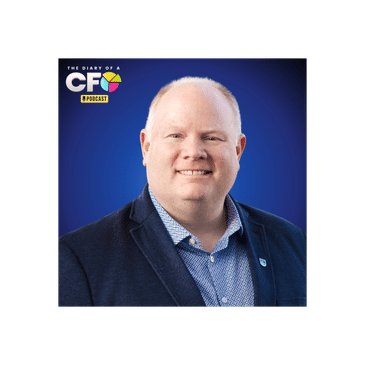
In this episode of the Diary of a CFO podcast, I sit down with Mike High, CFO of the Northern Alberta Institute of Technology, with more than 25 years of international experience across public and private sectors. Before stepping into finance, Mike served as a commissioned US Army Intelligence Officer across Asia, the US, and Latin America. He then spent 17 years at Shell, rising from financial analyst to CFO of the company's Deepwater Oil and Gas business in 2018.
We dig into how military leadership shaped how he leads finance teams today, why he moved from the golden rule of leadership to the platinum rule, what he learned becoming CFO during one of the toughest periods in recent corporate history, why most organizations get FP&A wrong, what actually makes digital transformation succeed, and how to advocate for finance resources when the business sees you as a cost center.
If you lead a finance team, want to grow into a CFO role, or are navigating change in your organization, this conversation is a practical leadership playbook from someone who has led through both real crises and corporate ones.
What You Will Learn
How military leadership shaped Mike's approach to leading finance teams
The difference between the golden rule and the platinum rule of leadership
Why focusing energy on direct reports beats trying to lead everyone equally
The transition from FP&A leader to CFO and what changes about accountability
How to manage your own energy as a CFO so you do not burn out through repeated crises
Why building playbooks before a crisis matters more than reacting during one
How to lead a finance team through a crisis when you are new in the role
Why conflating accounting and FP&A holds organizations back
Where FP&A should sit in an organization and why
The ideal composition of an FP&A team using a soccer team analogy
What makes digital transformation actually succeed
How to advocate for finance resources when the business sees you as overhead
The "not no" decision space and why it matters for leaders
Inside the Conversation
How military leadership shaped his approach to leading finance
Mike opens by explaining that in the military, leadership is the primary purpose of every role, regardless of function. That mindset carried into his finance career, where most professionals focus on function first and only later realize leadership is what truly matters. From the military, he also took a wider view of stakeholder mapping, working across branches, functions, disciplines, and even countries to deliver objectives. That habit of building broad coalitions to drive outcomes has shaped how he leads finance teams today.
The golden rule versus the platinum rule of leadership
Early in his career, Mike led by the golden rule: treat people the way you want to be treated. Over time, he realized this approach assumed there was one ideal leadership style. He has since moved to the platinum rule: lead each person the way they specifically need to be led to bring out their best. The shift came from reflecting on moments when he overstepped his frontline supervisors and tried to lead every individual directly, instead of trusting and developing his direct reports as the leaders of their own teams.
Why focusing energy on direct reports beats spreading yourself thin
Mike believes great business leaders are great because they think in terms of leverage. Doubling your energy on direct reports, helping them become strong leaders themselves, beats spreading your energy thin across every team member. As an organizational leader, your job is still to inspire the broader team and create the conditions for success, but your highest-leverage work is making your direct reports into exceptional leaders.
How he discovered finance was the right career fit
Mike did not start his transition out of the military knowing he wanted to be in finance. Through the transition process, he noticed he resonated most with companies hiring for finance roles because the work involved supporting decision making, having a seat at the table, and using data and logic. It took several years inside his first business unit CFO role at Shell to realize that the CFO part of the job, not the FP&A specialist part, was what he loved most.
What clicked when he realized he wanted to be a CFO
The moment Mike knew he wanted to be a CFO came when he saw the impact he could have far beyond the finance function. As new general managers and expat leaders joined his leadership team during a turbulent period that included COVID, the murder of George Floyd, and hurricanes hitting the Gulf Coast, he became a leadership resource for non-finance executives. He realized that in the finance function, the CFO is the only role expected to wear the general management hat and contribute well beyond finance itself.
The biggest shift from FP&A to CFO
The hardest part of moving from FP&A to CFO is the weight of accountability. In FP&A, you can sometimes defer to the business by saying "it is not my forecast." As CFO, the buck stops with you. Mike shared that this hit hardest after two deaths in his business linked to operations. That phone call, where you remember exactly where you were standing, is when the responsibility for the lives in the business becomes real.
How to manage your own energy through repeated crises
Crisis leadership is a marathon, not a sprint. Mike learned to manage his energy like a portfolio so he could meet the next crisis without being depleted by the last one. He shares that during his time in Europe, the year he took 43 days of vacation was also his highest individual performance year on record at Shell. The two are not unrelated. The pause, recovery, and rotation cycles that emergency responders use apply just as well to finance leaders managing ongoing crises.
Why crisis playbooks need to be built two years before the crisis
Mike borrows a principle from US Special Forces: you cannot mass-produce specialists overnight. If you wait until the crisis hits to start developing your leaders and your playbooks, you are already two or three years behind. He recommends building basic protocols, like a phone tree for when laptops are down, redundancy plans for critical tech, and rehearsed playbooks for predictable scenarios. He cites how companies with strong playbooks recovered fastest from the 2008 financial crisis, and how their V-shaped recoveries created more long-term shareholder value than the depth of the V itself.
How to lead a finance team through a crisis when you are new in the role
When a crisis hits early in your tenure, Mike's advice is to build trust by listening first. Your team knows more than you do. After listening, prioritize, decide, and communicate clearly about what you are spending energy on and why. He also recommends discernment about how big the crisis actually is. Not everything is a ten on the pain chart. Saving your emotional energy for true crises and dialing it down for sixes and sevens is how leaders sustain themselves and their teams over time.
Why most organizations get FP&A wrong
Mike sees three common mistakes. First, organizations do not even use the right language to describe FP&A, which makes it harder to mature the function. Second, putting FP&A under the controllership function sets both groups up to fail. Accounting needs to operate in a world of certainty and precision. FP&A operates in a world of uncertainty, where obsessing over decimal places means missing the bigger emerging risks. Third, organizations resource FP&A with the wrong talent because they have put it in the wrong place.
Where FP&A should actually sit in the organization
Mike challenges whether FP&A should even sit entirely within finance. He sees business partnering as a broader category, and a great FP&A business partner often has more in common with great HR, IT, legal, and supply chain business partners than with the rest of finance. The job is to help general managers make informed decisions. The best outcomes come from FP&A working horizontally with other business partner functions to deliver one synthesized view to the general manager, not separate functional views in competition.
The ideal composition of an FP&A team
Mike uses a soccer team analogy to describe the players an FP&A team needs. Referees set the rules of the planning game, defining the budget process, forecasting assumptions, and how the team will play together. Statisticians make sure the numbers add up and represent business performance fairly. Coaches advise business leaders on tradeoffs, unintended consequences, and second-order effects. Defenders manage risk, run scenario planning, and stress-test the portfolio. Offensive players are the most controversial. Mike believes finance teams sometimes need people willing to step on the pitch and score, whether that means leading a cost initiative or driving a commercial transaction over the line.
What makes digital transformation actually succeed
Mike has led FP&A digital transformation at scale, and he points to four ingredients that separate success from failure. First, partner with IT from day one rather than going off and building something in a corner. Architecture and roadmap thinking, which finance often underestimates, are critical. Second, work closely with IT security to de-risk projects and find what is possible within the red lines. Third, when hiring system implementers, insist on A players. Do not pay full price for someone else's C team to learn your business. Fourth, recognize that technology lives inside an ecosystem of people, processes, and systems. The best project in the world will fail if the ecosystem produces an antibody response to it.
How to advocate for finance resources when the business sees you as overhead
Mike's playbook for advocacy comes down to three things. First, creativity. He once created a literal cartoon showing a day in the life of an FP&A analyst overwhelmed by hidden work, which cut through where PowerPoint logic had failed. Second, courage and the willingness to take a bit of risk, especially within ethical limits. Third, comfort operating in the "not no" decision space. Sometimes you cannot get a yes, but you can get the decision maker to not say no. That is enough room, with top cover from your line, to take the risk and push forward.
Reallocating resources to unlock more value
In one of his most counterintuitive moves, Mike chose not to replace an FP&A analyst and instead hired a Lean Six Sigma Master Black Belt to fix the broken processes that were dragging the whole team down. By investing in continuous improvement, he created more capacity across the rest of the FP&A team than another analyst would have provided. The role was eventually backfilled with an FP&A hire, but only after the process work made the team measurably more efficient.
Key Quotes
"My primary role is to lead the people that directly report to me and create them into leaders that lead their teams well."
"Don't waste a good crisis."
"You can't mass create special forces overnight. The same applies to building leaders for a crisis."
"Conflating accounting and FP&A is one of the things organizations get totally wrong."
"Sometimes you just have to get the decision maker to not say no."
"The pause and recovery is as critical as the time spent fighting the fire."
About Mike High
Mike High is the CFO of the Northern Alberta Institute of Technology (NAIT) and brings more than 25 years of international experience across public and private sectors. He served as a commissioned US Army Intelligence Officer across Asia, the US, and Latin America before joining Shell, where he spent 17 years and rose from financial analyst in 2005 to CFO of the company's Deepwater Oil and Gas business in 2018. He is a strong voice in the FP&A community, working closely with the AFP, and is known for his collaborative leadership style, talent development focus, and cross-functional teamwork.
About the Diary of a CFO Podcast
The Diary of a CFO is a podcast about modern finance leadership, hosted by award-winning CFO Wassia Kamon. The show is for current CFOs, emerging finance leaders, FP&A professionals, and founders who work closely with finance teams.
Each episode explores how CFOs and senior finance executives build high-performing finance and FP&A teams, partner with CEOs, boards, and capital providers (banks, PE/VC, and impact lenders), and navigate growth, regulation, and transformation without burning out.
Submit questions to ask@thediaryofacfo.com or visit thediaryofacfo.com.
Topics and Keywords
Crisis leadership for CFOs, military leadership in business, FP&A best practices, FP&A vs accounting, where FP&A should sit in an organization, FP&A team composition, digital transformation in finance, finance technology roadmap, Lean Six Sigma in FP&A, leading finance through change, building crisis playbooks, advocating for finance resources, CFO transition from FP&A, business partnering in finance, CFO leadership development, Shell CFO, NAIT CFO, Mike High CFO.
Full Transcript:
[00:00:00] You are a strong voice in the fp NA space, especially with your role with the A FP. What do you think are some things that organizations or maybe CFOs miss about the role of FP NA? Conflating accounting and fp NA is one of the things that a lot of organizations get totally wrong. The accounting function broadly needs to be one about certainty.
[00:00:17] The FP a world is a world of uncertainty, and actually, if you're so focused on the precision in the decimal place, you may totally lose the plot of the broad things that could happen to you. But more importantly, I think the second is. Meet Michael High CFO of Northern Alberta Institute of Technology with 25 years of international experience across public and private sectors.
[00:00:38] From serving as a US Army Intelligence officer to leading finance teams at Shell, Mike brings a wealth of expertise in leadership strategy and fp and a. There are things I wish I knew then that I know now that I probably started with the golden rule of leadership. I thought there was one ideal and lead people the way I wanted to be led, and I think what I've evolved into is more of a platinum rule of leadership over my [00:01:00] career, which is each individual person has a certain way that they should be led to get the best out of themselves.
[00:01:05] Was there a specific event that happened along the way that made you realized? Need that more personalized approach to leadership. My primary role is to lead the people that directly report to me and create them into leaders that lead their teams well. You became CFO at a very tough times. There was a lot of uncertainty.
[00:01:22] Right. In 2025. I feel like it's the same environment again. What would you say are some things that you learned that. You get through that. One thing I have tried to do a lot of over the course of my career, which I think is critical for leaders, welcome back to the Diary of a CFO podcast, the podcast where finance leaders share the lessons, challenges, and wins that shape their careers as well as their organizations.
[00:01:44] I'm your host with sia, come on, and today I'm super delighted to have with me Mike High. He is a CFO of Northern Alberta Institute Technology. Nate, and with 25 years of. International experience across public and private sectors. Mark is a collaborative [00:02:00] leader who excels in talent development and cross-functional teamwork.
[00:02:04] Prior to that, Mike led teams across Canada, the US, and the Caribbean regions, as if your finance. He also spent 17 years working at Shell, where he started as a financial analyst in 2005 and went all the way to Chief Financial Officer in 2018 for the company's deep water, oil and gas business. Prior to his corporate finance career, he.
[00:02:25] Mike served as commission, US Army Intelligence Officer from 2005 across Asia, the US and Latin America. Welcome to Rockstar Mike. Oh, thanks. So thank you so much. I know you started in the US Army and before stepping into the world of finance, so curious to hear how that experience shaped how you lead today.
[00:02:48] Addition of the word lead there is, is the right one. And I think, you know, regardless of what function you might have done in the military, I think leadership is the primary purpose of why you're there. Uh, [00:03:00] it's the primary thing. You get outta your time there. And I, and I maybe even contrast that with my corporate experience, where we tend to think of function first and then realize later on.
[00:03:07] Leadership that matters. So first might just be simply that mindset that recognizing your primary purpose on the planet is to be a leader. I think the second is, you know, there are things I wish I knew then that I know now, and some of that is, I'd describe it as I probably started with the golden rule of leadership.
[00:03:23] So I thought there was one ideal and. Lead people the way I wanted to be led. And I think what I've evolved into is more of a platinum role of leadership over my career, which is each individual person has a certain way they should be led to get the best out of themselves. And so your role as a leader is to figure out what that personalized way is and meet them there, uh, more than trying to put out this one ideal.
[00:03:44] I think maybe one last thing I would say on leadership I think is recognizing, uh, there's a wide stakeholder map, uh, even in the military. And so whether that was working with other. Branches or functions within the military, whether that was working with other disciplines, whether that was even working [00:04:00] with other branches of military.
[00:04:02] So Air Force to army, Navy to army, or even broader, working with other countries, uh, in collaboration to deliver your objectives. It's a mindset very early on in my career, uh, that was instilled. Uh, something to think wider about the stakeholder map and make sure you bring up. Broad coalition together to get your, your vision achieved.
[00:04:19] Wow. Thank you so much. I like how you said you went from the golden role of leadership to now the platinum role of leadership. Was there a specific event or sit something specific that happened along the way that made you realize, need that more personalized approach to leadership? Maybe just start with honestly maturity.
[00:04:38] One thing I have tried to do a lot of over the course of my career, which I think is critical for leaders, is reflection. Uh, really thinking about if I was successful, why that success happened. Uh, but more importantly, you know, if I failed, why that failure happened. There were some moments in my leadership in the military that I look back on and I.
[00:04:56] Gotta think like, wow, the non-commissioned officer who was really in [00:05:00] charge of the soldiers of that team, I was trying to step over them and really lead every single individual person as if I was the lead director leader of every single person, as opposed to really deferring to the wisdom and knowledge of that frontline supervisor and allowing them to be the leader.
[00:05:14] Uh, I think where I've matured in the platinum rule. As well as recognizing my primary role is to lead the people I direct that directly report to me as well as possible, and create them into leaders that lead their teams well as opposed to trying to be that direct supervisor for everyone, uh, that's in the team.
[00:05:31] And it's not necessarily micromanagement, but I would say try, probably try to manage every single. On the chart and tried to establish that relationship, but it overstepped kind of the opportunity to develop the people who reported to me directly to be even better leaders than I was. And that's where, how I've matured, I'd say over time in my approach on, on leadership is even if the team's large, the actual team, you're.
[00:05:51] Primarily accountable for teaching to be great leaders still maintains just being those directly reporting to you and really saving your energy too, I imagine is [00:06:00] probably more relaxed to go and kind of stay in your lane, if I can say. Right. And I think that great. What I've learned about great. Business leaders, um, not even necessarily like the people leadership side, but their ability to think about scale.
[00:06:13] It's a high leverage thing to be able to develop your direct reports to be great leaders. Uh, it's less high leverage to try to be a leader to every single person on there in that exact same way. And so, you know, putting, doubling your energy into your direct reports versus spreading it. You know, peanut butter thin across everyone, it actually leads to better outcomes.
[00:06:32] Uh, I've learned over time, and it's not to say there's not a role as a broad organizational leader to inspire the entire team and create the conditions for leadership success for others, but it's to say the energy should primarily be focused on the folks who, the responsibility, the privilege, and the drawbacks of being your direct report.
[00:06:48] So the drawbacks, I love it. So curious to hear your transition from, um, the military. Into corporate finance. At what point did you find yourself saying, I wanna be A CFO? [00:07:00] Like why even getting into finance? It was pretty far into my career and I'll distinguish. I figured out in the transition that I wanted to be in finance.
[00:07:08] I actually didn't know that when I started my transition. It was through the transition process that I started seeing that I resonated mostly with companies that were hiring for finance and the role of. Finance seemed to resonate with kind of my inclinations toward, I would say, you know, supporting decision making, uh, having a seat at the table, uh, being a bit more data and logic focused in terms of that decision making as well.
[00:07:31] And there are some things that overlapped with my role as an intelligence officer as well, but it was, you know, actually well into my first, what I would describe as business unit CFO role. So this was the one in the Deep Water Gulf of Mexico business in the us, uh, for Shell. Where I was probably a few years into that role before it really clicked to say, oh, actually the CFO part is what I most enjoy.
[00:07:52] Up until that point in my career, I'd thought of myself as a bit more of a functional expert. Um, so, and particularly it was the fp and a community that I'd [00:08:00] grown up in, and so in my mind, I'd always. Thought of that as a broadening assignment I was doing to then go back into being maybe a senior vice president of fp and a or something.
[00:08:08] I think where it really clicked for me was seeing the impact I could have, well, outside the finance function, and it was things like, you know, a couple years into that role, I was in a place where new general managers were coming onto the leadership team. With me, I was the CFO. In the leadership team, there may be a head of engineering or head of operations, and in in particular, a number of expats who were coming into that team.
[00:08:29] In this s. Team. Yeah, it was a tough world in this time. This is the window around George Floyd. This was COVID was in this window as well, some hurricane sitting on the Gulf Coast and realizing that I could be a leadership resource to new leaders on that leadership team that were not of a finance background to help them be better general managers and integrate into this general manager leadership team.
[00:08:48] That really clicked to me that. In the finance function. The only role that really gets to do that is the CFO, where you're expected to put on this hat way beyond just the finance function and be part of the [00:09:00] general management team. Wow. And coming from FBNA, like you said into the CFO role, what did you think was the most challenging part in that transition?
[00:09:10] Coming from that background versus maybe investment banking or accounting. So I think one of the challenges moving out of probably any of the functions, uh, and siping, that CFO role, that is probably the first time I really felt accountability. Um, where you really felt like the buck stops with you. If there were, and this is actually deference to my accounting colleagues, like if there was a financial reporting error, like it was my name, it was my reputation, it was my team's reputation that was.
[00:09:36] Tied into it. And I was a line of defense in that. And if I didn't do my role, like things could go quite badly, especially being responsible for a very material part of the financial statements of the company. Um, so despite being a couple levels down in Shell, this was a major, major asset for the company.
[00:09:52] One of the things that in fp and a, you can kind of sometimes get away with, well, it's not my budget, it's my budget process. It's not my. [00:10:00] Forecast, it's the business' forecast. It's a little bit more of a consulting role if you kind of fall back into, at the end of the day, you're not the one getting the call at three in the morning when things go badly.
[00:10:10] Um, whereas in the CFO role, like you're, you're on that dial list if things go badly. And uh, and unfortunately in our case, uh, I happened to be in that general management leadership team when we had two deaths in our business, uh, related to our operations and, you know. Getting that call, like it's one of these things I could think exactly where I was on the planet in that moment.
[00:10:30] Uh, I know who I was with and I know what followed thereafter. And like, you know, that was the first time where I really felt that deep sense of responsibility for all the lives I would say in the business, uh, in a way that I had in the military. But that was the first time in the corporate world where I experienced that as well.
[00:10:44] Wow. And then you became CFO, like you said. At very tough times. Right. There was a lot of uncertainty when you thought you have seen it all. Something else showed up and I feel like we right in 2025, I feel like it's the same environment again. [00:11:00] What would you say are some things that you learned that help you get through that?
[00:11:04] Um, whether it's how you work with your team or how you even manage yourself so you wouldn't burn out. I like where you ended with that a bit. 'cause I, that was what popped in my head immediately is I think recognizing you're kind of managing your energy level and your capacity to deal with change and challenge and stress and all of that kind of stuff.
[00:11:23] And it's. Overly played cliche, but it is much more the marathon than the sprint in that regard. And so I think that's one of the things I would say I gained through that is, is not overreacting to every maybe perceived or actual crisis because you actually have to preserve a bit of energy for the next one that's coming, uh, down the pipeline as well.
[00:11:42] And it's. The kind of ma management of them all as a portfolio, uh, over time that actually will lead to the risk reduction. And so if you to some extent put all your eggs into a single crisis, you're missing the other three things that are emerging risks that could even be bigger for you. And having simultaneous kind of [00:12:00] crises, for lack of a better way, putting it occur in that role definitely brought that forward to me.
[00:12:05] Um, I think, you know, the other is, and I, it. As, uh, you know, an American living in Canada, uh, who's lived in Europe, I have very complex views on vacation. Um, I say a little bit tongue in cheek, but you know, I probably very stereotypical American before I went off to Europe and, you know, I would struggle to use all my vacation.
[00:12:22] I went off to Europe and I, and I saw culture that really embraced it. And what was fascinating is the year I took my most vacation ever, and I think it was like 43 days. Uh, one of the years I was working in Europe was actually my single highest year of individual performance. Wow. By the way that it was measured at the time at Shell and by a long shot like it was.
[00:12:41] And I don't think they're unrelated, like I do remember feeling much more present, much more connected, much more capable of leading a team through challenges. And as paradoxical as it is, I think these are the times where you actually have to take the pause breaks. Recharge and get right back into it.
[00:12:57] And you know, you see this with firefighters and others who [00:13:00] realize you ha the downtime and management of it is as critical as the time you're actually fighting the fire and rotating crews through to be able to stay at the top of their game through this. I think there's a lot we could learn from people who are really fighting real emergencies about how they manage things at rest and other things as part of the cycle of actually being able to manage emergencies.
[00:13:19] Wow. And so when you mentioned about having different crisis at the same time and you, you focusing on one can make you forget about the other one. How do you bring your team along so it's not just you doing it? Some of this, there's a, there's a quote from the sixties that I'll, that I'll probably, uh, get a bit off.
[00:13:37] But essentially it was around the Special Forces founding, uh, and it was around Kennedy's time and it was, you know, one of the, it was called the soft hard truth. So the special operations forces hard truths, and one of which is you can't mass create special forces overnight. Uh, and if you're waiting till the start of the crisis to start doing it, you're two years or three years behind.
[00:13:54] I think the exact same thing applies to how you think about developing leaders to be able to deal with crises. [00:14:00] Bring your team along, starts two years before the crisis. Um, you've gotta start building their capacity to be able to take on maybe one crisis so another leader can take on another and step up into it.
[00:14:10] Uh, some of it's the playbooks that you start to develop, um, so that you know, if X or Y happens, that you've got a playbook you can open up and you can, you know, follow and you know the steps that you would do. And best you've actually rehearsed them in some cases as well and know exactly how you would react to it.
[00:14:26] And, you know, it's like everything. These are the. I think of Stephen Covey's, you know, quadrant two type of stuff from the Eisenhower Matrix, which is, you know, these are the important but not urgent things. But you know, those are the things that if you invest in them when the crisis happens and it does become urgent, uh, you can do much better in getting into it.
[00:14:43] One of the things I found fascinating is if you go back to like the financial crisis of. The late two thousands, you know, the companies who actually had the V-shaped recoveries from that, uh, were the ones largely that had those playbooks going into it. And so it wasn't to say they weren't exposed to, uh, the crisis, [00:15:00] but their ability to recover fast from it was the better indicator of long-term value than necessarily how the.
[00:15:06] Deep that V was. Um, and you can see those companies that were, you know, bounced back quickly because they had good action plans and playbooks, uh, were far more successful and shareholder return and other things like that in the, in the years after 'cause of that ability to kind of, you know, pull open the playbook and recover.
[00:15:23] Yes. And now I wanna hear all about the playbooks asking for a friend who just started being A-C-F-O-A year ago. Scanning into a CFO role, what are some of the playbooks, your favorite ones? I will say, especially in times of crisis and how do you, again, bring your team along with you? Yeah, so I think, you know, some of it can just simply start with basics and I'll go basic, basic, which is, uh, back to that unfortunate phone call that I got in our business.
[00:15:48] Like it's literally the phone tree in some cases. Like as, as weird as it sounds like, do you actually know how to get ahold of folks when you don't have access to your laptop and teams and something bad happens? Like, do you, do you [00:16:00] have a basic phone treat, um, of who's gonna call whom? And you know, I've been in hurricane evacuation situations where we only had the ability to like, stand on one foot on a fence post in the corner of your yard and hold it up to send a text message, uh, to communicate as a team and, and to be able to kind of understand if everyone's okay.
[00:16:17] And, and sometimes we probably don't even have access. To like some of those numbers and ways of getting a hold of people. I think, yeah. If you go a little more broadly, I think, you know, there's obviously things like you're, we're so reliant on technology, you know how you're gonna, you know, what are truly your critical technology systems and what are your recovery plans for them?
[00:16:35] You know, do you have redundancy? Uh, do you have fallback data centers if you're a larger organization, stuff like that. You, I'd say the tech stack we're so reliant upon it. It's probably pretty high on my list. I would say of things to think about. And then on the other one I'm gonna say is much more about prioritization.
[00:16:52] Like, you know, crises can help you figure out pretty quickly what really matters and what doesn't. And I think having spent a little bit of time to kind of [00:17:00] create, even in some cases, a false crisis, to tease that out a bit and really figure out what reporting really matters. What, how crucial really is this function or process?
[00:17:10] Uh, and kind of knowing that that helps you really. Focus the mind when you get into a crisis, the deck for the things that, that truly matter and, and can then on the backside of it, don't waste a good crisis. As one of my bosses used to say, uh, hello Za, uh, who may be out there, um, you know, don't waste a good crisis is, you know, please apply those learnings after you've been through it.
[00:17:30] If you learned that it wasn't that essential, um, you know, maybe that gives you insight into stuff you're doing that's overprocessing or overproduction. And then I'm curious. Now, this is good when you are in a role and then the crisis. Find you. What if you just get and pew, there is a crisis, like how are you able to adapt or how the, are you able to have that game plan to know, okay, this is what I need my fp and a team to do, my accounting team to do, et cetera.
[00:17:55] How will you work across your different stakeholders? And so I think it depends how [00:18:00] early in your tenure are, but, uh, if it's quite early, I think this is where you have to build trust by listening. Um, your team is gonna know more than you are in this case. Um, now after listening, you may need to help prioritize and you may need to help focus and you may need to make some decisions.
[00:18:14] But I'd probably start with listening, uh, in that case. Um, I think, you know, the other is communicating, uh, and these are such basics that apply kind of in all situations. Ever more important in a, in a crisis, if you will. It'll be clear if you're prioritizing management of a crisis and it's consuming a lot of your time and you're not getting the time to focus on the other things, just be clear with your team about this is what I'm spending my energy on and why it's important, uh, and most people understand.
[00:18:41] And so I think this is where you overemphasize communication, I think, as well, and being really clear around your motives, what you're spending your time on, and why it's important. Uh, and then I think the third one's role modeling, which is to say like, is it really a crisis? And this is where I, you know, I come back to my time in the military versus maybe corporate.
[00:18:58] You know, there are things that can [00:19:00] result in loss of life in the corporate world. I, unfortunately, we've talked about that a bit. Um, and there's much more of it in, in a military context. And, you know, things that we call crises. In the grand scheme of humanity, maybe aren't as much of a crisis. And I think saving your emotional energy for a true crisis and being able to take the, not the emotion down a notch for the things that are less of one and being really discerning around, you know, kind of the.
[00:19:25] How, the degrees of which it is a crisis. And it's almost like those, uh, physical pain charts in the doctor's office. Like, is it really a 10? Uh, or is it actually a six? Or, and, and you should react differently emotionally to those and get the organization to expend emotional energy differently depending upon where you're at in that pain chart.
[00:19:43] I love it. I feel like at a doctor's office, I'm always at a eight or a nine, which if you're discerning about going, like you probably are, right? So. Uh, and that's something you gotta tease out with the doctor a little bit is if you're not there all the time and you only go when you really need it, like you may only be going for the [00:20:00] eights and nines, you know?
[00:20:00] I love that, that analogy, and thanks you so much for sharing that. Now you are a strong voice in the FDNA space, especially with your role with the A FP. What do you think are some things that organizations or maybe CFOs, miss? About the role of fp NA or what good fp NA should look like? I think a couple things and, and this has evolved over time.
[00:20:19] Like, you know, when I got involved in this community, uh, the most deeply, now I've been in fp NA roles since 2007 in the fp a community I got involved with in probably the earliest, about 20 14, 20 15. Even at that time, the term fp and a was not as widely used or understood. Even the organization I was in at the time at Shell, we didn't use that term to describe what it is that we did.
[00:20:43] So I think one thing they get wrong is sometimes even what they call it, and you know, this is where language matters a lot, and you know, we're getting to a point where there is a defined body of knowledge of what. PNA is, there is a high quality certification in the space as well. Like we need to start using the right words, uh, when [00:21:00] we describe the function because then it gives a nice anchor point for people who are trying to learn about it and talk about it.
[00:21:05] Uh, common body of knowledge and language to be able to describe what it is they do, figure out how to make it better, use maturity, curves, and all those kinds of things. So I think that's the first thing that organizations get wrong. I think the second, and this is with. All the love to my accounting team members and, and accounting, uh, colleagues and friends, uh, which are absolutely critical for the success of an organization.
[00:21:26] But conflating accounting and fp and a is one of the things that a lot of organizations get totally wrong. And I think when you see an organization who decides to put fp and a under the controllership. Function. It's not designed for success in both cases because, you know, the accounting function broadly needs to be one about certainty, and I would describe it as analysis.
[00:21:45] Um, you know, and really understanding what's go, what has happened, uh, or maybe is happening in the moment, um, and being factually as strictly correct as they can. Broadly speaking, the fp a world is a world of uncertainty. And actually, if you're so focused on the. [00:22:00] Precision in the decimal place, you may totally lose the plot of the broad things that could happen to you.
[00:22:06] And miss, miss the fact that actually there's this other emerging risk, which isn't necessarily showing up in the details yet, but maybe the most important thing to be discussing with your business because it could materialize and, and wipe you out. And I, you know, I think that's another thing they get wrong, is maybe where it fits in the organization.
[00:22:22] Uh, and then the third then is composition of talent. Uh, so if you. Put it in the wrong place, you start to resource it with the wrong kinds of folks, uh, who don't necessarily have the right skillset or the right mindset, uh, to be successful in the roles. And some of this, I would, I'll go even as far as saying, you know, should fp a entirely be in finance, like, I think that's a question some mature organizations wrestle with.
[00:22:44] I, I kind of have this. Theory that business partnering is a broad category of which fp and A is. But one, you know, part of business partnering for general manager has more in common with the business partners of hr, the business, good business partners of it, maybe even of legal and [00:23:00] procurement supply chain, than it does necessarily with the other parts of finance.
[00:23:03] Because what you're really doing is supporting decision making and trying to generate an outlook of where you think the business is going. An informed strategy. Pick the right tactics to deliver that strategy and you just happen to be doing it from a finance perspective. So it was a great HR business partner and others, and so you're, you should see Affinity, I think, with these other business partners around the general management table as part of a team that needs to come to a synthesize view of how to best support and drive the business.
[00:23:30] And I think the best service you could do to a general manager is actually work with. And horizontally with your colleagues across these functions arrive at a synthesized view that factors in each of these different functional perspectives and presents a general management recommendation to the general manager where to go forward.
[00:23:47] Love it. So you either call FPNA wrong or we position in the wrong place, but what about how we empower FPNA? Because I feel like sometimes we feel like throwing a new fp NA [00:24:00] software at the fp NA team will make the fp NA team go, whoa. What? What do you think about, you know, technology business partnering?
[00:24:08] How would they come together? A bit biased? 'cause it's having led a digital transformation effort. Uh, for a number of years at Shell around fp and a. I definitely have strong views on this. I think, you know, there are limits, and in fact, I wrote a, a, a short article on this on the back of an a FP conference some years ago.
[00:24:24] Like, I think, you know, and you maybe take a, a saw or an ax or a chainsaw analogy was the one that I used back then, you know, which is, I think to an extent you could argue Excel. And, and Excel has gotten better and better over time. It's still, I think, a critical tool in the tech stack for fp and a. But, you know, and sometimes it's only bringing a, a saw or maybe even an ax to a thing that needs a chainsaw.
[00:24:47] Um, and so, and particularly when it comes to global collaboration, uh, and, and really being able to kind of, um, have multiple players being able to update, uh, variables in your models, uh, from an really [00:25:00] informed perspective, Excel's pretty hard. Tough to use, uh, exclusively in a very large global organization to be able to really get all the cross-functional inputs in and manage them well in time.
[00:25:11] Um, and I think there's other, you know, place where you have, you know, the ability to, I think of as almost like islands and bridges. Like you have islands of work. But the magic is in connecting them by bridges so that you can move back and forth between them and those islands are everything from the finance perspective to the operations perspective, to the HR perspective.
[00:25:29] This is kind of what we were talking about before. And I think technology has a role to play in connecting these functions. Um, so 'cause while finance may be very mature in its use of. For example, Excel or, you know, maybe finance specific software. You know, when you start to get the insights of operations and others, this may or may not be where those insights are residing.
[00:25:47] And so you have to have technology that can create bridges into where those deep insights about, uh, business performance are happening. I like the analogy of the island and the bridges especially. 'cause I saw somewhere you worked with over the Caribbeans and things like that. I was [00:26:00] like, would you hire me then?
[00:26:01] I don't know. But anyway, um, thinking again about technology and when you said you let digital transformation, I read that most digital transformation fail, right? Because we go in with one mindset and we end up. Somewhere else, probably on the wrong island. What would you say are some other things that may make a digital transformation more successful than others?
[00:26:24] Like what are things that sometimes people miss? Yeah, I think, uh, a couple of places where I've seen lead to success. So I think, you know, I've gone off to a number of finance conferences and spoken, um, and a lot of the sessions. As a listener are often financed talking about, Hey, I went off into the corner and I did this technology project.
[00:26:42] I had to make it successful so then I could finally bring it on board. Uh, and, and they had no choice but to go along with my change because they found that it had been a really resistant partner and they avoided them and then made it a f calm plea that they had to go along and be in versus partnering throughout.
[00:26:58] I think where it's really [00:27:00] successful is that you really do form a partnership with your IT colleagues. Uh, from day one. I had a colleague, uh, who used talk about, it's a two in a box. So at each kind of layer of the project, you've got a, a business or finance person, and you've got a an IT or technology person who's in the box with you.
[00:27:16] And because the IT function does. Bring a lot of capabilities to the table. I think particularly architecture is one that I don't think the finance function really fully understands. And I have the office of the CIO in my role now too, so I'm speaking on behalf of my IT brethren here as well. Um, you know, the architecture is something that can lead to really good success.
[00:27:36] If you have a playbook for where your roadmap maybe is a better way of putting it, of where you ultimately want to go and how these things are gonna connect with one another. You know, we wouldn't want, um, a construction company out. Building something that hasn't had an architect, you know, build a blueprint for it of how it's all gonna go together and have a plan for it.
[00:27:53] And yet we go about digital transformation without that blueprint. Wow. Um, so I think that's one. I think the second is around IT [00:28:00] security and cybersecurity in particular. There's much deeper expertise in the office of the CISO and, and IT function and partnering with them and thinking about it. Flipping that around to also say part of that can be de-risking projects.
[00:28:12] So I was on a project where we were the first to move our most confidential information into the public cloud, and that took partnership with the IT organization to be able to figure out, okay, what are the risks? Where's the space that still will. Inside of the red lines that we don't wanna cross where we can push the boundaries of what we're trying to do and actually unlock this for others.
[00:28:31] And it can only be possible in partnership with the IT function. And then I think the last thing I would say is, uh, actually there's two other points. So I think one is when you pick system implementers or partners to work within the consulting space, like all humans, there's A players, B players, C players, so on and so forth.
[00:28:48] Make sure you're getting the A team when you're partnering with. Those firms because they can add a lot of value. Don't let that value be accruing to them because they got their C players working for you and learning your function or learning your business on your dime. Uh, find [00:29:00] the A players, they're gonna help you push into the things and challenge you, uh, to get the best value.
[00:29:04] So you can get value out of system implementers, but just you gotta be wise about the team that comes along. And the last one then is around the ecosystem. Recognize that all technology sits within an ecosystem of people, of systems, of processes, of functions. And so the more that those are working in concert for the success of your project, the more likely you're gonna be successful.
[00:29:25] The. If you could have the best project in an ecosystem that has an antibody response to your project and eventually it will undermine it. If we were to reverse engineer into that, would you say you will start with the ecosystem first and then pick the right partners if you said it, and then cybersecurity, how would you reverse engineer?
[00:29:43] Because I think sometimes we, in a rush maybe to prove that we're able to achieve this in the first 90 days or a hundred days. Like how long should it about take to do that? Get that blueprint really in mind before you just. Say, Hey, let's go live. Yeah. And that, I'll answer maybe a [00:30:00] slightly uh, nuanced way, which would be, I think of it as a little bit change management is part of the reason why you're managing the ecosystem.
[00:30:07] And you can either do a lot of work upfront in a short period of time on change management, or you can do that work spread out over 10 years after your project 'cause you didn't get it right. Uh, and it's always kind of undermining the value of what you got. So I think part of it is spend the energy upfront to think about.
[00:30:21] Call it the ecosystem, the stakeholder map, um, you know, kind of the data and systems and process context of which the change you're trying to make. And then as you're doing things like building the team, to your point, think about the right representatives from across that ecosystem to be involved. And then as you're engaging, uh, the decision makers around this, think about how do you give them a scorecard.
[00:30:42] For the project that they can see themselves back in. So one of the things that unlocked that project was recognizing that there were three stakeholder groups that needed to be satisfied at the highest level, and that had some form of decision making on the project. One was my finance line, and they had certain objectives that they wanted to see back.
[00:30:58] Uh, the second was the IT [00:31:00] line. Which had certain objectives they wanted to see back. And the third was ultimately the payer, which was the business, um, outta which this IT budget came from, who had business objectives they wanted to see achieved. And so one of the things that we did there was build a kind of balanced scorecard for those three stakeholders and continually showed that each of them were gonna get their thing out of the project.
[00:31:19] Um, and that ultimately getting at least two of three of those over the line in the beginning was crucial to getting momentum on the project, which ultimately brought the third stakeholder along as well. I really like the approach to, uh, various having systems to get you go going and a clear sight. And then there is crisis.
[00:31:36] My favorite topic for you, right? So you are in the middle of your digital transformation. You did all you could, right? You talked to the right stakeholders, you identified the A team players you wanted to have, but then crisis hit. How do you shift your energy? How do you shift your team? So that you can still reach what you want with the digital transformation, but also have to navigate whatever is at hand.
[00:31:58] And I think, you know, part of my [00:32:00] thinking on this, which I've tried to put into action over time, don't always get right, is I think, you know, there's only so much capacity in an organization for people to strap every initiative on as a side of the desk thing. And so I think the more you can compartmentalize an organization and allow a sub.
[00:32:16] Set to focus on medium to long term objectives that will, that kind of, regardless of the crisis of the day, will keep making progress toward those objectives. Uh, that can be a way to help maintain momentum in a world where you have to divert Most of us side of the desk people attention to the crisis at hand.
[00:32:34] Uh, and so that means, you know, if it's five or 10% of your organization setting them aside to work and think about the future, um, that can be a way to do it. Interestingly, the Army has a way of thinking about this too, uh, which is in the, what's called the S3 shop, but basically the operations, uh, function, uh, for lack of a better way of putting it.
[00:32:51] Also a bit strategy and planning. They've divided into S3 ops and S3 plans. Um, and so the plan side is thinking about strategy and [00:33:00] planning and longer term the operations side is thinking about the urgent and the now the next mission ahead. To an extent. And so in a way they've, even within that same department have divided this with low levels of leadership between recognizing there needs to be a medium to long-term focus in an organization and a short-term focus in the organization that get divided, uh, attention.
[00:33:19] Wow. I love it. And it also means that you have to negotiate for those resources to stay focused on the future. What would be your playbook to advocate for these type of resources? Because I feel like sometimes, um, the business can see finance as a back office function. Why do you even need this? Why are you even spending this?
[00:33:37] Um, so how do you negotiate or advocate for this type of resources for your team? And I think this is where it very much varies depending upon what level in the organization you're at, uh, how big your organization is. Perhaps a bit what industry or the profitability context of the organization that you're in or, um, and that can give you an extent to not-for-profit where, you know, how stressed your [00:34:00] income statement and balance sheet or cash flow impact how you might advocate or whether you should advocate.
[00:34:05] So with that context in mind, when I was, you know, earlier in my career. You have to cut through the noise. The one thing I would say, and so I ran up against a brick wall a bit on this advocacy for the digital transformation, and it took, you know, about after about six months to kind of run it up against the wall, I had to take a tack where I literally created a cartoon, I'm not kidding, a cartoon that showed kind of the day in the life of my everyday fp and a analyst.
[00:34:30] Experience and how stressed out they were by all the requests and the data and the hidden work that happened when an executive asked for something and it was the cartoon at the end of the day that kind of cut through the noise and got attention. The PowerPoint logic, it wasn't all the presentations, it was something creative, uh, that it took to do it.
[00:34:47] And I've heard several examples of the course of my career, of others who've had to literally like bring life-sized posters of the customer, uh, and the customer archetypes into the office. To make a point, we gotta be thinking about the customer, [00:35:00] uh, et cetera. Creativity, I think is one of the ways to cut through it.
[00:35:04] I think the second I would just say is courage, you know, and then, uh, you know, within ethical boundaries sometimes, you know, doing and then asking forgiveness is, is the right thing to do here. And you know, especially if you're in a leadership role. Part of leadership is taking risk and part of advancing your organization is taking risks.
[00:35:23] You're not always gonna have all the permissions you need ahead of time, nor the time to get them to do it. One of my bosses really helped me understand this too, which is sometimes there, it's not just yes and no. There's actually not no, which is in the middle. And this is a really important space to get comfortable with, which is sometimes you just have to get the decision maker to not say no.
[00:35:44] You may not get a yes from them, but if as long as they haven't told you no, then get your, you know, maybe your line to give you a bit of top cover to take that risk and push it forward. And that's one of the things that we did to get that third stakeholder on board was that we. That person to a not know.
[00:35:59] And then [00:36:00] my boss was like, look, you got 'em to not know. Good job. Now I'll give you top carver. Go take the risk, push this forward and we'll get them to yes later on. And so you can't wait around for the yes sometimes as well. And I think the, the third one is resource allocation and choices. Like good capital resource allocation isn't an unlimited capital environment.
[00:36:17] You sometimes have to say no to some things to say yes to better things. And I've made choices where I've decided not to replace, for example, uh, with an fp a analyst. I actually replaced 'em with a continuous improvement expert because we had so many process issues that were undermining the. To the analysts that I chose to invest in Lean Six Sigma, master Black Belt into the team and not fill an fp a analyst role so that I could create more capacity for the rest of the fp a team.
[00:36:42] And then eventually they were replaced by an fp a person, uh, down the line. And so I think sometimes it's. Choices we make with our resource allocation, people's one of those. And you may have to take some risk on reducing one part of your organization to feed another part. Wow. And, and I love what you just said about bringing [00:37:00] somebody that didn't have the fp and a background, because earlier you talked about what's the right composition of talent within an fp and a team.
[00:37:07] If you had a team of 10 or a hundred and you had percentages, let's say, what would you say would be that composition for you? Yeah. So I think, you know, and I'll, I'll start with who are the players on the pitch, you know, if you will, uh, and I'll use that analogy, players on a pitch. So I think about this a little bit in a, you know, if you was a soccer team or a football team for those outside of the, the US or, or North America, I, soccer.
[00:37:30] Soccer, yeah. We go soccer. Then, um, you know, you have offense, you have defense, you have coaches, you have statisticians, you have referees. And to some extent, and, and maybe it's more broad for finance, but even fp and a, there are offensive defensive roles, coach roles, statistician roles and referee roles, um, that all may be necessary.
[00:37:51] So referee in this case, uh, maybe just starting with that one. You know, this would be the one who figures out your planning process, the rules of the. How we're gonna [00:38:00] submit budgets, how we're gonna submit forecasts, what types of assumptions we're gonna take, essentially the rule book by which you're going to plan and forecast and establish kind of a set of boundaries by which the organization is gonna play the game.
[00:38:12] Uh, the statistician piece, this is probably a very typical role that we've got, you know. Accounting, the maths, adding things up, um, you know, making sure that there's a fair representation of performance and again, of the outlook of the business. So the real art then is actually in these offense, defense and coach roles, which is, you know, I think a team needs to have some folks, maybe they're like management consultant backgrounds who are there to really advise and counsel your business leaders that you're there with about.
[00:38:38] You could do this, you could, uh, you know, set your benchmark, your budget, your forecast at this level, but here's some of the consequences of doing that. And have you thought about the unintended consequences to culture or to what behavior you're trying to drive and what the, uh, knock on consequences that might be?
[00:38:54] Um, you could spend this money, but have you thought about the fact that if you. Commit to this capital [00:39:00] project. Now the better one in six months, you're not gonna have the financial capacity to go after. On the defense side, I think this is a pretty normal role for finance. Like part of our role is risk management, making sure goals don't get scored against us, even in an fp and a team.
[00:39:13] People who are focused on the more defensive side, figuring out what their risks are and how they could undermine this is. Scenario planning, the most dangerous scenarios that could happen in stress testing, kind of your portfolio. The offense one is the one I've found the most controversy on, which is I've had folks in the finance function tell me outright the role of finance is not to get on the pitch and score goals.
[00:39:32] I vehemently disagree. Somebody told me a long time ago, you know, at the end of the day, finance is kind of the internal representative of the shareholder. There are gonna be times where if that ball is out there, ready to be scored and no one is stepping up to do it. That you might need to run up to that ball and kick it in.
[00:39:49] And so sometimes that's leading a cost initiative, uh, as an example, and actually delivering that bottom line value, you know, to the business. Sometimes it's leaning in on a commercial transaction to help get it [00:40:00] over the line, et cetera. And you know, it isn't the primary role necessarily all the time, but I do think there needs to be some capacity in an fp and a team to be able to get on the pitch and score some goals ultimately, in the interest of your stakeholders.
[00:40:12] I love it. My son is in soccer and I'm originally from I coast, so soccer is big overseas compared to, I grew up with soccer. I was a goalie, like nobody will trust me to run anywhere else, but you need the goalie. I hired a, uh, our women's soccer team. Coach for the goalies as part of my team here in, uh, in my broader finance organization.
[00:40:32] So he has a day job that isn't soccer coach, but uh, it does bring an interesting perspective to the table, so, yes. Yes, absolutely. Well, thank you so much for being on the show. I have one last question for you. Sure. What is your favorite thing to do outside of work? I mean, I think family, first and foremost, no doubt about it.
[00:40:48] It's, you know, I think early on in my career I realized like if I put all this energy into developing other leaders, you know, in the context of business or army, and I failed to kind of put that same energy into my [00:41:00] children or even my partner, like fully lived my purpose on the planet. So families first and foremost, unfortunately I'm an empty nester now, so they're both off at university and so don't get to spend nearly as much time.
[00:41:10] With them. Uh, I think, you know, beyond that partner and I, both big readers love podcasts too. So I've been spending a lot of time listening, uh, yours as well, and really trying to kind of continually, kind of advance my knowledge, love, travel too. And unfortunately, I've had a hobby of moving too much and so usually that free time tends to involve a lot of setting up a houses.
[00:41:28] But, uh, if we've made a strong commitment that we're not moving for a very long time, unfortunately, love where we're at right now. Good. For you. Well, thank you so much again for being on the show. This was super welcome. Welcome. Thank you. Thank you.
[00:41:43] And that's it for today's episode of The Diary of A CFO. Thank you so much for tuning in. If you enjoy the show, don't forget to like, review, subscribe, and share with others. Our website is a diary of a cfo.com. That's where you can find all the episodes, [00:42:00] access all the guest. Profiles, see their bios and their social media links.
[00:42:05] It is also the place where you can apply to be a guest on the podcast and have information about how you can sponsor the show. As always, if there is any topic you would like me to cover in the future, just email me at ask at the diary of a cfo.com. See you soon wondering if you're ready for the CFO role?
[00:42:25] Find out with a free CFO readiness scorecard@cfo.scoreapp.com.