
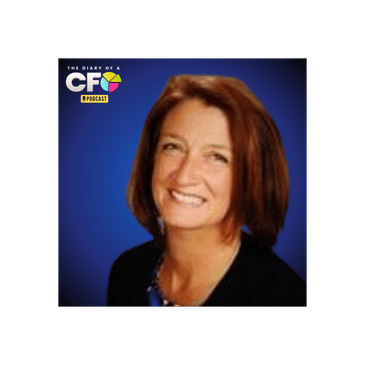

In this episode of The Diary of a CFO, we pull back the curtain on what nonprofit CFO leadership actually looks like, the surprises, the scope, and the resilience it demands. Teri Kozub, a three-time CFO with 33 years in the nonprofit sector, shares the lessons that only come from doing the job across arts organizations, social services, and legal aid, and from building financial stability in environments where the stakes are deeply human.
What Does a Nonprofit CFO Actually Do and What Surprises Most People About the Role
The nonprofit CFO role carries a reputation for being simpler than its for-profit counterpart. In practice, it is anything but. Nonprofit CFOs often carry the widest portfolio in the organization — finance, yes, but also IT, risk management, facilities, HR, and whatever else does not have a clear home elsewhere. The scope expands not because of dysfunction but because the CFO is trusted to hold complexity and make it work.
In this episode of The Diary of a CFO, Wassia Kamon speaks with Teri Kozub, Chief Financial Officer at Community Legal Services of Mid-Florida, about the real texture of a nonprofit finance career. Teri has served as CFO three times across organizations ranging from Ford's Theatre to the Orlando Philharmonic to legal aid services — each one a different mission, a different operating model, and a different set of challenges to grow through.
This episode is for finance professionals considering a move into the nonprofit sector, for CFOs navigating government funding uncertainty, and for anyone building a long career across organizations where financial sustainability and human impact are inseparable. Listeners will leave with a grounded view of what the nonprofit CFO role demands, how to lead functions outside your expertise, and why building community is as important as building a balance sheet.
Why This Episode Matters
If you think nonprofit finance is a simpler version of the CFO role, this episode offers a clear-eyed correction from someone who has lived it across three decades.
If you are a CFO navigating funding uncertainty or leading functions outside your core expertise, this episode offers practical wisdom on trust, communication, and staying strategic under pressure.
If you are building your career in finance and wondering whether mission-driven work is right for you, this episode shows what it looks like to find meaning in the numbers without losing rigor.
Key Takeaways
The CFO role is far more than financial reporting. In nonprofit organizations especially, it extends into operations, IT, risk, and facilities and the willingness to embrace that breadth is what makes a CFO truly valuable.
Leading functions outside your expertise requires hiring well, communicating clearly, and trusting people to do their jobs. Knowing what questions to ask matters more than knowing every answer.
Uncertainty is a constant in nonprofit finance. The most effective response is preparing for the worst while staying optimistic and surrounding yourself with a community that can hold you accountable to that posture.
Building a personal board of directors, diverse in perspective, industry, and background, is one of the most underused tools available to senior finance leaders navigating an isolating role.
Questions This Episode Answers
What are the biggest misconceptions about being a CFO in a nonprofit organization?
How do you lead teams and functions outside your area of expertise?
How should nonprofit CFOs navigate government funding uncertainty?
What is a nonprofit endowment and why does it matter for long-term financial stability?
How do senior finance leaders build community and overcome the isolation of the CFO role?
The Nonprofit CFO Role Is Wider Than Most People Expect
One of the most persistent myths about nonprofit finance is that it is a lighter version of the CFO role — smaller budgets, less complexity, fewer demands. The reality for most nonprofit CFOs, particularly in organizations under $20 million, is the opposite. Because nonprofits operate with lean leadership teams, the CFO becomes the default owner of every function that does not fit neatly somewhere else: IT, risk management, facilities, compliance, and more.
That breadth is not a burden; it is one of the genuine advantages of nonprofit finance careers. It produces CFOs who understand the full mechanics of an organization, who can make decisions across domains, and who are forced to develop leadership skills that pure finance roles rarely require. The CFO who has built an audio tour program, managed a facilities overhaul, and stood up an endowment from scratch has a range of organizational experience that is genuinely hard to replicate elsewhere.
The practical implication is that success in these roles depends far less on mastering every function personally and far more on hiring smart people, communicating clearly, and creating the conditions for others to do their best work. A CFO who can translate financial complexity into terms the board understands, and who can receive IT risk briefings and ask the right follow-up questions, is more valuable than one who tries to become a technical expert in everything.
Leading Through Uncertainty With Financial Clarity
Government funding is a cornerstone of most nonprofit budgets and in recent years, the reliability of that funding has become genuinely unpredictable. For CFOs in this environment, the job is not just to report on financial position but to actively prepare the organization for scenarios it hopes will not materialize. That means scenario planning, reserve strategy, and honest conversations with leadership and the board about what different funding outcomes would require.
Endowments are one of the most powerful tools available to nonprofits for building that kind of long-term resilience. At their core, an endowment is a permanently set-aside fund, invested conservatively, never touched for day-to-day operations, whose purpose is to ensure the organization exists in perpetuity. Even a modest endowment changes the financial posture of a nonprofit, reducing existential vulnerability to any single funding source and creating the foundation for a legacy giving program that can grow over time.
The less visible dimension of navigating uncertainty is emotional and cultural. A CFO who absorbs too much anxiety and projects it onto the team creates a climate of fear that makes strategic thinking harder. Staying grounded, maintaining perspective, and remaining open to input from peers, including those newer to the field, is part of the financial leadership job in ways that never appear on a job description.
Building the Community That Sustains a Long Career
The CFO role carries a particular kind of loneliness. Much of what a CFO knows cannot be shared, it involves people, confidential decisions, and information that is not theirs to disclose. The work often takes place in a room where no one else has the same frame of reference. And the higher the role, the fewer peers there are inside the organization who can offer meaningful reflection.
The most effective response is intentional community-building. Not networking in the transactional sense, but genuine relationships built over time with people who understand the weight of the role. A personal board of directors, diverse in background, industry, and perspective, provides the kind of honest challenge and support that no single mentor or colleague can offer alone. The goal is not agreement but the quality of thinking that comes from being genuinely questioned by people who have your long-term interests at heart.
Mentorship; both seeking it and offering it, matters too. Finance leaders who have accumulated decades of experience carry institutional knowledge that cannot be found in any training program. Passing that forward, even informally, is both a contribution to the profession and a way of staying connected to the reasons the work matters in the first place.
Resources Mentioned
Guest: Teri Kozub, CPA, Chief Financial Officer at Community Legal Services of Mid-Florida
Organizations: Community Legal Services of Mid-Florida, Ford's Theatre, Washington Performing Arts Society, Orlando Philharmonic
CFO Readiness Scorecard: cfo.scoreapp.com
Subscribe to the Finance Executive Track newsletter for actionable insights to become the obvious choice for top finance roles and thrive once you get there
https://the-finance-executive-track.kit.com/signup
Download the free guide on AI prompts every finance leader needs:
https://www.wassiakamon.com/prompts
If you liked this episode, listen next to:
Building a Finance Function That Drives Growth: Lessons from Liberty Bank’s CFO, Paul Young
The First‑Time CFO Playbook: The First 90 Days, Imposter Syndrome and Leading the Business
Learn more about Wassia Kamon and The Diary of a CFO at thediaryofacfo.com.
About The Diary of a CFO
The Diary of a CFO is a podcast about modern finance leadership, hosted by award‑winning CFO Wassia Kamon. The show is for current CFOs, emerging finance leaders, FP&A professionals, and founders who work closely with finance teams.
Each episode explores how CFOs and senior finance executives build high‑performing finance and FP&A teams, partner with CEOs, boards, and capital providers (banks, PE/VC, and impact lenders), and navigate growth, regulation, and transformation without burning out.
TRANSCRIPT
[00:00:00] If people don't know where a task fits, it fits under the CFO. Yes, you need to have smart people and then you need to be able to trust that they're smart and trust that they're doing their job. It's also a good reminder of the power of having a community and people around you. 'cause I feel like being the CFO can be a little lonely.
Numbers isn't what we do all day. Numbers provide us information, but as a CFO, we need to be at the table with the other leaders in the organization. What are some of the thing about being a CFO that might surprise people? Oh. What have you learned about the interesting things that, surprising things people may have about being a CFO in a not-for-profit environment?
That's a huge question. So let me start with the first, uh, meet Teri Kozub, a three time CFO with 33 years of experience in the non-profit sector. She currently serves as Chief financial Officer at Community Legal Services of Mid Florida, overseeing accounting, IT risk management and strategic planner with a strong financial [00:01:00] foundation.
Let's jump into the episode. Welcome back to the Diary of a CFO Podcast, the podcast where finance, you share the lessons, challenges, and wins that shaped their careers as well as their organizations today. I'm your host Wassia Kamon, and I'm delighted to have with me Teri Kozub. Welcome to the show, Terry.
Thank you. Good morning. Glad to be here. Awesome. Me too. 'cause you have such an extensive experience. I can't wait to dive in. So why don't you start with telling us about your journey and the story behind how you find yourself here today in your current role? It's been a good journey. Not always a straight line.
I don't think it's ever a straight line. I actually realized this morning that my middle child is turned 33. So I've been in this business for 33 years now. In the nonprofit side, doing a little bit of. Accounting and finance before that, but absolutely has been a, it's been a journey of just adventure and wonder and awe.
I never knew I wanted to work in the nonprofit world. I knew I [00:02:00] wanted to make the world a better place, so I didn't realize that those actually very much go hand in hand. I spent many years in nonprofit arts. Um, I was at Ford's theater. I was at Washington Performing Arts Society, you know, two just huge organizations in Washington, DC.
Maybe not in size, but in prestige and honor and all that. So had a lot of great people I worked with there. Decided it was cold, moved to Florida, ended up working with the Orlando Philharmonic and part of the Plaza Live. And then for some reason, and I'm really not sure why, but for some reason I went over to the, to the more social services sector for a little bit.
And I liked it, but it wasn't, it wasn't quite the same. And then I actually had a recruiter call me for this position at Community Legal Services. And again, it went back to that, you know, changing the world to make the world a better place. And it was just, it was a whole new adventure that opened up to me.
Many, many years ago I thought briefly about being a lawyer and [00:03:00] I'm never took that journey, but you know, now it's kind of cool that I am, I'm alongside of those people and I'm alongside of people. What I might not have a direct impact on the community. I know what I'm doing has a direct impact on community, and that's huge.
That means so much to me. That is awesome. Uh, it, it is rewarding 'cause I started in for-profit before coming into not-for-profit, and I've been not-for-profit now for almost four years. And it, it does make a difference when you know that the work you do, even though you still, you know, somehow in the numbers and things like that, does contribute to have sustainable impact in the community.
So, glad you find yourself in not-for-profit. Now, the thing is a lot of people think not-for-profit is easy. Easier. What do you have to say about that? Because I don't want it to come from me, but curious to hear you. 33 years, what have you learned about the, the interesting things that, surprising things people may have about being a [00:04:00] CFO in a not-for-profit environment?
Wow, that's a huge question. So let me, lemme start with the first of it's, it's easy, easy. And you're right, it's not, it's always a challenge. I think that's how you learn so much though, and that's how you grow is being a CFO isn't just. It's not just numbers, it's so much more than that. I have cleaned up rats from a basement.
I, as part of the CFO role, you look at your face, you know, I have, um, and I, I wanna talk about some of this more later, but I've also, uh, I've developed audio tours. I've, you know, looked at ways to help seniors that were not quite, you know, in line with what you would think we would be doing. So there's, I think, the.
Best, one of the best things about working, especially for the smaller nonprofits, and when I say smaller, I mean under under 20 million. You get to do a little bit of everything. You, you really get to, you get to work at, you get to play with numbers, you get to look at the endowment account. [00:05:00] How do you, how do you start an endowment?
How do you grow an endowment? What's the budget look like? So you get to do all of those things. But with a nonprofit, there's also so many other pieces that come in from you, because if people don't know where a task fits, it fits under the CFO. So, yes, it's gotcha. Yeah, it is a catchall, but that's, that's also a good thing.
So I think that was the first part of your question, then you asked a second question, kind of tagged onto it. Yes. What, what are some of the thing about being a CFO that might surprise people? Did I count on my fingers? I used to think was only me in the last week, I saw someone's doing this. I'm like, they're counting on their fingers.
So that's, you know, that's definitely surprising. I think, um, another thing is surprising, and I've already mentioned this, the whole idea is that numbers isn't what we do all day. Numbers provide us information, but as a CFO, we need to be at this, at the table with the other leaders in the organization having influence, [00:06:00] thinking strategically on the how do I move my organization forward.
So while the numbers are important, you know we're looking at historical numbers often, we also need to look forward and think what do we need to do to prepare for the future? Then the last kind of, the third thing I guess I would say is, we're actually kind of funny sometimes. They're like, oh, you're a, you, you're a boring accounting person, or whatever.
Not that accounting people are boring either, but you know, they, they always think we're very reserved and buttoned up and buttoned up, and we're not, I mean, you are a perfect example. Then we're just like everybody else. Yes, yes. Thank you so much for sharing. I'm curious to hear, especially since you've been A-A-C-F-O three times, I'm curious to understand, how did you grow into the role of CFO?
Like what was that first CFO experience like versus the second versus the third one? How did you prepare maybe differently or how did you learn the role maybe differently? Um, the first. Time I became a [00:07:00] CFO. Um, I was, I was beyond blessed, beyond fortunate. Someone took a chance on me. I had had a headhunter reach out to me, and this was at Washington Performing Arts Society.
I didn't really know what A CFO was. I knew they did a lot of different things, and I think I came in cheap. So compared to the other person with all those years of experience, they hired me. And then it's like, now what do I do? And it, because it really was a. You know, oftentimes the nonprofit world, especially, I think you do learn on your own.
You learn as you're doing the job and you just kind of figure out what needs to be done and you reach out to people and you get them to help. Since then, you know, the CFO, I would say each time it's gotten easier until I got into this position I'm currently in, because it was a whole new role. It wasn't.
Nonprofit arts anymore. And it was a bigger question. And I remember the first day our chief pro, one of the, like in the first week, our chief program officer came to me and she's like, she starts asking me this huge [00:08:00] question and I'm just thinking how that, nevermind what I know. I had no idea and. Again, I think that's what keeps interesting.
That's what keeps you coming back, is that I'm gonna learn more. I'm gonna do more. I'm gonna, I'm gonna learn something new. I had, I had no idea about the law or anything. How to serve people, how to serve clients. And believe me, I still don't know, you know, I know the tip of the iceberg, not even that much, but it's just, it's always evolving.
The role is always evolving. And I think especially now as you move more into it and cybersecurity risk and you know, it's like I know all this, this, you know, normal things to do, but it, you just have to keep staying on top of things. There's a lot of bad people out in the world and that it just infuriates me.
'cause it's like if they would just shift and do good things, what a better place. So will be so much better. Yeah. Yeah. But that's not gonna happen. So it comes back to how can I make the world a better place? So you learn what [00:09:00] cybersecurity risks are and you learn how to, to work through those. And you know, it's not, it's one of those, a lot of, it's not that hard, it's just being meticulous, paying attention.
Yes. 'cause in your current role, you oversee it and risk management and I'm pretty sure maybe in your first role you were not necessarily overseeing it and maybe were just finance and accounting. So the role is the plate is definitely getting larger. So what has been your go-to move to, you know, getting to that kind of situation and take over and being able to learn to be able to lead effectively other functions that maybe.
Like you are not an expert in, but now you have to lead them. That's a huge question. We can talk about that from all day. To me, the biggest there, there's a few things. You need to have smart people and then you need to be able to trust that they're smart and trust that they're doing their job and that open communication.
My and my director of it, [00:10:00] she keeps me informed. I don't tell her how to do her job. I don't know how to do her job. You wouldn't know how to, yeah, she knows how to do her job, but she comes to me when there's a problem. We talk about things. We talk about how do we, how do we move forward if there's a problem, because it comes down to making decisions and taking risks.
And you know, what are you balancing? What are you gonna, if you choose path A instead of path B, what does that mean? So it's really just trusting them and allowing them to do their job, and also allowing for mistakes. I have made some really stupid mistakes in my career. Some of 'em, lack of judgment or lack of experience, and some just.
I made a mistake that day. You know, so, but you have to allow yourself grace, and I think other people, grace and just mistakes are gonna happen. So you just move forward with that. Then the one other thing I think that's really important is conversations and talking with people. Because if I hire a really good [00:11:00] IT person that they can't tell me what's going on, that doesn't do me any good.
You need, they need to be able to talk English to me, just like I need to be able to take my financial statements and explain them to somebody who's not financial. So it says that, that ability to communicate meaningfully. Yeah, that's um. I think that's really, really important. Great wisdom nuggets right there.
Thank you so much for sharing. I'm curious right now, um, what would you say is the biggest challenge keeping you up at night and how are you navigating through it? The biggest challenge I'm gonna, since January, February has been uncertainty what's happening. Tomorrow, what's gonna happen next week? And you know, even, you know, we get, we have a lot of government funding, as I'm sure a lot of nonprofits do.
And it's just always trying to plan well, what's, what's, what's gonna happen? So there's uncertainty if you know what's gonna happen and you know, oh, I'm gonna get this, this much money every year, some [00:12:00] of 'em might go up a little or down a little. That's easy to plan for. But this past year. Has been really tough because not only were we looking at current year funding, but also, you know, now we're looking at next year's funding and now there's a possible shutdown coming.
So there's a whole lot of uncertainty. Best way to prepare for that is, you know, accept what you can't control. We know we can't control everything, so if I can't control everything, what can I do to prepare for the future? And you prepare for the worst and you just expect the best. Um, I, I was reminded that.
That this past week I was at a conference for a legal services corporation. I met this, uh, brand new CFO. She's about 20 years younger than me, and she was like, your attitude the first day, it was just terrible. You were doom and gloom and you know what? She was right. I, I let myself go down there and it's, and it's refreshing to hear somebody so much younger than you say, you know, be optimistic.
You, you know, we're, we're gonna get [00:13:00] through this. And that was, that was really cool. That was just neat to, to hear that from someone else, from someone who didn't know me that well. But, um, obviously I was not giving off a goodbye that day. But it's, it's also a good reminder of the power of having a community and people around you.
'cause I feel like being a CFO can be a little lonely. Sometimes you're the only finance person talking, um, to other non-finance people. I just feel like it's, maybe as a lady, I'm just curious to hear, you know, you've been a CFO three times, so curious to hear if you do feel like being a CFO and ex top executive period is kind of lonely, and how do you bridge the gap?
How do you build a community around you? Um, I think it is, you know, I, I. Don't know if I've ever really used that word lonely, but I know I have felt that way. Felt a little bit of iso. Isolation because you come off and so much of what you do, you can't [00:14:00] talk about because it's involves people. So much of what you do, you can't talk about because there is some bad news and you're trying to process it and deal with it.
Then a lot of people just don't understand what you're doing. So it goes back to, I think just what you said, you know, building a community, building teams you can trust and not just, we've worked on this so much at community legal services, not just the team that you manage, but also that team across the chiefs.
You know, all of our, all of the chiefs, the human resources officer, the program officer, the executive officer, the growth officer, we all need to be a team as well. And while they might not understand the everything behind the numbers, the, the chief executive officer certainly does, but you know, not everyone's gonna understand all of the things you're going through my head, but they can understand the frustrations I'm feeling.
They can understand the impact of everything that's happening. So I think, you know, kind of having those work communities and then I'm all, I'm [00:15:00] also a big outside of work community person, communities are important, whether it's people with similar. You know, values and goals and fun activities to do outside of work, or if it's networking groups.
I, I hate networking, so that's probably not the best example. But, um, you know, it's just, it's always good to like already go to these conferences. Again, I'm not a, I'm not a big conference person. I met three or four people who it's like, wow. Now when I have a question, you know, I can. I can go to them and I can lean on them.
And that's really, that's reassuring too. So I think just the more you can, can build up connections and build those strong relationships, um, and you don't always have to agree it's mm-hmm. Okay to disagree, but then you just kinda, you work together and I think often we build a stronger. Idea when we come from different sides and different perspectives, and then let's build it up to make it [00:16:00] good.
That's very true. That's, that's very powerful too, is the fact that we don't all have to agree. And I read a book couple actually a couple years ago, it's called Unstuck Unstoppable, by Janine Brown, and she was talking about the idea of a personal board of directors in my first time hearing it. And she was like, you know, companies are.
Support of directors, you should also have one and make sure that it's diverse in terms of not just finance people. You need maybe a lawyer, a CEO, and it went back to what you just said, having different perspectives. You may not always agree, but it definitely make you a stronger as an executive period.
But being able to have better decisions because people are coming from different angles and challenging you differently as well. So that has been very, I've been very grateful for that. 'cause I expanded my personal board of directors since, and I've been mentioning it everywhere I go because it does feel sometimes lonely.
Yeah. I, I really like that idea. [00:17:00] Um, one of the. I know you haven't asked this or, and, and I'm just gonna, I guess I'm just gonna volunteer it. One of the things that I really wish I had done, I've never had a mentor, you know, when I was, when I started in this business years ago, I remember when I said, oh yeah, I'm in nonprofit arts.
People looked at me and they're like, oh, I want my kids to go into a field that pays. You know, that's not a respectable job or whatever. There was never anyone there, I never had a mentor. So I, I would love if I could have one redo in my, in my professional life, find a mentor. And I think that goes very much in line with, I like the board of directors.
I did. Now that I'm a little bit old, I think I'm, uh, too old for a mentor, but a board of directors, that's I. I wanna follow up on that. That's great. Oh yeah, for sure. We'll definitely drop the link in the jo in the show notes too. But it's something that, especially as women in finance, 'cause there is the role of the CFO being a law and then being a woman in executive leadership can also come with its own set of [00:18:00] challenges.
So definitely, um, surrounding yourself with the right people, it's has been very comforting for me at least. So. But thanks for sharing. Um, I've always been into, you know, mentoring or whatever, so I'm like, oh, you never had a mentor. So, so right now you don't have a mentor. I'm curious, but are you a mentor to somebody else?
I haven't done that. Um, I should, I've, I've definitely given people advice and kind of said, well, this is what I would do, or this is how I would handle. I would recently had somebody who, again, is like this job number two out of college and she was like, you always know so much, you know what to say. And I just was like, I've been doing this forever, you know, it's.
It's like I'm older than your parents, but you know, I, it goes back to diversity. I think age diversity, it's just one form of diversity and. Personally, I think the more we can embrace diversity, we just come across with better ideas and better [00:19:00] solutions. Yes, we do. I agree. I agree. I'm curious now about maybe, uh, the best project you worked on or, you know, maybe something, um, 'cause I think you, you, you started an endowment from scratch and the, the idea of endowment is.
When I got enough for profit, I was like, wait, what? How does it work? So maybe you can share something around that because it's one of those things that don't exist in for profit. So the other question I wanna hit on first though, on, uh, you the, the favorite project, um, it had nothing. Absolutely nothing to do with finance.
And, and I think that's part of why it was my favorite. And then part of it is 'cause I think it actually was super successful when I, I worked at Fort's Theater twice actually. And the second time I worked there, I was Director of Finance and Administration, which is the same, I was like the deputy director or one of the deputy directors.
So that's the same as being a CFO, even though the title's not quite the same. We were looking at ways to [00:20:00] diversify revenue and diversify income, and somebody had said, Hey, I heard this was many years ago. We'll leave it at that. So audio tours were still a very new thing and someone's like, let's start an audio tour, Terry, why don't you do it?
Because you're trying to make more money for us? I didn't know what audio tour was. So we had to do, we did an audio tour, and I like museums. I'm not a museum person. I don't read all the signs, so I'm in charge of making an audio tour. For a museum that's attached to Fort's Theater. It was great. It was great 'cause you actually can hire companies and hire writers and all of that.
So it was more of a managing the project. But you know, that's, I think that's my kind of thing that had I been in a for-profit world than a bigger company, I would've never had that opportunity. So that's just really, that's really kind of cool. You know, all because that, well, you didn't narrate, like when you said audio talking, were you the one reading the thing?
No. You just, oh, no, no. I got to, [00:21:00] we got to hear like audio tapes of the people reading and all that. We could decide the voices and everything, and then about Oh, wow. Halfway through and said, we need a kids' version of this too. So, you know, there's, there's things like that that are always a lot of fun and you never know what the day's gonna bring Uhhuh.
Nice. Nice. And then the endowment. Can you The Endowment. Endowment 1 0 1. 'cause I'm interesting in doing that. But you know, since you here, I'm like, okay, why not teach me? So endowments are interesting. I've never been in a nonprofit without an endowment until Community Legal Services. And, you know, we're about to celebrate 60 years, so it seems like it was time.
We actually got a gift from McKenzie Scott, the. Gazillionaire. We had a gift from her. It's been a few years now, and it wasn't huge. It was a couple million dollars, which, you know, and I know her gifts range from, you know, a a million to 70 million I think was yesterday's headline. [00:22:00] So they range all over, but her instructions with the gift.
Do something you've never been able to do. So for us, and for me, it's like we need to build an endowment. And at first people are like, oh, let's do this, let's do that. And then it's like, no, we've never been able to do this. You know, there's never enough money that you can just set aside this other piece of money and say, I'm never gonna touch that, and I just want it to grow.
So that's where our endowment came from. It was a beautiful thing. It wasn't, I don't wanna say it wasn't work on our part because I think that she gives to companies that, do they, they've already. Done the work and she's acknowledging it. So lots of work on our part, but nothing to really, not to actually put the money in the bank.
Okay. And for people who don't understand how, what an endowment is or like what are the benefits of an endowment for an organization, can you please share, uh, some one-on-one nuggets here? Yeah, so the, you know, [00:23:00] the endowment is really just an account, simple terms. It's set aside, you don't use it for day-to-day operations.
You don't use it for anything really. You, the goal is to actually be putting money into it. It's also invested very conservatively, and the, the goal is for that money to always be there, for it to be in per, I can't say that word, perpetuity, have it around forever. One of the good. Pieces of an endowment is actually to use it as a, as a marketing campaign almost for your fundraising efforts, you know, to do it, to have a whole legacy program where this, this sounds terrible, but when people pass away, you know, to, to benefit financially from, from them as well, where, you know, maybe they give 10,000, maybe they give 50,000, but many people don't have kids or family or whatever, and they're, they need someone to give their money to.
So it's great for that, but it's, you know, that's, that's one way that you can build it. And I can't believe I just went down that tangent, but you just wanna [00:24:00] build it. And you know, you hear about these huge schools that have hundreds of millions. And their endowments. Or endowments, yeah. Yeah. Most of us don't live like that.
We have, you know, one to 10 million in our endowment, and when it gets that big, then you can maybe fund a position from it if, if you have a $10 million endowment, you know, take some of the earnings and use it towards some sort of operation. But mostly you're just putting that money away, not even for a rainy day, but just putting that money away so that your organization will always have a legacy.
Will always exist. Wow. Thank you so much for sharing because it's one of those things that we don't always understand from, you know, reading the business news and things like that. We hear the, the, the, the name, the term, but we don't always know what it means. And especially when we, we go back to how we said earlier, the uncertainty going on right now.
Those organizations that have in Doman do have an advantage, right? Oh, yes. Very much so. Yes. [00:25:00] So, uh, what would you say is one piece of wisdom that you pass along to the next generation of finance leader? To be a sponge, to really learn everything you can, whether it's about your role or another role. To not, to not shy away from the opportunities, to not shy away from the audio tours or from going to, we do a lot of outreach events at community legal Services, you know, where we're going out into the community.
You, you meet the people you're serving. And so many times in finance you get pulled back and you're behind this wall and nobody sees you and you don't know who you're serving. So, but to really become a part of the organization, then you know its values, you know what people are working on, you know what breaks their heart and you know what drives them and keeps them up at night and that just makes you so much better in your role.
Wow. That's so good. Thank you. I know we, we, getting to the end, so I'm just gonna ask you two more [00:26:00] questions. So, what's your favorite quote and why? So, my favorite quote's, not technically a quote, but I'm gonna use it as a quote, speak up for those who cannot speak for themselves. For the rights of all who are destitute.
That's actually from the Bible. It's uh, Proverbs 31, 8, and it's just, there's so much. This is, I know I'm all over the map, but there's so much in the Bible, especially in Lake Proverbs that is about justice for all, for everyone, and that it's our responsibility to look out for each other. To make sure everything, to as much as we can to make sure life is fair.
We're taking care of other people. You know, it's one thing to say, oh yeah, you know, you know, hope you're, well stay warm and all that, but if you don't give your coat, then how are you helping them stay warm? So if you don't give them legal. Services, how are you helping them? You can't say, oh, I, I hope you get over your, [00:27:00] your legal issues, but you have to speak up for them.
These people, the people that we serve, don't have voices in the courtrooms. Wow. So this has always been up there as one of my favorites. And since I've been at Community Legal Services, obviously that is so. Important. And it doesn't matter to me. You can believe or not believe, or you can believe whatever you want, but you cannot question that statement to speak up for those who cannot speak for themselves, for the rights of all who were destitute.
Wow. So that must have been a full circle moment for you. Yeah, working where you are. So thank you so much for sharing. Um, my last question will, will be, what's your favorite thing to do outside of work? I'm excited to know that one. 'cause you left DC to come to Florida. So what are you doing on the weekends?
Well, it's DI love back in Virginia, but that's a whole nother story. Uh, but I'm still working in Florida. I love to hike. So I like cooler weather, so I'm really looking forward to the next few months. But I like to hike and you know, if you [00:28:00] hike, you get thirsty, so you have to drink beer. So that's all good too.
And other than that, and the reason I moved back up north is it, it what everybody says, my friends and family, you know, those are, those are certainly important to me, but have a super close family. Everybody's close and that's why we're back up here. But so friends, family, hiking and beer. There you go.
That's me. Good. Good. Well, thank you. Thank you so much for being on the show. It was such a great conversation. Well, thank you. Thank you. You made it easy. Thank you. And that's it for today's episode of The Diary of the CFO. Thank you so much for tuning in. If you enjoy the show, don't forget to like, review, subscribe, and share with others.
Our website is a diary of a cfo.com. That's where you can find all the episodes, access all the guest profiles, see their bios and the social media links. It is also the place where you can apply to be a guest on the podcast and have information about how you can [00:29:00] sponsor the show As always. If there is any topic you would like me to cover in the future, just email me at ask at the diary of a cfo.com.
See you soon, wondering if you're ready for the CFO role? Find out with a free CFO readiness scorecard@cfo.scoreapp.com.