
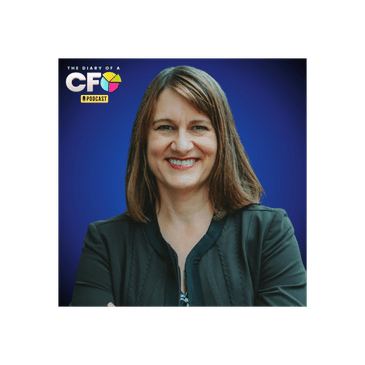


In this episode of The Diary of a CFO, we explore why many talented professionals remain stuck in mid-management despite strong performance and credentials. Leadership coach Jill Avey shares how executive presence, visibility, and intentional career ownership shape who ultimately advances to senior leadership. Drawing on her experience as a corporate executive and leadership coach, she breaks down the behaviors that signal readiness for promotion and the invisible barriers that often keep high performers from reaching the C-suite.
Why Executive Presence and Visibility Matter for Career Advancement
Technical excellence and consistent results are essential for career growth, but they are rarely enough to secure executive roles. Organizations promote leaders not only for their work output but for how they show up, influence others, and demonstrate readiness to operate at higher levels.
In this episode of The Diary of a CFO, Wassia Kamon speaks with Jill Avey, Founder of SisterSmart® and a Professional Certified Coach who helps high-achieving women transition from director and VP roles into executive leadership. After 25 years leading complex cross-functional teams in corporate marketing, Jill built her coaching practice to address a gap she repeatedly observed: talented professionals who were highly capable but invisible to decision-makers.
This episode is particularly relevant for professionals navigating the difficult transition from middle management into senior leadership. It offers practical insight into how executive presence, strategic communication, and intentional visibility can dramatically accelerate career progress.
Why This Episode Matters
If you feel stuck at the director or VP level despite strong results, this episode explains why visibility often determines advancement.
If you have been told to develop “executive presence” without clear guidance, this conversation breaks down what the concept actually means.
If you want to build influence and credibility with senior leadership, the episode offers practical behaviors that increase your leadership visibility.
Key Takeaways
Executive presence is not an innate personality trait but a set of behaviors that professionals can deliberately develop.
Promotions rarely come from hard work alone; leaders advance when others clearly see their impact and leadership potential.
Authentic leadership matters because professionals who try to imitate traditional leadership molds often undermine their credibility.
Listening and preparation are critical leadership skills that help build trust and strengthen influence in high-stakes conversations.
Strategic visibility, including communicating results and building cross-department relationships, is essential for career advancement.
Questions This Episode Answers
What does executive presence actually mean in a leadership context?
Why do so many talented professionals remain stuck at the director or VP level?
How can professionals build influence without appearing overly aggressive?
What practical habits improve credibility and leadership perception?
How can leaders increase their visibility without resorting to self-promotion?
What role do coaching and mentorship play in accelerating career growth?
What Executive Presence Really Means in Leadership
Executive presence is often described as a difficult concept to define, yet leaders immediately recognize it when they see it. It is a combination of behaviors that signal credibility, confidence, and leadership readiness.
Jill’s framework breaks executive presence into several elements, including how a leader presents themselves, how they connect with others, how they operate professionally, and how they treat the people around them. Together, these behaviors create the impression that someone is capable of guiding teams and influencing decisions at higher levels.
Importantly, executive presence is not limited to extroverts or charismatic personalities. It can be learned and developed through intentional practice, reflection, and leadership experience.
Why High Performers Often Get Stuck in Mid-Management
Many professionals assume that producing excellent work will naturally lead to promotions. In reality, advancement depends heavily on visibility and perceived leadership potential.
Jill explains that professionals often fall into the “busyness trap,” focusing entirely on execution while neglecting the broader communication and relationship-building required for advancement. Without actively sharing results and building relationships across departments, senior leaders may never fully recognize the value someone brings to the organization.
Breaking out of this cycle requires shifting from simply completing tasks to demonstrating strategic thinking, impact, and leadership capability.
How Leaders Can Increase Their Visibility Without Self-Promotion
Visibility does not require aggressive self-promotion. Instead, it often begins with intentionally communicating outcomes and aligning work with organizational priorities.
Jill recommends tracking measurable impact, highlighting team achievements, and sharing results with stakeholders through concise updates or recap emails. These small communication habits help leaders understand how someone’s work contributes to the company’s broader objectives.
Equally important is building relationships across departments. By understanding how other teams measure success and how their roles intersect with your work, you create opportunities to demonstrate collaboration, strategic thinking, and enterprise awareness.
How Listening Strengthens Executive Presence
One of the most overlooked leadership skills is listening. While many professionals focus on delivering strong presentations, influence often begins with understanding other perspectives.
Jill emphasizes that leaders who actively listen build trust faster and create more productive conversations. When people feel heard, they are more open to considering new ideas and collaborating on solutions.
Preparing thoughtful questions, understanding stakeholders’ priorities, and entering meetings with curiosity rather than defensiveness can significantly strengthen executive presence.
Why Coaching Can Accelerate Leadership Growth
Professional coaching provides a structured way to develop leadership capabilities that are rarely taught in traditional corporate training programs.
Unlike mentors, who typically offer perspective based on their own experience, coaches focus entirely on helping clients identify strengths, overcome career barriers, and build the skills required for advancement.
Jill explains that targeted coaching can significantly shorten the path to executive roles by helping professionals focus on the behaviors that drive visibility, influence, and leadership credibility.
Resources Mentioned
Guest: Jill Avey, Founder of SisterSmart® and Professional Certified Coach
Organization: SisterSmart® Leadership Programs
Topics: Executive Presence, Leadership Visibility, Women in Leadership, Career Advancement, Executive Coaching
Subscribe to the Finance Executive Track newsletter for actionable insights to become the obvious choice for top finance roles and thrive once you get there
https://the-finance-executive-track.kit.com/signup
Download the free guide on AI prompts every finance leader needs:
https://www.wassiakamon.com/prompts
If you liked this episode, listen next to:
Learn more about Wassia Kamon and The Diary of a CFO at thediaryofacfo.com.
About The Diary of a CFO
The Diary of a CFO is a podcast about modern finance leadership, hosted by award‑winning CFO Wassia Kamon. The show is for current CFOs, emerging finance leaders, FP&A professionals, and founders who work closely with finance teams.
Each episode explores how CFOs and senior finance executives build high‑performing finance and FP&A teams, partner with CEOs, boards, and capital providers (banks, PE/VC, and impact lenders), and navigate growth, regulation, and transformation without burning out.
TRANSCRIPT
[00:00:00] You could shorten your career path by 10 years by hiring the right coach. I'm curious to hear for women, for example, how can we show confidence without having to worry that we seen as too strong or aggressive? My biggest tip, the, I'm not gonna say it's easy, but my biggest tip is to always. Jill Vy helps women leaders get promoted to the director and VP levels with the Sister Smart Leadership Programs.
She does this by supporting her clients to develop their strengths, increase their influence, and improve team performance while navigating gender bias. Executive presidents, we can sum that up. It's that special. Something about people that tells you that they're the leader. 90% of the time it. To the visible people that move up.
It's not a reward for hard work. They're moving you up because they see that you can add value at the senior level. For somebody listening that feel that they're in that stuck level, what could be one or two things that can start doing differently? So how do we get more visible? The things that you could [00:01:00] do?
One of 'em. Welcome back to the Diary of a CFO podcast. I'm your host Wassia Kamon, and today's guest knows exactly what it takes to be seen, heard, and promoted. Not just what you do, but for how you show up. Welcome to the show, Jill. Oh, thanks so much for having me. Of course. I will definitely love to spend our time talking a lot about executive presence.
So starting with the basics. What is executive presence to you? Executive presence. We can sum that up. It's a, it's one of these very difficult topics, like it's that thing that you know when you feel it, but it's hard to describe. And so that's kind of how we can sum it up is it's that special. Something about people that tells you that they're the leader.
It's really in how we hold ourselves. It's the energy that we bring off, but it's also a bunch of behaviors. And so you have to have both though. And there's a author and researcher, um, Sylvia and Hewlett who is out of Harvard, and she's done an incredible [00:02:00] amount of research on executive presence. She has a real simple model that's.
Communication plus gravitas, plus appearance. And that is kind of a easier way to think about it. You know, it gives, it gives us something to grab onto. It's not the model that I use. I use a more complicated model because I find that gravitas is still one of those ambiguous things, and it's hard to explain that one.
And so it's, um. I've done, I've researched this because I saw right away that executive presence was something that was kind of mysterious. It was something I didn't understand that well in my career. I could have done a lot better job at this when I was a vp, but I, I just leaned into it as a coach because I knew that this is something that people really needed.
So I've studied it for years and so I feel like I've cracked the code, but it is hard to, it's hard to explain. And it, even the researchers, even the experts don't do a good job at explaining it. I don't think so that's where. Having a lot of conversations about it and talking about the different [00:03:00] behaviors, um, it really makes a difference.
Okay. So now I'm curious to hear, because you said Gravita is not even English. So how would you define with the research that you did, um, what is executive presence and do you think it's something that people are born with or is it something that they can learn? It's definitely something you can learn.
I don't think. I don't know if anybody's born with it, but there are some of those little kids who are like, blah, blah, blah, blah. You know? And you think, I have a nephew and I'm like, he's gonna be in sales. And so, you know that it can come naturally. Some people are naturally more charismatic, for example.
Um, but it's, it's not charisma. It's not really how you, um. Uh, how you, your personality, you know? So, um, we can definitely learn it. So that's the good news. And, um, so there's, I break it. My, my personal models, I break it down into five different categories. So appearance is one, because that's the critical [00:04:00] first filter is Hewlett calls it and people will make a judgment on your appearance as do you look like a leader.
And there's, there's a look that leaders have and you know. I'm, you know, I love that we're busting that right now 'cause I'm all about like breaking rules and um, you know, for example, curly hair has been one that like straight hair has been an executive thing for women, but curly hair is now like totally breaking in and, you know, I encourage my clients to.
Wear it how you like it, wear what makes you feel best. And you know, clothing too, you know, there, we don't have to be in a black suit, but we can really put our own signature style into that. So that's, that's kinda the easy part is the appearance. A lot of people get stuck there and a lot of people get stuck on like, um, presentation skills and, you know, those kinds of things too.
But that's. I don't even count presentation skills in a, in executive presence because that's more of a skillset. What I do count [00:05:00] is, um, what I call, I say it's how I operate, it's how I connect with people. It's how I present myself and it's how I am connecting with others. So it's how you know. Do people resonate with me?
Do I care? You know, do I have empathy? Do I put myself in other people's shoes? That's, that's a big part of executive presence. And then, um. How I operate is, do I have practical wisdom? Do I know my job? Mm-hmm. You know, you have to have the technical skills to be a leader and people need to be able to trust that you're gonna make the right calls, that you have a vision that, and uh, it's a vision that people wanna follow.
And that's tough. Right now, it's AI changing everything. It's very hard to have a vision of where we're going. And so, you know, but people need that and people need you to. Bring everybody together. You know, are you, I had a mentor once that said that business is at 10,000 [00:06:00] steps and it's up to you as a leader to bring all those steps going in the right direction.
So that's, you know, somebody who can do that, has that presence about them. And then, so you said your model had five, you mentioned appearance was one. Um, I'm assuming practical wisdom is the other part. So it's how I connect. Yeah. How I look. How I look was the pre, the appearance one. Oh, okay. So how I look, how I connect.
Okay. How I operate. How I operate. Okay. How I treat others. How I treat others. Okay. And then how I present. How I present, huh? Okay. That's like how I present myself, not how I present a presentation. So. Yeah. Got it. Okay. So when you mentioned how I operate, um, can you, can you, you know, bring gi give me more here on how I operate?
So, yeah, so for me that's how do [00:07:00] I operate in the world? How, how am I doing my job? How am I, you know, that's that practical wisdom piece. It's the vision piece. It's bringing everybody together towards that goal and, you know, do people trust you in the thing you do? So you're in finance. Do I trust that you're really.
You know, managing the finances in the way that's gonna be best for everybody. Or do I think that your, somebody without good executive presence would be somebody who's looking out for their own bonus, for example, and ouch. And that's not good Executive presence, that's the me show. You know? And, and good executive presence.
A leader cares about the we, not the me. Wow. Thank you so much for sharing. So why do you think so many capable wi um, leaders, especially women, get told they need more presence? Because from what you've described, it's pretty simple, right? How I operate, how I connect, how I engage with other, but. Why is it that you can have all the technical skills that you need in your field?
So I'm in finance, I have all the letters possible, [00:08:00] and I was still told I didn't have executive presence, so the only one. So I think there's, yeah, I think there's a lot of reasons. Um, and you know, there's reasons for men and women to not be showing the executive presence that they could be. Part of it's just that you've never worked on it, because there's very few places to work on it.
There's very few resources on how to actually develop the skills. Like you can read some books and learn about it, but that doesn't actually tell you how to develop the skills. And so that would be one thing. There's also another factor that I think is huge, uh, for. For all sorts of people, but I work with women specifically, so I know that this is a factor for women is that, um, if you aren't fitting into the traditional male leadership mold, so, um, you know, for ex women don't, you know, they're, they're, you know, they lead in a different way.
Usually they lead. With a different set of skills to the forefront. Sometimes, sometimes not. You know, uh, women can [00:09:00] lead with very masculine leadership skills, and that's fine too. Generally, we're not fitting the mold, and that's why we get told you, you don't look like a leader. Mm. 'cause they're not used to seeing that kind of leadership.
And so this doesn't, I feel really strongly about building our executive presence in authentic way of figuring out what's right for us, and then really being able to understand that and describe it to others because you can help people along in understanding you as a leader and having them see you as a leader when you can talk about those things.
And so let's say you're a guy who is, uh, like nice guys, have as much problem as women do in the workplace. So like, let's say you're a nice guy and they're calling you, you know, saying that, you know, you're not a, not leadership material, you know, and so you can put together. You know, there's 15 different facets that we work with.
In executive presence, you can put together your own style and show how this, I connect with people very deeply. I understand people, [00:10:00] and so that makes them want to come along with me. That makes them want to follow my vision because they know I understand their world. A guy can say that just as well as a, as a gal.
So, you know, these are, these are ways that we can explain ourselves to be shown as the, the, with the executive presence that we do have. Wow, that's quite powerful because yeah, I personally started in corporate America and there was nobody looking like me, um, at the top of the organization. Yeah. Like that representation was not there, especially in finance, period.
Um, so I'm curious to hear, um, especially when you were talking about. Masculine trait of leadership and how ni, you know, nice guys also struggle for women, for example, how can we show confidence without having to worry that we're seen as too strong or aggressive? Like I, I feel like it's a double-edged sword almost in most cases.
Yes, yes. That's one of those double binds that women face. We face a lot of double binds, but that's definitely one of 'em is that it's easy for us to tip over [00:11:00] from assertiveness to aggressiveness and. If there's my biggest tip, the, I'm not gonna say it's easy, but my biggest tip is to always add warmth in.
So. If you come to the conversation there is, you know, we're gonna pick our times when we need to be assertive. And there are times when we need to be assertive and there are times when we're going to, you know, be risk. We're gonna risk being called the B word, you know, and we're gonna, you know, and that's okay.
People can think that we're not nice sometimes. And you know, women are expected to be pleasing, helpful, and nice, and we can go against that. But when we bring warmth and like a kindness into it, like we're doing this for the good of everybody. I'm laying down the line here because we all need this, not because I am mad or I, you know, was trot on or whatever, you know, um, it's, it's coming to it with that we approach and, which [00:12:00] is, you know, what that does is women have different gender expectations.
It are. Our societies are the way they are, and men and women have different social expectations. And one of the expectations that women have to deal with is that we are going to look out for the whole, and it's much more, it's okay for men to look out for themselves, but we will get judged. Um, it's, that's our, you know, that's the bias that we're, that we'll face and we'll be judged by men and women, you know, and so.
Yeah, it just, because it's just gonna rub people wrong. And so when we bring that warmth in and thinking about the whole, and I'm, you know, I'm, I'm making a stand for this because I'm looking out for the company, for all the teams, for the budgets or whatever it is that, that bigger picture, then all of a sudden that can be so much more.
Curable for people, you know, because when we strike [00:13:00] against those gender norms, then the ears can close and our message isn't being heard because they're too caught up in how they feel about it. Wow. So let's say I walk into a high stake meetings tomorrow. Um, the habit. What is a micro habit or how can I apply this warmth to change how I'm perceived?
Like I, I still want people to see me as an executive. I don't wanna be seen as too aggressive, but I have a tough message to deliver. So how do you prepare for those kind of meetings? I think the best thing is how you prepare yourself. And so, um. I'm gonna pull from a, another part of what I do in coaching, which is my communication training, and we talk about priming for trust.
And so that's something where that's about preparing yourself and. Really being prepared with your message and why. You know, what is the purpose of this? What is the bigger picture? What is the mission you're [00:14:00] serving with this tough message? Or do you have to get tough with the people? Sometimes there's these characters that you really have to get tough with, and especially at the executive levels, like it can be rough and tumble and.
So does that character need you to be tough with them so they can hear you? You know, so if you come in knowing kind of what you're serving and why you're doing what you're doing and coming in with, you know, kind of piecing your heart about that. Because if you come in with anger about it and you've had it, or you've, you know, you're not taking anymore or you know, something like that.
Totally different message you're gonna deliver. And so it's about really taking care of ourselves first, our own emotional balance and making sure that we're grounded when we come into that conversation. For me, what always worked really well was, um, having compassion for the other people in the room because they're just trying to get their jobs done too.
And if I would think about where they're coming from, if there are people that you [00:15:00] know, um, then you could think about. Even something that you love about them. I mean, you can find something to love about everybody, even the most grizzly characters like I could. That was always my challenge was how can I find something that I love about them?
And so if I can remember that before I say what I'm gonna say, it comes off so much better, a lot less aggressive. Okay. And then I like how you said, preparing for yourself, almost doing your homework on the people that you are also going to be talking to. Right. Understanding why, what will make their ears closed, like you said.
Mm-hmm. Earlier. Mm-hmm. You've dealt with, in your practice, you deal with a lot of women coming in. What are some of the things we usually say, don't do this or do more of this so that the ears stay open so that your message actually lend. The things that I think is really important with the opening the ears part is that people feel heard and so.[00:16:00]
I mean, even with your, you know, in your own family. Right. I'll argue against my husband so hard until I feel heard and I know he's doing the same thing. And you know, I, I've been a coach for a long time and I've been in personal development for a really long time, and we still do it. We still catch ourselves doing it.
Yeah. It's so hard to listen, but that's why the prep is so important because when you. When you prep yourself and you're ready for the questions that you're gonna ask, or at least have some ideas, you can change in the moment if you've already prepared yourself. But the more people feel listened to, the more you're asking them, you know, what's your viewpoint on that?
You know, ears open, wide up. Once they feel heard, they feel you understand where they're coming from. It's much more likely that you're gonna. Be listened to in a calm, you know, receptive manner. [00:17:00] If you've been listening first and you know, sometimes it's hard to be the first one to go. Sometimes you wanna be the one talking, but you have to think about what do I want outta this conversation?
What is my goal? And sometimes it's, you know, for you to, to do the work of doing the listening first. And you know, often you're gonna get listened to a lot more when you've done that first. And that's. So that's a better conversation for everybody. True. And that's how you're able to show that you are a partner in whatever problem you're trying to solve too.
So absolutely. Thanks for sharing that. Which is hard for us introverts. So I'm an ex extra extrovert, I should say. It's hard for extrovert to listen. Like, it's hard for us. So any, I'm an extrovert too, so. So any extra tip for the extrovert listening, but also for the introverts, right? Because sometime we feel like, uh, having a strong executive presence is that charisma is presenting well.
And if you are introvert, can you have some executive presence? Can [00:18:00] introvert Definitely. Listen, my poor husband, he listens, but I don't, so yeah. And I, I mean, I, my husband's an introvert too, thankfully, because my first husband was an extrovert as well. And boy, that was competition, you know? And so, you know, really, I, I think both of us need to listen, but a lot of times the extrovert, uh, you know, they're, they're struggling with the listening, but the introvert is also struggling a lot of times with saying what they feel.
And so one of the things that they can do is when the extrovert is actually trying to listen and they come in prepared to do that, open up a little bit, you know, talk a little bit more, give them a little bit more information because they want it and they, they need you to help them continue to listen.
And, you know, if you continue the conversation along, that can be really helpful. Wow. And then as an extrovert, so I, I, I have a post-it on, on [00:19:00] my desktop here that literally has, listen, I wrote, listen on the post-it note and put it on my, on my desktop just so I can remember. But it's hard to do when you are in person, right?
So I learned that trick being remote and having my post-it note right here saying, listen. But when you are in the moment, like what are some things that could help? It's, I think it's important to have a cue for yourself, um, no matter where you are. So if you're in person in a meeting, some, some leaders do a thing where they prep themselves as they walk through the door, and that whatever practice they need to have, uh, grounding, breathing, you know, um, usually calming yourself before a meeting that helps us be in the right part of our brain and, you know, um.
That's where our best behavior and our best thinking comes from. So, um, having that kind of, this is what I do every [00:20:00] time I walk through a doorway, I take a breath and I, you know, and I kind of put my feel, my feet on the ground, you know, that kind of thing can really help. And I think, as I mentioned, good meeting preparation of what are the questions, what are the things I want to learn from this person?
Because if you have that all figured out, it's gonna be a lot easier to listen. Maybe you have some questions written down already, you know that's gonna prime you to wanna ask the questions and then listen, and so you'll be totally ready for it. Sometimes we don't get to prepare for every meeting, though, you know, lots of meetings we're sliding in from another meeting and what are we talking about today?
And so for me, I, you know, I always have a notepad with me. I like to hand write notes, um, rather than type on my computer. So if you've got a computer, you can do the post-it note or some kind of like. Label on your computer if you need to, you know, if you're bringing your laptop into meetings, but for me, I'm a hand writer, so I write at the top of my page.
You'll listen Or, [00:21:00] oh, it used to be keep your mouth shut. I do that too. I do have a shut up. Uh, posted notes. KYMS. Whatever works. Whatever works, whatever works. Yes. So I'm curious to hear, with all the years you spent in coaching, first, what got you into coaching? And especially diving in like you've done with executive presence.
I, um, so I, I spent 25 years in marketing and I led a lot of cross-functional, complex cross-functional teams with, you know, all the players. And that is really hard work, and it, and it kind of wore me out. And so I, uh, I decided I wanted to have a second act in my career and that I wanted to do something that was gonna be more of service.
And I, I personally would like to work till I'm 80. And so, um, I. Picked coaching as a way that I could, you know, kind of taper down, but not have to, you know, leave, leave work altogether. 'cause I, I love being in the [00:22:00] world, you know, I spent my career traveling around the world and so now the world comes to me through my clients and, and I loved leadership.
So this is a way for me to bring, uh, my background into something new and into helping people. And, um, for me it's really motivating. It became. It became obvious right away that I should work with women and it's really motivating for me to help women rise up because I think there's just a lot of overlooked talent in the workforce that doesn't have the leadership training.
I work specifically with, with women at the director and VP levels and help them move up to the next level. So whether that's the VP or C-suite level. So I think that there's not a lot of support in that middle of the pipeline, is what we call it, um, to help people get from middle management to upper management.
Um, it's usually not a place where companies are spending a lot. They may do some workshops, but you're not getting that personal development that, [00:23:00] you know, you get all that when you're a senior management, but you don't get it. To bring out the potential to show that you could be really good in senior management.
And so I feel like that's a, that's the problem that I wanted to solve with my business. That's a big problem because I feel like I was stuck at that director level for so long. Um, you're doing all the work 'cause you middle management is like, it's so hard. Yeah. Time with employees because the first, the first step, so right.
You, you start on the individual contributor, you move to management and sometimes now you managing your peers, doing performance review. You haven't woke up from this nightmare. Then now you're thrown into something else. But there is very little, like you said, beyond the workshop that you do once a year or twice a year to really help you break from that director VP to C-suite and more executive roles.
So what have you seen as being the main obstacle, um, or problems that [00:24:00] get people stuck at that level? I would think we can, I mean, there's a skillset, you know, there's the communi, to me it's strategic perspective, it's communication, executive presence. Uh, and it's also self-awareness. So the first step is really understanding yourself and what it is that you are bringing that's special about you.
And being able to talk about that, understanding your leadership style, and then developing that executive presence based off of what's special about you. And then when you have that package together, now you can, um, you can bring that into the world. And so it all comes down to visibility in my mind, because.
Nobody knows what you're doing. So many people get stuck in the doing part, and they're working harder and harder hoping that somebody's gonna notice and move them up. And once in a while, that works. I'd say 10% of the time that works. But 90% of the time it's the visible people that move up and there's, it's [00:25:00] not a reward for hard work.
They're moving you up because they see that you can add value at the senior level. They see how you're thinking, they see how you're solving problems. They see the impact you're making in the company, most importantly, and they want more of that. And they see that you could do even more from a higher level.
And until you can show people that and do that translation for people, you're not gonna get the attention. That's very true. That's some hard, hard, tough love right there. Yeah. So, um, for somebody listening that feel that they're in that stuck level, if I can say what could be one or two things that can start doing differently to start having that visibility?
'cause 90% of people not being seen for the hard work is, is hard. It's a hard statistic. Yeah. Yeah. It's, and that's, there's no data behind that, by the way. I, I, I can. That's my feel. I, I, that's how I felt too. I, I felt like the mo, the most visible people would move [00:26:00] up. Some, some of them I just felt like were jerks, but they're the, they were the one that were visible.
They're the one that were bragging or, you know, showing the world and networking and in all those dreams. So after hours and all these things, but that were visible. Yeah. They were visible. Yeah. So how do we get more visible? The things that you could do? One of 'em is check your busyness, because the busyness trap is something that we work with in our program and you know, are you really doing every, you know, is everything that you're doing really that important?
Because I would love for you to trim a couple hours a week off. Is it a meeting you don't have to go to? Is it something you could delegate? Those are the easiest ways to do, um, things, but also, you know, check out your workload. Like there may be things that you just don't even have to do that you're still prioritizing and so can you trim off a couple hours a week to go out and get yourself visible?
And so let's say you have found two hours a week. What do [00:27:00] you do with that time? Now I want you to start tracking what you're doing and measuring the impact because so often we finish up a project and we just run to the next thing, and we're not even stopping to see for ourselves what, what did we do?
What you know, and that will really help you on the busyness front because you'll start to be able to see. Out of all the activities that I'm doing, what are the things that are really making a difference? And so once you start measuring all of that, then you can start talking about it. You can mention in a meeting, Hey, this is, I'm really proud of our team.
You can do the brag and thank email. You know, like really proud of the team. They worked really hard. Here was our results, and here's some contributions of the team members that I really wanna highlight. Those kinds of things going out once in a while, um, make a huge impact. Maybe there's, um, I love the book Smart Brevity.
Um, and they, they talk about having a little, you know, weak recap for your manager, for the people that care about what you do. Um, you know, let them know. [00:28:00] And then, um, then you can start to get more personal and build relationships. So that's maybe spend an hour on the measuring and an hour on actually talking to people.
And so. I always have people think about, okay, who are the, or what are the departments that my job impacts? So what are all the people that are tangential to my work that are above me, and why do they care about what I'm doing? And so, and meet with them. Let them know about how you're doing, and then have a conversation about how can we do this better?
How can I serve your needs better? Start to understand their world more and understand how they're compensated. And you know what? How do they get bonuses? You know, they care a lot about those things and the company cares about it too. Otherwise they wouldn't be putting money there. So. You can start to align your work with what everybody else is caring about more.
And those conversations give you incredible availability and they give you a lot of support from [00:29:00] senior management that could turn into a sponsorship. It could turn into somebody speaking up for you when it's time for promotion to come around. And you know, a lot of those conversations happen when we don't even know they're happening.
And so you've gotta have those relationships up front because. The conversation happens, the announcements made that somebody's getting promoted and you had no idea any of that was going on. And you gotta, you gotta have those people that are gonna speak for you. That's true. And it remind me, like, I, I used to think that, you know, thinking about your career was only happening once you got performance.
Right. And I wish somebody told me what you just said. Car should be a year round conversation. Yes. It's year round. And before you know you, like, how did that get promoted? I thought I would negotiate at my performance review. Gimme a three or a four and mm-hmm. It already happened. Yeah. Yeah. And so you [00:30:00] wanna be laying all those seeds all year long and.
Creating those relationships, they take a long time to create a relationship. And so, you know, especially with senior leaders, you don't get a lot of access to them. You may have 15 minutes, you know, four times a year maybe. That's it. So you gotta have a good story and you gotta be fast with it. And you gotta have a couple good questions for them and, and then you can circle back and let 'em know how it went and that can, you know, be the next conversation and the next one.
So. It's important to think about your career yourself. I think that's another mistake that a lot of people make, is that if you wait till review time, your manager's in charge of your career and your company's in charge of your career, not you. And so you should be the one driving it. You should be figuring out what you need to work on.
Because you know where you wanna go and what it takes to get there. And that's, it's your career path, not what can I get. [00:31:00] You know? And that's, it's a big mindset shift for a lot of people because there's this feeling, I think this kind of an employee mentality that we get instilled in us of the, the company supposed to provide all that to me.
And you know, I mean, back in the day, companies did provide leadership training, but. So there's very few management tracks anymore and you know, rotations and things like that that used to happen, like leadership's really in our hands now. Right, and those budgets keep getting cut more and more. I, you know, I mean, I don't still, I don't know of any company that's finance expanding their, yeah.
Finance people. Yeah, no, it, yeah, it's a long term investment that's hard to see the return on, and you know, it's. It's, I get it. But that, that means that we need to do that work. And, and ultimately, no one cares about your career as much as you do. Your manager only cares a couple times a year. Like they're all thinking about you all the [00:32:00] time.
Very true. Oh, I, I love that. But how, how did you get to that? Um. Get to that. If I can say practical wisdom, like I'm curious, like if you could go back to your younger self before you build this level of confidence, what would you tell young Jill when she was, you know, in her maybe first five years of marketing?
How do you build that confidence and that would, that mindset shift of I have to be like the CEO of my career can't just be an employee waiting for others to help me.
That's a hard question because when I was that young, the resources that we have now, were not available. So if I think, you know, I would love to rephrase that in. What would I tell somebody who is starting their career now because. There is so much help out there. Like I had, I did all this by trial and error, like there wasn't even business books when I started my career.
You know, now we have so many books, [00:33:00] so many things to listen to, podcasts, you know, YouTube videos. There's so much resource for us. And you know, I always thought it was all about mentors, but mentors can only give you their viewpoint. But when you work with a coach. Then that person, like all I do all day every day is think about how to move women from middle management to upper management.
That's all I do, and that's all I've done for nearly nine years. And so that's a, and I've worked with over 200 women for over a year. Like that's, I go deep into these careers. I know the blow by blow for sometimes many years, and no mentor can give you that. True. No mentor can do that. They can give you the essential information of the politics in your organization that I can't give you, but there's a, there's like a coach for everything now.
And so whatever thing that you need, you know, I had one client [00:34:00] who. Was making a move into customer service. And so she hired somebody that it was a customer service coach, like a skills-based coach. And so that there's, there's so much learning that's out there with really specialized skills that you can find exactly what you need now versus, you know, joining, you know, in my case, joining the American Marketing Association and hoping that you were gonna learn what you needed to learn and.
You know, going to an event or two a year, you know that that's just not how a smart person is gonna get there today. And you have so many more resources and finding that guide that is that expert. Just shortens it by years. You know, like you could, you could shorten your career path by 10 years by hiring a right coach.
It does. It did for me. So I started working with an executive coach when I was VP of finance, and at the time, my company would not pay for it. So I was like, I'm gonna make the investment, [00:35:00] Lord. Fast forward. Within two years I became a CFO. By working with our coach and now the company pays for it. But you know, the first time I feel like we are often not always willing to make the investment in ourselves.
And I think it goes back to the employee mentality that you said. We want the company to do it for us sometimes, and I. Sometimes you just have to take the first step. But I do believe that executive coaching was transformative for me, and I can only imagine for your own clients how transformative it is.
So I'm curious to hear what's the best way to start working with you? You know, the best way to reach me is on LinkedIn because I'm on LinkedIn all day every day, and so just send me a DM and um. You know, reach out or, or start following my posts. I post every day and talk about the stuff that I work with.
And so that's, um, an easy way to get in touch with me. Well, thank you so much, GIA, for being on the show. Such a joy. You confirmed so many things for me that work [00:36:00] for me that I hope other people listening and watching eventually on YouTube will also learn. So thank you so much. Oh, you're so welcome.
Thanks for having me. And that's it for today's episode of The Diary of A CFO. Thank you so much for tuning in. If you enjoy the show, don't forget to like, review, subscribe, and share with others. Our website is the diary of a cfo.com. That's what you can find all the episodes, access all the guest profiles, see their bios and their social media links.
It is also the place where you can apply to be a guest on the podcast and have information about how you can sponsor the show. As always, if there is any topic you would like me to cover in the future, just email me at ask at the diary of a cfo.com. See you soon wondering if you're ready for the CFO role role?
Find out with a free CFO readiness scorecard@cfo.scoreapp.com.