
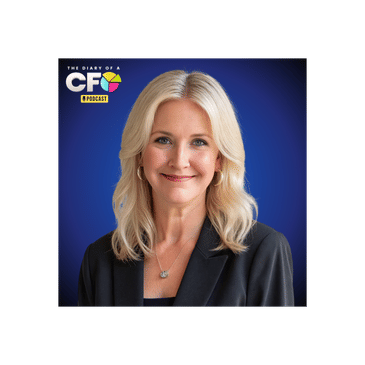


In this episode of The Diary of a CFO Podcast, host Wassia Kamon sits down with Jennifer Warawa, President of insightsoftware and a seven-time honoree as one of the top 25 most powerful women in accounting, to explore what CFOs must fix before implementing AI.
Drawing on over 25 years of experience at the intersection of finance, technology, and leadership, Jennifer shares :
Why systems and talent have not kept pace with the evolution of the CFO role,
How AI amplifies what already exists rather than fixing broken foundations,
What a successful AI implementation looks like and how to bring excited and skeptical team members along
----------
This episode is brought to you by insightsoftware. With Spreadsheet Server, you can spot trends in your data before they become problems and make faster, smarter decisions. Visit insightsoftware.com/reporting to see how it works.
---------
Key Takeaways:
1. The CFO role has fundamentally shifted from functional expert to strategic co-pilot.
Today's CFOs are technology decision makers, talent leaders, and strategic partners who translate uncertainty into actionable plans, not just stewards of numbers who stay in their lane.
2. AI without data integrity delivers confident, fast, wrong answers.
If you don't trust your data today, AI will only amplify the problem. Before implementing AI, CFOs must ensure they have a single source of truth and that systems actually talk to each other without manual workarounds.
3. Standardize processes before you automate, then apply AI.
The sequence matters: understand what people are actually doing, standardize those processes, automate what you can, and only then layer in AI. Skipping steps leads to automating broken workflows.
4. Finance professionals who don't adopt AI are more at risk than those who do.
The value of finance is shifting from pulling data to interpreting it and helping leaders make better business decisions. AI makes you more powerful in that strategic role if you learn to use it properly.
5. Always understand the inputs before trusting the outputs.
Finance has a professional obligation to know where numbers came from. AI can look clean and sound smart while being completely wrong. The human in the loop must validate based on business context and understanding of what right should look like.
Noteworthy Quotes:
1. "Today's CFO is a strategic co-pilot to the CEO. They're a technology decision maker, a talent leader, and someone who has the ability to translate uncertainty into a plan."
2. "If you don't trust your data today, then AI is just going to give you confident, fast, wrong answers. And that's more dangerous than slow wrong answers."
3. "The jobs that are more at risk of going away are the ones where someone's not using AI. If you're doing things in the old school way, your value becomes less than if you're leveraging AI to make smarter decisions."
4. "AI elevates what already works. It amplifies what's already there. So if your team is working with data that's reliable, AI can be an accelerant. But if the data is not reliable, they're going to be disappointed."
5. "It's amazing how far you'll get if you don't care who gets the credit. It always comes out in the wash who did the work. You're on a mission trying to get to a certain place and how you get there and who gets the credit doesn't matter."
Timestamps:
01:32 How Jennifer went from accounting to software and the CFO ecosystem
03:49 What has fundamentally changed about the CFO role over two decades
05:40 Whether systems and talent have kept up with CFO role evolution
07:13 How AI can elevate finance teams and what it cannot fix
08:54 The roadmap for AI implementation: data integrity and process discipline
10:45 How to bring both excited and skeptical team members along the AI journey
13:39 Where human judgment remains irreplaceable in AI-enabled finance
15:41 How finance professionals must upskill to become better business partners
20:10 Where smaller companies should start with AI and technology
23:18 The underplayed risk of over-relying on AI outputs without understanding inputs
26:01 What helped Jennifer build an impressive leadership career in tech and finance
32:40 How to build confidence speaking up in male-dominated rooms
👉 If becoming a CFO is in your 5-year plan, get your free CFO Readiness Scorecard here:
📬 Get Involved
Have a question or topic suggestion?
Email: Ask@thediaryofacfo.com
Transcript
00:00:00 --> 00:00:02 Today's episode is brought to you by insightsoftware
00:00:03 --> 00:00:05 which provides AI -powered financial reporting
00:00:05 --> 00:00:07 solutions that can save you from spreadsheet
00:00:07 --> 00:00:09 sludge and give you time back for weekend fun.
00:00:09 --> 00:00:11 With Spreadsheet Server, you can spot trends
00:00:11 --> 00:00:14 in your data before they become problems and
00:00:14 --> 00:00:17 make faster, smarter decisions. Visit Inside
00:00:17 --> 00:00:19 Software slash reporting to see how it works.
00:00:20 --> 00:00:22 I'll drop the link in the show notes. Welcome
00:00:22 --> 00:00:24 back to the Diary of a CFO podcast. I'm your
00:00:24 --> 00:00:26 host, Wassia Kamon, and each week we explore how
00:00:26 --> 00:00:29 top finance leaders help build high performance
00:00:29 --> 00:00:31 teams. partner with CEOs and board and lead through
00:00:31 --> 00:00:33 growth and transformation without burning out
00:00:33 --> 00:00:36 in the process. Our guest today is Jennifer Warawa.
00:00:37 --> 00:00:40 She's a transformative executive with over 25
00:00:40 --> 00:00:42 years of leadership experience, driving growth.
00:00:43 --> 00:00:46 innovation and cultural change globally. She's
00:00:46 --> 00:00:48 currently the president of Insight Software and
00:00:48 --> 00:00:51 her resume reads like a master class in transformation.
00:00:52 --> 00:00:54 From leading Quick Feed North America through
00:00:54 --> 00:00:56 major growth and expansion to holding multiple
00:00:56 --> 00:00:59 global executive roles at Sage for over 12 years,
00:00:59 --> 00:01:02 she has built a career at the intersection of
00:01:02 --> 00:01:04 innovation and impact. Jennifer has been recognized
00:01:05 --> 00:01:09 as one of the top 25 most powerful women in accounting
00:01:09 --> 00:01:11 seven years running and was named the accounting
00:01:11 --> 00:01:15 today's top 100 most influential people for nearly
00:01:15 --> 00:01:17 a decade. I've been trying to do this one year.
00:01:17 --> 00:01:20 Okay. She's a sought after keynote speaker known
00:01:20 --> 00:01:23 for being refreshingly candid about leadership,
00:01:23 --> 00:01:25 resilience, and what meaningful change actually
00:01:25 --> 00:01:28 looks like in practice. Welcome to the show,
00:01:28 --> 00:01:31 Jennifer. Thank you very much. That's, that was
00:01:31 --> 00:01:33 a lot, a lot to live up to there. Oh my gosh.
00:01:33 --> 00:01:36 But it's your story. It's, it's amazing. And
00:01:36 --> 00:01:38 so I really wanted to start with that. So sound
00:01:38 --> 00:01:41 is your story. How did you end up in this world
00:01:41 --> 00:01:45 of accounting software and now working so closely
00:01:45 --> 00:01:48 with CFOs? Yeah, that's a, it's a great question.
00:01:48 --> 00:01:51 You know, I, I look back to when I was, you know,
00:01:52 --> 00:01:54 in high school and finishing high school and
00:01:54 --> 00:01:56 those years when you think about, what do I want
00:01:56 --> 00:01:59 to do when I grow up? If that's the way to say
00:01:59 --> 00:02:02 it. And at the time, as I was evaluating what
00:02:02 --> 00:02:05 that looked like, my dad's in -house accountant
00:02:05 --> 00:02:08 actually ended up leaving his business. And he
00:02:08 --> 00:02:09 said, well, why don't you go into accounting?
00:02:09 --> 00:02:11 And I was like, accounting? That doesn't sound
00:02:11 --> 00:02:16 very fun. And so I decided to go down that path.
00:02:16 --> 00:02:19 And as I started on the journey and as I got
00:02:19 --> 00:02:23 kind of set into college, I fell in love with
00:02:23 --> 00:02:26 this telling the story of the numbers and the
00:02:26 --> 00:02:29 data. And it actually ended up with me starting
00:02:29 --> 00:02:32 my own accounting and consulting business. And
00:02:32 --> 00:02:35 I think it was exciting because it wasn't about
00:02:35 --> 00:02:37 debits and accredits or financial statements.
00:02:38 --> 00:02:42 It was about having a, making sense of all of
00:02:42 --> 00:02:44 the data that was available to business owners
00:02:44 --> 00:02:48 and having it. presented to them in a way where
00:02:48 --> 00:02:51 it told a story and it helped them figure out,
00:02:51 --> 00:02:54 how am I going to get from where I am today to
00:02:54 --> 00:02:56 where I want to go in the future? And that was
00:02:56 --> 00:03:00 so fun and so exciting. When I moved into the
00:03:00 --> 00:03:02 software world, so when I had my own firm, I
00:03:02 --> 00:03:04 was a partner at Sage Software and ended up moving
00:03:04 --> 00:03:07 over to work with them directly. And then eventually,
00:03:07 --> 00:03:10 of course, here I am at Insight Software. I've
00:03:10 --> 00:03:13 always looked at it through that lens. What does
00:03:13 --> 00:03:16 in person need that's trying to run the business?
00:03:16 --> 00:03:19 What story are their financial statements telling?
00:03:19 --> 00:03:22 What decisions does the data tell them need to
00:03:22 --> 00:03:26 be made? And I think I've always found that exciting
00:03:26 --> 00:03:29 and empowering. And for people who are like his
00:03:29 --> 00:03:32 finance or, or being a CFO, I think it's incredibly
00:03:32 --> 00:03:34 exciting. And if you tell the story in the right
00:03:34 --> 00:03:37 way, it's like, what a great career choice. Wow.
00:03:38 --> 00:03:41 So it's so fascinating that you went from accounting,
00:03:41 --> 00:03:43 like when we typically think about accounting,
00:03:43 --> 00:03:46 debits and credits, to software. It's like two
00:03:46 --> 00:03:49 opposite worlds, it feels like. But now you spend
00:03:49 --> 00:03:53 25 years in that office of the CFO ecosystem,
00:03:53 --> 00:03:55 bringing the systems together with the people
00:03:55 --> 00:03:59 side. And so what has fundamentally changed about
00:03:59 --> 00:04:04 the CFO role over those two decades? So much
00:04:04 --> 00:04:06 has changed. Oh my goodness. I think about even
00:04:06 --> 00:04:10 during my time at Sage when I'd be in the market
00:04:10 --> 00:04:11 and meeting with accountants, like I can have
00:04:11 --> 00:04:13 the beginning of that chapter and then 12 years
00:04:13 --> 00:04:16 later and how much change there was. And now
00:04:16 --> 00:04:19 that level of change is actually happening in
00:04:19 --> 00:04:22 a much more compressed timeframe. So change is
00:04:22 --> 00:04:26 happening incredibly rapidly. I think what, what's
00:04:26 --> 00:04:28 changed the most is probably the expectation
00:04:28 --> 00:04:32 of the CFO. And I think they, they used to need
00:04:32 --> 00:04:35 the data. Steward, the steward of the numbers,
00:04:35 --> 00:04:37 close the books, make sure that compliance is
00:04:37 --> 00:04:40 being adhered to. Provide your core that I almost
00:04:40 --> 00:04:43 think about them as, you know, kind of a function
00:04:43 --> 00:04:46 that stayed in their lane. So they were, they
00:04:46 --> 00:04:47 were kind of on the side of the business and
00:04:47 --> 00:04:50 now they're in the business. I think today's
00:04:50 --> 00:04:54 CFO is kind of a strategic co -pilot to the CEO.
00:04:55 --> 00:04:57 They're often a technology decision maker. They're
00:04:57 --> 00:05:00 a talent leader. and they're someone who has
00:05:00 --> 00:05:04 the ability to translate uncertainty into a plan.
00:05:04 --> 00:05:06 So they're really a partner to the business versus
00:05:06 --> 00:05:10 a functional area that's on the side. When I
00:05:10 --> 00:05:13 think about what hasn't changed, I think about
00:05:13 --> 00:05:17 the fundamentals of trust. So the board still
00:05:17 --> 00:05:19 needs to believe in the numbers and the CEO still
00:05:19 --> 00:05:22 needs to believe in the forecast. And all the
00:05:22 --> 00:05:25 technology in the world doesn't replace the credibility
00:05:25 --> 00:05:29 that CFOs build through integrity, consistency,
00:05:29 --> 00:05:32 accuracy. And I think that even in a world where
00:05:32 --> 00:05:35 we're heavily powered by AI, that's not going
00:05:35 --> 00:05:40 to change. Agree, agree. And as a CFO role has
00:05:40 --> 00:05:43 changed, like you said, in how now they're no
00:05:43 --> 00:05:45 longer that back office person, like they're
00:05:45 --> 00:05:48 really at the forefront of the business. Do you
00:05:48 --> 00:05:50 feel like the people in the system supporting
00:05:50 --> 00:05:55 the CFO has kept up with those changes? Probably
00:05:55 --> 00:05:59 not just enough. So I think with all the evolution
00:05:59 --> 00:06:02 of the CFO, even over the last decade, a lot
00:06:02 --> 00:06:05 of the systems and talent development models,
00:06:05 --> 00:06:08 if you will, are still catching up to where the
00:06:08 --> 00:06:10 role was maybe even five years ago, let alone
00:06:10 --> 00:06:14 where it is today. You look at really sophisticated
00:06:14 --> 00:06:18 finance teams that are running strategic analysis
00:06:18 --> 00:06:20 in spreadsheets. It's like, you know, I remember
00:06:20 --> 00:06:22 like a decade ago, people were like, oh, Excel
00:06:22 --> 00:06:24 is going to go away. It's still, it's used every
00:06:24 --> 00:06:28 day by accountants. And so they're doing a sophisticated
00:06:28 --> 00:06:32 analysis and spreadsheets and the same spreadsheets
00:06:32 --> 00:06:34 that the company was maybe a tenth the size they
00:06:34 --> 00:06:38 are today. So we've got ERP systems that were
00:06:38 --> 00:06:41 implemented years ago that have so much technical
00:06:41 --> 00:06:43 debt that they're slowing down the business rather
00:06:43 --> 00:06:47 than enabling it. And we've got finance talent
00:06:47 --> 00:06:50 that's been hired and in some cases are coming
00:06:50 --> 00:06:54 out of school, they're forward thinking and they're
00:06:54 --> 00:06:57 using systems. that are, that are archaic. We
00:06:57 --> 00:07:00 actually have seen a recent study where, you
00:07:00 --> 00:07:03 know, accounting students or the next generation
00:07:03 --> 00:07:05 accountants will actually turn down a job because
00:07:05 --> 00:07:08 the systems that are being used inside the business
00:07:08 --> 00:07:10 are inside the firm. And that's a, that's a big
00:07:10 --> 00:07:14 shift. Wow. They're like, we don't want to deal
00:07:14 --> 00:07:17 with like your old school stuff. Absolutely.
00:07:17 --> 00:07:20 Yeah, absolutely. Wow. And do you think AI will
00:07:20 --> 00:07:23 help elevate the teams and systems so that they
00:07:23 --> 00:07:25 can finally catch up? to the demands of the role
00:07:25 --> 00:07:29 of the CFO? Yeah, I think that AI has the potential
00:07:29 --> 00:07:32 to be transformative. I think there's still some
00:07:32 --> 00:07:36 skepticism around, is this a lot of hype? And
00:07:36 --> 00:07:38 where is it practical? So I think being able
00:07:38 --> 00:07:41 to get finance teams to understand the practical
00:07:41 --> 00:07:45 applications of AI. And when you think about
00:07:45 --> 00:07:47 where there's so much time that's consumed on
00:07:47 --> 00:07:51 a finance team, think about data gathering, reconciliation,
00:07:51 --> 00:07:55 repetitive reporting cycles. And AI has the ability
00:07:55 --> 00:07:58 to compress all of those. And when you do that,
00:07:58 --> 00:08:01 it can free up human capacity for more strategic
00:08:01 --> 00:08:04 things like analysis for judgment for the actual
00:08:04 --> 00:08:07 work that requires a human to be involved. And
00:08:07 --> 00:08:10 I think that's significant. I think it's really
00:08:10 --> 00:08:14 important to be careful because AI elevates what
00:08:14 --> 00:08:17 already works. So when you think about, you know,
00:08:17 --> 00:08:19 it amplifies, it's already there. So if your
00:08:19 --> 00:08:23 team is. Yeah, working with data that's reliable,
00:08:23 --> 00:08:27 AI can be an accelerant, but if the data is not
00:08:27 --> 00:08:29 reliable, they're going to be disappointed. And
00:08:29 --> 00:08:31 so that's really, that's really important. It
00:08:31 --> 00:08:33 doesn't fix the problems that exist in the data
00:08:33 --> 00:08:36 today. Yeah. And so what would you say are some
00:08:36 --> 00:08:39 of the things CFOs need to be aware of in that
00:08:39 --> 00:08:42 AI journey, right? Because I know you made a
00:08:42 --> 00:08:45 point that if a process is broken, AI just does
00:08:45 --> 00:08:49 the broken faster, right? And AI is just simplifying
00:08:49 --> 00:08:51 the issues we have. So what would you say is
00:08:51 --> 00:08:53 a good roadmap? Because I feel like there is
00:08:53 --> 00:08:56 a lot of pressure now on CFOs and finance there
00:08:56 --> 00:08:59 to implement AI. Like, I want AI. Like, I want
00:08:59 --> 00:09:02 ketchup on my fries. So what would you say are
00:09:02 --> 00:09:04 some of the things I need to be aware of or some
00:09:04 --> 00:09:07 type of a roadmap to get there and do it the
00:09:07 --> 00:09:09 right way? Yeah, I think the first thing probably
00:09:09 --> 00:09:13 is data integrity. If you don't trust your data
00:09:13 --> 00:09:16 today, then AI is just going to give you confident,
00:09:16 --> 00:09:19 fast, wrong answers. And so I think that's more
00:09:19 --> 00:09:21 dangerous than slow wrong answers because it
00:09:21 --> 00:09:23 looks like it has this level of authority where
00:09:23 --> 00:09:26 people are like, this must be right. And if you
00:09:26 --> 00:09:28 don't have data integrity, it's not right. So
00:09:28 --> 00:09:32 that's it. That's a challenge for sure. Asking
00:09:32 --> 00:09:36 the CFOs. Do you have a single source of the
00:09:36 --> 00:09:38 truth? Do your systems talk to each other or
00:09:38 --> 00:09:40 are there people that are manually bridging the
00:09:40 --> 00:09:44 gaps in these spreadsheets as an example? I think
00:09:44 --> 00:09:46 the other, the other thing that we see a lot
00:09:46 --> 00:09:49 of is around process discipline. You know, what
00:09:49 --> 00:09:52 are the processes today? Not what a CFO thinks
00:09:52 --> 00:09:55 they are, but what are people actually doing?
00:09:55 --> 00:09:58 Like how are you leveraging that process math?
00:09:58 --> 00:10:01 And then, and then figuring out how do you standardize
00:10:01 --> 00:10:04 before you can automate? And then once you have
00:10:04 --> 00:10:07 the automation, you can apply AI. And so I think
00:10:07 --> 00:10:09 that that sequencing is really important, but
00:10:09 --> 00:10:10 I think sometimes you will just want to jump
00:10:10 --> 00:10:13 to AI. Like AI will solve the problem. The process
00:10:13 --> 00:10:16 is broken today. AI can fix it. It's still the
00:10:16 --> 00:10:18 process. They're still doing those manual steps.
00:10:19 --> 00:10:20 So making sure that that is in place, I think
00:10:20 --> 00:10:25 is foundational. Wow. And so when you think about
00:10:25 --> 00:10:27 bringing AI to an organization, I love how you
00:10:27 --> 00:10:30 say you start with data integrity. you ask the
00:10:30 --> 00:10:32 right question to make sure the processes that
00:10:32 --> 00:10:35 you think are in place are actually in place,
00:10:36 --> 00:10:38 and not a lot of band -aids. Now, how do you
00:10:38 --> 00:10:40 think you can bring the teams along? Because
00:10:40 --> 00:10:42 there's typically two camps. There's the people
00:10:42 --> 00:10:44 who are excited about AI. They want AI, too,
00:10:44 --> 00:10:46 because they used to have GPT and other things.
00:10:46 --> 00:10:49 And then you have people that are scared or skeptical
00:10:49 --> 00:10:52 about AI, maybe will take their jobs. How do
00:10:52 --> 00:10:55 you think leaders can talk to both groups and
00:10:55 --> 00:10:58 bring the whole team along in that journey? Yeah,
00:10:58 --> 00:11:01 it's a good question. Certainly one that is top
00:11:01 --> 00:11:03 of mind for a lot of people and it actually slows
00:11:03 --> 00:11:06 down change. I've met with a number of people
00:11:06 --> 00:11:08 from the office of the CFO. They're like, we
00:11:08 --> 00:11:10 have a really good process today. I don't think
00:11:10 --> 00:11:13 we need AI. I'm doing it well already. And they're
00:11:13 --> 00:11:15 just worried once AI comes in, their job goes
00:11:15 --> 00:11:19 away. I do think that the jobs that are more
00:11:19 --> 00:11:21 at risk of going away are the ones where someone's
00:11:21 --> 00:11:23 not using AI, to be honest. It's like, well,
00:11:23 --> 00:11:25 if you're doing things in the old school way,
00:11:26 --> 00:11:29 your value becomes less than if you're leveraging
00:11:29 --> 00:11:31 AI to make smarter decisions. So I actually think
00:11:31 --> 00:11:35 there's more risk in not adopting AI. For the
00:11:35 --> 00:11:37 people that are scared, I don't dismiss the fear.
00:11:37 --> 00:11:40 I don't think that it's not unfounded. There
00:11:40 --> 00:11:42 are roles that are going to change. My role has
00:11:42 --> 00:11:45 significantly changed because of AI. But historically,
00:11:46 --> 00:11:48 every wave of technology and finance shifted
00:11:48 --> 00:11:51 what people did. So when you think about moving,
00:11:51 --> 00:11:53 you know, from DOS to Windows or on -prem to
00:11:53 --> 00:11:55 cloud, those were big significant shifts in the
00:11:55 --> 00:11:59 way that finance teams worked, but it never ever
00:11:59 --> 00:12:02 eliminated the need for smart people to make
00:12:02 --> 00:12:06 good judgment. So I think, you know, when I'm
00:12:06 --> 00:12:08 talking to people in a finance function, I'll
00:12:08 --> 00:12:09 say, what do you, what do you want to be known
00:12:09 --> 00:12:11 for? If the answer is, you know, I want to be
00:12:11 --> 00:12:13 known for the person who pulls the data, which
00:12:13 --> 00:12:15 is almost never the answer. Let's know what people
00:12:15 --> 00:12:18 want to be known for. But that's a very vulnerable
00:12:18 --> 00:12:21 position. If the answer is, I'm a person who
00:12:21 --> 00:12:23 interprets the data and I help people make better
00:12:23 --> 00:12:27 business decisions, that's a much more valuable
00:12:27 --> 00:12:30 position. So I think that AI makes you more powerful
00:12:30 --> 00:12:33 in that role. I think that in the excited champ,
00:12:34 --> 00:12:35 there's people who just want to jump in and go.
00:12:36 --> 00:12:38 They're enthusiastic and they're like, let's
00:12:38 --> 00:12:43 just put our foot on the gas and go. I say curb
00:12:43 --> 00:12:46 the enthusiasm a little bit and turn that enthusiasm
00:12:46 --> 00:12:48 into learning because there is a lot of learning.
00:12:48 --> 00:12:51 And I even think about how we leveraged AI a
00:12:51 --> 00:12:53 month ago is different than how we do it today.
00:12:53 --> 00:12:55 Like so much has changed. I think about a lot
00:12:55 --> 00:12:59 and how much has changed in 30 days. And so that
00:12:59 --> 00:13:02 learning is so important. So enthusiasm without
00:13:02 --> 00:13:05 learning is a challenge. And then just really
00:13:05 --> 00:13:09 making sure that no one thinks AI is magic. So
00:13:09 --> 00:13:11 like when people are excited, don't think about
00:13:11 --> 00:13:15 this as a kind of a silver bullet. It has limitations.
00:13:15 --> 00:13:19 There are places where human judgments are irreplaceable.
00:13:19 --> 00:13:22 You need the human in the loop. And so I think
00:13:22 --> 00:13:25 that, you know, you want leaders that are enthusiastic,
00:13:25 --> 00:13:28 but also rigorous and making sure that all of
00:13:28 --> 00:13:31 those foundational pieces are in place. Yeah,
00:13:31 --> 00:13:34 and I like how you mentioned that human element.
00:13:34 --> 00:13:36 I wanted to spend a little more time on it when
00:13:36 --> 00:13:39 you mentioned having the human in the loop. What
00:13:39 --> 00:13:41 are some of the things that people have to realize
00:13:41 --> 00:13:45 you will always need a human to make X decision
00:13:45 --> 00:13:47 or to do X things? Like what are some of the
00:13:47 --> 00:13:50 things you've seen in your role, especially at
00:13:50 --> 00:13:54 Inside Software? Yeah, I think when I look at
00:13:54 --> 00:13:56 where humans play such an important role, there's
00:13:56 --> 00:13:59 so much context right now that a human can provide.
00:13:59 --> 00:14:02 AI is getting better at providing it, but there's
00:14:02 --> 00:14:05 all of this business context and how do you make
00:14:05 --> 00:14:09 smart decisions based on what AI is giving you
00:14:09 --> 00:14:11 and telling you like, you can assimilate, you
00:14:11 --> 00:14:14 know, so much more data. Like I think, but when
00:14:14 --> 00:14:16 I started this role now, so it's, I haven't even
00:14:16 --> 00:14:19 been a year and how much more data I had at my
00:14:19 --> 00:14:21 fingertips and how much faster I'm getting it.
00:14:21 --> 00:14:25 That's amazing. But then I have to assimilate
00:14:25 --> 00:14:27 all that data and say, how do we turn that into
00:14:27 --> 00:14:30 a strategy? And that's still actually me. I have
00:14:30 --> 00:14:32 the business context. I'm the one sitting down
00:14:32 --> 00:14:34 with the customers. I know what's going on in
00:14:34 --> 00:14:37 the market. And I think over time AI will get.
00:14:37 --> 00:14:40 better at that context, but sitting across the
00:14:40 --> 00:14:43 table from a customer or a user of your solutions
00:14:43 --> 00:14:48 or the customer or client of an accountant, you're
00:14:48 --> 00:14:49 not going to be able to replace that face to
00:14:49 --> 00:14:52 face, but AI should make you smarter. So I think
00:14:52 --> 00:14:54 it's about figuring out how do I leverage it
00:14:54 --> 00:14:58 in a way where I add more value to the conversation,
00:14:58 --> 00:15:00 regardless of what my role is. And that's where
00:15:00 --> 00:15:03 the human element is so important. You know,
00:15:03 --> 00:15:04 I think back to when I was talking about the
00:15:04 --> 00:15:07 beginning of my career, Yeah, people already
00:15:07 --> 00:15:10 had access to financial statements. They knew,
00:15:10 --> 00:15:12 I said, okay, I see my income statement. I see
00:15:12 --> 00:15:14 my balance sheet. I have no idea what that means.
00:15:14 --> 00:15:16 And so being able to step in and kind of interpret
00:15:16 --> 00:15:19 and say, you have a lot of data here. Let's talk
00:15:19 --> 00:15:21 about what this practically means for your business.
00:15:22 --> 00:15:25 That role is becoming significantly more important
00:15:25 --> 00:15:28 as we move forward. Yeah. And as that role becomes
00:15:28 --> 00:15:32 more important, how do you think actual finance
00:15:32 --> 00:15:34 professional and accounting professional as it
00:15:34 --> 00:15:37 will have more time? because AI will help them
00:15:37 --> 00:15:42 do more. How do you think they need to upgrade
00:15:42 --> 00:15:45 how they think or upscale themselves or learn
00:15:45 --> 00:15:48 new things to adapt and use that new time they
00:15:48 --> 00:15:51 will have more effectively as business partners?
00:15:52 --> 00:15:54 Well, when I look at, and I always look at what
00:15:54 --> 00:15:57 do I want from our finite team, you know, as
00:15:57 --> 00:15:59 I'm leading my areas in the business, what would
00:15:59 --> 00:16:02 I like to be able to get? And I think the more
00:16:02 --> 00:16:05 that they can have the context understanding
00:16:05 --> 00:16:07 of the business, the better. So they're not coming
00:16:07 --> 00:16:09 in saying, you know, here's your financial statements,
00:16:09 --> 00:16:12 because my next question is always why. So I
00:16:12 --> 00:16:15 see that this is down year over year. Why? I
00:16:15 --> 00:16:18 see that, you know, our margins have increased
00:16:18 --> 00:16:22 here. Why? And so kind of curious people in the
00:16:22 --> 00:16:24 finance function that want to understand the
00:16:24 --> 00:16:26 why, they don't want to just provide the information
00:16:26 --> 00:16:28 to the business, but they really want to understand
00:16:28 --> 00:16:31 the business and get the business context makes
00:16:31 --> 00:16:34 them an incredibly valuable partner. So I think
00:16:34 --> 00:16:37 just being curious, learning the context, knowing
00:16:37 --> 00:16:40 what it is we're trying to do and being able
00:16:40 --> 00:16:42 to come with the why and the insights is hugely
00:16:42 --> 00:16:45 valuable. It saves me from having to get to that.
00:16:45 --> 00:16:48 If someone in finance comes to me with, here's
00:16:48 --> 00:16:50 what we've seen and here's why it looks like
00:16:50 --> 00:16:53 it's happening, it gets me to a decision and
00:16:53 --> 00:16:56 an action faster. And it saves me having to do
00:16:56 --> 00:16:59 that. So it makes a finance person so much more
00:16:59 --> 00:17:03 valuable. Wow. And so now I'm also curious because
00:17:03 --> 00:17:05 you move from, you know, accounting and finance
00:17:05 --> 00:17:08 to now president and over operations. And so
00:17:08 --> 00:17:11 I'm curious now from your seat, when you look
00:17:11 --> 00:17:14 back at finance, what are some of the things
00:17:14 --> 00:17:16 that you like? Okay, we did this wrong. We thought
00:17:16 --> 00:17:17 it was going to help the CEO. We thought it was
00:17:17 --> 00:17:19 going to help the president, but we keep doing
00:17:19 --> 00:17:23 the same thing wrong from your seat. And what
00:17:23 --> 00:17:25 are some of the things you wish your financing
00:17:25 --> 00:17:29 or finance function in general will realize about
00:17:29 --> 00:17:33 helping the business? Yeah, I mean, I think when
00:17:33 --> 00:17:36 you look back, I ever want to look back and say,
00:17:36 --> 00:17:38 Oh, I did so many things wrong or would have
00:17:38 --> 00:17:41 done them differently. I think being able to
00:17:42 --> 00:17:45 I don't think I anticipated how long change would
00:17:45 --> 00:17:48 take in the finance and accounting space. Like
00:17:48 --> 00:17:51 I think even when you looked at the early days
00:17:51 --> 00:17:53 of cloud, as an example, it's like, okay, well,
00:17:53 --> 00:17:54 this is going to be a, you know, a couple of
00:17:54 --> 00:17:56 year trend they share. You have been saying back
00:17:56 --> 00:17:59 to big data and that was a term, you know, that
00:17:59 --> 00:18:00 was a term that was used. People are like, how
00:18:00 --> 00:18:03 do I take advantage of big data in a smaller
00:18:03 --> 00:18:06 company? Now every company has access to big
00:18:06 --> 00:18:11 data through AI. And so I think the, what I probably.
00:18:11 --> 00:18:13 thought was, hey, this is going to, all of the
00:18:13 --> 00:18:16 firms and all of the finance functions will move
00:18:16 --> 00:18:18 quickly because this just makes logical sense.
00:18:18 --> 00:18:22 It's been a very long transition. So I think
00:18:22 --> 00:18:25 moving faster than the market is the huge competitive
00:18:25 --> 00:18:28 advantage. So as we're looking at AI and I think
00:18:28 --> 00:18:30 there's a tendency for finance teams to look
00:18:30 --> 00:18:32 around at other finance teams and say, well,
00:18:32 --> 00:18:34 they're moving at, you know, they're moving at
00:18:34 --> 00:18:36 this speed. We're moving, you know, maybe a little
00:18:36 --> 00:18:38 bit faster. That's not what's going to give you
00:18:38 --> 00:18:41 the competitive advantage as a finance leader
00:18:41 --> 00:18:44 or in a company. It's how do we move faster than
00:18:44 --> 00:18:46 the market? So I wish, you know, I wish I would
00:18:46 --> 00:18:47 have done that. I think I thought the market
00:18:47 --> 00:18:50 would move faster overall and it didn't. And
00:18:50 --> 00:18:53 it's still, it's still kind of behind. I think
00:18:53 --> 00:18:57 the other one is how do you really leverage that
00:18:57 --> 00:19:00 big data? Like how do you overlay all the information
00:19:00 --> 00:19:03 you get from your ERP system or your finance
00:19:03 --> 00:19:07 data? with intelligent insights about your customers
00:19:07 --> 00:19:09 and sales and all the different things you are
00:19:09 --> 00:19:11 going on in your business. Because if you're
00:19:11 --> 00:19:13 just telling the story based on the data that
00:19:13 --> 00:19:15 comes from finance, you're missing the rest of
00:19:15 --> 00:19:18 the picture. And so how do you start to integrate
00:19:18 --> 00:19:21 different data points? And I wish I would have
00:19:21 --> 00:19:24 got to that earlier. It's hard. You know, earlier
00:19:24 --> 00:19:25 in my career, you didn't have the tools and the
00:19:25 --> 00:19:27 systems. Those were only available to really
00:19:27 --> 00:19:29 large companies. Now they're available to everyone,
00:19:30 --> 00:19:32 but not everyone is using them. Let's take a
00:19:32 --> 00:19:34 quick break to talk about a problem most financing
00:19:34 --> 00:19:37 face. You spend hours wrestling with data, building
00:19:37 --> 00:19:40 a report manually, and by the time you are done,
00:19:40 --> 00:19:43 the insights are outdated. That's where today's
00:19:43 --> 00:19:46 sponsor. come in. Insight Software gives your
00:19:46 --> 00:19:49 finance team AI power tools that automatically
00:19:49 --> 00:19:52 pull data together and deliver super fast insight.
00:19:52 --> 00:19:54 So don't leave your team stuck in spreadsheets.
00:19:54 --> 00:19:57 Let them flex their talent as strategic advisor
00:19:57 --> 00:20:00 who got smart business decisions. To learn more,
00:20:00 --> 00:20:03 attend part one of their free webinar series
00:20:03 --> 00:20:07 titled Data is Power on March 31st. Visit insightssoftware
00:20:07 --> 00:20:11 .com slash data is power to register and transform.
00:20:11 --> 00:20:14 how your finance team operates. I'll also drop
00:20:14 --> 00:20:16 the link in the show note. Now let's get back
00:20:16 --> 00:20:20 to our episode. Oh, that, that last one is so
00:20:20 --> 00:20:23 powerful because, um, we, you know, in accounting
00:20:23 --> 00:20:26 and finance, we tend to just take the information
00:20:26 --> 00:20:29 from the accounting system, from the ERP when
00:20:29 --> 00:20:32 there is so much context, like you said, that
00:20:32 --> 00:20:35 can be gathered from the CRM that can be gathered.
00:20:35 --> 00:20:39 Like you can have those lagging and leading indicators
00:20:39 --> 00:20:43 in one place. So in terms of tools and systems,
00:20:44 --> 00:20:45 what are some of the things you think can help
00:20:45 --> 00:20:48 teams, especially in smaller companies? Like
00:20:48 --> 00:20:51 you said, because there's so much that is available
00:20:51 --> 00:20:54 to large enterprise, but then you think about
00:20:54 --> 00:20:57 small to medium sized businesses, we feel like,
00:20:57 --> 00:20:59 okay, we don't know where to go. So curious to
00:20:59 --> 00:21:03 hear your experience there as well. Yeah, it's
00:21:03 --> 00:21:05 hard for people to figure out where to start.
00:21:06 --> 00:21:08 So they're looking at companies that have embraced
00:21:08 --> 00:21:12 AI or technology. you know, from end to end and
00:21:12 --> 00:21:14 they're like, I just don't have the resources
00:21:14 --> 00:21:16 or the capacity or the people to be able to do
00:21:16 --> 00:21:19 that. So how do you, how do you pick somewhere
00:21:19 --> 00:21:21 and start somewhere? And I think anyone that
00:21:21 --> 00:21:25 starts somewhere will be further ahead in, you
00:21:25 --> 00:21:27 know, by the end of 2026. And if they wait and
00:21:27 --> 00:21:29 say, I got to do it all at once. And so I'll
00:21:29 --> 00:21:32 always encouraging smaller companies. They're
00:21:32 --> 00:21:33 like, I don't know where to start. It's like,
00:21:33 --> 00:21:35 just pick something, pick somewhere and say,
00:21:35 --> 00:21:37 I'm going to start here. We're going to automate
00:21:37 --> 00:21:39 what we can. We're going to leverage AI to get
00:21:39 --> 00:21:43 better insights. I, I want to think about what
00:21:43 --> 00:21:46 are the technology solutions and the tools that
00:21:46 --> 00:21:49 are going to help me look out the windshield
00:21:49 --> 00:21:52 instead of the rear view mirror. So I've looked
00:21:52 --> 00:21:54 at, you know, financial statements and the history
00:21:54 --> 00:21:56 and what got us here, but what's going to get
00:21:56 --> 00:21:59 us ahead in the future. And it is that, you know,
00:21:59 --> 00:22:01 multiple data sources coming together, giving
00:22:01 --> 00:22:05 you the context for how you got to where you
00:22:05 --> 00:22:07 are and then where do you need to go in the future?
00:22:07 --> 00:22:10 So. I think it's starting somewhere. You don't
00:22:10 --> 00:22:12 have to do everything at once, but picking somewhere
00:22:12 --> 00:22:15 and going deep can have such a meaningful impact.
00:22:16 --> 00:22:18 Wow. And that's some of the things like, at least
00:22:18 --> 00:22:21 at ACE we're trying to do and, you know, using
00:22:21 --> 00:22:24 the, the systems that we already have. And we've
00:22:24 --> 00:22:28 seen a lot more, you know, systems embed AI in,
00:22:28 --> 00:22:31 so it's like a... I would say a more comfortable
00:22:31 --> 00:22:33 environment. Cause you're already in like, like
00:22:33 --> 00:22:35 Excel and co -pilot, right? Like you already
00:22:35 --> 00:22:38 in the environment that you've been operating
00:22:38 --> 00:22:40 in. And so you start, you know, doing your baby
00:22:40 --> 00:22:43 steps with AI, but I agree. You definitely have
00:22:43 --> 00:22:45 to start somewhere. Yeah. And I do think that
00:22:45 --> 00:22:49 Microsoft and co -pilot and the AI that's embedded
00:22:49 --> 00:22:51 in the tools with accountless use every day.
00:22:51 --> 00:22:53 I think that's made a huge impact because there
00:22:53 --> 00:22:55 are already trusted solutions that have been
00:22:55 --> 00:22:58 around for a long time. And so when they start
00:22:58 --> 00:23:00 to. That's a good place to get their feet wet
00:23:00 --> 00:23:03 and start thinking about what that could look
00:23:03 --> 00:23:05 like. And then it can, it can grow from there.
00:23:05 --> 00:23:07 Oh yeah. Cause I feel I was just having a call
00:23:07 --> 00:23:10 yesterday. We're talking about Excel and he was
00:23:10 --> 00:23:12 like, Excel is our comfort food. Like we, we,
00:23:12 --> 00:23:16 we hold on to Excel. So as much as we can embed
00:23:16 --> 00:23:20 power into it is always great. It's always good.
00:23:20 --> 00:23:23 Yeah. Our son is in college and he is taking
00:23:23 --> 00:23:25 an Excel course and he's like, I don't like,
00:23:25 --> 00:23:27 am I even going to use this? I'm like. All I
00:23:27 --> 00:23:29 can tell you is I use it every day. Like I don't,
00:23:29 --> 00:23:31 I don't even know, but I guess there's jobs where
00:23:31 --> 00:23:34 you won't use it, but I can tell you it is like,
00:23:34 --> 00:23:37 it becomes a staple. Like it's just, there's
00:23:37 --> 00:23:40 so many applications. So. Yes. Yes. There is
00:23:40 --> 00:23:43 no way to, to, especially if you're doing anything
00:23:43 --> 00:23:47 numbers, um, you will deal with Excel. Yes, absolutely.
00:23:47 --> 00:23:50 And so when you think about AI in general, what's
00:23:50 --> 00:23:53 one risk around AI that you think is underplayed
00:23:53 --> 00:23:56 and what is something that you think, um, is
00:23:56 --> 00:23:59 probably overhyped when it comes to it. I know
00:23:59 --> 00:24:02 you mentioned thinking it's magic, but I'm curious
00:24:02 --> 00:24:04 about a risk in particular that you think people
00:24:04 --> 00:24:08 may not be thinking enough about. I think there's
00:24:08 --> 00:24:12 a lot of tendency to rely on the output, and
00:24:12 --> 00:24:16 I think there's times when that is okay, when
00:24:16 --> 00:24:18 you're, you know, if you're asking AI, what should
00:24:18 --> 00:24:21 I have for dinner? And, you know, and what's
00:24:21 --> 00:24:23 a good recipe for that? That's if they get it
00:24:23 --> 00:24:26 kind of wrong, that's okay. It's not okay in
00:24:26 --> 00:24:29 finance, right? So you, there's an over -reliance
00:24:29 --> 00:24:31 on the outputs because you get so comfortable
00:24:31 --> 00:24:33 with it in your personal life that you're like,
00:24:33 --> 00:24:35 oh, it's, it's good. It's really good. It's,
00:24:35 --> 00:24:37 it's, but in many cases it's better than human
00:24:37 --> 00:24:40 outputs. That's great. But they don't understand
00:24:40 --> 00:24:43 the inputs. So I think there's, um, you know,
00:24:43 --> 00:24:45 in finance is just professional obligation to
00:24:45 --> 00:24:48 understand where a number came from. So when
00:24:48 --> 00:24:51 AI generates a forecast or variance analysis.
00:24:52 --> 00:24:55 It's easy to quickly almost present that as truth
00:24:55 --> 00:24:57 and be like, well, AI did it. This is, you know,
00:24:58 --> 00:25:00 it was fast, especially for the generation that's
00:25:00 --> 00:25:03 really comfortable with AI and technology. But
00:25:03 --> 00:25:06 where it looks clean, it looks good, but where
00:25:06 --> 00:25:09 did the, where did the inputs come from? And
00:25:09 --> 00:25:13 so I think it's always understanding the inputs
00:25:13 --> 00:25:16 that came in, then drove the output. I think
00:25:16 --> 00:25:20 it's, it's not understanding that is underplayed.
00:25:20 --> 00:25:23 risk. I think it's that super, super form. It's
00:25:23 --> 00:25:25 kind of like, you know, when I learned accounting,
00:25:25 --> 00:25:27 I learned on a manual ledger. Like we had a ledger
00:25:27 --> 00:25:30 book and it was debits and credits. And when
00:25:30 --> 00:25:32 you got into computerized accounting, which I
00:25:32 --> 00:25:35 did also in college, I'm not that old, but you
00:25:35 --> 00:25:37 know, you, you learn manually first because then
00:25:37 --> 00:25:39 when you're on the computer, I know exactly what
00:25:39 --> 00:25:40 needs to be done to reverse a journal entry.
00:25:41 --> 00:25:43 You understand it. And it's that manual piece
00:25:43 --> 00:25:45 first. So it's the same kind of thing with AI
00:25:45 --> 00:25:48 understand. where the data came from and what
00:25:48 --> 00:25:50 those inputs were before you really trust the
00:25:50 --> 00:25:54 outputs. Wow. It's so true because it can look
00:25:54 --> 00:25:56 good, but not be right. Absolutely. Yeah. It
00:25:56 --> 00:25:58 can look really good and it can sound really
00:25:58 --> 00:26:02 smart. And not be right. And yeah, you didn't
00:26:02 --> 00:26:04 know what the input and you don't have a clear
00:26:04 --> 00:26:07 idea of what right should look like. You're going
00:26:07 --> 00:26:10 to take it at face value and I can definitely
00:26:10 --> 00:26:12 see that as a risk because we won't be able to
00:26:12 --> 00:26:15 just blame AI and say, AI did it. I mean, they'll
00:26:15 --> 00:26:19 always come back to you. Absolutely. That's why
00:26:19 --> 00:26:21 you're the human in the loop. You're the one
00:26:21 --> 00:26:24 who's just to validate. That's right. Yes. Yes.
00:26:24 --> 00:26:26 Now I want to pivot a little bit. I know you've
00:26:26 --> 00:26:30 been advising a lot of CFOs around big complex
00:26:30 --> 00:26:34 things. I want to shift to you, really, your
00:26:34 --> 00:26:37 story, because you build an impressive impressive
00:26:37 --> 00:26:39 leadership career in tech and finance. Have you
00:26:39 --> 00:26:42 been named in so many, so many places? So I'm
00:26:42 --> 00:26:46 curious, what helped you get to where you are
00:26:46 --> 00:26:48 now that people may not see from the outside?
00:26:49 --> 00:26:53 There are so many things. I want all the tea.
00:26:55 --> 00:26:57 All right. Well, that's a good question. I think
00:26:57 --> 00:27:00 I'm naturally curious. Like I really want to
00:27:00 --> 00:27:03 understand how things work and I don't want to.
00:27:03 --> 00:27:06 I was never satisfied just staying in my lane.
00:27:06 --> 00:27:08 I don't want to be in a finance function and
00:27:08 --> 00:27:11 not understand the rest of the context on what's
00:27:11 --> 00:27:13 going on in the business. I want to understand
00:27:13 --> 00:27:15 the customer's world. When I had a firm, I want
00:27:15 --> 00:27:18 to understand my client's world, the partner's
00:27:18 --> 00:27:21 world, the engineer's world. So I think there's
00:27:21 --> 00:27:26 a lot of curiosity there that got me, I guess,
00:27:26 --> 00:27:29 to where I am. I think that played into it. I
00:27:29 --> 00:27:34 also think I'm... I'm not afraid to take on things
00:27:34 --> 00:27:36 that are, that are new. And I love that curiosity
00:27:36 --> 00:27:39 kind of drives you to figure out how do we solve
00:27:39 --> 00:27:41 complex problems? Like it's all like the Rubik's
00:27:41 --> 00:27:43 cube of business. Like show me something that's
00:27:43 --> 00:27:45 really messed up and I really like to get involved.
00:27:46 --> 00:27:50 So whether it's a startup or a turnaround or
00:27:50 --> 00:27:52 something that isn't working or isn't yet defined,
00:27:52 --> 00:27:56 I just naturally love that and would jump in.
00:27:56 --> 00:28:00 And I also. and not afraid to put in the cycle
00:28:00 --> 00:28:03 of the time. Like I just, when you kind of get
00:28:03 --> 00:28:05 immersed in solving something, you kind of get
00:28:05 --> 00:28:09 lost in the excitement of it and you, you go
00:28:09 --> 00:28:13 fast. So I think those are some things that helps
00:28:13 --> 00:28:16 me get where I am today. Okay. And so you juggle
00:28:16 --> 00:28:18 big roles and you speak, you're a great speaker
00:28:18 --> 00:28:22 as well. And you also have a full home life.
00:28:22 --> 00:28:25 So how do you actually keep all these things
00:28:25 --> 00:28:28 going without burning out? Yeah, I don't think
00:28:28 --> 00:28:30 that I've always got that right. So just to be
00:28:30 --> 00:28:32 like, I'm not like that. Let me tell you how
00:28:32 --> 00:28:36 you never get burned out. So I think, you know,
00:28:36 --> 00:28:38 one of the ways I think is really important for
00:28:38 --> 00:28:40 anyone that's in a leadership role when you're
00:28:40 --> 00:28:42 thinking about how do I avoid burning out, really
00:28:42 --> 00:28:45 looking at where you're spending your time. And
00:28:45 --> 00:28:47 sometimes I found that I was spending my time
00:28:47 --> 00:28:50 doing things because I hadn't invested enough
00:28:50 --> 00:28:54 in the people around me. So it's, it's, I, I
00:28:54 --> 00:28:56 should have someone on my team that can run with
00:28:56 --> 00:28:58 that, but I haven't spent enough time investing
00:28:58 --> 00:29:00 in them to learn that or to be able to take it
00:29:00 --> 00:29:02 over. And so making sure that you're building
00:29:02 --> 00:29:05 a really strong team in your personal life and
00:29:05 --> 00:29:08 in your work life to support, you know, that,
00:29:08 --> 00:29:11 that momentum and go forward direction, I think
00:29:11 --> 00:29:15 is really critical. I also think as far as burnout
00:29:15 --> 00:29:19 can be. you know, kind of a result of maybe doing
00:29:19 --> 00:29:21 something that you don't launder or passionate
00:29:21 --> 00:29:24 about. Like you're, it's, it's much more tiring.
00:29:24 --> 00:29:26 If you're, if you're dreading going to work every
00:29:26 --> 00:29:28 day, you're like, Oh, I'm doing something I just
00:29:28 --> 00:29:30 don't like. When you are passionate about it
00:29:30 --> 00:29:34 and you love it, it kind of fuels you up and
00:29:34 --> 00:29:36 creates this buffer for, you know, you also should
00:29:36 --> 00:29:38 be careful because sometimes you're passionate
00:29:38 --> 00:29:41 and it means that you can keep running. Even
00:29:41 --> 00:29:43 though you should probably stop and take a break.
00:29:43 --> 00:29:45 So you have to be aware of that, but I think
00:29:45 --> 00:29:47 just building that strong ecosystem inside and
00:29:47 --> 00:29:50 outside the office, and then just making sure
00:29:50 --> 00:29:51 that you're doing something you're passionate
00:29:51 --> 00:29:54 about. It just keeps filling up your, your tank,
00:29:54 --> 00:29:57 if you will. Oh yeah. I definitely noticed that
00:29:57 --> 00:30:00 I feel energized, like doing this podcast, for
00:30:00 --> 00:30:02 example, but how do you do a podcast? I'm like,
00:30:02 --> 00:30:05 it gives me so much energy. I enjoy it. I don't
00:30:05 --> 00:30:08 see it as a, and so I can definitely relate to
00:30:08 --> 00:30:11 that, but I never thought about. um making sure
00:30:11 --> 00:30:14 you have the support system at home like how
00:30:14 --> 00:30:16 do you build that branch because i understand
00:30:16 --> 00:30:19 as a leader you know at work sometimes you have
00:30:19 --> 00:30:22 that tendency of saying it will take me less
00:30:22 --> 00:30:26 time to do it myself um but spending the time
00:30:26 --> 00:30:28 i can see the volume spending the time in training
00:30:28 --> 00:30:30 and teaching someone else to help you do that
00:30:30 --> 00:30:34 but how do you do it at home especially the kids
00:30:34 --> 00:30:38 asking for a friend yeah yeah i mean i i think
00:30:38 --> 00:30:42 It's okay to know when you need additional support.
00:30:42 --> 00:30:45 I think there's, there can be a tendency, especially
00:30:45 --> 00:30:48 on, you know, mothers and women, they want to
00:30:48 --> 00:30:52 personally be able to do it all. And I think
00:30:52 --> 00:30:54 that it's okay to say, Hey, here's where I need
00:30:54 --> 00:30:57 some help. I'm going to need, you know, support
00:30:57 --> 00:30:59 on, you know, how we're doing meal planning or
00:30:59 --> 00:31:02 eating well, or keeping the house organized and
00:31:02 --> 00:31:04 clean, or how do we... You know, how do we make
00:31:04 --> 00:31:07 sure that we've got the right support? And although
00:31:07 --> 00:31:09 there are lots of things that I could do, I do
00:31:09 --> 00:31:12 get help in areas that will allow me to invest
00:31:12 --> 00:31:15 in kind of where I'm passionate about. But I
00:31:15 --> 00:31:18 think there is a tendency because, you know,
00:31:18 --> 00:31:20 A type personalities just want to do it all themselves.
00:31:20 --> 00:31:22 Like it's faster for me to do it than to get
00:31:22 --> 00:31:25 someone else to do it. But it also takes, is
00:31:25 --> 00:31:27 that the best use of my time? So if it's not
00:31:27 --> 00:31:29 the best use of my time, is there someone else
00:31:29 --> 00:31:32 that could do it that I'd be better off to redirect
00:31:32 --> 00:31:35 that to something that. I love to do, I'm passionate
00:31:35 --> 00:31:38 and it is the best use of my time. So, but it's
00:31:38 --> 00:31:40 hard because you want to do it all, right? Yes.
00:31:40 --> 00:31:44 Yes. It's, it's so hard. Yeah. And you want to
00:31:44 --> 00:31:47 have it all at the same time. And yeah, definitely
00:31:47 --> 00:31:50 need to pace yourself there. I agree. Yes. And
00:31:50 --> 00:31:54 so what helped you develop, um, confidence in
00:31:54 --> 00:31:56 speaking up in rooms where you might have been
00:31:56 --> 00:32:00 the only women, because accounting and tech are
00:32:00 --> 00:32:03 male dominated. Very much, yeah. When I'm in
00:32:03 --> 00:32:06 round tables or, you know, small events, I always
00:32:06 --> 00:32:08 look around the room and often I'll count, like,
00:32:08 --> 00:32:10 how many women are in this room? We've got 100
00:32:10 --> 00:32:12 people at this event or we've got 50 people at
00:32:12 --> 00:32:15 this event. How many are women? And it's almost
00:32:15 --> 00:32:18 with a high, high level of certainty, it's a
00:32:18 --> 00:32:20 minority that are women. Like it's just, it's
00:32:20 --> 00:32:24 the industry in a way that we're in, right? And
00:32:24 --> 00:32:27 so for a number of years, I wasn't just the only
00:32:27 --> 00:32:29 one in the room. I was also the youngest person
00:32:29 --> 00:32:31 in the room, which is not the case anymore, unfortunately.
00:32:32 --> 00:32:34 Um, but I was, you know, because I started my
00:32:34 --> 00:32:36 business, you know, relatively in my early twenties,
00:32:37 --> 00:32:40 getting out of college. And so, um, you feel
00:32:40 --> 00:32:44 like you just don't have the same level of credibility.
00:32:44 --> 00:32:46 Like I felt like I had a lot to prove on the
00:32:46 --> 00:32:49 credibility side. It's all these, you know, man
00:32:49 --> 00:32:51 that had been in the business for a long time
00:32:51 --> 00:32:54 and I am newer and I am an adult woman, right?
00:32:55 --> 00:32:58 And so I think that this almost unamplified when
00:32:58 --> 00:33:01 I moved over a stage because I was an entrepreneur
00:33:01 --> 00:33:02 and now I'm moving into a corporate world. So
00:33:02 --> 00:33:04 now I felt like these people had all this corporate
00:33:04 --> 00:33:07 experience and I've been running a small business.
00:33:07 --> 00:33:10 So now they, when in actual fact I had experience
00:33:10 --> 00:33:12 that they didn't have because I've been running
00:33:12 --> 00:33:14 a small business, right? And I, and I've been
00:33:14 --> 00:33:16 in the accounting space that we were serving.
00:33:17 --> 00:33:19 So I had a... I was fortunate enough to have
00:33:19 --> 00:33:22 a mentor early in my career who taught me, like,
00:33:23 --> 00:33:25 when you don't have the confidence maybe in yourself
00:33:25 --> 00:33:27 or you're like, I don't know how to, how to say
00:33:27 --> 00:33:29 this or go up against someone who has 20 more
00:33:29 --> 00:33:32 years of experience than me or is more dominant
00:33:32 --> 00:33:35 in a conversation. He's like, oh, feel free to
00:33:35 --> 00:33:38 lean back on the data. So it's not that your
00:33:38 --> 00:33:41 opinion has to come back and say, I don't agree
00:33:41 --> 00:33:43 with you because I think you're wrong or I believe
00:33:43 --> 00:33:46 this. But when you say, I really appreciate what
00:33:46 --> 00:33:48 you're saying, Bill. I always pick Bill's name.
00:33:48 --> 00:33:50 I don't actually have someone named Bill that
00:33:50 --> 00:33:51 I'm talking about, but you know, I appreciate
00:33:51 --> 00:33:53 what you're saying, Bill. But when you look back
00:33:53 --> 00:33:55 at the data, it's actually telling a bit of a
00:33:55 --> 00:33:57 different story. And let me walk you through
00:33:57 --> 00:34:02 that. It allows you to be able to kind of counter
00:34:02 --> 00:34:05 what someone else is saying in a confident way,
00:34:06 --> 00:34:07 even when you're in a room where you may not
00:34:07 --> 00:34:10 have all the confidence because It's not your
00:34:10 --> 00:34:12 opinion that you're bringing forward. It's the
00:34:12 --> 00:34:14 data. And so you said until you feel confident
00:34:14 --> 00:34:16 enough that you're just your opinion, which shouldn't
00:34:16 --> 00:34:19 matter until you feel like that can be the voice,
00:34:19 --> 00:34:22 lean on the data and build your confidence. And
00:34:22 --> 00:34:24 it can really help me because then I always start
00:34:24 --> 00:34:28 with the data and be able to lead with that until
00:34:28 --> 00:34:31 I felt like my opinion had a place in the room.
00:34:31 --> 00:34:34 And I could start with that. Oh, I love it. I'm
00:34:34 --> 00:34:37 so going to steal that. Thank you for sharing.
00:34:37 --> 00:34:39 Any other piece of advice you might want to share,
00:34:39 --> 00:34:43 especially from that mentor or as you grew in
00:34:43 --> 00:34:45 your career and now your opinion. Because I feel
00:34:45 --> 00:34:47 like, especially as women, things like imposter
00:34:47 --> 00:34:50 syndrome, not being able to speak up in those
00:34:50 --> 00:34:53 rooms kind of crippled us at some point in our
00:34:53 --> 00:34:56 career. So I'm always looking for more advice.
00:34:57 --> 00:35:00 Yeah, that's a good one. been fortunate enough
00:35:00 --> 00:35:02 to get some really good advice over the course
00:35:02 --> 00:35:04 of my career. There are a few things that come
00:35:04 --> 00:35:09 to mind. I always check in with myself and people
00:35:09 --> 00:35:12 I see making sure that we don't confuse motion
00:35:12 --> 00:35:16 with progress. And so, you know, when you, when
00:35:16 --> 00:35:19 you think about it in today's world, everybody
00:35:19 --> 00:35:21 is busy. Like you talk to people, it's like,
00:35:21 --> 00:35:23 oh, how are you all so busy? Everything's so
00:35:23 --> 00:35:25 busy. I think, you know, that word is overused.
00:35:25 --> 00:35:28 But people have full calendars. They've got long
00:35:28 --> 00:35:31 task lists. They want to feel productive. And
00:35:31 --> 00:35:35 so what I was taught earlier is how do you make
00:35:35 --> 00:35:37 sure that you're moving towards something that
00:35:37 --> 00:35:42 matters? So how do you prioritize the most important
00:35:42 --> 00:35:45 things? Because I think activity is really easy,
00:35:45 --> 00:35:47 but progress and results are what really counts.
00:35:48 --> 00:35:49 So it doesn't matter. You can do all the activity
00:35:49 --> 00:35:51 in the world. And at the end of the day, if you
00:35:51 --> 00:35:53 don't hit the result, It has been for nothing.
00:35:53 --> 00:35:55 So how do you make sure that you're doing the
00:35:55 --> 00:35:57 right things instead of just staying busy? The
00:35:57 --> 00:36:02 other one is a piece of advice. I had an opportunity
00:36:02 --> 00:36:06 to meet a business leader who had a tremendous
00:36:06 --> 00:36:08 amount of respect for early in my career. And
00:36:08 --> 00:36:10 I asked him, I had the same question for him,
00:36:10 --> 00:36:12 what's the one piece of advice to lead all these
00:36:12 --> 00:36:16 companies? And she said to me, it's amazing how
00:36:16 --> 00:36:19 far you'll get if you don't care who gets the
00:36:19 --> 00:36:21 credit. And I was like, whoa, that's really interesting.
00:36:21 --> 00:36:24 And he said, He said, it always comes out in
00:36:24 --> 00:36:27 the wash who did the work. Even if you're like,
00:36:28 --> 00:36:30 hey, this person, they did it all. He said, I've
00:36:30 --> 00:36:32 got people in my business who will give full
00:36:32 --> 00:36:34 credit to someone else. I know they're the person
00:36:34 --> 00:36:37 who got it done. But at the end of the day, you're
00:36:37 --> 00:36:40 on a mission and you're trying to get to a certain
00:36:40 --> 00:36:42 place and how you get there and who gets the
00:36:42 --> 00:36:44 credit, it doesn't matter. Just how do you get
00:36:44 --> 00:36:46 to that end destination? And it all comes out.
00:36:46 --> 00:36:48 So always thinking about how do you give the
00:36:48 --> 00:36:51 credit to others? How do you... not feel like
00:36:51 --> 00:36:54 in order, I need to get recognized for that idea.
00:36:54 --> 00:36:56 Oh, it's like if someone else took my idea and
00:36:56 --> 00:36:58 they're, yeah, great. As long as we get it delivered,
00:36:58 --> 00:37:02 let's go, you know? So that was some really good
00:37:02 --> 00:37:07 advice that I've always respected and listened
00:37:07 --> 00:37:09 to. And that's great leadership advice, like
00:37:09 --> 00:37:13 getting your team to focus on, are we actually
00:37:13 --> 00:37:15 making progress or are just, you know, being
00:37:15 --> 00:37:18 busy and also, like you said, being able to cheer
00:37:18 --> 00:37:23 them. It really comes back and help people enjoy
00:37:23 --> 00:37:26 your leadership. Wow. Thank you so much for sharing.
00:37:27 --> 00:37:29 Thank you very much for the discussion today.
00:37:29 --> 00:37:32 I've really enjoyed it. Yes. I have one last
00:37:32 --> 00:37:36 question. What is your favorite thing to do outside
00:37:36 --> 00:37:39 of work? I joke a little bit that I am solar
00:37:39 --> 00:37:44 powered. outside. So I guess people are like,
00:37:44 --> 00:37:46 well, why didn't you get a job outside? I don't
00:37:46 --> 00:37:49 know. There's just no job and what I do gets
00:37:49 --> 00:37:51 outside, but I just love to be outside. So if
00:37:51 --> 00:37:54 it's a sunny and warm day, whether it's going
00:37:54 --> 00:37:58 for a walk or being on the water or, you know,
00:37:58 --> 00:38:01 having friends over and enjoying, we have a pool,
00:38:02 --> 00:38:03 so enjoying the pool, just something outside
00:38:03 --> 00:38:08 in the sun. supercharged by more sunny weather.
00:38:08 --> 00:38:10 So I just love to be outside. I feel like I spend
00:38:10 --> 00:38:13 most of my day inside. So anytime that I can
00:38:13 --> 00:38:16 get outside, I love it. Oh, yeah. That's a great
00:38:16 --> 00:38:18 one. I have a win, but it's great right now.
00:38:19 --> 00:38:21 But yeah, that's a great one. Well, thank you
00:38:21 --> 00:38:23 so much for being on the show, Jennifer. It was
00:38:23 --> 00:38:25 such a joy. Yeah, thank you so much for having
00:38:25 --> 00:38:29 me. I really enjoyed our conversation. Likewise.
00:38:29 --> 00:38:29 Thank you.