
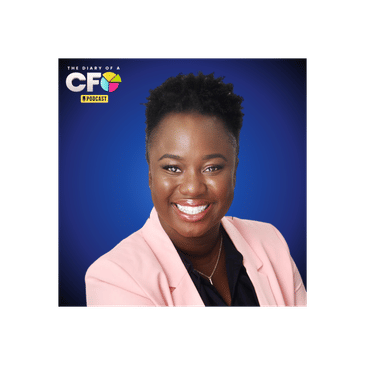
In this solo episode of The Diary of a CFO, Wassia Kamon shares her fifteen-year journey from staff accountant to CFO, revealing the career decisions, setbacks, and leadership lessons that shaped her path. From immigrating to the United States as a teenager to navigating layoffs, negotiating promotions, and redefining what it means to be strategic, Wassia explains how finance professionals can accelerate toward executive leadership with intention rather than luck
How Can Aspiring CFOs Navigate Their Career Path from Entry Level to Executive?
Breaking into the CFO seat rarely follows a straight line. Technical credentials help, but they do not guarantee promotion, influence, or long-term success. Wassia opens up about starting in public accounting, pivoting into industry, learning how to advocate for herself, and discovering that strategy, relationships, and executive presence ultimately determined her trajectory.
In this episode of The Diary of a CFO, Wassia reflects on pivotal moments including passing the CPA exams in a second language, managing peers early in her career, surviving restructurings, and investing personally in coaching and professional development. She explains how each stage forced her to think beyond reporting and toward enterprise leadership.
This episode is for finance professionals at every stage of the journey, from early-career accountants to VPs preparing for the CFO role. Listeners will walk away with practical lessons on building credibility, navigating corporate politics, developing strategic thinking, and positioning themselves for executive opportunity.
Why This Episode Matters
If you feel stalled despite strong performance, this episode explains what actually unlocks promotion to senior leadership.
If you are preparing for VP or CFO roles, it outlines the habits and experiences that separate managers from executives.
If you want to future-proof your career, it shows how branding, networks, and continuous learning create optionality.
Key Takeaways
Credentials like a CPA or MBA provide a foundation, but executive promotion ultimately depends on building trust, influence, and a strategic perspective.
Growth occurs by operating outside your comfort zone through stretch assignments and cross-functional exposure that accelerate leadership readiness.
Strategic thinking is developed by deliberately learning to zoom out, framing long-term trade-offs, and communicating beyond technical accounting details.
Investing in yourself through coaching and skill-building compounds over time and often requires personal initiative before receiving company support.
Cultivating a strong personal brand and professional network consistently unlocks more opportunities than traditional online job applications
Questions This Episode Answers
What does it really take to move from staff accountant to CFO?
Why do high performers get passed over for promotion?
How can finance leaders build strategic credibility earlier in their careers?
What role do executive coaches and mentors play in advancement?
How should professionals invest in their own long-term growth?
How Early Career Decisions Shape Long-Term CFO Potential
Wassia describes how moving from public accounting into industry exposed her to broader business operations and forced rapid people leadership. She explains why working in companies of different sizes accelerated her learning curve and created resilience under pressure.
What Credentials Can and Cannot Do for Finance Careers
Passing the CPA exams opened doors, but Wassia recounts how credentials alone did not secure the controller role she wanted. She walks through the negotiation that finally earned her interim responsibility and the realization that ambition must be articulated, not assumed.
What Separates Managers From Executives?
A turning point came when recruiters told Wassia she was not yet strategic enough for a senior role. She shares how expanding her network, observing executives, and working with a certified executive coach transformed how she framed decisions and communicated at the top table.
Why Personal Brand and Networks Matter More Than Ever
From navigating layoffs to being recruited for CFO roles through LinkedIn, Wassia explains how reputation, relationships, and visibility created options when organizations changed. She outlines why every finance leader should treat their career like a business venture and invest accordingly.
Resources Mentioned
Topics: Career Strategy, Executive Coaching, Personal Branding, FP&A Leadership, CFO Readiness
Tools: CFO Readiness Assessment
Organizations and Media: Wharton Online FP&A Program, Wall Street Journal, Fast Company, Accounting Today, Strategic Finance Magazine.
Subscribe to the Finance Executive Track newsletter for actionable insights to become the obvious choice for top finance roles and thrive once you get there
https://the-finance-executive-track.kit.com/signup
Download the free guide on AI prompts every finance leader needs:
https://www.wassiakamon.com/prompts
If you liked this episode, listen next to:
Learn more about Wassia Kamon and The Diary of a CFO at thediaryofacfo.com.
About The Diary of a CFO
The Diary of a CFO is a podcast about modern finance leadership, hosted by award‑winning CFO Wassia Kamon. The show is for current CFOs, emerging finance leaders, FP&A professionals, and founders who work closely with finance teams.
Each episode explores how CFOs and senior finance executives build high‑performing finance and FP&A teams, partner with CEOs, boards, and capital providers (banks, PE/VC, and impact lenders), and navigate growth, regulation, and transformation without burning out.
[00:00:00] It took me 10 years to become director of fp and a and only five more to become CFO. Mind you, I grew up in a former French colony and came to us at age 17, which means my first language was French. And so by the time I came here, I didn't fully understand what people were saying. I understand the culture, and I definitely didn't know what being a CFO was.
[00:00:20] Fast forward. I am now the CFO of Access to Capital Fund Entrepreneurs, and I've been named twice 40, under 40 by CPA practice advisor. I'm also a guest faculty on the Wharton Online FPNA certificate, and I've been featured in major publications such as the Wall Street Journal, fast Company, accounting Today and Strategic Finance Magazine.
[00:00:40] So today in this video I wanna share with you my full journey, and so I'll be sharing the lessons I learned, the obstacles I had to overcome, and the many, many, many, many things. I wish somebody had told me earlier, let's dive in. Growing up, I was always top of my class and my, both my parents were executives, so when I came to the US [00:01:00] I was determined I was going to do the same.
[00:01:02] And so I knew I wanted to be in business. You know, I was 17 years old, but I knew what I didn't want to do. I didn't wanna deal with blood. It, computer science. So I went into business as a major, and when I took my first accounting class, I just fell in love and that became my major. Now in my third year of college, I had a college professor, Alison Jacobs, I'll never forget this woman, and she said, if you wanna be.
[00:01:25] Successful in accounting, whether it's public accounting or industry, you have to be a CPA and you have to work for a big four. So the good student, I was said, yes, let's go Now. When I graduated from college, I got an internship at PWC in the assurance slash audit track. This and I hated it. Okay. I did not like audit.
[00:01:45] I did not like public accounting. It wasn't gonna be for me. And I went into industry and I became a staff accountant at a manufacturing slash technology company. So when I look back at my. [00:02:00] Time at this time. What are some of the things that I really learned? So when I went to PWC as an intern in assurance, I just hated it.
[00:02:09] I did not like public accounting. And so I went to industry and I became a staff accountant, and that was really those. Start of my accounting and finance career. So what are two things that I learned in that transition, that part of my career that really helped me become A CFO, even though at the time I didn't see it as a goal number one, operating outside of my comfort zone.
[00:02:31] I had to operate by default outside of my comfort zone. First of all, every time I. Speak. I'm speaking a language that is not mine, and I operate in an environment where I didn't grow up and so I had to become comfortable in those class project. In applying for role, we use back home, we use a cv. My mom was a HR director, and now here it's a.
[00:02:52] Resume. What are those differences? Even the these tiny thing that we often take for granted when we are within our culture. I had to learn to [00:03:00] operate outta my comfort zone and be confident in that. The other thing that I had to learn was learning to make decisions with limited information, which is really the foundation of navigating uncertainty with confidence.
[00:03:11] What, why is that? Well, first, when you are learning a new link. Language and you're talking with someone, you probably only understand 50 to 60% of what that person is saying. That was my case in class. That was my case in group project. That was definitely my case during internships and, you know, understanding what the role and the expectations was.
[00:03:32] So I had to learn to really focus to get things the first time, because I didn't have much time, I didn't have to, I couldn't just ask the professor in class to just repeat a whole segment because I didn't get it. So I had to really listen in and learn to piece in and be able to grab all these different details and move on with it.
[00:03:53] If I was in the street and asking for direction and somebody said, you go left right, and it, it's all sounded blah, blah, blah, blah. In my [00:04:00] head, I had to hold on to the information I knew and go with it. And I will say that these are two things that we often underestimate in the journey to being an executive, really in any, um, discipline, but especially as a CFO one, you are.
[00:04:14] Always operating outside of your comfort zone. As a CFO, I spend more time outside of the finance function than with my own finance team. I'm dealing with the COO, I'm dealing with people in, in marketing, I'm dealing with the CEO, I'm dealing with so many people who don't have a finance and accounting background.
[00:04:30] And so you have to be comfortable in those things. I, um, people are looking up to me for decisions in, in a certain economy when I'm in a certain about some. Some of the things that I wanna do, but oh, well, it's part of the job. You are providing clarity as you are yourself, looking for clarity. And so the second thing about learning to operate in that uncertainty is the same thing.
[00:04:52] It all comes together. And so the earlier you can really ground yourself and be comfortable operating outside of a comfort zone by [00:05:00] doing things that are outside of what you'll normally do. You don't have to travel to another country, but. Even trying a different discipline, learning to code, learning ai, learning something that you're not used to, and also communicating and developing friendships with people that don't have the same background as you, as you will really, really help.
[00:05:17] And that's really what helped me when I look back at that time in my career, when I became a staff accountant, my first duties were billing bank recs. We're using Sage at a time and using Hyperion to report to our parent company. And so as a company grew rather. Quickly, I had the opportunity to move from staff accountant to senior to accounting manager very, very quickly, and that was the start of my problems.
[00:05:42] A lot of things became very difficult for me, um, because I wasn't ready managing people who used to be my peers, managing people were much older than me. Having to fire, hire, promote, having to do annual performance reviews, reporting with a parent company, and it was a [00:06:00] lot. I wish that. Somebody had said earlier how corporate America works.
[00:06:05] Like we should have a corporate America one-on-one in our curriculum in college. I mean, we should learn that in school somewhere. I don't know. Because you have to learn how to leverage a one-on-one. What is a one-on-one? How can you use it to showcase your work, uh, and not just work hard hoping that people.
[00:06:21] Will see you, how to deal with office politics, how to ask for a raise for a promotion. It was just a lot of things I had to learn. The hard one was very frustrated. Now, when I look back, I will say that one of the most valuable lessons for me was that you learn a lot when you work for a small or medium sized company.
[00:06:38] One because you're exposed to a lot more areas, and two, because you have a lot more access. Two executives, that is invaluable. And at the time I didn't realize it. It was all painful. It was all a lot. But now I look back and I really appreciate it. And I know it goes against a lot of common advice that you have to work just for big companies, fortune 500 household names.
[00:06:59] But I [00:07:00] think that at some point, moving between company sizes. Is an underrated way to accelerate your career. It has helped me a lot in my journey. Moving from accounting manager to controller seemed like a natural, simple move, especially since I knew that to get there, I needed three letters. C-P-A-N-I.
[00:07:19] Did I passed all four parts of the CPA exam by age 25 by working like a mad woman because mind you, again, my first language is French, which means as I was going through this, I was learning the CPA exam in a different language, and in the process I. Always had to break it down in order for my native French speaker to understand it.
[00:07:41] That was a skill I didn't know I will really need when, um, I became CFO and on that journey, because you really need to know how to break down very. Hard concept into simpler terms for your audience. So I was like, I'm getting this. I have the letters, and so hey, now is my [00:08:00] turn. But it didn't happen that way.
[00:08:01] The company I was working for had a lot of turnover in the controllership role, and so I went through three controllers in like five years. So when that third controller left, I thought, now it's my turn. Especially since I had the three letters, the CFO required. And one day she called me in her office for me.
[00:08:19] I had a whole dance going on. I was like, Ooh, they're gonna offer me the job. I was all excited. And I get into her office and what does she say? She sit me down. She said, well see, I know you've been working hard. I'm like, Uhhuh, Uhhuh. Of course I know. And she said, hang in there. We are going to post the position and you'll soon get help.
[00:08:39] At that time, my heart like sank. Okay. I was like, wait, what? I've been at this company for how many years? For me, I had all, I mean, I had, the loyalty was there. I had the letters. I worked hard. Not what, like what did I need to do different? Why is it that she wasn't offering me the job? She was telling me [00:09:00] that they were gonna hire another controller.
[00:09:01] So I went home crying of. Course and my husband was like, Hey, but did you tell her that you wanted the role? Like instead of, you know, saying, Uhhuh ba, what did you do? You have to fight for this. And at the time I was also good friends with the gentleman that was our head of supply chain at the time. Cha Shivers got Rest is Soul.
[00:09:19] And he told me the same thing. He said, well see, you need to. Articulate what is it that you want and why you the best person for the role. You have to go in with the facts and not just your emotions, because at that time I was all emotions. I was all frustrated. But again, as I said earlier, we don't get corporate America one-on-one or anything about how to ask a raise or promotion.
[00:09:39] So I was able to go back to my CFO the next day and make my case. We negotiated and we agreed that I was gonna be an interims. Controller at the time. I will oversee everything the controller will do. I got a pay bump, small one, steal something. And I was overseeing accounting AP [00:10:00] AR inventory 'cause we were manufacturing at the time and I had employees in Ohio and also tax and FPNA.
[00:10:07] So that's how I was able to negotiate to get to controller. And it was something that really made me realize. How limited having credentials was 'cause up till now. I was a good accounting student. Remember I graduated top of my class back home. I graduated summa cum laude for Georgia State University. I went for my CPA, I was going for these credentials.
[00:10:28] I was even started to work on my MBA at the time 'cause I needed those hours anyway to start passing the CPA exam. And so that's when I really realized that having credentials, it just. Not enough. If you wanna get to the top. In corporate America, it's hard to accept that in a lot of ways, especially when you feel like you're working hard.
[00:10:49] That was my case. I was like, I've been here through all these people. I trained how many of my bosses, and here I am not getting it. And so if you want to succeed, you will have to make your [00:11:00] intentions. Clear and known by the right people because you get to a point in your career where who you know and who trusts you is more important than what you actually know.
[00:11:11] Again, I say you get to a point in your career where who you know. Who trusts you is more important than what you actually know. That's what a lot of people you will notice are good at office politics. Their knowledge and performance is very shallow, but they keep going from promotions to promotions, and that is something I wish, again, somebody had told me earlier.
[00:11:31] So I was entering controller and after. First successful audit and budget cycle, I was promoted to corporate controller. Yay. By now, I had to do more work with people outside of finance and accounting. I had to take more charge of the budget itself, collecting data, spending a lot more time, and I, that's when I really enjoyed FPNA.
[00:11:52] But that time as a controller, when it came to budget season, my work was 50% FPNN and 50% accounting. And during the [00:12:00] year it was much less. So I wanted to go full in at a hundred percent in fp NA. So I started working on my CMA. There were no fp NA or any kind of content created on fp NA on LinkedIn. It wasn't a thing.
[00:12:11] So for me, CMA was what was gonna help me in that process. And so I did that and applied at a massive, uh, from a company and was hired at FPNA manager. Now the move came with interesting trade-offs. That move came with. Interesting trade off. The first one was I had to take a pay cut, a five digit pay cut.
[00:12:33] Yeah. It hurts me when I think about it, but it made sense 'cause I was going from having a lot more employees, um, under me to being a sole contributor and have just not the, the big business units under my leadership. And so, yes, it made sense for me. I had two kids under three and I couldn't take one more employee anything.
[00:12:54] Being a manager is exhaust. Let's face it. And so that's what made sense for me. And I knew that [00:13:00] in the long term. 'cause again, it's about playing the long game. Me adding that FPNA layer to my already solid accounting background was really going to help. Now what I didn't see coming is that I will have to go through two rounds of layoffs, not as.
[00:13:15] An impacted employee, but as the finance person behind the numbers. And that was incredibly hard mentally, physically, I couldn't sleep at night. It was my first time going through this, and it was before COVID, which means everyone was at that spreadsheet I had lunch with. I knew, and I couldn't say anything.
[00:13:35] They were talking about how they were gonna have these vacations, but I knew that they weren't, they wouldn't be on the budget for next year. So that was very hard and. The main lesson I took from that, which I carry till this day, is that as a professional, regardless of your field, you have to optimize your career so you have more doors than dead ends.
[00:13:59] And for me, the [00:14:00] best way to do that is to work on your personal brand and on your professional network so that if anything like this happened or you are in a situation where you really need to go for whatever reason, it is. You can do it easily than a lot of other people can. 'cause I saw how those who had great relationships with the decision makers in that layoff process stayed.
[00:14:21] Those who had strong personal brands stayed and not just not online or offline. It's. It's both. Okay. You need to invest in your relationships and your personal brand, which is what I did, and that's also one of the things that really accelerated my career to CFO. By the way, if you're watching this and you're wondering where you stand on your path to executive leadership, I created a free CFO readiness assessment that you can take.
[00:14:47] Less than 10 minutes, and I'll drop the link in the show notes and description, strongly encourage you to take it because it will help to determine which area you need to focus on to get to that next step. Now let's get back to it, [00:15:00] and then COVID hit. Mm. Time to reflect. It was during that time that I realized that work-life harmony was so much better than work-life balance.
[00:15:11] 'cause we thought all along that work-life balance is, is, is the best. But then you home and you realize, huh, I could work 20, what, 20 hours. A day for work. But then if I come home to a jerk, what's the point? And so work life harmony is that idea that you're optimizing your life and you're also optimizing the choices that you made in your career.
[00:15:29] So you have a truly fulfilling career and life. And so that really changed the definition of what I had as a great job. Meanwhile, during COVID, I was also spending more time on LinkedIn. I started. Posted on LinkedIn, which till this day feels awkward even though I have over 28,000 followers there. And so what happened from all this in networking with others, I starting attending conferences when I could, attending first as uh, an attendee, but.
[00:15:57] Also starting to do it [00:16:00] as a speaker. I joined the board of a local not-for-profit. So I started doing things that I realized I need to energize me beyond my work. Now. In doing that, an executive recruiter out of nowhere reached out to me on LinkedIn about a VP of finance and accounting role. I went through the interview to me, I was ready because I have.
[00:16:20] Uh, the accounting and FPNE background, but when he got to the last round, um, his name was Huff and he pulled me aside and said, well, they really think you should be the one for this role, but they don't think you are strategic enough. That was the first time in my career going from how I was so good at my job to going to another level after I build a personal brand.
[00:16:41] I have the network, I have the experience, I have the, the credentials. By then I'm. CPAI have, um, A-C-M-A-I was working almost done with my MBA, actually, I was an MBA, so all these letters behind my name and I wasn't strategic enough. And at the time I remember, yes, it hurt to hear that, but then I didn't [00:17:00] even know what it truly meant.
[00:17:01] I couldn't define that. And so he walked me through how I was answering the question and how my first. Instinct was to go directly in the weed and I wasn't thinking bigger picture and I wasn't thinking longer term. Eventually I got the role, but then as soon as I got the role, I started really working on that idea of being strategic enough, of being strategic, operating at that level.
[00:17:27] So it's really. When I became a VP that I got to really dive in and really fully operate as a strategic executive. Now, unfortunately, it is something that you don't, you're not taught unfortunately, but I learned that as you expand your professional network and start really spending time with executives.
[00:17:49] End up picking those things that will make you show up as an executive, that'll make you think like an executive and operate as an executive. So the sooner you can do it, I could have started doing [00:18:00] that so long ago, and that's something somebody I wish again would've told me earlier, but definitely wherever you are in your career, work on those strategic.
[00:18:08] Work on showing up and speaking and thinking like an executive. The earlier you can do it, the better off you would be. 'cause that was definitely something I had to overcome to get to the VP level and something that really helped me in those next interview rounds when it came to the CFO role. So when I look back at that transition from being a VP to becoming CFO, 'cause I was a VP for about three years, the thing that really helped me the most was working with an executive coach, not just any coach, a certified coach that had a background in accounting.
[00:18:41] Her name was Janine Brown. And working with her really helped me understanding and refining my executive brand. How do I talk? Who should I typically hire? How do I typically show up in conflict, and what do I need to improve to get [00:19:00] there to be more effect? Whether it's in conflict resolutions, working with boards, and so that really helped me mind you, the first time I walked with Janine, because I was following you with, I was following you on LinkedIn for some years, and I finally got to meet her at the future of Finance Summit because she was keynoting there, so I got with her afterwards.
[00:19:19] She also lives in Atlanta. We connected and I was like, I need to work with you. That first time I worked with her, those first session came out of my own pocket. Now, I know we tend to wait for companies to invest in us and all that, but as I like to say, you should treat your career like a business. Yes, you should treat your career like a business venture and be comfortable with the fact that you often have to invest your own money before other investors show up.
[00:19:45] So yes. Those first executive coaching lessons were out of my own pocket. Now they're part of my package, but that's how we started and that's how I was really able to refine my executive brand as I was doing. Also other things is through her that I [00:20:00] learned about the concept of having a. Personal board of directors, not just one mentor, but having people that can root for you.
[00:20:07] You have sponsors on my board of directors are people that are my age, people older than me, people in different disciplines, so I have a lawyer as well, and so people that allow me to stretch. My thinking. So in doing all those things, I became a well-rounded executive. And so when that opportunity came, when another recruiter reached out to me on LinkedIn, I know you'll hear me say that a lot and be like, cia, are you overdoing it?
[00:20:33] No, I'm not. I am not. Recruiter reached out to me out of nowhere on LinkedIn and within a week I was hired as a CFO of Ace. And I know that's a combination of all these learnings that I had to do and all these refining I had to do over the years. But I will say that the thing that really helped me was working on an executive coach.
[00:20:54] 'cause there is such a difference between how you operate as a manager and how you operate as an executive. And that's [00:21:00] why a lot of people stay stuck at that manager level. It is so easy to stay stuck there because very few will share with you some of the things I just shared or the things I will stretch you to become an executive.
[00:21:12] So yes, I got a CFO at a great organization with great people, and yeah, it felt ser I got a role, but really what it means to be A CFO is I oversee finance, accounting, compliance. I have primary responsibility for planning, implementing, making sure that. Our controls are there being the face of financial communication with the board, with our investors and funders as well as the rest of the organization, and so it's been an incredible experience.
[00:21:40] I really felt prepared when I stepped into that role, and I really feel that I can be impactful because of all the. The things that I've learned, the people that I met, the people that are currently on my personal board of directors, because there are certain things that are very tough about being a CFO.
[00:21:55] You have to deal with a board. You have to be able to say no to your boss, the CEO. You have to [00:22:00] do so many things that are not in the book. Especially when I became CFO in 2024, we didn't know how 2025 will be challenging in terms of the economy, the volatility. So I had to accelerate my learning. But thanks to the foundation I had and that I, I'm sharing with you, it really helped.
[00:22:16] So what really made that foundation, what were my key takeaway from this whole journey? From college, from Ivory Coast, even all the way to now as A CFO? So now that I've shared my full story with you, I wanna talk about a couple of the most important things that I've learned along my journeys. Five of them.
[00:22:36] One, force yourself outside of your comfort zone. For me, it's a default because my first language is French, but I've. Also kept that habit throughout, and so I would read books that would challenge me. I would get into activity that challenged me. This very podcast is me being outside of my comfort zone.
[00:22:53] Me getting on stages and speaking is getting outside of my comfort zone. There's never a point where you arrive, quote unquote, but it's [00:23:00] definitely a habit you wanna have because that will allow you to really stay calm even when there is this. Storm or chaos about you and will allow you to really lead effectively and get clarity among chaos.
[00:23:13] Like it's amazing how you get that confidence from doing instead of waiting to feel confident to get certain things done. The second thing I will say, to spend time with people that will really make you think bigger people that will stretch your thinking. I cannot emphasize this enough, and that is really one of the.
[00:23:33] Best decision I made in my career is having that personal board of directors. Half of them of the one I have are CPAs, and I also have a guy that I will drop the link in the bio coming up soon about how you can also build your personal board of directors and making sure that they are diverse in terms of background, ethnicities, functions.
[00:23:54] Because again, as a CFO, you're dealing with legal, you're dealing with. Supply chain sales and marketing. So you [00:24:00] cannot just be surrounded with people in accounting and finance. You need people that will really stretch that thinking. Now, number three, which you may not have noticed, is that you have to become someone that people genuinely enjoy.
[00:24:12] Working with and working for. Remember earlier I told you that I had to start managing people that were much older than me. People that used to be my peers. I had to hire, I had to, I had to communicate bad news. And in all that enable to lead effectively. You, you need to be someone that people really wanna work with in order to be a good.
[00:24:33] Partner, like if people don't like working with you, it doesn't matter what your title is, you will not be effective. And as a CFO, you also realize you cannot do it all. There is no way you can do billing and you can do invoicing, and you can do prepaids and bas. There is no way, but people have to believe in you.
[00:24:50] And be willing to work with you, for you to be effective. So that third thing is so underrated. Unfortunately, a lot of people don't understand [00:25:00] that. And you may get higher and higher and higher, climb that ladder very fast, but then get to a point where you stuck. And sometimes this could be. People just don't wanna work with you.
[00:25:10] So working on that is also having emotional intelligence and all that good stuff, but really doing that assessment of do people really wanna work with me or work for me? Now, the fourth thing is invest in yourself. Even if the company won, I paid for executive coaching out of pocket executive resume writing for.
[00:25:27] Certain conferences, I pay a lot for it, sometimes speak to it so I can go there for free too. But you have to be willing to do it because you have to see it as an investment in your future because really nobody will care more about your career than you. Not hr. Definitely not hr. And so that's what you have to do.
[00:25:44] You shouldn't see it as an expense. And then the last thing is build your personal brand and professional network. I cannot say enough. I look at the past five years, I have not gotten a job. Through an app, a job application. You have all been through [00:26:00] connections and having a strong personal brand. The point where people Google you, what do they find about you?
[00:26:05] Because that's really how things are today. If you're going to a meeting, you can ask the people on the call, how many of them looked you up on LinkedIn or Google? You'll be surprised. Probably 99% of them. 'cause that's how we now form first impression. That's why it's so. So, so important to do that. So if you listen to my story and you're now thinking, Hmm, I wanna get to that level, I wanna get to that level in my career too, you can click the first link in the description to take my free CFO redness assessment.
[00:26:32] Again, it will help you evaluate where you stand right now and give you personalized recommendation to help you reach the executive leadership level. It takes less than 10 minutes. I've seen a lot of people taking in five minutes. And you'll get insight instantly on the competencies you need to reach the VP level and above.
[00:26:48] So again, click that first link in the show notes and I'll see you in the next episode.