
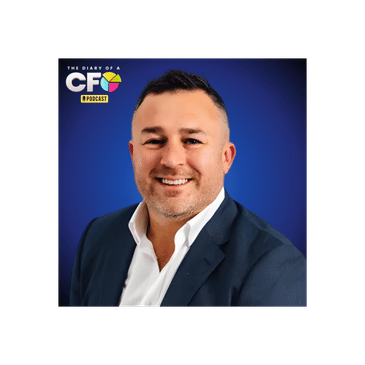

In this episode of The Diary of a CFO, executive recruiter Mark Johnson shares insider perspectives on what CEOs are really looking for in today's CFOs.
Discover how the expectations of finance leadership are evolving, what separates top candidates in interviews, and the essential qualities that define success in the modern C-suite.
Whether you’re an aspiring finance leader or a seasoned executive, you’ll gain actionable advice to stand out and thrive at the top.
Expect to Learn
- Beyond the Resume: Why today’s CFOs must stand out with emotional intelligence, resilience, and trust, not just credentials
- AI vs. Human Connection: How automation is reshaping hiring, and why relationships still make the difference
- Interview Strategy: Why performance alone isn’t enough, and how to truly impress in high-stakes executive interviews
- Path to CFO: What it really takes to land your first CFO seat, including mentorship, visibility, and cross-functional experience
- The Four Intelligence Pillars: How IQ, EQ, SQ, and AQ together define the next generation of finance leadership
If becoming a CFO is part of your goals, get your CFO readiness score here: https://thecfo.scoreapp.com/
Don't forget to download the free guide on AI prompts every finance leader needs:
[00:00:00] Welcome back to the Diary of a CFO Podcast, the podcast where finance leaders share the lessons, challenges, and wins that shape their careers as well as their organizations.
I'm your host with Wassia Kamon, and today I'm super delighted to have with me. Mark Johnson. Mark Johnson, founder of EGM Partners and one of Australia's leading voices in recruitment and workforce strategy.
He's helped shape hiring trends, build stronger companies, and inspire people to be their best at work and beyond. Welcome to the show, mark. Thank you very much. Great to be here. Thank you so much. Coming all the way from Australia, I am very curious to hear what your perspective is from your standpoint as an executive recruiter.
When A CEO calls you, because the CFO just left, what do they usually say happened? Yeah, right. Okay. So I've recruited CFOs for, oh, a good 15 to 20 years or so, and there's usually a fair degree of panic. Once A CEO calls me, there'll either be two, two reasons, right? So they'll either be [00:01:00] calling me saying, my CFO has resigned, what are the next steps?
And they'll be calling me for assurance for peace of mind. They'll be wanting to know my thoughts on what the next steps or the best next steps are going to be. They'll seek advice on whether that's a permanent person, what that process would look like, or whether there's an interim option. Or sometimes they may be calling me on a preemptive call, which might mean that they may be aware that their current CFO is ready to move on, or they may have concerns about the performance of that CFO.
So it's almost giving me a, a, a heads up, a little bit of leeway to be able to start conversations with them in confidence to. Be able to ensure that the finance team and that that CFO role is going to have a fair degree of continuity around it. Okay. So whether they call you because the CFO resigned or because they feel like the CFO is [00:02:00] not where they want them to be, what would you say is most CEOs are looking for in the next CFO?
Yeah, that's a really good question. So the, the role of the CFO has evolved in, in my career, I think. 20 years ago or so, you'd be looking at CFOs and they, they were probably more backwards looking, so it'd be more around compliance. It would be more around a safe pair of hands. The evolution that we've seen, so probably it's taken off a lot in the past 10 years or so, has been more of a strategic forward looking, more fp and a focused.
So CEOs are really looking for a CFO that can be attached to them at the hip, be the voice of reason, be the person that can, a trusted advisor When, when I speak to CEOs now and when I place CFOs with CEOs, I'll check in from time to time, and one of the things that. I will look forward to understand whether that role is adding value, is whether that CFO [00:03:00] is being the voice of reason to that CEO, making sure not just making sure there's no surprises that come up, but really being sounding board to that CEO.
So the CEO can make strategic decisions, but rely on the CFO to give them the data or data if you're in, in the States, but give them the numbers or quantify. How that decision can best be made. It's, it's a, it's still a risk mitigation role, but it's involving them at the decision making process a lot more than it used to be.
Wow. And I wanna go and dive back into what you said, how. You said in the past decade you've really seen the CFO role evolve. Can you speak a little more about what it means for you when you are looking for A CFO now versus a decade ago? What are the things that usually pop out? Like what are the usual, the things that you, you really looking for in that CFO?
If you just look at A CFO 20 years ago versus what you have now, even by your visuals, it'll be [00:04:00] completely different versus on a cv, right? Your traditional. Stale white male that went to the same school as the people around them and the CEOs, the whole workforce has changed completely, right? So you've got a whole diverse workforce.
You've got people from all different backgrounds. You've got men, you've got women. So your CFO just looks different to start with, right? The other side of things is probably more of the social and the emotional side of things as well. A CFO previously would've gone to Big four, a big four firm. They'd have done either audit or tax specialized in it.
They'd have been a technical expert and they would be a subject matter expert that, you know, has a seat at the ELT, but doesn't necessarily have the same. Impact as they do now. So I'd say the IQ side of things is still just as important, right? So the intelligence part, you still have to get great grades at school.
You still have to go to your firm. You still have to be a high [00:05:00] achiever. You have to pass the tests. You have to have that into that. But what I think we've seen as much more of an emphasis on the eq, the emotional intelligence side of things, the social side of things, which is the. Being able to win hearts and minds and win trust.
And then what I pull the AQ side of things, which is the adversity side, which means you can no longer have, look, the, the IQ side's gonna get you the, the ticket to the game. It's gonna get you there. But where your career's gonna really progress now, how you're gonna become that high performing CFO and that big hitting CCFO is gonna come from the eq.
Yes, it's gonna come from the sq. The aq, the adversity side of things, being able to deal with the setbacks in a role. 'cause every CFO is is gonna get it wrong, right? You're gonna get it wrong. At some point you're going to make mistakes, but it's how you bounce back from those mistakes. It's really gonna set you apart.
And as a business partner or a true business partner to a CE. [00:06:00] Having the sq, the eq, and the AQ side of things is gonna give more peace of mind to that CEO where they're able to say, okay, right. I know that you've got that ticket to the game. I know you are that smart. I know you are that technical fantastic CFO that I can rely on for the numbers, but I also know that you're gonna look after the team, you're gonna be able to liaise with all the stakeholders and I know.
When the proverbial hits the fan that you are gonna be able to be there and you're gonna be able to not panic. You're gonna be able to perform and we're gonna have great days. But when we're not gonna have not so great days, I still know that you are gonna be there with me in the trenches and I can rely on you and trust on you.
Wow. I love what you said about a QSQ iq Of course. But how are you able to detect that, whether it's in the resume or in the interview process? Yeah. Wow. Um, it's really [00:07:00] hard and it's gonna get harder. There was, I was on Instagram scrolling through my reels like everybody does, right? Um, and the algorithm obviously figures out what I do for work or what interests me, and there was this app, and this app comes up and it basically just, it's a fantastic app.
And AI is come on leaps and bounds, like as, as we all know, we're all talking about it. We're all quite trying to grasp our levels of understanding with it. We're a little bit scared as we are excited about it, but this one was amazing. It blew my mic. This app takes your CV and it finds roles that you want, and it automatically matches them.
So within seconds, you can create the perfect CV for the perfect role, which means for organizations, well, for candidates, it means that it's easier for you to. Apply for roles or look like the perfect candidate for people like me and for organizations, it means that every applicant looks like the perfect person.
Right? Wow. [00:08:00] So the technical ability or the achievement sides of things, it, it's gonna be so much harder to find those people. Because everybody now is gonna look like the perfect candidate. The trick to finding who is that amazing high performing CFO, again, when you're looking at things like the SQ and you're looking at the A, the EQ and the aq.
The only way you can actually figure that out is by knowing the person. So I'm really excited as a recruiter for then this next period of ai, because everybody's gonna look amazing. But when an organization then goes up, we can do this ourselves, and they end up with 200 people that are actually the same.
Where we differentiate ourselves as executive recruiters is I deep dive into CFOs, which means I know them and I know them personally. Right? So I'll know. Everything from what sports they like, what um, what schools they went to, the sorts of environments that brings the best, brings the best out of them, what their peers have said [00:09:00] about them as well.
All this data that comes together is the stuff at the moment that humans can do that ar can't, or specialist. Executive search recruiters can do. So how do you find the best CFO for the role? You have to have as many data points as possible. The only way you can know is by truly knowing that person inside and out.
From another organizational risk perspective, one of the things that I love are the, the extra add-ons, reference checks get a bit of a bad rap because obviously right. Organizations that do, do reference checks. 'cause I know that there's, there's a fair bit of legality around that. I know in the United States that's a lot of the policies aren't right.
We don't issue reference checks. In Australia, we're a little bit more laid back where it's say, yeah, I'll tell you about that person, but you're not gonna normally give a referee to be, you're not gonna give a name to be your referee unless you think, okay, that person's gonna say something good about me.
Yeah. Um, and a lot of the time being. [00:10:00] Doing the reference check, you'll call that person out and you'll just have standard questions. If you don't invest in the reference check, it's pointless. It's worthless. Whereas if you actually take a good reference check and you ask probing questions, you can actually get a little bit more out of it.
And then on top of that, from the psychometric assessments, people call it psychometric testing. I like the word assessment because it's not a pass or fail. There's, uh, every, I believe every person has the right sort of environment and the right sort of role, but if you use your psychometric assessments well.
You can really sort of find out about the motivating factors, what makes that person sick, how they respond well to feedback, what sort of peer group environment is gonna suit them. And if you combine those data points of finding out about the individual and their motivations and the things that that interest them, that are gonna set them alike, and then you crosscheck them with the reference checks.
Then the other bit, which is in the [00:11:00] intuition where if you interview that person, that's probably how you're gonna get more of the verified approach into the suitability of that candidate and into those three things we discussed before. So big complex process in a nutshell. Too much data isn't enough.
Wow. And I like how you said with ai, everybody will look like the perfect candidate. So when you think about your certifications or you think about the degrees, uh, the company you, you've been to, you all look the same. So really, from what I understand, what would differentiate you from the rest is really during the interview process.
Now, I think you, uh, are coaching some CFOs in doing the interview. And make, and make sure they're impressive. But what would you say typically makes A CFO impressive in an interview with a CEO? Yeah, so interviews, I don't necessarily, I don't like them. Nobody does. Um, yeah, they're awkward by design and if you actually [00:12:00] like peel back what we we're doing here, it's crazy, right?
You're assessing somebody on how good they are at performing, whereas. The performance or public speaking or stakeholder engagement, that's not necessarily the in your top criteria of getting a CFO. Right. So the interview process for me is kind of, I think an a lot of organizations make bad hires by hiring the best actor and the best performer.
Performer because if you judge somebody by being the best candidate on a 45 minute interaction. Whether that's a, a good enough benchmark for how they're gonna perform in the role for the next three to five years, let alone the next 90 days.
Yeah, I coach people on how to, how to interview, but my advice on the flip side to clients is don't place too much weight on that interview. [00:13:00] However, when I am talking to, to candidates about their interview process, as I said, it is, it's exactly that. It's a performance. So I recruit people for a living and I interview people every single day.
When I started this role. I had the biggest amount of stage fright you could ever imagine. I had a stutter. I wouldn't be able to finish my sentences. The only way you can ever get better at performing, whether it's an online podcast or it's a face-to-face interview, I'm sorry, but there is only, the only way you can do it is by practicing and rehearsing.
There's no better way. So you have to be uncomfortable with being uncomfortable. It's a horrible process, but it's literally sitting there with a friend or a partner, or even in front of the mirror and planning the questions that are gonna be asked, still thrown at you, planning the answers to those and saying them in front of the mirror.
There's no other way, sadly, and it's as awkward as hell, right? Nobody wants to talk to a mirror and nobody wants to role play. [00:14:00] Nobody. No single person likes that in my, I don't believe any. I've not met anybody that does, but. Forcing yourself into that uncomfortable situation and practicing it is the way that you refine it.
You are able to find the things that you do well, the things that you don't do as well. It makes you more conscious about how you behave when you interact with people, and that's the way that you get the best outta the interview that you can. Wow. And so when you, you, you're seeing, um, some CFOs, especially the first time CFOs, right?
What would you say are some of the things that make them stand out for roles? Because sometimes CEO may come to you, I'm assuming, saying I want a more strategic CFO. What does that mean? And especially if you are never been A CFO but would like to become a CFO, what does it mean for you, for your resume or how you show up in an interview?
Yeah, look. The strategic part of thing, I think is coming to every, every role really. It's not just the [00:15:00] CFO role. Like, what, what does somebody mean? Again, I'm always trying to dissect stuff that, that, that's what I do. Whenever any anyone asks me a question, when A CEO says, I want somebody that's more strategic, or when I meet a CFO that says I want a more strategic role, what that really for me means is more involvement beyond the traditional remit.
So A-C-F-A-C-E-O will say, I need somebody that's more strategic, which means I don't want somebody that is backward facing. I don't need a compliance, I don't need a bookkeeper. What I need is somebody that will business partner with me and help. Propel the organization forward. From the candidate's perspective, it's exactly that as well.
It's the, I don't wanna just stay in my lane, I want to be adding more value. Um, how that role has progressed and how the strategic aspect of a of a CFO role has gone through an evolutionary process is that they're able to not just sit at that table, but they're able to think on the business rather than in the [00:16:00] business.
And it's that ability to be able to. Detach yourself from your day-to-day job. Think outside of the box. Um, summarize things better as well. So put that strategy on a page. There's the whole concept of strategy on a page, which is the, the, the, the who are we, where are we going, how are we gonna get there?
And answering it really clearly and succinctly. I think part of what I look for in the, the, the next generation of CFOs will be things on how they present board papers. For example, if they're presenting, if they, if their financial reports are just ledger dumps or they're just, all, all they're doing is taking the data out there, ERP, and just presenting that straight away to their ELT.
That's not just strategic thinking. And, and the advice I would give them is put yourself into the role. Of a director. So put yourself into the role of a board member, um, or a CEO, and these are the words that you need to always revert back to. What [00:17:00] does that mean for me? So if you're a CFO and you're presenting, um, you know, at the last course is financial results, you can present them, and that's what a finance guy does.
All right? You can present them with the, what that means for you. That's how you get to the next level of strategic thinking, um, and thinking more on the business and thinking outside of just your remit. So if you are able to identify, you know, your finance managers or your financial controllers, or fp and a people that are already thinking in that way, those for me are gonna be your next CFOs.
Nice. And do you think at this point that being a CPA or chartered accountant is getting obsolete when it's becoming a CFO one day? Do you know, I hate this. I, I, I spoke to a CFO ages ago and he had a marketing background and he said, you don't need, you don't need CA or CPA to, to be A CFO. Um, and I, I really disagree with that.
It's the same as when people say [00:18:00] you don't need to go to university. They're correct. You don't need to go to university to have a career. You don't need nowadays to have a CPA qualification or whatever. Um, qualification Your country has to be a CFO. You don't need it. But that doesn't mean you shouldn't have it.
I think there's a whole load of learning that you can get from being in the weeds, right. If you think about where A CFO sits, right? It's a, it's, it's a higher level view of the finance department. Um, and I love the idea that somebody has gone through an accounting firm or, or, or, or gone through their studies.
They've learnt the whole sector of what they're doing, and then they refine it and they can maybe broaden it. And as they go up the ladder, they're able to take a more holistic view. So for me personally, I would always. Prefer to have, again, the skills, the soft skills. When we talk about [00:19:00] the Q and the SQ and the aq, absolutely.
You don't need to have an accounting qualification to be A CFO and excel in those areas, but the buy-in that you'll get from your team below, if you can say, I've walked in your shoes. I don't think you can put a price on that, and I don't think you ever will. So if your CFO has got all those in abundance, yeah, fantastic.
If they've got all those in abundance, but they've also said. I have. Done the depreciation for that fixed asset, I understand how to calculate it. Or they can sit down and say, ah, I built a model, a three way model that looked similar to this. I did this, this, the buy-in that you get from your team and leading the team, I think is incomparable to somebody that has walked in those shoes.
Wow. I, I really like that perspective, but it also makes me think in terms of what kind of CFOA company needs, depending on the industry or what the company is at on its maturity stage. Right. Because sometimes I feel like there are [00:20:00] certain industries that really value that chartered accountants, CPA background versus others.
Like, what is your what, what have you seen when you're recruiting what, whether it's CP, a preferred or required. You're touching on a, an interesting topic in diversity of experience I think there as well. So a lot of organizations that I'll recruit for will want someone from that industry. So like oil and gas people, they'll be the oil and gas clients.
So like we want somebody that's worked in the oil and gas industry. That's traditionally been a really strong emphasis from a lot of our clients. Uh, that's changing. So a lot of the time now they're looking at things like, okay, they've got the technical ability. They've got technical, they've got the IQ, and they've got the technical skills within around accounting.
And if they've got those three other things, they're thinking, well, the industry side of things, we can kind of teach them. So if a candidate can be taught the industry, that's less important to, than the other things that I've discussed. I've definitely seen a more organizations accept [00:21:00] candidates that don't necessarily have qualifications.
A lot of the conversations I have with CEOs and boards probably still reverts back to what we were discussing before. And there's a really interesting sort of linkage with this as well, which probably goes around to conversations that I like to have with people. I think you get to, there's a lot of talk about ageism in the workforce at the moment, right?
So in Australia, for example, our Human Resource Institute, the body did a poll and they said everybody over the age of 50. They view as being old, right? And age isn't. It's in the workforce, it's there. I'm gonna do my usual thing, right? Where I dissect why people are ageist. I actually don't think it's got anything to do with age.
I placed somebody in their seventies a few weeks ago, right? So it was the willing, the willingness to work was there from that person. What I think happens is people generalize. So they are used to, [00:22:00] they as humans, we're all, we're all financial analysts. We look at trends and then we, we sort of, we put things into boxes, right?
And what will happen is if somebody is over the age of 50, they've had a great career. They usually, you peak in your career career at 50 years old. That's when. A lot of other things happen in life, right? You can have aging parents that need care. Your, your kids probably need to get through school and things like that.
You can have your own personal health, health, um, challenges as well. And I think what goes missing as you get older is that appetite for learning, continuous learning and being curious. And that's probably my point with this, right? I think qualifications. I get upset when people stop looking at qualifications, and I don't mind looking at people that don't have the qualifications.
But the key bit that you need in every role, in my opinion, whether it's a CFO or even further down in in, in your organization, is the [00:23:00] desire to keep learning. Because once you stop wanting to be relevant, you're done. And that's when things like ageism come in. So yeah, I'm okay with organizations going, yeah, we don't need an MBA, we don't need a CPA.
But if you are hiring people on that premise and they are set in the ways and not wanting to continue to learn. I think you're going down a very, very dangerous route. Wow. I, I really like that perspective because it reminds me of, of a, I went to a conference that was a, a book about the coachability, um, habit, talking about how, um, you get pretty much set in your ways and it's hard for you to be flexible.
And unfortunately, like you said, we generalize people at a certain age. Having that. Um, I still wanna go back to the question about. What will help a first time CFO get into a role when the company or the CEO expect the [00:24:00] CEO, uh, the, the next CFOI should say, to have 5, 10, 15 years of experience? So is this question around how do you get over the lack of experience in the role?
Yes. How does a first time person get in? You just need that break. Right? So there's two, two ways you can get that. It's either your internal promotion within the organization. Or it's leaving to get that new role. Um, both of those things, the common, the common thing with both of those situations is you need somebody to take a punt on you.
So you, you need someone to give you a break. How do you do that? They need to believe in you. How do you get somebody to believe in you? You show them the track record of things that you've done, which means that in turn, you need to make sure that you're doing stuff outside of your remit. So if you're a financial controller, you wanna speak to your CFO and say, help me get more strategic.
This is where I want to, where I want to go. And then they need to believe in your personality. So believe that you can learn and you can grow into that role. [00:25:00] So what I would do is if I was an aspiring CFO, first thing I would do is I would get a mentor. I would sit with that mentor and I'd say exactly what, ask exactly what you've asked of me, how do I get to that role?
Somebody that's been there, someone that's walked in those shoots, and they'll be able to give you that advice and they'll be able to coach you through everything from the skillset that you need and, you know, push you to ask your, your boss to get more duties and responsibilities on. And the other thing that they'll do is they'll probably get you to grow your network, um, since the pandemic.
Everybody's done. What we are doing now, they've hidden behind computer screens and they've worked from home and they've just done their job. What we used to do five years ago was we would go to events, we'd go to conferences like you mentioned, and we, we'd go it for we'd, we'd do it for learning, but you can get that learning from reading an online book, right?
You don't need to get out, but the power that you get of connection. The buy-in that you get from other people and the influence that you get from [00:26:00] the keyword I'm gonna say here is trust from face-to-face is undeniable, right? So if you are networking with these people, and I hate the word networking, but if you are building relationships and building trust with people within your industry, they're going to be advocates for you and they're gonna be going, that person is the.
Next up and coming, CFO. So building your reputation and building your brand is equally as important as getting the skill sets and building your cv, in my opinion. Wow. Yeah, I, I, I really, for myself at least, um, during the pandemic, that's when I started thinking about building a brand, uh, and meeting people.
And that really accelerated my careers in a way that I really didn't anticipate. So I do agree that building those relationship in person especially makes such a difference. Now, how can somebody, let's say on LinkedIn, so 'cause you are all the way in Australia right now, [00:27:00] trying to have you as a mentor or connect, um, and learn from you because it's awkward, I feel like in person, just as it's awkward in on LinkedIn and other online media.
So how do you grow your network? Um, even though it feels it's still awkward. How will you do it effectively? How do you build the online network? Um, I don't know. See, this is the thing, I post quite a bit on LinkedIn and I've managed to get a following, but I never had the design to do it that way. What I've done is I've logged for about 15 years, right?
Oh, wow. And I found a, a, a, a niche that I'm passionate about, which is the world of work. So I'm passionate about three things and everything. Posts that I do always comes back to these three things, which is helping people being the best versions of themselves inside and outside of work, helping build better companies and progressing Australia or my community South Australia in particular.
I don't really do [00:28:00] online stuff. I don't really mentor people on online or even talk to them. On messages, um, I'll converse on, on certain topics, but what I would advise is don't so much focus on your online brand, which is a little bit against. The modern day thing. I think the opportunity right now is to focus on the in-person brand because everybody's starting to do the LinkedIn kind of thing, right?
Um, every time I open up my feed, it's full of a chat, GPT generated post. You can spot it from a mile away and it's inauthentic. And I think what's happening online right now is we started off with people that were thought leaders or um, uh, bringing up things of interest. Now people are using it to just make a noise and using it to promote themselves, but not doing it in the right way.
They're doing it to just make a noise for the sake of it without adding value. So [00:29:00] if you are doing something online, have purpose behind it. Make sure you're adding value. But if it comes back to how do I get mentors? How do I promote myself? Win trust, win the relationships. Go face to face. So I'd use the online bit to say, Hey, can we grab a coffee?
I love what you're writing about. I'd love to catch up and talk to you a bit more, but I think we're about to enter as a result of all of these technology advancements. I think we're about to move away from social media, which is anti-social. Into true social media, the face-to-face side of thing. Wow. And I love how you said with all the AI generated content, 'cause it, it took me back to your comment earlier about with AI and the apps, you can have the perfect resume with ai, you can also have the perfect LinkedIn profile and posts, et cetera.
So what really differentiate you is. In person, how you show up in those [00:30:00] interviews, in those conversations. Um, so I'm curious to hear, besides the evolution of the CFO as a role, how are you seeing more CFOs stepping into the CEO role? I think I first started noticing that about 15 years ago, and it's. The evolution of that CFO role to being more strategic.
So it was always gonna happen, right? If you've got smart individuals that understand the, the engine room of your organization, which is your finances, and they're getting more strategic and they're adding more value, and they're getting more multi multidisciplinary in, they're, um, integrating themselves as business partners across the broader business.
For me, I genuinely see that, that. CEOs should be coming from finance because if they've got those extra attributes of the, uh, the sq, the eq, and the aq, why wouldn't you? Because the actual technical expertise from that side of, there's two for me. Um, well, three. You've either got the marketing, which is the revenue generation side of things.
You've [00:31:00] got the financial side, which is the commercial side, or for some organizations, the technical engineering side of things, engineers are, in my experience, tend to not even enjoy the C-Suite areas as much, or they don't have the the SQ and uh. Quite as much. The marketing people and the sales generation people tend to have more of that than they actually do the iq, and I feel that the CFO suite, for me personally, and I'm incredibly biased with this, but I believe the CFOs have the perfect balance of the IQSQ EQ and AQ to move into A CEO.
Okay, so now I wanna dive in into all these iq, eq, aq and sq. Um, for each one, can you please give an example of how someone can start developing it as they think about growing their career and be in upper management, what are some of the things that demonstrated or can help build it? Wow, [00:32:00] that is an incredible question and I dunno the answers to all of them, but we'll talk 'em through.
Right? Yes. Uhhuh. So the IQ side of things. You need to be learning, always learning. So be curious. Um, that's one of the values we've got in our organization at EGM. So being curious and wanting to learn, whether it's informal learning from reading books and blogs or, or my LinkedIn posts, um, or going to uni and going to school and doing courses.
That that's how you're gonna get, keep, keep exercising that IQ muscle side of things. The eq, so the emotional intelligence bit. See this is the bit that's really difficult. I dunno whether that is as trainable. So the EQ side of things, your emotional intelligence is, uh, I, I think if you are, if you are.
Improving that. You can only get that from being around people. Uh, and I think the catalyst for that is active listening. So if you, if you are able [00:33:00] to sit in groups and listen and observe how people work and understand how people feel, that's probably what's gonna develop your EQ skills. The sq, so the social side, that's winning trust, that's getting buy-in from people.
And I don't mean like a dodgy salesperson, just trying to convince somebody to, to do what you want or manipulate. That's not a, that's not a Q at all. Building trust comes from understanding, again, how people work, which means trust in humans we're, you know, we're animals when it comes down to it, right?
Which means that, um, one person has to give something to another, then the other person gives something back, and then you. Can repeat those good actions and, and they can rely on you. That's how you get trust ultimately, right? I don't think you can have the sq this you genuinely love people and you, you care about people.
Um, so I don't think that's [00:34:00] something that you can fake. So you have to be authentic and you have to genuinely. Care about the best interests of people in order to get that SQ bit. And then the AQ side of things is, I think it's something that's missing in society at the moment. And I, I really fear for the younger generation with stuff like this, it's resilience.
So when we went to school and we did athletics, track and field events, you only got a medal when you're in the top one, two, or three, right? Yep. And no one remembers two or three. They remember number one. Nowadays, everybody gets a medal and I kind of feel like that approach is probably getting rid of our resilience.
I feel that there's a societal trend where we've made it acceptable to give up, oh, I don't like that job. I'm gonna quit it. So I dunno how you can train adversity other than appreciating that reward actually [00:35:00] comes from hard work. So I think we probably need to install it from a young age that things like struggle and pain and hard work and graft, the joy that you get from achieving things, from putting that stuff in, we need.
This is a learn behavior, right? The joy that you get from putting those things in is way better than. Just receiving the medal, for example. So if you train to do that track and field event and you put your heart and soul into running really, really hard and then you manage to. Maybe get fourth one year and then you get third, the next second, then one after when you finally get number one, you will feel a lot happier than the person that gets the same medal that gets in the eighth place and doesn't do any training.
That is so beautiful, especially the last one on the AQ for resilience. So I'm a our mom of two and my husband and I were having this conversation and we're thinking [00:36:00] about how, um. Different generations interact in the workplace, right? So I'm a millennial, which mean my parents were boomers and the first people to complain about millennials are boomers.
But they raised us, they raised us with a medal, and now we're seeing, um, the next generation of Gen Z probably, uh, the kids of the Xers and you know, the late boomers and it's really how we cannot work together. But we kinda raised each other, which is quite interesting. So how do you do you manage that when you get into a workforce and it's probably difficult for different generations to work together, even though we try to make life easier for our kids, but then we get in the workforce and it's hard.
So my dad's an academic and he did a, he wrote a research paper. Called. They liked it, but did they learn anything? And what that comes down to is, you know, at the end of a lecture when they give you the satisfaction survey and you go, go 10 outta 10 or [00:37:00] or five out 10, what they found in universities or in schools was everyone that was given the answers would give a 10.
Um, and the ones that were actually taught or forced to learn wouldn't rate it as high. Whereas you, you scale that back and you're like, well, what's the point of going to school? It's not to be given the answers, it's to learn. My dad used to infuriate me as a, as a child, right? 'cause he's a scientist. So every time I had science homework, I'd be like, dad, what's the answer to this?
And he never gave me the answer. He used to infuriate me. I'd get, I'd get so annoyed. But what he would do is he'd sit down and he'd explain it to me, because understanding it is way better than writing down the answer, because then I can answer. The next question that's phrased differently, but once, once I understand the system or the process of how that's how that works.
So I've got two young girls that are eight and 11. I do the same thing that my dad did, and I think we need to do that. And it's harder because it's easier for me [00:38:00] to just say, oh, here's the answer. Go away so I can go back and finish cooking dinner or whatever. But feel that we need to be able to, we, it's our duty as parents to be able to raise the next generation of kids that are curious.
I'll use that word again and understand that there is a process to get there. You don't wanna be at. The destination at the start. You need to appreciate the journey and the journey of learning and continuous learning. And I think in a workplace, probably what we can do around that resilience side of things is educate them around again, learning and the process, and learning to enjoy the process.
Because I think as soon as you start looking for the results with anything in life. You miss out on the best parts and it's unsustainable. Um, it relates to going to the gym, right? You could be saying, oh, I want, I want to lose five pounds. If you just look at the scales, that's not gonna do any good. But whereas if you look at your nutrition and your exercise [00:39:00] every single day and you trust that process, that's how you're gonna get there.
Yes. How we interact from a demographic perspective in the workplace, we're all very different. I think what you do is you then realign that. So this is the actual word alignment. We're all aligned. This is the journey, this is how we're gonna get there, and these are the processes and this is that. These are the expectations, these are the behaviors.
This is what you're gonna do. Once you've got that alignment, it doesn't matter whether one person, you know, uses, listens to. It's a nineties hip hop or one of another person listens to Taylor Swift, right? And you've got different generations and different points of views and different ways that they act.
But if you get that alignment and ideally you've been educated the right way by by, and have good mentors that can show you to appreciate the value of a journey, then you'll all be in the right direction. Wow. Thank you so much. I have one last question for you. This has been super, super helpful. My [00:40:00] question, I'm curious, what do you like to do outside of work?
Wow. I'm in one of them rare positions where I love what I do, so I'll, I'm, I'm, I'm gonna, it's late at night, so 1111, 11:00 PM here. So I'm gonna go home and go to bed, but I go to bed excited about my morning coffee. When I have my morning coffee. I read the newspaper. I, I'll probably blog or post on LinkedIn.
My girls and my wife, they're my life, right? So outside of work, I will be tomorrow. We've got basketball and we've got quiet, and we've got netball. Oh wow. And then at one o'clock I'm gonna go off and play rugby. So sport's big for me. I play soccer and rugby still. I'm 40 years old, so I probably, probably shouldn't, or I should probably stop a little bit.
But you're a long time retired. So outside of work, I'm very lucky that I've got my girls that are very active in sport and I'm very lucky to still be able to play sport. And most importantly, I live in the most. Amazing place on earth in South [00:41:00] Australia where I've got the beach five minutes that way, wineries to another direction and fantastic weather.
So I'll, I'll enjoy being outdoors and probably have a glass of wine, um, after I finish playing rugby. Doesn't sound like you'll go back to the UK anytime soon. No, don't think so. I, I go to visit, but I can never live there again. Oh wow. Well, thank you so much for being on the show, mark. It was super helpful.
Thank you. I really enjoyed it. And that's it for today's episode of The Diary of A CFO. Thank you so much for tuning in. If you enjoy the show, don't forget to like. Review, subscribe and share with others. Our website is a diary of a cfo.com. That's where you can find all the episodes, access all the guest profiles, see their bios and their social media links.
It is also the place where you can apply to be a guest on the podcast and having information about how you can sponsor the show. As always. If there is any topic you would like me to cover in the [00:42:00] future, just email me at ask at the diary of a cfo.com. See you soon, wondering if you're ready for the CFO role?
Find out with a free CFO readiness scorecard@cfo.scoreapp.com.