


Episode Summary
Most finance professionals get stuck somewhere between technical skill and strategic influence. The ones who break through learn to lead the conversation, not just report on it.
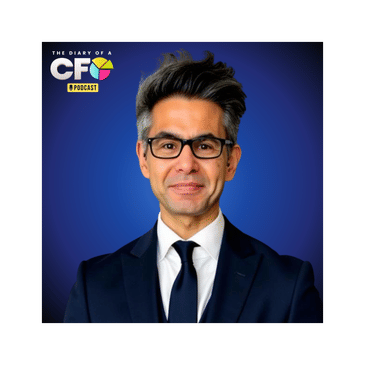
In this episode of the Diary of a CFO podcast, I sit down with Dr. Tamer Alsayed, CFO at the Future Investment Initiative, part of Saudi Arabia's Public Investment Fund (PIF). With more than 23 years of hands-on experience across industries, countries, and boardrooms, Tamer has worked across family businesses, Big Four firms, and large regional groups. He has led IPOs, M&A deals, and turnarounds, and is the author of The Art of Becoming a Strategic CFO.
We unpack what it takes to become a strategic CFO in your thirties when experience is everything in your region, the difference between a good CFO and a great one, what companies should stop doing when raising capital, how to simplify complex finance for boards and CEOs, the mentorship gap that holds finance professionals back, and a powerful conversation on whether AI is training our replacements or our assistants.
If you are a finance professional trying to step into a more strategic role, or a CFO looking to lead with more clarity and impact, this conversation is full of practical wisdom from someone who has lived it.
What You Will Learn
How Tamer became a CFO in his thirties in a region where experience was everything
Why a market-oriented mindset is the fastest way to grow your finance career
The mindset shift required to pass the CIMA strategic level (and why most people fail it)
How a startup CFO role rewired Tamer's thinking from reporting the past to shaping the future
The difference between technical thinking and strategic thinking in finance
What companies should stop doing when trying to impress investors
How to push back on inflated forecasts as a CFO without breaking trust
The one-slide executive summary structure Tamer uses for every board meeting
The three differences between a good CFO and a great CFO
Why mentorship is the most underrated accelerator in a finance career
The best career advice Tamer ever received
Whether AI is training our replacements or our assistants
How Tamer built a fully functional corporate finance teaching website in four hours using AI
Inside the Conversation
From Big Four audit to CFO across industries
Tamer started in Big Four audit, then moved into industry, working across private companies, family businesses, oil and gas, manufacturing, and technology. The biggest lesson from his early years came from a large family conglomerate, where he learned that logic alone does not move people. Relationships, networking, and emotions matter just as much. That shaped his leadership style around the belief that the human always comes first and the finance comes second.
Becoming a CFO in his thirties
Tamer became a CFO in his thirties in a region where experience traditionally determines who gets the seat. To stand out, he made a deliberate choice to always exceed expectations and to study what the market actually needed rather than what was comfortable. He read constantly, attended conferences, listened to industry discussions, and chose qualifications and courses based on where finance, investment, compliance, and risk were heading next. The CIMA, in particular, became the qualification that reshaped how he thought about the role.
What it really takes to pass the CIMA strategic level
The CIMA Strategic level is where most candidates fail. Tamer failed twice. A close friend failed four times before passing. He explains why: you cannot pass until you change your mindset from controlling the books to thinking beyond the numbers. Strategic level forces you to think future-focused, become a true business partner, and step outside your comfort zone. Tamer studied weekends and early mornings, skipped family occasions, and credits the experience as the foundation of his strategic thinking today.
The startup that rewired his thinking
The biggest shift in Tamer's career happened when he joined PAXAN, an American manufacturing startup with a patented plastic shipping pallet technology. He went from working in spreadsheets to flying around the world pitching investors, structuring Series A, B, and C rounds, and helping shape the valuation and future of the business. That experience taught him that finance is not about reporting the past. It is about influencing what comes next. From that point on, strategic thinking became his default setting.
The difference between technical and strategic thinking
Tamer describes strategic thinking as the ability to wear multiple hats, see beyond what others see, and constantly run scenario planning in your head. Technical thinkers focus on the numbers in front of them. Strategic thinkers focus on the business model, the ecosystem, and the multiple futures the company could face. His favorite line on this: "If you don't have a seat at the table, you are probably on the menu."
What companies should stop doing when raising capital
Tamer's most direct advice for companies preparing to raise capital: stop faking maturity. Investors are not fooled by polished decks, inflated forecasts, and unrealistic hockey-stick projections. What they want is honesty, clarity, and control. He recommends being transparent about risks, weaknesses, and gaps, and explaining how the company plans to close them. He also warns against the assumption that a strong brand will compensate for weak governance. It will not. Fix the internal chaos first.
How to push back on inflated forecasts as a CFO
When a CEO or executive team wants to show numbers the business cannot deliver, Tamer's playbook is communication and scenario planning. He shows the impact of overpromising, walks the board through what-if scenarios, and demonstrates the long-term cost of missing forecasts in front of investors. If the leadership team still does not see it, he sits down again to explain it differently. His principle: when the why is clear, the how becomes easy.
How to simplify complex finance for the board
Tamer's secret weapon for board meetings is a single executive summary slide. It has four sections: the context of what is being presented, the update since the last meeting, the current challenges, and his recommendations. Most of his board meetings never move past that first slide. The rest of the deck exists if needed, but 80 percent of the conversation happens on one page, in clean narrative, without fluff or noise.
The three differences between a good CFO and a great CFO
Tamer's framing is sharp.
A good CFO reports the past. A great CFO shapes the future.
A good CFO gives you clean financials. A great CFO gives you clarity in chaos.
A good CFO protects. A great CFO provokes.
He believes the role is not about hiding behind dashboards or KPIs. Those are tools, not shields. Great CFOs walk the talk, challenge strategy, support the CEO, and know when to say no.
Why a great CFO is also a teacher
Tamer mentors young finance professionals constantly, and his message to them is to stop trying to be the smartest person in the room. Your job is to make others smarter because of you. The insight, the questions, and the framing you bring should make your CEO, your peers, and your team better at what they do. That is what real influence looks like.
Why he wrote The Art of Becoming a Strategic CFO
Tamer wrote his book to close the gap he sees everywhere: the gap between academic finance and real professional life. He sees mid-career finance professionals with seven to ten years of experience stuck, unable to identify their next step, which qualifications to pursue, or which experiences to chase. The book is built around 22 chapters of real situations, role plays, and case studies. Readers wear the hat of a strategic CFO and work through real problems before reading his take on each.
The mentorship gap holding finance professionals back
Tamer was not lucky enough to have strong mentors early in his career, and it hurt him. He decided to become the complete opposite for the people around him. He mentors, extends his hand, supports the team that works with him, and intentionally builds successors. His belief: if you cannot build a team of successors, you are a failure as a leader. His advice for anyone without a mentor is simple: find one. The ROI is unbelievable, and he says he would have become a CFO in his twenties if he had had a mentor earlier.
The best career advice he ever received
The best advice Tamer ever received was to stay curious, stay hungry, and read a lot. Curiosity is what makes finance professionals different. Without it, you are going with the flow. With it, you start asking the questions that lead to real insight, the kind that changes how the business operates.
Is AI training our replacements or our assistants
Tamer recently hosted a packed group discussion at the Future CFO Leadership conference in Riyadh titled "AI and CFOs: Are We Training Our Replacements or Our Assistants?" The room included finance, HR, IT, sales, and management professionals. The consensus surprised even him. Many believed AI will eliminate around 40 percent of day-to-day operational work, and not just in finance. His message: this is not a finance-only conversation. Every function is being transformed, which means how finance partners with the rest of the business is being transformed too.
Building a corporate finance teaching website in four hours
Late one night, bored over a coffee, Tamer decided to test an AI tool. Four hours later, he had built a fully functional website that teaches corporate finance through live examples, dashboards, case studies, and scenarios. It covers everything from NPV to DCF to investment valuation. He is still receiving LinkedIn messages from people thanking him for what they have learned from it. The takeaway: the pace of technology is so fast that the moment you think you have arrived, something new shows up. Staying curious is no longer optional.
Key Quotes
"If you don't have a seat at the table, you're probably on the menu."
"A good CFO reports the past. A great CFO shapes the future."
"A good CFO protects. A great CFO provokes."
"Your job is not to be the smartest guy in the room. It's to make others smarter because of you."
"When the why is clear, the how is easy."
"Stay curious, stay hungry, and never stop learning. Or you'll become obsolete."
About Dr. Tamer Alsayed
Dr. Tamer Alsayed is the CFO at the Future Investment Initiative, part of Saudi Arabia's Public Investment Fund (PIF). With more than 23 years of hands-on experience across industries, countries, and boardrooms, he has worked across family businesses, Big Four firms, large regional groups, and global startups. He has led IPOs, M&A deals, and turnarounds, and is the author of The Art of Becoming a Strategic CFO. He holds FCMA and CGMA designations and a PhD in global finance. Outside of work, Tamer is a professional competitor in Ironman and Spartan Race events.
Sponsor: Bill
This episode is brought to you by Bill, a leading financial operations platform for small and mid-sized businesses. Bill helps businesses and accountants automate the back-office work that slows them down so they can focus on the strategic work that matters. During Wassia's recent webinar with Bill on leading through uncertainty, they shared a free Financial Survival Toolkit packed with practical steps any finance team can use immediately.
Download the toolkit at bill.com/guides.
About the Diary of a CFO Podcast
The Diary of a CFO is a podcast about modern finance leadership, hosted by award-winning CFO Wassia Kamon. The show is for current CFOs, emerging finance leaders, FP&A professionals, and founders who work closely with finance teams.
Each episode explores how CFOs and senior finance executives build high-performing finance and FP&A teams, partner with CEOs, boards, and capital providers (banks, PE/VC, and impact lenders), and navigate growth, regulation, and transformation without burning out.
Submit questions to ask@thediaryofacfo.com or visit thediaryofacfo.com.
Topics and Keywords
Strategic CFO, becoming a CFO, CFO career path, CIMA qualification, CGMA, good CFO vs great CFO, IPO readiness, M&A leadership, raising capital, fundraising mistakes, board reporting for CFOs, executive summary slide, mentorship in finance, AI in finance, AI and CFOs, future of finance leadership, Saudi Arabia CFO, PIF Future Investment Initiative, startup CFO experience, communicating finance to non-finance leaders, finance career growth, The Art of Becoming a Strategic CFO.
Full Transcript:
[00:00:00] Today's episode is brought to you by Bill, a leading financial operations platform for small and mid-sized businesses. During your recent webinar, we hosted together on leading through Uncertainty. We shared a free financial survival toolkit that's packed with vertical steps you can use right away.
[00:00:20] Visit bill.com/guides to download it and I'll also drop the link in the show notes. Welcome back to the Diary of a CFO Podcast, the podcast where finance leaders share the lessons, challenges, and wins that shape their careers as well as their organizations. I'm your host, SIA Kaman, and today I'm so delighted to have with me
[00:00:40] Dr. Tamer Alsayed. Currently he holds a CFO position at the Future Investment Initiative, which is part of the Saudi Public Sovereign Fund, PIF. He's a finance leader with over 23 years of hands-on experience across industries, countries, and boardrooms. He's worked in everything from family [00:01:00] business to big four firms to large regional groups, always with one goal in mind to make finance matter beyond the numbers.
[00:01:07] He holds A-F-C-M-A. A-C-G-M-A with a PhD in global finance. Over the years, he's led IPOs, m and a deals turnarounds, but he'll be the first to tell you that none of that matters unless you are building trust, clarity, and real value. Welcome to the show, Dr. Tam. Mayor. Pleasure to be here. Thank you Was, yeah, I really appreciate the opportunity to share my knowledge and my thoughts with your audience.
[00:01:32] Thank you. Oh, thank you. I know that you have a PhD in finance, so I, for somebody to go to that level, I'm always curious to hear what drew you to finance in the first place. You wanna hear the truth? Yes. Okay. It was a challenge between me and a friend. Okay. And I want. But anyway, anyway, I love to study. I love to read, I love to push myself to the limit.[00:02:00]
[00:02:00] And I took it, I took it after my CGMA challenge. Okay. Because I, I, I had many challenges during my career, but again, it was like the cherry on the top. Yeah. And I love the experie. Good for you. Good for you. So why don't you tell us what brought you to this point in your career? Were, are you A CFO and also an author, which I hope we get to talk a bit a bit more about that.
[00:02:24] What were some unexpected twists along the way? That's like, you're bringing me back twists. Like I've had a few, I've had a few. I started in audit, like many do. Mm-hmm. Big four firms, long hours, coffees that could paid. From the walls, but it taught me discipline and position. Then I jumped into industry, private companies, family businesses, oil and gas, manufacturing, technology, and I have like worn many hats so far.
[00:02:58] One of the biggest twists is like [00:03:00] getting into a massive family conglomerate early in my career and realizing that logic alone does not move people, does not move people. Relation and networking matter. Emotions matter. I had to learn fast how to influence others. Mm-hmm. Influence without authority. And that's what shaped my leadership style, my mindset, my vision.
[00:03:25] That always human comes first by finance. Second, another twist. Another twist was, yeah, because you asked, another twist was becoming a CFO in my thirties. Wow. In a region where experience, experience was everything. I was very young, by the way, and I look young. Somehow. Somehow you still do. Somehow I have good gene, I have good genes.
[00:03:46] I dunno. So I, I was too young for the position. That's why I learned into strategy. I tried to build trust with the board, with the founders, with the management, with my colleague, with [00:04:00] my peers as well, and focused on impact, not the title. Nice. That's what approach me. That's what attracted me. Nice. And I like how you said you became a CFO in your thirties.
[00:04:11] You're too young for the role 'cause that's me right now. So I'm curious to see what do you think made you stand out, right? Because you said you were in an environment where experience with everything and yet you were picked for the role. What would you say are some of the things that helped you make that move at some point?
[00:04:27] Why would they go, we need this guy to be our CFO? You're asking so hard and tough question. I had I I have to give it to you. I always had this one thing in mind. I look young, so I should do what exactly. Exceed whatever the expectations are. Expectation in terms of company's role, job and job description.
[00:04:53] My competition. So I had this in mind that whenever I go for a qualification for a [00:05:00] study, for a course, for program, I always go market oriented. So what does market oriented means? Where is the market is headed in terms of finance, investment, uh, compliance, risk, audit? I would go after, yeah, it depends on reading the market, attending conferences, meeting new people, listening to the discussion, what's going on, what are the risks in the market?
[00:05:26] And I will go and take this course and thank God I succeed. One of the most, most challenging qualification I have ever had is the CIMA. It's long. Okay. Yeah. Tell the audience what the CIMA is. 'cause I'm here in the US and we do the CPA and it's four parts and we think like it's a big deal. Please tell us how does the CIMA works please.
[00:05:55] So I don't wanna make it complicated. Mm-hmm. But I [00:06:00] want you to. Go with the CIMA, which is the Chartered Institute of Managed Accountant from the uk, and once you pass, hopefully you pass because it's very, very hard. You'll become a chartered, sorry, an associate? A CMA. A C, chartered management Accountant and chartered global management accountant.
[00:06:19] What does it mean for me to become one? It took me over two years. Mm-hmm. To finish, especially the strategic level. That's where we. Most of us failed me, myself, I failed twice. Final exam. Wow. Yep. Yep. One of my dear friends failed four times. Wow. And he passed the effects. And why is that? Because you're not gonna pass until you change your mindset from controlling the books to mm-hmm.
[00:06:50] Sync beyond the numbers Sync. Future strategically driven, become a true finance business partner. And [00:07:00] get outta your comfort zone. I used to study in the weekends, three hours before my duty starts. I skipped many family occasions. Mm. Because I had this one goal in mind. I must pass it. No, I'm way better than this.
[00:07:15] And I, I did, I did. And I was crying. By the way, by the end when I, when, when I just opened the website and found. The green box pass with my mark. Oh my God. I called my wife Uhhuh. Please come. She, she was asleep. Come and read this for me. I'm not sure if I'm dreaming or It's a nightmare. Yeah, and I was, and it was actually true and I made it.
[00:07:41] I passed and three years later, I'm a fellow. So, yeah, it's, oh wow. It's been hard. It's been hard. And how many parts are in the exam before you get to the strategic level? Two parts. Okay. And then you have to go strategic level, and then you have to spend couple years before you actually become [00:08:00] good.
[00:08:00] Congratulations. Thank you. Thank you. Uh, is that, that point of studying for that exam that made you realize that you needed to really stretch yourself to be at the strategic level, or did you realize it earlier in your career? No, it really happened. Do a specific time in my career. This shift happens.
[00:08:23] Happened when I joined a startup. Okay. A new startup as a CFO. I love Startup Life. I love Startup Mindset. The company was, I can, I can name the company now. It's called pax, P-A-X-A-N. It's an American company. American Investment Manufacturing. It was in, in, yeah. In manufacturing. We had this incredible patented technology for plastic shipping pallets registered in both the US and the Middle East.
[00:08:50] Okay. It wasn't just spreadsheets. Not at all. Not at all. It was suddenly I was part of something being built from [00:09:00] scratch. We were flying across the world, meeting investor, pitching, pitching at road shows, structuring series A, B, and even C rounds. And I wasn't just building financial models or crunching numbers as they call it these days.
[00:09:15] I was helping shape the story. Helping drafting the future of tax, the evolution, the valuation, and the future of the business. Wow. That journey literally led something in me inside. It showed me that finance is not just about reporting the past. We all know that we report the path. It's about influencing what comes next, what comes after.
[00:09:40] From that point on, I stopped thinking like a finance controller or a finance guy and started thinking like an an architect, if you may call it, of the business. And literally, strategy became my default setting. My default setting. I just turned it on and it never [00:10:00] shut down or turn off again. Oh, that's amazing.
[00:10:03] And how would you describe strategy? I feel like we use, we use strategic thinking a lot of time, but it's hard to. Touch it. It's hard for some people to grasp it. So if you were to give an example of what is being strategic about something versus being technical about one thing. Right? So you gave the example of you are a startup.
[00:10:25] What is something that's very technical thinking, right, but, and what is something that's more strategic, like when you're trying to impress investors and do things like that? It's like you're digging. You're digging in my, okay. Yes. Okay. You're gonna wear multiple hats. You're gonna wear multiple hats. You gonna make that, make sure that suit fits you.
[00:10:54] Mm-hmm. Whatever the suit is. So when I, when I say suit. I'm talking about the business [00:11:00] model. I'm talking about the ecosystem. Strategic means you see beyond others, and I try to always do that. Mm-hmm. What if multiple scenario, scenario planning, you try to find information in the market by reading, by discussing, by listening more than you talk.
[00:11:23] And try always to come with something new, something to the table if again, because I, I usually said that if you don't have a seat at the table, maybe you are on the menu. Oh, that is nice. You'll be eaten. I love it. If you not on, if you don't have a seat at the table, then you're probably on the menu. Wow.
[00:11:45] Yep. That's good. So I always try to come up with something new, something curative outta the box. Make value. It's all about value. Yes. And you've worked in IPO readiness and [00:12:00] m and a deals at different companies. What do you think companies should stop doing when they're trying to impress investors? Or start doing.
[00:12:10] I love this one. I love this one. I should meet your editor later. I should. Oh, you should meet. Maybe. My editor is me and Chad gt.
[00:12:23] Here's what companies should stop doing. Faking maturity. Faking maturity. They should stop it. Investors are not stupid anymore. Okay. As they've seen like polished texts. The inflated forecast, the multiples like crazy and the unrealistic hockey tech projections. What they want is honesty, clarity, and control.
[00:12:50] Honesty, clarity, and control. So stop overselling, stop hiding weaknesses, and companies should become more [00:13:00] transparent about their risks, their gaps, and whatever gap in the plan, show it. Explain it and justify it and how we can come up with solutions in the future. If you are not ready, say so and show how you are getting ready or when or will you become ready.
[00:13:20] And please, please stop thinking branding will cover bad governance, because always think about it. Oh, we have a big name. We have a brand we have been building. Okay, that's fine. But again. The control, the governance, the SOPs, it, it doesn't, it doesn't. You wanna impress investors, fix your internal chaos first.
[00:13:46] They can't smell it, by the way. They can smell it from a mile away. Yes, they can. And as a CFO, as a finance leader in those situations, there is always that. Challenge, right? [00:14:00] Where the business wants to impress investors by doing the thing you just say, you should stop doing marketing team. Sales team. Like we, they all want to do that.
[00:14:09] But then you come in and you're trying to get them to balance and say, okay, maybe let's not do this. Like can you give us example of. You know, maybe frameworks or tips you have when as a CFO, you have to deal with this. You have to be able to say, no, I'm not going to show this over inflated forecast or challenge the business to do the right thing.
[00:14:34] It happened many times and it's still happening, especially when Okay. Let's not talk about investors or startups. Mm-hmm. When you raise fund, no, let's talk about the board. We have a board meeting and you CEO, or let's say the marketing chief, the sales, yeah, the legal guy gathered in a meeting. We wanna show strong numbers, but we don't have [00:15:00] the capacity, we don't have the capability to achieve.
[00:15:04] Maybe you show a forecast for a very good year and you come up in, in the first quarter showing bad numbers. The second quarter showing very bad numbers, but you will recover in the third and fourth, second half of the year you'll recover and, and you will at that time. At that time it was a conflict between holding back, being a bad cop and the CEO was pushing to show perfect numbers.
[00:15:36] So I told them we should become transparent. I don't wanna say a different word. Mm-hmm. We should be transparent and again. Having a meeting and showing what those number can affect us and how will affect us in the future. Because we will be in a very bad situation, in a bad position, in front of support if we show something and the actual is like [00:16:00] miles away from what we have budgeted.
[00:16:03] Mm-hmm. Communication is key in this situation. You come up with multiple scenarios, show the what, f what f. With the projection, with the assumptions. And if they're not convinced yet, don't show it. No. Sit more in a meeting, try to explain where's the stack this time. Mm-hmm. Because sometimes they say to the CFO, looks like you are talking Chinese to me.
[00:16:31] With full respect to Chinese language, Uhhuh, they don't understand what you think. Yes. So come down to their level and try to educate them more about the future, about the impact. When the why is clear. The how is easy. Yes. When the Y is clear, the how is easy. When you know the why, the issue, the problem, how to fix it, and how to put it down in a piece of paper.
[00:16:55] The board is easy, but it's sometimes, like you said. [00:17:00] You talking and they hear something else like Gibb Rich, how do you think we can do a better job of, like you said, coming down to their level, like understanding how to simplify those complex accounting term Because you know, you go through school, through all these certification, everything is technical as if you only talking to accountants and then you get into the world and it's like.
[00:17:20] We didn't go to school with you. We didn't take the CMA, like we didn't take all these things. You took. What has been your experience in learning to simplify those terms for them and and really connect? Let's take a quick break to thank Bill who is sponsoring today's episode. They help businesses and accountants automate all the back office work that slows you down so you can focus on the strategic stuff.
[00:17:44] If that sounds like something your team needs, visit bill.com to learn more. Now, back to the episode. Okay. Whenever you submit a report, you have two types of information, right? Mm-hmm. Visualized data and your [00:18:00] narrative plus, what are you saying during the meeting? Yes. Okay. First of all, data and numbers tell the story.
[00:18:06] So I try to paint and write a story whenever I'm working on a report, and I always, always start my report with one executive summary. Okay? Listen to this, it's very important. I have this first slide. First slide that combine one part about the context, what I'm presenting today. Mm-hmm. Second part is the update.
[00:18:30] What happened from the last meeting. Third part is the challenges, what I'm facing. Fourth part is my recommendation. Recommendation, what I'm recommending today. Sometimes we don't go past or go beyond slide number one. Maybe I have this five to seven slide, but we usually, like 80% of the time stick to slide number one, where I put all my data, my story, my updates, my challenges, my [00:19:00] recommendation in one slide, in a very simple narrative beyond the fluff, beyond the noise.
[00:19:05] Mm-hmm. And explain everything in, in the most simplified words you can ever hear. I love the idea of that executives already lining up everything so you can really start having good discussions as opposed to clicking through 10,000 things and trying to get to the end. Which bring me to my other thing.
[00:19:25] I saw that you said somewhere you are not the kind of CFO who hides behind dashboard. So what do you think separates a good CFO from a great CFO? Okay, again, I gave it to you. A good CFO reports the past, I have said that before, but a great CFO shapes the future, shapes the direction. A good CFO gives you a clean financials, but a great one will give you the clarity in chaos.
[00:19:57] Okay, last one. A good CFO [00:20:00] protects but a great CFO provokes. Wow provokes, I don't believe in hiding behind theirs. Or KPIs at all. KPIs are tools. Those are tools. You feel it, you get it. Not shields. They are tools for us to use, not shields. We cannot hide behind the best walk, the talk to the people.
[00:20:25] Challenge strategy, support the CEO, and most importantly, they know when to say no. And by the way, I have this, whenever I join a new company and there is this CEO. I always tell him, consider me as your first and last line of defense. I'm your first and last line of defense. Utilize my skills and ask me.
[00:20:50] And personally, I think a great CFO is a teacher. Somehow we are teaching others. I mentor a lot of young [00:21:00] professionals by the way, and I tell them, your job is not to be the smartest guy in the room. So some of us. Show off. Show off. It's to make others smarter because of you. Yes. The insight. You, your ceo, smarter than you, you get me.
[00:21:18] Yes, absolutely. And I like how you use practical example and I wanted to just pivot to your book, like why don't you tell us, I know you mentioned a lot of case studies, like tell us a bit about what led you to write the book and. All these case studies that you brought together to help that next generation of finance leaders?
[00:21:41] Uh, okay. I wrote this book, the Art of Becoming a Strategic CFO, and why I wrote it is something that I feel it deep in my heart and I see it in every occasion, whenever I speak, whenever I mentor, whenever I [00:22:00] answer a question to a colleague that. Like 10, 15 years younger than me, uh, we have always this gap between academic and professional life.
[00:22:13] There is a big gap. People stuck in their career, especially mid-level finance professionals, between seven to 10 years of experience. They don't see, they're unable to decide what to do. What would be my next step? How to target qualifications, how to target experience. If then I had this in mind, I think I should step up and help.
[00:22:40] So I did. It has like 22 chapters. I should send you one, uh, copy.
[00:22:50] Okay. It, it has 22 chapters. And it's not academic at all. You would be surprised it's not academic at all. Walking you through [00:23:00] actual situations, role play cases, studies, some of them are real from actual real study, actual problem happened and you have to read and elaborate and then I'll give you my own version of the problem.
[00:23:15] Mm-hmm. It's a challenge. Mm-hmm. And you're gonna read it through and wear the hat. Of a problem solver or istic, CFO, strategic CFO and step in and solve it yourself. That's how it started and end that, that's amazing and sad at the same time that we all going through the same gap. Right now, I think you, you are in Saudi Arabia.
[00:23:39] I'm here in the US and we have the same gap between academic and then professional when it come to accounting and finance, like the way we, we go in school and what we learn, we come out, it works. The couple, few years maybe you get a certification and then you stuck. What do you think we can do better, like acro, acro across the [00:24:00] globe?
[00:24:00] What can we do better about our profession? Can I say something? Mm-hmm. And allow me to, it's again, it's something provoking. I haven't had, I was not lucky to have a good manager, a good mentor, and it hurts me. It hurts me a lot. So I have decided to be the complete opposite. Good for you. Okay. I extend the hand, I extend the hand.
[00:24:25] I mentor, I help, I support. I love the team who works with me. Whenever I, let's say, I always try to build. A better version of Dr. Tamer with a mighty. So each and every one of them could become one day a very well successor because the seat is not always there. Mm-hmm. One day you're gonna move out or move up.
[00:24:53] So someone will replace you if he's not your successor. I think if [00:25:00] I cannot build a team of successors, I'm a failure and I'm not a failure. So if you are a manager, if you are a director, if you have a team, support your mentors and become a good one. Yes, that's definitely something that will help like bridge that gap between, you know, how you did academically and then you come to professional world.
[00:25:20] Having that mentorship that will help you, right. Get to the level, like you said, of being a successor. But not everybody has that. You know? Yes, I wanna help. Yes, I wanna step in. Yes, I wanna have successors. Like what would you say to people like that? I'm curious. Get yourself together. Okay. You, you're talking about the employee type of, no, I'm not up to the challenge, not, I'm not up to the challenge or the manager is not making time to coach the employee or maybe not realizing the need to be that figure to [00:26:00] pull them up, find a mentor.
[00:26:03] If it's not your manager, find a mentor. Trust me. Trust me. It makes a big difference. It makes a big difference. It'll help you like, oh my God, it'll save you a lot of time. If I had that mentor early in my career, I would've become CFO in my twenties. Wow. I'm not 30. It does make a difference. I mean, I, I have mentors myself and.
[00:26:27] I mean the, the ROI, if I can say is unbelievable. It's unbelievable. So from your mentors that you finally had, 'cause you said you didn't have mentors earlier, you probably had them later on. What was the best career advice you've ever received from them? What are some, I'll give you the best one. Stay curious, stay hungry.
[00:26:51] Wow. And read a lot. But curiosity makes you difference. Unique because if you're not curious means [00:27:00] you are going with the flow. I love challenges. I love to ask. It doesn't matter a bad or good question, but I love to ask. I love to stay curious and dig in the numbers or even what behind the number. But again, curiosity makes magic.
[00:27:19] I agree. I agree. That's a good one. Thanks for sharing. So two more questions before I let you go. What is a career advice you usually give people? I know you mentioned men, you know, find a mentor. You just mentioned being curious. What is some something else you would give to the next generation of finance leaders or CFOs?
[00:27:42] Please stop caring about. What number means? What numbers means what type of a leader you wanna become and pursue it. I always love, okay, I'm talking like leadership now. [00:28:00] Yes. Okay. Always whenever you talk to someone, try to leave an impact, a positive impact. Okay. When you talk to strangers, leave an impact.
[00:28:11] What about yourself? What about yourself? It is your own career. It's your own future. Leave an impact on yourself. Try to leave the legacy behind you. No one will live forever. But building a legacy and different versions better than you is an impact. And I always love to have an impact on people and on myself first.
[00:28:41] So. Stay curious, stay hungry, and never, never, never. Stop learning. You'll become obsolete. Oh gosh, yes. Can we talk about AI for a second? I feel like everything we learn is like, Hmm, okay. What do we [00:29:00] do now with AI and all that? What are your thoughts? I may echo to what you just said. I, I was at this conference in, in Riyad last week.
[00:29:14] Mm-hmm. It's called the, uh, future CFO Leadership, and I hosted a group discussion titled AI and CFOs. Are we training our Replacements or Assistants? Oh, nice. And the discussion went, oh my god, over the roof. We had, we had like a mix of professions, not only in finance, hr, it, sales and management as well. So instead of asking about only finance people mm-hmm.
[00:29:52] The discussion went far away, even past finance went to it. Mm-hmm. So would AI replace [00:30:00] CTOs, for example? Okay. But AI replace salespeople somehow the HR procurement and the feedback I got from the audience was like mind blowing. Some of them believe like 40% of our day-to-day operation will be eliminated, and I agree with that.
[00:30:26] It meant to help you make decision faster. And like, let's say 90% accurate. Mm-hmm. So it save your time, help you lead in the right way. But what about other professions? You get my point? Yes. What about other professions? Yes. What would happen? It's not only finance guys wake up, it's not only finance. It's true because we work with other functions and however they're being transformed, we will also be transformed, right?
[00:30:59] Like if your peer [00:31:00] now is a robot, I don't know, or, you know, have that kind of assistant, it's good to stay up to date. But I love that that that concept and how can we find those kind of things, right? Because I would've loved to attend that. But you're on the other side of the world. You have a website, like how can we, um, catch this great insight from right here asking for a friend?
[00:31:24] I'll send the invitation later. I'll tell you what happened. Okay. I've been using AI for the past two years. Two years? Mm-hmm. Yeah. Yeah. Personally and professionally. Personally and professionally. And I came up with this AI tool. I'm not sure if I, if I should say the name or not. But anyway, anyway, I was like late at night, 10:00 PM having.
[00:31:45] Coffee. Coffee and watching a movie, and I was bored. I said, why not? I go and try it out and find what will happen. Mm-hmm. So after four hours, after four hours of playing with ai, I created [00:32:00] this lovely website that teaches you corporate finance with live examples, with dashboard, with different cases, studies and scenarios.
[00:32:10] Wow. Website, fully functional. Four hours in four hours. Yep. Wow. It was an introduction about who created the website, which is me, a link to my LinkedIn profile, and of course, a box to send me questions or how to improve this website. Amazing. And the people loved it and still tell yesterday I'm getting, I'm getting dms on LinkedIn.
[00:32:36] I just logged outta your website and it's teaching me a lot. I'm getting a lot of information, a lot of. New ideas. Mm-hmm. It's, it's not only, it covers the whole ecosystem of corporate finance. Okay. From NPV, from DCF to investment valuation. Four hours. Yes. In four hours. Yes. So you're going to share the [00:33:00] website with us in the show notes?
[00:33:04] No, it's, it's impressive. And it goes back to what you said about. If you don't keep learning, you'll be obsolete. Like, because the minute I, I think the way the pace of technology now, the minute you think you have arrived, something else shows up. Like you really need to stay curious and, and stay learning.
[00:33:21] Thank you so much for surgery inside. My last question, what is your favorite thing to do outside of work and building a website with ai? Oh, that's the personal one. Yes. Okay. What. What you don't know about me and nobody knows about me is I that I am, I'm a professional competitor in Ironman and Spartan Race.
[00:33:46] Oh wow. That's why you look so young. Shoot. Wow. So you do the like the full Ironman. My best friend did one last year. You did [00:34:00] two? No, I do it every year. You do it every year. Wow. Okay. So how many hours do you train a week to do this? I train every day. Wow. So during the weekdays I left weight. Mm-hmm.
[00:34:14] During the weekend I joined classes like body pump circuit training and bootcamp. Wow. So you're swimming the cycling, the weights are everything. Okay. Okay. Okay. Ironman, Dr. Ironman, I should, I should, I should change the title on, on, on length then. Yes. Dr. Tamir Ironman outside. Yeah, you're right. You're right.
[00:34:42] Thank you. It's a passion. It's a passion by That is amazing. That is amazing. And I off record, I'll ask you all about it, but thank you. Thank you so much for being on the show. It was such a joy to talk with you. Appreciate it. Thank you. Thank you so much Was Yeah, you were like. Plus. [00:35:00] And I love your smile.
[00:35:01] I love the way you moderate and your questions are out of the script. Thank you so much. And that's it for today's episode of The Diary of A CFO. Thank you so much for tuning in. If you enjoy the show, don't forget to like, review, subscribe, and share with others. Our website is the diary of a cfo.com.
[00:35:21] That's where you can find all the episodes. Access all the guest profiles, see their bios and their social media links. It is also the place where you can apply to be a guest on the podcast and have information about how you can sponsor the show. As always, if there is any topic you would like me to cover in the future, just email me at ask at the diary of a cfo.com.
[00:35:44] Again, the email is asked at the diary of a cfo.com. See you soon.