
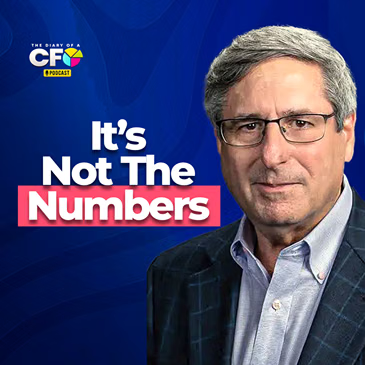
David Fubini spent 35 years as a senior partner at McKinsey & Company, where he co-founded the firm's global merger integration practice. He has advised on dozens of major transactions, including the deal that brought IBM's PC business to Lenovo.
He started his career at Johnson & Johnson, where he was part of the team that launched Tylenol as a consumer brand. He now teaches at Harvard Business School and is the author of four books, including his latest, Post-Merger Integration, released in June 2026 with Wiley.
In this conversation, David explains why most M&A deals fail, and why the answer has very little to do with the financial model. He breaks down the cultural and organizational blind spots that CFOs and management teams consistently miss during due diligence.
He shares what happened behind the scenes of the IBM-Lenovo deal, including the moment that finally brought two very different teams together across 12 time zones. And he talks about what the best CFOs he has worked with do differently: they act as counselors, not disciplinarians. They speak hard truths to their CEOs. They translate numbers into what is actually happening inside the organization.
Whether you are a CFO navigating a deal, a finance leader thinking about M&A strategy, or someone who wants to understand what really happens after the paperwork is signed, this episode will change how you think about integration.
00:00:00 --> 00:00:02 Welcome back to the Diary of a CFO podcast. I'm
00:00:02 --> 00:00:04 your host, Wassia Kamon, the sitting CFO, the
00:00:04 --> 00:00:07 background in accounting and FP &A. And I started
00:00:07 --> 00:00:08 this show because I believe the way companies
00:00:08 --> 00:00:11 build and lead their finance function determines
00:00:11 --> 00:00:14 whether they actually scale or fall apart. Each
00:00:14 --> 00:00:17 week, I'm sitting down with CFOs, CEOs, and strategic
00:00:17 --> 00:00:19 business partners to talk about what that actually
00:00:19 --> 00:00:22 looks like in reality. Are they building the
00:00:22 --> 00:00:24 right teams, getting the right system and control
00:00:24 --> 00:00:26 in place, partnering with the business, and doing
00:00:26 --> 00:00:29 it all, hopefully, without breaking out. Today,
00:00:29 --> 00:00:32 I am super delighted to have with me David Fubini
00:00:32 --> 00:00:35 He is a senior lecturer at Harvard Business School
00:00:35 --> 00:00:37 and former senior partner at McKinsey & Company,
00:00:38 --> 00:00:40 where he co -founded the firm's global merger
00:00:40 --> 00:00:43 integration practice. Over a 35 -year career,
00:00:43 --> 00:00:46 he has advised on dozens of major transactions
00:00:46 --> 00:00:50 and taught generations of leaders in M &A and
00:00:50 --> 00:00:53 organizational transformation. David is the author
00:00:53 --> 00:00:56 of four books, Hidden Truths, Mergers, Leadership
00:00:56 --> 00:00:59 Performance in Corporate Health, Let me explain
00:00:59 --> 00:01:02 and his latest book post merger integration,
00:01:02 --> 00:01:05 which was just released in June, 2026. Welcome
00:01:05 --> 00:01:07 to the show, David. Well, thank you for having
00:01:07 --> 00:01:09 me and I'm thrilled to be here. So I'm looking
00:01:09 --> 00:01:11 forward to this and thank you for reaching out.
00:01:11 --> 00:01:14 Oh, absolutely. I'm so excited about this interview
00:01:14 --> 00:01:17 because when I looked at your background, I was
00:01:17 --> 00:01:19 just so amazed. I really want to start with way,
00:01:19 --> 00:01:22 way, way back before we get to where you are
00:01:22 --> 00:01:25 now and your early career. You started at Johnson
00:01:25 --> 00:01:27 and Johnson. where you were part of launching
00:01:27 --> 00:01:30 Tylenol. Can you please take us back to that
00:01:30 --> 00:01:33 time and what that experience was like? Well,
00:01:33 --> 00:01:35 it was an incredible experience. And I was so
00:01:35 --> 00:01:38 lucky to have this opportunity. And really, as
00:01:38 --> 00:01:41 one finds in one's early life, you don't plan
00:01:41 --> 00:01:43 for these things that just happen. I happened
00:01:43 --> 00:01:45 to be at the University of Massachusetts Amherst.
00:01:45 --> 00:01:47 A professor I was working with had me do a special
00:01:47 --> 00:01:49 project with a gentleman who formerly worked
00:01:49 --> 00:01:52 at J &J. He knew that this group of people was
00:01:52 --> 00:01:54 being formed. around the Tylenol product and
00:01:54 --> 00:01:58 suggested I go talk to them. And this would be
00:01:58 --> 00:02:01 what we would call internal startup, but we didn't
00:02:01 --> 00:02:03 have that vocabulary then. It was just a group
00:02:03 --> 00:02:09 of about nine people. Some came from J &J corporate
00:02:09 --> 00:02:10 and other inventions, and some came from Parkland
00:02:10 --> 00:02:15 Gamble. And they were created to basically relaunch,
00:02:15 --> 00:02:17 in some respects, Tylenol. Because at that time,
00:02:17 --> 00:02:19 Tylenol was a product that nobody knew. I remember
00:02:19 --> 00:02:21 before my interview, I had to actually go to
00:02:21 --> 00:02:24 the store and ask a pharmacist to show it to
00:02:24 --> 00:02:26 me because they kept it behind the counter rather
00:02:26 --> 00:02:28 than in front of the counter. And it had been
00:02:28 --> 00:02:30 a product that had been around for a long time,
00:02:30 --> 00:02:32 but it had never been marketed. So the whole
00:02:32 --> 00:02:34 point was to try and market it. And the reason
00:02:34 --> 00:02:37 for that was because Bristol Myers Squibb, then
00:02:37 --> 00:02:39 just Bristol Myers, had come out with a product
00:02:39 --> 00:02:42 called Datril. And believe it or not, John Wayne
00:02:42 --> 00:02:45 was the person who was endorsing it. And it had
00:02:45 --> 00:02:47 got a lot of play. And Jane Jay was like, oh
00:02:47 --> 00:02:49 my heavens, we have to do something. So they
00:02:49 --> 00:02:52 got this group together to do that. The person
00:02:52 --> 00:02:54 I worked directly for was the former product
00:02:54 --> 00:02:57 brand manager for Crest Toothpaste from P &G.
00:02:57 --> 00:03:00 So a real pillar in terms of marketing talent
00:03:00 --> 00:03:03 and great person to learn from. And my seatmate
00:03:03 --> 00:03:06 in my cubby was Jim Lanahan who goes on to become
00:03:06 --> 00:03:09 the vice chairman of J &J. So it was just a really
00:03:09 --> 00:03:12 great group of really spectacular people to learn
00:03:12 --> 00:03:15 from. And so I spent the first two years basically
00:03:15 --> 00:03:18 helping learn, helping really how to actually
00:03:18 --> 00:03:21 market an over -the -counter product. and with
00:03:21 --> 00:03:23 this group of people who really were an internal
00:03:23 --> 00:03:26 startup. Wow. And so now when you walk into a
00:03:26 --> 00:03:30 store and you see Tylenol, how do you feel? I'm
00:03:30 --> 00:03:32 amazed. I'm just amazed by that. I mean, at that
00:03:32 --> 00:03:35 time, our big event and really big thought was
00:03:35 --> 00:03:38 to launch extra -strength Tylenol. And then,
00:03:38 --> 00:03:40 of course, we launched any number of different
00:03:40 --> 00:03:42 forms, and then we put it into cold medicine
00:03:42 --> 00:03:46 called cyanate, and then all these various products.
00:03:46 --> 00:03:48 And now, of course, it's become you know, just
00:03:48 --> 00:03:51 a routine household name. And it's quite remarkable
00:03:51 --> 00:03:53 to see something that really people never knew
00:03:53 --> 00:03:56 about. And it actually came to pass. And funny,
00:03:56 --> 00:03:57 in my whole career, that happened only one at
00:03:57 --> 00:04:00 the time. And we won't talk about it, I'm sure.
00:04:00 --> 00:04:05 But I helped IBM PC business get bought by Lenovo.
00:04:05 --> 00:04:08 And at the time I was working with Lenovo, nobody
00:04:08 --> 00:04:09 had ever heard of Lenovo in the United States.
00:04:09 --> 00:04:11 And of course, now we all carry around Lenovo
00:04:11 --> 00:04:14 laptops. That's my computer right now. And you
00:04:14 --> 00:04:16 know it. And so that I had that same thing happen.
00:04:17 --> 00:04:20 at the midway in my career as well. So that was
00:04:20 --> 00:04:23 quite fun. Tell me about the Lenovo story now.
00:04:23 --> 00:04:26 Now I'm intrigued. I want to learn more about
00:04:26 --> 00:04:29 it. When you get on these kind of teams, how
00:04:29 --> 00:04:32 do you actually learn more about the project
00:04:32 --> 00:04:35 and able to add value? How do you connect with
00:04:35 --> 00:04:39 people and bring those brands to life? Well,
00:04:40 --> 00:04:42 in this context, here you have IBM, which is
00:04:42 --> 00:04:46 massive, as you can imagine. had the PC business,
00:04:46 --> 00:04:49 which was quite famous because it was one of
00:04:49 --> 00:04:52 the first really business -oriented computers,
00:04:52 --> 00:04:54 had done it spectacularly well, but over time
00:04:54 --> 00:04:57 had sort of waned because Dell computer had come
00:04:57 --> 00:05:00 in with a direct -to -consumer model, and Compaq
00:05:00 --> 00:05:03 had come in and really were better with printers
00:05:03 --> 00:05:06 than anybody else, and there were lots of other
00:05:06 --> 00:05:08 competition. And inevitably, IBM said, you know,
00:05:08 --> 00:05:11 we probably shouldn't be in this business. And
00:05:11 --> 00:05:14 so Lenovo, who's sitting over, you know, a Chinese,
00:05:14 --> 00:05:17 basically largely, partially Chinese owned company
00:05:17 --> 00:05:19 is saying, they're saying, well, we are only
00:05:19 --> 00:05:21 known in China and Asia, really China and India,
00:05:22 --> 00:05:24 we'd like to be known globally. So here's the
00:05:24 --> 00:05:28 deal to be done. And so they come together and
00:05:28 --> 00:05:30 we're asked to propose on that project along
00:05:30 --> 00:05:32 with a number of others. We sat down with the
00:05:32 --> 00:05:35 management teams and told them how we'd actually
00:05:35 --> 00:05:37 work together and they asked us to do the work.
00:05:38 --> 00:05:41 And so if you think about it, it's stunningly
00:05:41 --> 00:05:44 difficult because not just the cultural difference,
00:05:44 --> 00:05:47 which you just pause and think about IBM and
00:05:47 --> 00:05:50 Chinese based driven individuals who have a whole
00:05:50 --> 00:05:52 different culture and trying to merge those two
00:05:52 --> 00:05:55 cultures was just stunningly challenging. Yes.
00:05:55 --> 00:05:57 And that's just that's at the highest order at
00:05:57 --> 00:05:59 the most micro level. It took us literally several
00:05:59 --> 00:06:01 several days, if not weeks, to figure out when
00:06:01 --> 00:06:04 we could meet. Because, you know, because if
00:06:04 --> 00:06:07 you think about it, you know, there's 12, you
00:06:07 --> 00:06:10 know. 12 different time zones away or some silly
00:06:10 --> 00:06:12 number. And so just finding a time to actually
00:06:12 --> 00:06:14 physically meet. And then of course, how to actually
00:06:14 --> 00:06:17 deal with the language issues were challenging.
00:06:18 --> 00:06:19 So at the most macro level, it's a huge challenge.
00:06:19 --> 00:06:21 At the most micro level, it was a huge challenge.
00:06:22 --> 00:06:24 But it turned out to be one of the great, great
00:06:24 --> 00:06:27 experiences for me of working with them and shows
00:06:27 --> 00:06:31 the power of really executive teams who run and
00:06:31 --> 00:06:34 come together to do something great. The IBM
00:06:34 --> 00:06:36 PC business was very proud of their heritage
00:06:36 --> 00:06:38 and they well, they should be. The Lenovo people
00:06:38 --> 00:06:40 were very proud of becoming a global company.
00:06:41 --> 00:06:43 They wanted to use the Beijing Olympics as a
00:06:43 --> 00:06:46 launching pad for their company. And it just
00:06:46 --> 00:06:49 drove everybody to work very hard and very successfully
00:06:49 --> 00:06:52 to bring it all together. That is so amazing.
00:06:52 --> 00:06:55 And you spent decades on McKinsey and helped
00:06:55 --> 00:06:58 build the M &A integration. What kept you in
00:06:58 --> 00:07:02 the M &A space for so long? Well, first of all,
00:07:02 --> 00:07:06 it's one of those things where CEOs are always
00:07:08 --> 00:07:10 spectacularly good at running their companies.
00:07:10 --> 00:07:12 But one of the places that CEOs tend to sort
00:07:12 --> 00:07:14 of say, you know, I'm not as good at this because
00:07:14 --> 00:07:18 I don't do it very often is transactions. And
00:07:18 --> 00:07:20 so they're much more open to and desirous to
00:07:20 --> 00:07:23 have external counsel because this isn't something
00:07:23 --> 00:07:26 they do every day. You know, you do a major transaction
00:07:26 --> 00:07:30 that, you know, adds, you know, some huge overlap
00:07:30 --> 00:07:32 and adds to your company. This isn't something
00:07:32 --> 00:07:37 they do on an annual basis. One, they're very
00:07:37 --> 00:07:39 anxious to have help. Two, they love people who've
00:07:39 --> 00:07:42 done this work before. And one of the great things
00:07:42 --> 00:07:45 that when you add a firm, a scale, McKinsey,
00:07:45 --> 00:07:49 it doesn't take long to get a lot of reps. So
00:07:49 --> 00:07:50 before you know it, you've done three or four
00:07:50 --> 00:07:52 or five, and then suddenly now you're really
00:07:52 --> 00:07:54 down the learning curve. And that's quite valuable
00:07:54 --> 00:07:57 to clients. And so that every time you do one
00:07:57 --> 00:08:00 more, your learning increases and you may be
00:08:00 --> 00:08:02 even more valuable to the next client. So that
00:08:02 --> 00:08:05 was really another exciting reason to do it.
00:08:05 --> 00:08:08 And the third is that these are really life -changing
00:08:08 --> 00:08:12 events in many cases for companies and to be
00:08:12 --> 00:08:14 You know a part of that process and you know
00:08:14 --> 00:08:16 and I'm not in any way suggesting I'm at the
00:08:16 --> 00:08:18 core But I'm trying to be additive and trying
00:08:18 --> 00:08:22 to be counseling and but you can feel quite prideful
00:08:22 --> 00:08:24 when things come together and work so well and
00:08:24 --> 00:08:28 I enjoyed that feeling So many of my colleagues
00:08:28 --> 00:08:31 at McKinsey have that that that from other quarters
00:08:31 --> 00:08:34 But I had this you know in that unique environment
00:08:35 --> 00:08:37 So when you look back at this season of your
00:08:37 --> 00:08:40 career, what do you think you learned the most?
00:08:40 --> 00:08:43 Because from textbooks and articles all we hear
00:08:43 --> 00:08:48 is very few M &A transactions actually succeeded
00:08:48 --> 00:08:51 in a long time. So curious to hear what you've
00:08:51 --> 00:08:54 learned in the process of being in those tranches.
00:08:54 --> 00:08:56 Well, I think one of the things you certainly
00:08:56 --> 00:09:00 understand is that where M &A used to be something
00:09:00 --> 00:09:04 like a side effort that you do infrequently.
00:09:05 --> 00:09:07 Now, one of the things I've learned is every
00:09:07 --> 00:09:10 management team I've dealt with always has how
00:09:10 --> 00:09:13 we're going to actually think about either buying,
00:09:13 --> 00:09:16 selling, or venturing as part of their fundamental
00:09:16 --> 00:09:19 strategy conversations. It is no longer an exception.
00:09:19 --> 00:09:22 It is almost every on the boards I'm now on,
00:09:22 --> 00:09:23 every time we meet as a board, we're talking
00:09:23 --> 00:09:27 about that topic. So it's become at the very
00:09:27 --> 00:09:30 core of strategy. where it wasn't before. Now
00:09:30 --> 00:09:32 it is, you know, it's a core element. And so
00:09:32 --> 00:09:35 that's one of the first learnings you get about
00:09:35 --> 00:09:38 being in this space. The second is how challenging
00:09:38 --> 00:09:43 these things are to do because they're so, they're
00:09:43 --> 00:09:46 both strategically challenging and then they're
00:09:46 --> 00:09:50 just operationally, they have so much trying
00:09:50 --> 00:09:53 to knit together a company and create a new set
00:09:53 --> 00:09:57 of systems and processes and organizations. is
00:09:57 --> 00:09:59 very challenging. So, you know, a traditional
00:09:59 --> 00:10:02 deal of any scale could have up to 300 people,
00:10:02 --> 00:10:05 maybe more part time, trying to figure out how
00:10:05 --> 00:10:07 to knit these companies together. So it's a huge
00:10:07 --> 00:10:10 project organizational change. And that's also
00:10:10 --> 00:10:12 quite exciting. But when you first think about
00:10:12 --> 00:10:15 and you read about somebody doing a major transaction,
00:10:15 --> 00:10:16 you don't think about what's happening behind
00:10:16 --> 00:10:19 the scenes. And it's stunningly challenging.
00:10:19 --> 00:10:23 Wow. And so if you had like a playbook about
00:10:23 --> 00:10:27 like what people should be thinking about, that
00:10:27 --> 00:10:29 maybe typically gets overlooked, whether they're
00:10:29 --> 00:10:33 trying to acquire or be the person that's being
00:10:33 --> 00:10:35 acquired. What would you say are some of the
00:10:35 --> 00:10:37 things people should keep in mind? Well, the
00:10:37 --> 00:10:39 first thing is that the underlying strategic
00:10:39 --> 00:10:42 reason for the deal has to always drive everything
00:10:42 --> 00:10:46 you're doing. You're not buying a company or
00:10:46 --> 00:10:50 a portion of a company or assets of another company
00:10:50 --> 00:10:54 without some clear objective that you're trying
00:10:54 --> 00:10:57 to achieve. First, you actually have to have
00:10:57 --> 00:11:00 that objective. I know it sounds silly, but you
00:11:00 --> 00:11:02 just can't buy something because you're trying
00:11:02 --> 00:11:03 to do a deal. You have to have a fundamental,
00:11:03 --> 00:11:05 and you have to be able to articulate it to each
00:11:05 --> 00:11:07 other so that when somebody says, why are we
00:11:07 --> 00:11:10 doing this deal? You have an answer and a real
00:11:10 --> 00:11:14 answer. Now, sometimes that reason isn't sort
00:11:14 --> 00:11:17 of what's said at the time of the announcement.
00:11:17 --> 00:11:19 There you go on CNBC or you do an FTE interview.
00:11:20 --> 00:11:22 You're not sometimes talking about the underlying
00:11:22 --> 00:11:25 real reasons for the deal. because it's not appropriate.
00:11:25 --> 00:11:27 It's too divulging of confidential information.
00:11:27 --> 00:11:30 But you have to keep that centerpiece. It's surprising
00:11:30 --> 00:11:33 how that sometimes falls away when you get into
00:11:33 --> 00:11:35 the sheer raft of changes and challenges of doing
00:11:35 --> 00:11:38 an integration. So one, stay true to why you
00:11:38 --> 00:11:41 did the deal. The second is you have to start
00:11:41 --> 00:11:43 planning integration from the moment you're doing
00:11:43 --> 00:11:47 your due diligence. Your CFO audience knows very
00:11:47 --> 00:11:49 well. If I say due diligence, they know exactly
00:11:49 --> 00:11:52 what they're going to do. And my point to all
00:11:52 --> 00:11:55 the CFOs out there is Great. You're doing financial
00:11:55 --> 00:11:57 due diligence. Perfect. I'm not going to tell
00:11:57 --> 00:12:00 you how to do it better. You got it. What you
00:12:00 --> 00:12:03 don't get is how to do the organizational and
00:12:03 --> 00:12:06 cultural due diligence. That you need to start
00:12:06 --> 00:12:09 at the same time. Rare that that happens. Very
00:12:09 --> 00:12:12 rare. And so what happens is that you think you
00:12:12 --> 00:12:13 have this wonderful financial model, but you
00:12:13 --> 00:12:16 have no real belief that you can actually achieve
00:12:16 --> 00:12:18 it because you haven't done due diligence soon
00:12:18 --> 00:12:21 enough. So that's the second thing. And the third
00:12:21 --> 00:12:23 is when you actually start to do the integration
00:12:23 --> 00:12:26 itself, you have to realize that you have to
00:12:26 --> 00:12:28 keep running the base business. And everybody,
00:12:28 --> 00:12:30 you know, doesn't want to do that. They want
00:12:30 --> 00:12:32 to get involved in the new thing. No, no, you
00:12:32 --> 00:12:34 have to say, no, no, no, all of you go do your
00:12:34 --> 00:12:36 jobs. Okay. This small group over here is going
00:12:36 --> 00:12:38 to work on the integration and you separate the
00:12:38 --> 00:12:42 two. And when you commingle, it gets really challenging
00:12:42 --> 00:12:45 and many, many, many management teams say, oh,
00:12:45 --> 00:12:48 I literally have had a CEO say to me, David,
00:12:48 --> 00:12:50 we meet every other week as a management team.
00:12:50 --> 00:12:53 We'll just add this to the agenda. And we'll
00:12:53 --> 00:12:55 just talk about this at that point. I went, no,
00:12:55 --> 00:12:58 we cannot do that. Because then we have 25 people
00:12:58 --> 00:13:00 opining on a topic where virtually only three
00:13:00 --> 00:13:03 or four really know the knowledge. And two, we
00:13:03 --> 00:13:05 have to operate with entirely different decision
00:13:05 --> 00:13:07 criteria. And so you have to separate the two.
00:13:07 --> 00:13:10 So those are the three I would say most prominently.
00:13:11 --> 00:13:13 Really, nope. Everything has to be driven by
00:13:13 --> 00:13:16 the reason you did the deal. You've got to actually
00:13:16 --> 00:13:19 remember to keep the two separated from each
00:13:19 --> 00:13:24 other is a key element of all doing this. Wow.
00:13:24 --> 00:13:27 And what did working in that space maybe tell
00:13:27 --> 00:13:31 you about pressure? Like where maybe you had
00:13:31 --> 00:13:33 moments where you thought like, I can't keep
00:13:33 --> 00:13:35 doing this or doing this. Well, I must admit
00:13:35 --> 00:13:40 it is it is not the type of work that is people
00:13:40 --> 00:13:45 love to do because it is very intense. You know,
00:13:45 --> 00:13:47 one of the things I often, I created a committee,
00:13:48 --> 00:13:51 a council of former leaders of integration, because
00:13:51 --> 00:13:54 they love to talk about what they did, but they
00:13:54 --> 00:13:56 all agree pretty much uniformly, they never want
00:13:56 --> 00:13:59 to do it again. So I would say to somebody, oh,
00:13:59 --> 00:14:01 congratulations, you're the new leader of this
00:14:01 --> 00:14:04 major integration operation. Here are eight people
00:14:04 --> 00:14:06 who've done this before. They can't wait to give
00:14:06 --> 00:14:08 you advice, but on the other hand, you're going
00:14:08 --> 00:14:10 to hear from them. Great thing, best thing they
00:14:10 --> 00:14:12 ever did, but boy, don't want to do it again.
00:14:12 --> 00:14:16 So as an advisor, yes, it was challenging. It
00:14:16 --> 00:14:20 was really challenging. But on the other hand,
00:14:20 --> 00:14:22 you get rewarded for doing these things. And
00:14:22 --> 00:14:24 at the end of the day, that reward was worth
00:14:24 --> 00:14:27 the stress. But there are stresses. There really
00:14:27 --> 00:14:30 are. So when you think back of those M &A's years,
00:14:30 --> 00:14:34 what did success mean to you then? And has that
00:14:34 --> 00:14:39 definition changed since you moved on? Yeah,
00:14:39 --> 00:14:42 I think... I think I've just added elements as
00:14:42 --> 00:14:46 to what is considered successful. In fact, in
00:14:46 --> 00:14:50 the early transactions, I wanted a seamless project.
00:14:51 --> 00:14:54 I wanted to actually get to, I wanted to maximize
00:14:54 --> 00:14:55 the time that we have between the announcement
00:14:55 --> 00:14:59 of a deal and when we have regulatory okays,
00:14:59 --> 00:15:01 and then we can move to a legal close and have
00:15:01 --> 00:15:04 a smooth transition towards, okay, here's how
00:15:04 --> 00:15:05 we're now gonna start to implement the integration.
00:15:06 --> 00:15:08 Those were things I really... wanted to make
00:15:08 --> 00:15:11 happen and I wanted those to be seamless. Along
00:15:11 --> 00:15:14 the way, other things got added. One client said
00:15:14 --> 00:15:17 to me, David, this doesn't work and it isn't
00:15:17 --> 00:15:19 successful if you don't teach us how to do this.
00:15:19 --> 00:15:21 So we frankly don't have to ask you to do it
00:15:21 --> 00:15:24 again. And I think that was wonderful to say,
00:15:24 --> 00:15:26 oh my God, we really do need to teach people
00:15:26 --> 00:15:29 along the way. And we leave behind, frankly,
00:15:30 --> 00:15:32 an institutional knowledge base so that you could
00:15:32 --> 00:15:35 replicate this. So we changed our whole approach
00:15:35 --> 00:15:37 to actually making sure that we actually left
00:15:37 --> 00:15:39 behind you know, not quite a how -to manual,
00:15:39 --> 00:15:41 but certainly people that actually understood
00:15:41 --> 00:15:43 and related to that. So that was one additional
00:15:43 --> 00:15:47 ad that came along the way. The second, it becomes
00:15:47 --> 00:15:50 very clear when you do these, this is really
00:15:50 --> 00:15:53 very challenging for the senior management teams.
00:15:53 --> 00:15:56 At some level, there isn't that much change,
00:15:56 --> 00:15:59 you know, in terms of the broad populations,
00:15:59 --> 00:16:01 but the top of the house really goes through
00:16:01 --> 00:16:04 a lot of change. And so really just the personal
00:16:05 --> 00:16:07 challenge of trying to realize that this is something
00:16:07 --> 00:16:10 that maybe you helped build and now it's being
00:16:10 --> 00:16:12 taken over by another person and letting go is
00:16:12 --> 00:16:14 challenging. Making the decision about whether
00:16:14 --> 00:16:17 or not you want to move to a new corporate headquarters
00:16:17 --> 00:16:20 location, take on a greater opportunity set,
00:16:20 --> 00:16:22 but change what you're doing. All those are things
00:16:22 --> 00:16:25 that you then spend real time with very senior
00:16:25 --> 00:16:28 people working through at a personal level. And
00:16:28 --> 00:16:30 it was a real privilege for me to be asked to
00:16:30 --> 00:16:34 opine on those topics. obviously makes it more
00:16:34 --> 00:16:36 fun and more engaging because now you're dealing
00:16:36 --> 00:16:38 with the human element, not just the institutional
00:16:38 --> 00:16:41 element. Okay, so what would be like the coolest
00:16:41 --> 00:16:45 story or project you run, like you still remember
00:16:45 --> 00:16:48 to this day and probably laugh about or cry about
00:16:48 --> 00:16:52 from these things? Well, it's a couple because
00:16:52 --> 00:16:55 there's so many and that we could take the whole
00:16:55 --> 00:16:57 rest of the time we have and much more to talk
00:16:57 --> 00:17:00 about that. But let's go back to IBM Lenovo for
00:17:00 --> 00:17:02 example. One of the things that was really challenging
00:17:02 --> 00:17:04 was the culture of these two organizations, as
00:17:04 --> 00:17:06 I mentioned, and really trying to find a common
00:17:06 --> 00:17:09 ground. And so one of our early, early on meetings,
00:17:10 --> 00:17:13 we were talking as a sidebar about the challenges
00:17:13 --> 00:17:15 of working with Microsoft and Intel, who are
00:17:15 --> 00:17:18 the major suppliers to the PC and who are very
00:17:18 --> 00:17:20 difficult to deal with because they are, you
00:17:20 --> 00:17:23 know, frankly, not quite monopolies, but feel
00:17:23 --> 00:17:26 sometimes like they are operative, like in a
00:17:26 --> 00:17:29 monopoly context. And so the IBM people were
00:17:29 --> 00:17:33 complaining about one of them. And the Lenovo
00:17:33 --> 00:17:35 people through translation said, oh, we hate
00:17:35 --> 00:17:38 them more than you do. And before you know it,
00:17:38 --> 00:17:40 they're all talking about, this is how we got
00:17:40 --> 00:17:42 allocated here. Here's how we couldn't get them
00:17:42 --> 00:17:44 to do this. Here's how they gave this to Apple,
00:17:44 --> 00:17:47 not to us. And they just bonded in this moment.
00:17:47 --> 00:17:49 It was like, they realized that they really were
00:17:49 --> 00:17:52 one team globally separated that had the same
00:17:52 --> 00:17:56 experience. And it was like this seminal moment
00:17:56 --> 00:17:57 where they looked at each other and said, oh
00:17:57 --> 00:17:59 my God, we actually do the same sorts of things.
00:17:59 --> 00:18:01 Yeah, we're going to learn how to talk to each
00:18:01 --> 00:18:05 other. But this is a pretty cool thing. That's
00:18:05 --> 00:18:07 one thing you think about. I guess a second,
00:18:07 --> 00:18:10 and I'll only stop here, is that I helped put
00:18:10 --> 00:18:12 the privilege of being asked to work with American
00:18:12 --> 00:18:15 Airlines and US Airways. US Airways bought American
00:18:15 --> 00:18:20 Airlines. And they were one of the later people
00:18:20 --> 00:18:24 who did a major transaction of this type. And
00:18:24 --> 00:18:27 so they were well aware that usually when you
00:18:27 --> 00:18:30 stand up a common reservation system and a system
00:18:30 --> 00:18:33 that's used by consumers for everything from
00:18:33 --> 00:18:35 booking their flights to their frequent flyer
00:18:35 --> 00:18:38 miles, deeply challenging to have that happen.
00:18:39 --> 00:18:41 And many airlines faltered at that moment. I
00:18:41 --> 00:18:43 mean, you can go back and look and some airlines
00:18:43 --> 00:18:45 actually stopped flying for six hours. Some actually
00:18:45 --> 00:18:49 went dark. It was really quite. And so one of
00:18:49 --> 00:18:50 the things that we kept saying to each other
00:18:50 --> 00:18:53 is that we are not going to do that. We are not
00:18:53 --> 00:18:56 going to do that. And I remember calling back
00:18:56 --> 00:18:58 to the client on the day that they actually did
00:18:58 --> 00:19:01 the cutover. And they were so proud that everything
00:19:01 --> 00:19:03 just happened seamlessly. There were no, you
00:19:03 --> 00:19:05 know, nobody on NBC News was talking about how
00:19:05 --> 00:19:07 this airline shut down for six hours and people
00:19:07 --> 00:19:11 were backed up in their days. And it was this
00:19:11 --> 00:19:13 quiet celebration of what, you know, what was
00:19:13 --> 00:19:17 achieved. And, you know, in part because nothing
00:19:17 --> 00:19:18 actually got to be talked about. It was just
00:19:18 --> 00:19:22 this wonderful achievement that we all collectively
00:19:22 --> 00:19:25 got to. So that was a wonderful moment. Oh, wow.
00:19:25 --> 00:19:28 You you worked on so many cool projects, man.
00:19:29 --> 00:19:33 Well, I you know, this is the the wonderful thing
00:19:33 --> 00:19:36 about working for a firm like McKinsey. And it's
00:19:36 --> 00:19:37 true for other other consulting firms as well,
00:19:37 --> 00:19:39 because all of them have wonderful projects.
00:19:40 --> 00:19:42 But it was what helped you ask, why did you put
00:19:42 --> 00:19:45 up with all the stress and travel? Now you're
00:19:45 --> 00:19:48 getting a sense of it. Oh, yeah, for sure. I'm
00:19:48 --> 00:19:50 curious to hear now that you moved into academia
00:19:50 --> 00:19:53 and you have a new book, Post Merger Integration,
00:19:53 --> 00:19:56 that just came out. What made you decide to write
00:19:56 --> 00:20:00 it now? Well, obviously I have all this experience
00:20:00 --> 00:20:02 working with my McKinsey colleagues, which I
00:20:02 --> 00:20:06 wanted to try and pull together. The second is,
00:20:06 --> 00:20:08 since I've now moved to Harvard Business School
00:20:08 --> 00:20:11 and I'm teaching, one of the things I get to
00:20:11 --> 00:20:13 do is teach as part of our M &A program that
00:20:13 --> 00:20:16 we run every year. and I'll sit and I'll talk
00:20:16 --> 00:20:18 around case studies that I've written up about
00:20:18 --> 00:20:20 some of the situations we're just now describing.
00:20:21 --> 00:20:23 And there are cases, Harvey cases, by the way,
00:20:23 --> 00:20:25 on just the, even the two examples I just gave.
00:20:25 --> 00:20:28 And at the end of the sessions, very often the
00:20:28 --> 00:20:29 executives will come up to me and say, Dave,
00:20:29 --> 00:20:31 this is terrific, but don't you have something
00:20:31 --> 00:20:33 that I can, give me something that I can take
00:20:33 --> 00:20:36 with me that I can, that, you know, and I didn't
00:20:36 --> 00:20:38 have anything. And I felt badly, I'd had sort
00:20:38 --> 00:20:41 of no sort of leave behind to help them. And
00:20:41 --> 00:20:44 so I was always motivated to try and, and get
00:20:44 --> 00:20:49 this into a form that would make sense. And then
00:20:49 --> 00:20:54 I worked very closely with my colleague, Patrick.
00:20:54 --> 00:20:57 And we looked at all the other books that have
00:20:57 --> 00:21:00 been written about mergers and valuations. And
00:21:00 --> 00:21:02 look, there's some very fine books out there.
00:21:03 --> 00:21:06 But the ones on integration were much more cookbookish.
00:21:06 --> 00:21:08 And it's like, you know. Listen, you're going
00:21:08 --> 00:21:09 to bake a cake. It's very simple. You put the
00:21:09 --> 00:21:11 flour in, and you put this amount of milk in,
00:21:11 --> 00:21:13 and they put a little of the baking soda here.
00:21:14 --> 00:21:17 And you just spin it around for a little while
00:21:17 --> 00:21:18 and put it in the oven for 350. It's going to
00:21:18 --> 00:21:23 work. Well, no, no, no transaction is that clean.
00:21:24 --> 00:21:26 Every one of them is bespoke. And we tried to
00:21:26 --> 00:21:30 really say, no, it's not that. There's no guidebook
00:21:30 --> 00:21:33 that is that detailed. Here are the key thematics
00:21:33 --> 00:21:35 you have to keep in mind. And so that was a breakthrough
00:21:35 --> 00:21:39 idea, and that really led us to then write the
00:21:39 --> 00:21:42 book as we did. Wow, that analogy really resonated
00:21:42 --> 00:21:46 with me about Cookbook, because my kids, 12 and
00:21:46 --> 00:21:49 11, at the time we were recording this, they
00:21:49 --> 00:21:51 saw these shorts on YouTube, and they wanted
00:21:51 --> 00:21:54 to make bread. Right. And it's a short, which
00:21:54 --> 00:21:56 means one minute, somebody showed them how to
00:21:56 --> 00:21:59 make bread. And I was like, I don't think in
00:21:59 --> 00:22:01 just one minute, quick, quick, quick, quick,
00:22:01 --> 00:22:02 here, you're going to get the bread. Anyway.
00:22:03 --> 00:22:05 I was supportive. They didn't want to crush their
00:22:05 --> 00:22:10 dreams. So we got the flour, the yeast, everything.
00:22:11 --> 00:22:14 And as you can imagine, it didn't look like what
00:22:14 --> 00:22:16 was on the YouTube video. It was something flat
00:22:16 --> 00:22:18 that looked like a cake and it was supposed to
00:22:18 --> 00:22:21 be bread. So it really resonated with me, but
00:22:21 --> 00:22:23 it's so true about so many things in experience,
00:22:23 --> 00:22:25 right? You think it's going to be simple, you
00:22:25 --> 00:22:27 go in and it's like, oops, it didn't work that
00:22:27 --> 00:22:31 way. Right. And I'll just give you one example
00:22:31 --> 00:22:33 from that which we talked about. And it's a really
00:22:33 --> 00:22:36 simple one, which is that before you start the
00:22:36 --> 00:22:39 integration, and because very often somebody
00:22:39 --> 00:22:41 will say to you, oh, you're in charge of the
00:22:41 --> 00:22:43 HR group. We want you to put it all together.
00:22:43 --> 00:22:45 We want you to reorganize it. We'd like you to
00:22:45 --> 00:22:47 professionalize it in today's world. Figure out,
00:22:47 --> 00:22:49 tell us how you're going to use AI. And by the
00:22:49 --> 00:22:51 way, in so doing, we'd like to think about 30
00:22:51 --> 00:22:56 % less expenditure. Well, 30 % of what? see,
00:22:56 --> 00:22:59 nobody thinks about the, we need a baseline.
00:22:59 --> 00:23:01 And so one of the things that integrations have
00:23:01 --> 00:23:04 to do is start with a baseline so as to measure
00:23:04 --> 00:23:08 your progress. And it seems so simple, and it's
00:23:08 --> 00:23:12 one of those things that isn't really well -written,
00:23:12 --> 00:23:16 documented, you know, and it's just, you have
00:23:16 --> 00:23:18 to have a baseline for where you start because
00:23:18 --> 00:23:21 one of the other things, truisms about this is
00:23:21 --> 00:23:24 that, and CFOs would love this because they understand
00:23:24 --> 00:23:27 it, is In merger integrations, if you don't measure
00:23:27 --> 00:23:30 it, it will not change. So you've got to measure
00:23:30 --> 00:23:33 it. And you can't measure it without a baseline.
00:23:33 --> 00:23:36 So there's just one of those things that leads
00:23:36 --> 00:23:40 to a flat cake rather than a lost cake. And bread.
00:23:40 --> 00:23:44 Actual bread for sure. I'm curious to hear now,
00:23:44 --> 00:23:46 like when you look at the biggest deals that
00:23:46 --> 00:23:50 you have advised on, whether it's pre -integration
00:23:50 --> 00:23:53 or like your book really focused on post -merger
00:23:53 --> 00:23:57 acquisitions, What is the part, the pattern that
00:23:57 --> 00:24:00 you've seen that makes most of these deals fail?
00:24:00 --> 00:24:04 Yeah, starting too late on the integration. As
00:24:04 --> 00:24:06 I said earlier, you should start really early.
00:24:07 --> 00:24:09 So the due diligence has to be, as I mentioned,
00:24:10 --> 00:24:12 not just financial, but operational and cultural
00:24:12 --> 00:24:16 as well. Not staying aligned to the reason you
00:24:16 --> 00:24:18 did the deal, something we already spoke about.
00:24:18 --> 00:24:21 Three, minimizing the cultural challenge of putting
00:24:21 --> 00:24:24 these together. every integration I've been involved
00:24:24 --> 00:24:27 in, the cultural challenge is always enormous.
00:24:29 --> 00:24:32 And in some respects, you know that you're in
00:24:32 --> 00:24:34 trouble when you'll sit with two CEOs and they'll
00:24:34 --> 00:24:37 say to me, David, look, it's great because we
00:24:37 --> 00:24:40 recruit from the same places. We have the same
00:24:40 --> 00:24:43 general organization. We have the same mission
00:24:43 --> 00:24:46 and values. And so we think the cultural assimilation
00:24:46 --> 00:24:48 here will be quite easy. And you know in your
00:24:48 --> 00:24:50 heart, The moment they say that is that they
00:24:50 --> 00:24:52 are totally wrong. It's going to be incredibly
00:24:52 --> 00:24:56 challenging because that is not the culture.
00:24:56 --> 00:24:59 The culture is how you make decisions. Who gets
00:24:59 --> 00:25:04 promoted? Who is valued? How do people actually
00:25:04 --> 00:25:07 go about their day? How do they actually think
00:25:07 --> 00:25:09 about capital formation questions? These are
00:25:09 --> 00:25:11 the things that change the culture of the place.
00:25:11 --> 00:25:14 And if you don't get into that level of detail,
00:25:15 --> 00:25:17 you won't be able to put the companies together
00:25:17 --> 00:25:19 in a meaningful way so that's the third thing
00:25:19 --> 00:25:23 really and the fourth strangely enough is when
00:25:23 --> 00:25:25 you buy something the focus is all on that what
00:25:25 --> 00:25:28 you're acquiring and and what you have to do
00:25:28 --> 00:25:30 is remember you know by the way the acquiring
00:25:30 --> 00:25:33 company is equally nervous and challenged as
00:25:33 --> 00:25:36 is the acquired company so you're spending all
00:25:36 --> 00:25:38 your time worrying about the new person people
00:25:38 --> 00:25:40 yeah you're not spending enough time with your
00:25:40 --> 00:25:42 own folks who are like equally worried about
00:25:42 --> 00:25:45 hey They just bought this huge company. Maybe
00:25:45 --> 00:25:47 I'm not going to be needed here, rather than
00:25:47 --> 00:25:48 saying, you know, we're obviously going to be
00:25:48 --> 00:25:50 the winners here because we bought them. No,
00:25:50 --> 00:25:52 they are very nervous. So people don't spend
00:25:52 --> 00:25:55 enough time on their own business. So that's
00:25:55 --> 00:25:57 the other thing that often is a failure mode.
00:25:57 --> 00:26:00 Wow. I'm curious to hear about like these last
00:26:00 --> 00:26:04 two, when you talk about the culture, right?
00:26:04 --> 00:26:09 And what people tend to overlook. How can you
00:26:09 --> 00:26:11 surface those? Like what kind of questions do
00:26:11 --> 00:26:15 you usually ask? or process you may have to understand
00:26:15 --> 00:26:18 what is the true culture of the two companies?
00:26:18 --> 00:26:20 Well, one of the benefits of these integration
00:26:20 --> 00:26:24 teams that you form are that they are little
00:26:24 --> 00:26:27 cultural indicators, every one of them, because
00:26:27 --> 00:26:32 you put together a traditional scale integration
00:26:32 --> 00:26:35 might have as many as 20, possibly 30 separate
00:26:35 --> 00:26:38 integration teams working. Each of those will
00:26:38 --> 00:26:41 have representatives from both sides of the companies.
00:26:41 --> 00:26:47 each one of them is a wonderful lens into what
00:26:47 --> 00:26:50 is the cultural challenges, in some cases by
00:26:50 --> 00:26:53 function or by geography. So listen to those
00:26:53 --> 00:26:56 groups and ask them where are the challenges,
00:26:56 --> 00:26:59 where are the Venn diagram, where's the overlap
00:26:59 --> 00:27:01 with the non -overlap. So one of the things is
00:27:01 --> 00:27:04 just using them as a mechanism for listening.
00:27:05 --> 00:27:10 Often it's not done. really understanding the
00:27:10 --> 00:27:12 broader population. And the other way to do that
00:27:12 --> 00:27:14 is by getting out and spending time with them.
00:27:15 --> 00:27:19 And so reading about it isn't as helpful as actually
00:27:19 --> 00:27:23 spending time. I'd have CEOs come back and say,
00:27:23 --> 00:27:25 I didn't really understand that till I actually
00:27:25 --> 00:27:27 went out in the field and I really didn't get
00:27:27 --> 00:27:29 the information from the presentations I was
00:27:29 --> 00:27:32 given. It was actually the person who drove me
00:27:32 --> 00:27:35 around. It was the individual I sat next to at
00:27:35 --> 00:27:38 lunch. It was the person who took me back to
00:27:38 --> 00:27:41 the airport. I learned more from them about how
00:27:41 --> 00:27:43 people really think than I did in the major presentations.
00:27:44 --> 00:27:47 So being an active listener is equally as important.
00:27:47 --> 00:27:49 And third, there are some measurements that you
00:27:49 --> 00:27:53 can obviously look at, retention, the overall
00:27:53 --> 00:27:57 quality of the speed with which decisions are
00:27:57 --> 00:28:01 being made. So I don't want to diminish those,
00:28:01 --> 00:28:04 but I'm talking about the more softer, more.
00:28:05 --> 00:28:07 ways that you can really come together and understand
00:28:07 --> 00:28:09 culture. Yeah, and what you mentioned about,
00:28:09 --> 00:28:12 like, these days we talk about working remotely
00:28:12 --> 00:28:14 and being in person. I always say there's nothing
00:28:14 --> 00:28:17 like being in person because you pick up on those
00:28:17 --> 00:28:21 things, right? Yeah, it is. Many people think
00:28:21 --> 00:28:23 it's an old school comment, which it is because
00:28:23 --> 00:28:26 look at me, I'm old. You know, it's an old school
00:28:26 --> 00:28:31 comment, but there's, you know, It's a three
00:28:31 --> 00:28:33 -dimensional game. You've really got to be in
00:28:33 --> 00:28:35 the room with people to really feel and know
00:28:35 --> 00:28:39 them and get to understand them. And so you're
00:28:39 --> 00:28:43 so good at this because you just project that,
00:28:43 --> 00:28:47 but many don't do that. And so it's hard in this
00:28:47 --> 00:28:50 context to actually really feel like you're establishing
00:28:50 --> 00:28:52 the type of relationship you really need to make
00:28:52 --> 00:28:55 these things work and to learn. So yes, it's
00:28:55 --> 00:28:58 a travel heavy. commitment. So do you feel like
00:28:58 --> 00:29:01 working remotely can make it hard for successful
00:29:01 --> 00:29:04 M &A integrations these days? I do. Or AI? Okay.
00:29:04 --> 00:29:07 I am a big believer in, you know, trying to work
00:29:07 --> 00:29:10 on these things in a collective fashion. It just,
00:29:10 --> 00:29:14 it's just so hard. Now, obviously we're getting,
00:29:15 --> 00:29:17 two things are helping that. One is AI is helping
00:29:17 --> 00:29:20 this immeasurably, right? Because it used to
00:29:20 --> 00:29:23 be that just getting the sheer baselines that
00:29:23 --> 00:29:26 I spoke about earlier and information, which
00:29:26 --> 00:29:30 is large amounts of it getting processed, AI
00:29:30 --> 00:29:32 is now helping us do that much faster. So now
00:29:32 --> 00:29:35 we're better informed. So we can be much more
00:29:35 --> 00:29:39 productive in talking about what the data says
00:29:39 --> 00:29:42 or what the situation is because the data is
00:29:42 --> 00:29:44 more readily available. So that helps us. So
00:29:44 --> 00:29:46 when we do meet, it isn't like we're going over
00:29:46 --> 00:29:49 definitions and you know, trying to, you know,
00:29:49 --> 00:29:52 dig for data and come back and have, that's just
00:29:52 --> 00:29:56 more efficient. By the way, AI doesn't tell you
00:29:56 --> 00:29:58 the answers to any of that stuff. That's part
00:29:58 --> 00:30:01 of it. So that helps. The other is we're getting
00:30:01 --> 00:30:05 better because we all have it working remotely
00:30:05 --> 00:30:08 and we're finding ways to supplement that. So,
00:30:08 --> 00:30:11 but still, I think it's still fair to say that
00:30:11 --> 00:30:13 I hold to the old school view, as I said, that
00:30:13 --> 00:30:16 this is a, you know, face -to -face game. And
00:30:16 --> 00:30:19 when you think back about the CFO role in the
00:30:19 --> 00:30:24 whole M &A process, where does the CFO role really
00:30:24 --> 00:30:28 start when there is an M &A deal? Yeah, I think
00:30:28 --> 00:30:32 the moment they're going through the valuation
00:30:32 --> 00:30:36 processes and even the sense of assessment of
00:30:36 --> 00:30:39 potential transactions, I want CFOs, and the
00:30:39 --> 00:30:42 really great ones already do this, is to say
00:30:42 --> 00:30:44 it's not just the financial fit, it's got to
00:30:44 --> 00:30:46 be the operations and organizational fit and
00:30:46 --> 00:30:50 cultural fit. And I don't care if the numbers
00:30:50 --> 00:30:52 are great, if the cultural fit isn't there and
00:30:52 --> 00:30:54 the organizational fit isn't there, the CFO has
00:30:54 --> 00:30:56 to say, look, we have to put a higher risk factor
00:30:56 --> 00:30:59 on this because it's going to be a deeply challenging,
00:30:59 --> 00:31:01 you know, because they're so different than we
00:31:01 --> 00:31:07 are. And that is their job to actually call out.
00:31:07 --> 00:31:10 not just the financial risk, but the operational
00:31:10 --> 00:31:13 and cultural risk and organizational risk. And
00:31:13 --> 00:31:18 the really great CFOs do it. Many can fall victim
00:31:18 --> 00:31:20 sometimes to the investment bankers whispering
00:31:20 --> 00:31:22 in their ear and saying, if you don't do this
00:31:22 --> 00:31:24 deal, we're going to lose it. Let's go, let's
00:31:24 --> 00:31:27 go, let's go. And not stepping back and saying,
00:31:27 --> 00:31:29 is this really fit who we are and what we want
00:31:29 --> 00:31:32 to be? So that's the place where we can make
00:31:32 --> 00:31:34 a difference. And since you've been in so many
00:31:34 --> 00:31:36 rooms where, you know, you've seen those major
00:31:36 --> 00:31:38 transactions, what would you say you've seen
00:31:38 --> 00:31:41 the best CFO do differently when it comes to
00:31:41 --> 00:31:44 not just pushing back or maybe asking different
00:31:44 --> 00:31:47 questions? I'm just curious to see, like, when
00:31:47 --> 00:31:49 you think about some of the best CFOs you've
00:31:49 --> 00:31:52 seen doing it well on their side, like, what
00:31:52 --> 00:31:55 were they doing right? Well, really a couple
00:31:55 --> 00:31:57 of things. One is, and I talk about this in the
00:31:57 --> 00:32:00 Hidden Truths book, which is that CEOs are somewhat
00:32:00 --> 00:32:01 lonely people, even though they're surrounded
00:32:01 --> 00:32:05 by lots of people every day. They need somebody
00:32:05 --> 00:32:10 to be their counsel. They're a true go -to person
00:32:10 --> 00:32:12 that tells them the truth, that tells them the
00:32:12 --> 00:32:14 hard truths, tells them when they're screwing
00:32:14 --> 00:32:16 up, and tells them when they're doing things
00:32:16 --> 00:32:20 right. Increasingly, that should -being is the
00:32:20 --> 00:32:23 role of the CFO. I see this in my own board work.
00:32:25 --> 00:32:27 the CEOs that I think are most successful is
00:32:27 --> 00:32:29 because they have a great team around them, but
00:32:29 --> 00:32:32 it's really excellent CFO who is a true counselor
00:32:32 --> 00:32:36 and not just a financial guy or gal. So I think
00:32:36 --> 00:32:39 it's really important for them to, for really
00:32:39 --> 00:32:41 great CFOs that I work with is that they, one,
00:32:42 --> 00:32:44 they see the whole and they speak the truth to
00:32:44 --> 00:32:48 their senior team and indeed to their CEO. So
00:32:48 --> 00:32:51 they go to her or him and say, look, you're out
00:32:51 --> 00:32:54 of bounds. We got to back this one up. and do
00:32:54 --> 00:32:58 so in a way that without fear to their own personal
00:32:58 --> 00:33:01 careers. So that's one. They also have to be
00:33:01 --> 00:33:04 the translator often for what a management team
00:33:04 --> 00:33:08 is trying to do to lower levels. It's sometimes
00:33:08 --> 00:33:11 hard to convey to different audiences what is
00:33:11 --> 00:33:13 the nature of the transaction or what we're trying
00:33:13 --> 00:33:16 to get achieved in the integration. Here, CFOs
00:33:16 --> 00:33:19 can be a better translator and a communicator,
00:33:19 --> 00:33:22 and they can help. the BU management team and
00:33:22 --> 00:33:24 even the functional leaders understand how to
00:33:24 --> 00:33:26 best communicate that. The CEO doesn't have time
00:33:26 --> 00:33:28 to do that. She's too busy or he's too busy to
00:33:28 --> 00:33:30 do all that. But CFO can do that and through
00:33:30 --> 00:33:33 their team because they're pervasive. They're
00:33:33 --> 00:33:38 basically the core systems that are always there.
00:33:38 --> 00:33:41 So their teams can be quite valuable. And third,
00:33:41 --> 00:33:46 they really are a counselor to the board because
00:33:46 --> 00:33:48 the board's really important in setting the guidelines
00:33:48 --> 00:33:52 and the expectations here. And I know that the
00:33:52 --> 00:33:55 boards that I've been on and am on, the really
00:33:55 --> 00:33:58 great CFOs are the ones who actually help illuminate
00:33:58 --> 00:34:02 the challenges and give greater clarity to them
00:34:02 --> 00:34:05 for boards. And the boards want to have a, they
00:34:05 --> 00:34:08 like having not just the CEO's voice, but also
00:34:08 --> 00:34:11 the CFO's voice. And so I think that's where
00:34:11 --> 00:34:13 they could also be quite helpful. And also going
00:34:13 --> 00:34:15 to the... to their and this is another one where
00:34:15 --> 00:34:17 truth -telling is helpful go back to their CEO
00:34:17 --> 00:34:19 and say you know to her you know look at that
00:34:19 --> 00:34:21 wasn't good we didn't do good there you know
00:34:21 --> 00:34:24 I would often present to a board and be shocked
00:34:24 --> 00:34:27 in some cases by either the lack of attention
00:34:27 --> 00:34:29 by the board in which case I go to the CFO and
00:34:29 --> 00:34:32 say why isn't the board care more about this
00:34:32 --> 00:34:37 or go to the to the board and they would ask
00:34:37 --> 00:34:40 really tough really important questions and we
00:34:40 --> 00:34:42 always thought that was so much better. because
00:34:42 --> 00:34:45 largely the CFO is there helping make that happen.
00:34:45 --> 00:34:49 Nice, nice. Now you wrote Hidden Troops about
00:34:49 --> 00:34:53 CEOs, like what CEOs need to hear but rarely
00:34:53 --> 00:34:56 told. So if you are writing the same book, so
00:34:56 --> 00:34:59 Hidden Troops about what CFOs need to hear but
00:34:59 --> 00:35:05 rarely told, what would be on it? Oh, one, they
00:35:05 --> 00:35:09 are, as I think I just said, they are an incredibly
00:35:09 --> 00:35:12 important counselor role in this with the C -suite
00:35:12 --> 00:35:15 and they have to be the glue that holds it all
00:35:15 --> 00:35:18 together rather than the disciplinarian. Okay,
00:35:18 --> 00:35:21 I think too often they're viewed as the disciplinarian
00:35:21 --> 00:35:22 because they're the one who says, you know, you
00:35:22 --> 00:35:24 can't have the capital, you can't have the budget,
00:35:24 --> 00:35:26 your project, you know, and that's, no, they
00:35:26 --> 00:35:29 have to be the people that go to, you know, become
00:35:29 --> 00:35:32 more the counselor to help. So that's one, and
00:35:32 --> 00:35:35 really good CFOs do that as a nature of course.
00:35:35 --> 00:35:39 Two, they have to realize that they'll get romanced
00:35:39 --> 00:35:42 and approached by all manner of counselors. I
00:35:42 --> 00:35:47 mean, CFOs are inundated by investment bankers,
00:35:47 --> 00:35:52 by analysts, by sell -side, buy -side people,
00:35:52 --> 00:35:55 so many constituents. And so they have to be
00:35:55 --> 00:35:57 the one that is the clearinghouse for all of
00:35:57 --> 00:36:00 that and realize that a lot of those people have
00:36:00 --> 00:36:04 commercial interests. And you've got to have
00:36:04 --> 00:36:07 a really good filter that says, I know I need
00:36:07 --> 00:36:09 to listen to you, but I don't need to act on
00:36:09 --> 00:36:11 what you're telling me. In some cases, I don't
00:36:11 --> 00:36:13 even need to spend the time listening to you.
00:36:13 --> 00:36:16 So really recognizing that they are getting a
00:36:16 --> 00:36:18 lot of commercially -based information that they
00:36:18 --> 00:36:22 need to filter out. And the third is to say that
00:36:22 --> 00:36:25 numbers are often a reflection of the challenge
00:36:25 --> 00:36:27 that is operational and organizational. And so
00:36:27 --> 00:36:31 they have to basically say, this number is where
00:36:31 --> 00:36:35 it is because not because the math says it's
00:36:35 --> 00:36:38 there it's but because it's the operational organizational
00:36:38 --> 00:36:40 challenges that lie behind that number so they
00:36:40 --> 00:36:43 have to be able to give that piece of it to that's
00:36:43 --> 00:36:45 the third piece is translational of the actual
00:36:45 --> 00:36:48 numbers themselves wow um thank you so much i
00:36:48 --> 00:36:50 have two more questions for you before we wrap
00:36:50 --> 00:36:54 up so i'm curious to hear now that you work um
00:36:54 --> 00:36:58 mna you now you're teaching you see it on boards
00:36:59 --> 00:37:03 you are able to see organizations at 360. Really,
00:37:03 --> 00:37:08 you've seen organization like 360. What are you
00:37:08 --> 00:37:10 still surprised when you see things maybe in
00:37:10 --> 00:37:14 the news? Or what would you say are, hey, this
00:37:14 --> 00:37:18 is how I can tell an organization is successful.
00:37:18 --> 00:37:20 This is how I can tell something is messed up.
00:37:20 --> 00:37:22 Because I feel like sometimes we don't learn
00:37:22 --> 00:37:27 from history. Well, let's start right there.
00:37:27 --> 00:37:30 I think I'm surprised sometimes by people who
00:37:30 --> 00:37:32 don't really go back and look at history and
00:37:32 --> 00:37:35 say, in their own history, and say, where were
00:37:35 --> 00:37:37 we successful and where were we not? I think
00:37:37 --> 00:37:40 there's sometimes, and this is sometimes tied
00:37:40 --> 00:37:42 to turnover of management and new management
00:37:42 --> 00:37:44 comes in and says, I'm going to ignore the history
00:37:44 --> 00:37:47 that we had, because that was the old manager's
00:37:47 --> 00:37:50 fault. That was his fault, but I'm new, I've
00:37:50 --> 00:37:52 got this handled and so I'm in a different place.
00:37:53 --> 00:37:56 So I think. ignoring history is not a good thought.
00:37:56 --> 00:37:59 I think most of the clients I've worked with
00:37:59 --> 00:38:02 for a longitudinal perspective have a tendency
00:38:02 --> 00:38:04 to repeat the errors of their past. So that would
00:38:04 --> 00:38:09 be one thought. I think the second is that the
00:38:09 --> 00:38:14 speed of activity now is much higher, and it's
00:38:14 --> 00:38:18 not just because of the expectations and the
00:38:18 --> 00:38:20 challenges. I mean, look at IBM in the last week.
00:38:21 --> 00:38:24 It makes one decision and now lose 25 % of its
00:38:24 --> 00:38:28 market cap. So we have speed and an impact changing
00:38:28 --> 00:38:30 dramatically. It's also because in the things
00:38:30 --> 00:38:33 that we're talking about, driving change in a
00:38:33 --> 00:38:36 social media driven arena is so much harder because
00:38:36 --> 00:38:39 everything gets amplified. There's no secrets.
00:38:39 --> 00:38:42 And everybody has a view of what's happening.
00:38:42 --> 00:38:47 So it's really hard to direct a group of people.
00:38:47 --> 00:38:50 as much as it once was because there are so many
00:38:50 --> 00:38:53 outliers that can talk about it and opine on
00:38:53 --> 00:38:55 it. So part of that working in a social media
00:38:55 --> 00:38:59 based way is often hard. And third, there's just
00:38:59 --> 00:39:03 greater risks now. Now, when we sit around, we
00:39:03 --> 00:39:05 talk about what is right or wrong and aboard,
00:39:05 --> 00:39:07 we're constantly on the back of our heads is
00:39:07 --> 00:39:09 what happens if we do this and an activist comes
00:39:09 --> 00:39:12 in? What if we do this and the sell side analyst
00:39:12 --> 00:39:14 doesn't like it? What do we do this if somebody
00:39:14 --> 00:39:18 actually short sells this? And so now the risk
00:39:18 --> 00:39:20 profile is much higher and much more challenging.
00:39:21 --> 00:39:22 So that's part of the other thing you have to
00:39:22 --> 00:39:25 think about. Do I listen to that or do I not?
00:39:25 --> 00:39:28 So that leads to a more thoughtful problem. Those
00:39:28 --> 00:39:32 are all things that are new. What's positive
00:39:32 --> 00:39:34 is that a lot more transactions are possible
00:39:34 --> 00:39:37 now than they used to be because we have this
00:39:37 --> 00:39:42 lovely third party market that can take out stuff
00:39:42 --> 00:39:44 we don't want. If we're buying a company, you
00:39:44 --> 00:39:47 know, I worked for a very large pharmaceutical
00:39:47 --> 00:39:50 integration, you know, who had a pet food business.
00:39:50 --> 00:39:53 We didn't want the pet food business. So you
00:39:53 --> 00:39:55 didn't have to worry about the deal because we
00:39:55 --> 00:39:58 knew we actually pre -sold the business. No,
00:39:58 --> 00:40:01 I didn't do it. I say that we, they and the people
00:40:01 --> 00:40:04 I had a chance to be counseling, figured out
00:40:04 --> 00:40:06 how to pre -sell that business for private equity
00:40:06 --> 00:40:09 plan. Great. So now, so in some cases, the private
00:40:09 --> 00:40:13 equity in markets to create a way to actually
00:40:13 --> 00:40:15 enable transactions, which wasn't the case previously.
00:40:15 --> 00:40:20 Okay, thank you. My last question is so good.
00:40:21 --> 00:40:23 What is your favorite thing to do outside of
00:40:23 --> 00:40:26 work? Oh, you're really kind to ask. We had this
00:40:26 --> 00:40:29 conversation before we went on air. I have four
00:40:29 --> 00:40:31 children. I know you have two children. You've
00:40:31 --> 00:40:33 talked about them. Anything they're doing that
00:40:33 --> 00:40:35 I get invited to do, that's my favorite thing.
00:40:38 --> 00:40:42 you know the uh we just said July 4th and um
00:40:42 --> 00:40:45 we all got introduced to pickleball because uh
00:40:45 --> 00:40:47 our oldest son decided he has been a passion
00:40:47 --> 00:40:50 of his. So we all uh you know went down and learned
00:40:50 --> 00:40:52 how to play pickleball and that two weeks ago
00:40:52 --> 00:40:54 I would have said you know I don't know think
00:40:54 --> 00:40:55 about pickleball now I'm like oh I'm going to
00:40:55 --> 00:40:57 do this because right because I can play with
00:40:57 --> 00:41:00 my children so that that um the only other thing
00:41:00 --> 00:41:03 is um I do love to ski we we have a home in Vermont
00:41:03 --> 00:41:07 and so I do like to ski um and I'm a horrible
00:41:07 --> 00:41:14 golfer who enjoys it. that's for any future playing
00:41:14 --> 00:41:16 partner that wants to play with me. Thank you
00:41:16 --> 00:41:19 so much for the opportunity. Please realize it's
00:41:19 --> 00:41:22 going to be a torturous process for you. Golf
00:41:22 --> 00:41:28 is so hard though. I watched it on TV that growing
00:41:28 --> 00:41:30 up you see people on TV and then one day you
00:41:30 --> 00:41:35 get on the golf course. and you swing and the
00:41:35 --> 00:41:37 ball is still there. Like that, that is totally
00:41:37 --> 00:41:41 me. It is, it's so, I'm sure that's true of so
00:41:41 --> 00:41:43 many sports, but certainly golf, just because
00:41:43 --> 00:41:46 it's so prevalent that people play it recreationally.
00:41:46 --> 00:41:48 And then you watch these people, most of them
00:41:48 --> 00:41:50 from the LPGA and PGA tour, and you're like,
00:41:50 --> 00:41:52 oh my heavens, these people are so spectacular.
00:41:53 --> 00:41:57 It's just amazing. You know, my son is a girlfriend
00:41:57 --> 00:42:01 whose family, one of them plays. golf and she's
00:42:01 --> 00:42:03 spectacular and i'm like it's just oh my heavens
00:42:03 --> 00:42:07 i wish i could do that yes i doubt i i didn't
00:42:07 --> 00:42:10 know how heavy the golf club was it was heavier
00:42:10 --> 00:42:13 than i thought you know watching on tv again
00:42:13 --> 00:42:15 everything on tv seems easier i was like you
00:42:15 --> 00:42:17 just take this one you put it oh i can do this
00:42:17 --> 00:42:21 well but it's it's it's part of their skill set
00:42:21 --> 00:42:25 that they can make it look so easy yes yes absolutely
00:42:25 --> 00:42:28 well thank you so much david for taking your
00:42:28 --> 00:42:32 time to be here I know post -medium integration
00:42:32 --> 00:42:36 is now with Wiley. For anyone listening who wants
00:42:36 --> 00:42:38 to pick a copy or follow your work, where should
00:42:38 --> 00:42:43 they go? Go to LinkedIn. Please just let me know
00:42:43 --> 00:42:45 that you'd like to connect. I've been posting
00:42:45 --> 00:42:49 a number of things in LinkedIn. I've done some
00:42:49 --> 00:42:51 videos which are slightly uncomfortable for me
00:42:51 --> 00:42:53 to do. But my wife says to me in this wonderful
00:42:53 --> 00:42:55 back -ended way, oh, you're getting better at
00:42:55 --> 00:43:00 least. Secondly, go to LinkedIn and also obviously
00:43:00 --> 00:43:02 the book is available through Amazon and Goodreads
00:43:02 --> 00:43:05 and any other mechanisms that you want to use
00:43:05 --> 00:43:09 to purchase it. Thank you. Thank you so much,
00:43:09 --> 00:43:11 David. It was such a joy to have you on the show.
00:43:11 --> 00:43:14 Thank you for having me. I enjoyed it as well.
00:43:14 --> 00:43:15 Thank you.