
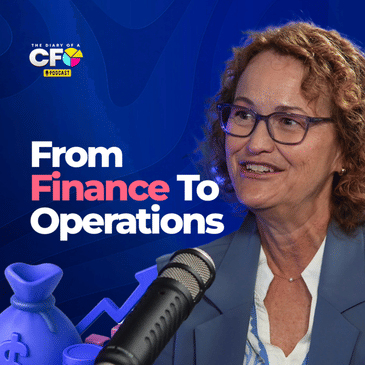


She spent 19 years at Southwire. She started in treasury, moved through business unit finance, became Chief Accounting Officer, and then made a move nobody saw coming. She left finance to run supply chain at a $9 billion company that provides cable for and electrical transmission throughout the US.
In this episode, I sit down in person with Christy Wright, Executive Vice President of Supply Chain at Southwire. Christy also recently served as Interim CFO while continuing her supply chain role.
We talk about what made her leave finance after checking every experience box. Why she says curiosity and a connection to the supply chain team years earlier planted the seed. What surprised her about the operations side, including having to learn the periodic table to understand the materials her team works with every day.
How her finance background gives her a different lens in supply chain, from her focus on scrap and recyclability to her appreciation for lean and continuous improvement. What it felt like stepping into the Interim CFO seat while running supply chain and why prioritization and sleep became non-negotiable.
Why she says people leadership is the hardest and most continuous work of her career. Her advice for controllers and CAOs who want to become CFOs, including why a lateral move might be the most important one you make. And the 12 for Life program at Southwire that brings at-risk youth into manufacturing to earn a paycheck, learn skills, and finish high school.
Whether you are a finance leader thinking about stepping into operations, already in the CFO seat trying to understand the business better, or building your career at one company and wondering if that is enough, this conversation covers it.
This episode is brought to you by FISPAN. Learn more at fispan.com.
00:00:00 --> 00:00:03 Like, what's your routine or system to remain
00:00:03 --> 00:00:07 sharp as an executive? I went to our executive
00:00:07 --> 00:00:11 leaders and said, I can't work 24 -7. I need
00:00:11 --> 00:00:19 to sleep. She was also named interim chief financial
00:00:19 --> 00:00:22 officer. She held both roles for five months.
00:00:22 --> 00:00:25 It's the balance of all the things coming at
00:00:25 --> 00:00:28 you at once. And then it's the magnitude of decisions
00:00:28 --> 00:00:31 that you're having to make. You're making decisions
00:00:31 --> 00:00:34 around people's compensation and their livelihood.
00:00:35 --> 00:00:38 And you have this impact upon thousands of families.
00:00:38 --> 00:00:41 I had to give up some of the detail, some of
00:00:41 --> 00:00:44 the curiosity. I just there isn't enough hours
00:00:44 --> 00:00:46 in a day. And what would you advise? someone
00:00:46 --> 00:00:50 that's probably a controller or a CEO right now
00:00:50 --> 00:00:53 about transitioning to CFO, just from what you've
00:00:53 --> 00:00:59 seen. Take the opportunity to... Today's episode
00:00:59 --> 00:01:02 is brought to you by FISPEN. By embedding banking
00:01:02 --> 00:01:05 services directly into ERP and accounting software...
00:01:05 --> 00:01:09 Fispen streamlines financial workflows, reduces
00:01:09 --> 00:01:12 cost, minimizes manual errors, and enhances efficiency
00:01:12 --> 00:01:16 for businesses of all sizes. You can learn more
00:01:16 --> 00:01:19 at fispen .com. I will drop the link in the show
00:01:19 --> 00:01:22 notes. Christy is the Executive Vice President,
00:01:23 --> 00:01:25 Chief Supply Chain and Business Systems Officer
00:01:25 --> 00:01:29 at Southwire. A company that did $9 .7 billion
00:01:29 --> 00:01:32 in revenue last year, Southwire's products deliver
00:01:32 --> 00:01:35 power to multiple industries, including emerging
00:01:35 --> 00:01:38 markets such as data centers, electric utilities,
00:01:38 --> 00:01:41 transit, construction and residential markets.
00:01:42 --> 00:01:44 But here is what makes Christy's story unusual.
00:01:45 --> 00:01:47 She started in treasury, she became chief accounting
00:01:47 --> 00:01:50 officer, and then she did something most financiers
00:01:50 --> 00:01:52 never do. She left finance completely to run
00:01:52 --> 00:01:55 the supply chain, and she recently served in
00:01:55 --> 00:01:58 a transition role as interim CFL. I met Christy
00:01:58 --> 00:02:01 a couple years ago at a manufacturing event right
00:02:01 --> 00:02:03 here in Atlanta. She stood up to answer a question
00:02:03 --> 00:02:06 I was struck by how sharp, charismatic, and full
00:02:06 --> 00:02:09 of energy she was. I went up to introduce myself
00:02:09 --> 00:02:11 afterwards and we have stayed connected ever
00:02:11 --> 00:02:15 since. So I'm super excited to finally have her
00:02:15 --> 00:02:18 on the show. Welcome, Christy. I'm so excited
00:02:18 --> 00:02:20 to be here with you, Ossie. So it's so nice to
00:02:20 --> 00:02:22 be here. Thanks for inviting me. Of course, because
00:02:22 --> 00:02:25 I know we met a lot of one time at an event and
00:02:25 --> 00:02:28 then every time after that was at some conference
00:02:28 --> 00:02:30 in a different city. It has been. I don't think
00:02:30 --> 00:02:33 we've actually seen each other in Atlanta in
00:02:33 --> 00:02:36 a while, but we have seen each other all across
00:02:36 --> 00:02:40 the. Yes, over the past few years. Yes. So curious
00:02:40 --> 00:02:42 to hear like what brought you to Atlanta in the
00:02:42 --> 00:02:46 first place. So I moved to Atlanta from Birmingham.
00:02:46 --> 00:02:51 Alabama. My husband and I both moved for my opportunity
00:02:51 --> 00:02:55 at Southwire about 19 years ago. Wow, but you've
00:02:55 --> 00:02:58 been out Southwire ever since, right? Yeah, I
00:02:58 --> 00:03:00 have. I've had tremendous opportunity to grow
00:03:00 --> 00:03:04 my career and started in treasury and took other
00:03:04 --> 00:03:08 roles, business unit, finance leader, in chief
00:03:08 --> 00:03:12 accounting, in corporate accounting, and just
00:03:12 --> 00:03:14 a lot of different finance roles and now in supply
00:03:14 --> 00:03:16 chain. Yeah, it's awesome. What keeps, what?
00:03:17 --> 00:03:19 What's keeping you there still? Because almost
00:03:19 --> 00:03:21 two decades at the same company is very rare
00:03:21 --> 00:03:25 these days. It is. It's very rare. And it has
00:03:25 --> 00:03:28 a, South Fire has a fantastic culture. It's privately
00:03:28 --> 00:03:33 owned and professionally managed. It's got a
00:03:33 --> 00:03:35 great sense of community and the people that
00:03:35 --> 00:03:38 work there are wonderful to work with. And so
00:03:38 --> 00:03:41 when you come to come to work every day and you're
00:03:41 --> 00:03:44 excited about it and you like the people that
00:03:44 --> 00:03:46 you work with, that's what really keeps you there.
00:03:46 --> 00:03:51 there, right? It's hard. You never say that when
00:03:51 --> 00:03:53 you are looking at other opportunities, are you
00:03:53 --> 00:03:55 running away from something, are you running
00:03:55 --> 00:04:00 to something, right? And I come back to Southwire
00:04:00 --> 00:04:03 and just think about how great of an experience
00:04:03 --> 00:04:07 it has been for me and just what. what the business
00:04:07 --> 00:04:09 does, but also what they do for the community
00:04:09 --> 00:04:12 and giving back. Oh, good for you. Good for you.
00:04:12 --> 00:04:15 Now, you were chief accounting officer and then
00:04:15 --> 00:04:19 you let finance to run supply chain. What made
00:04:19 --> 00:04:22 you say yes to that move? Because up until now,
00:04:22 --> 00:04:25 when I looked you up, yeah, of course, you were
00:04:25 --> 00:04:28 in accounting and finance, right? Treasury, accounting,
00:04:28 --> 00:04:30 chief accounting officer. And then you went,
00:04:30 --> 00:04:33 boom, supply. So a whole different unit. What
00:04:33 --> 00:04:38 made you say yes? So when I was in Treasury over
00:04:38 --> 00:04:41 10 years ago, I had the opportunity to work with
00:04:41 --> 00:04:44 the supply chain team on supply chain finance.
00:04:47 --> 00:04:52 was a peek into the commodity markets and how
00:04:52 --> 00:04:56 the company's raw materials are sourced and I
00:04:56 --> 00:05:00 really became super curious about it. And even
00:05:00 --> 00:05:03 though I've had other roles, I've always had
00:05:03 --> 00:05:06 this connection with that. with either with that
00:05:06 --> 00:05:10 team or just what they do and understood the
00:05:10 --> 00:05:14 importance of what they did. And so I think it
00:05:14 --> 00:05:16 was just that curiosity and connection that I'm
00:05:16 --> 00:05:19 like, I'd like to have a little bit more information
00:05:19 --> 00:05:24 and be able to be a part of what they do. Wow.
00:05:24 --> 00:05:29 And why then at that time? And not earlier. Yeah,
00:05:29 --> 00:05:33 I think I felt like in finance, I had checked
00:05:33 --> 00:05:37 a bunch of like the experience boxes. And so
00:05:37 --> 00:05:42 obviously, Treasury did that for many years and
00:05:42 --> 00:05:47 loved Treasury, but moved laterally into a business
00:05:47 --> 00:05:51 unit finance role and had the opportunity. to
00:05:51 --> 00:05:54 work across different businesses and loved having
00:05:54 --> 00:05:59 that FP &A, had plant controllers reporting to
00:05:59 --> 00:06:02 me for a bit of time, had a lot of different
00:06:02 --> 00:06:07 things happening. And then I moved into the corporate
00:06:07 --> 00:06:11 area and led as chief accounting officer, had
00:06:11 --> 00:06:15 tax, had shared services, and really felt like,
00:06:15 --> 00:06:18 hey, I had kind of done all these things and
00:06:18 --> 00:06:20 what else could I do and how else could I contribute?
00:06:21 --> 00:06:25 And so there was an opportunity that arose and
00:06:25 --> 00:06:32 I really had made my availability kind of known
00:06:32 --> 00:06:34 to the company that said, hey, I'm interested
00:06:34 --> 00:06:38 in learning and leading and being a part of the
00:06:38 --> 00:06:42 business in a more meaningful level. And if I
00:06:42 --> 00:06:45 look back on my career, operations was something
00:06:45 --> 00:06:49 that I wasn't super deep in. I hadn't had like
00:06:49 --> 00:06:53 10 years of experience working in a plant. And
00:06:53 --> 00:06:57 I wanted that opportunity to really see how things
00:06:57 --> 00:07:00 happen in a manufacturing company. Wow. And now
00:07:00 --> 00:07:03 you're seeing it. I am definitely seeing it.
00:07:03 --> 00:07:05 I am definitely seeing it. What would you say
00:07:05 --> 00:07:09 surprised you the most when you made that switch
00:07:09 --> 00:07:13 from finance to supply chain? So at the core
00:07:13 --> 00:07:18 of what we do is we convert materials into the
00:07:18 --> 00:07:21 products that deliver power to millions across
00:07:21 --> 00:07:26 North America. And every step in our value chain
00:07:26 --> 00:07:32 is super critical. And I understood I understood
00:07:32 --> 00:07:35 the criticality of the materials, but the importance
00:07:35 --> 00:07:39 of flow and with all of the different geopolitical
00:07:39 --> 00:07:42 things happening and where critical materials
00:07:42 --> 00:07:46 are coming, my appreciation for elements has
00:07:46 --> 00:07:48 grown. And when I say elements, I'm literally
00:07:48 --> 00:07:51 talking about the periodic table. Like go back
00:07:51 --> 00:07:55 to chemistry and think about the period. So I
00:07:55 --> 00:07:58 have an appreciation for where things sit on
00:07:58 --> 00:08:02 the periodic table now. based upon materials
00:08:02 --> 00:08:06 that we need to make our products. And so both
00:08:06 --> 00:08:10 all of these things has just grown my appreciation
00:08:10 --> 00:08:14 for it. So I think those were the biggest things
00:08:14 --> 00:08:16 that were surprising. Like, wow, I need to pull
00:08:16 --> 00:08:20 out my chemistry knowledge and understand how
00:08:20 --> 00:08:24 all these things come together to deliver our
00:08:24 --> 00:08:27 products. So tell us more, because on the outside,
00:08:27 --> 00:08:31 I'm like, oh, they do cables. What goes into
00:08:31 --> 00:08:33 that? Like, now I'm curious, now that you said
00:08:33 --> 00:08:36 elements, like, what are the intricacies you
00:08:36 --> 00:08:38 probably had to learn probably over, you know,
00:08:38 --> 00:08:41 your experience at Southwire of how do you actually
00:08:41 --> 00:08:43 make a cable that electricity can go through?
00:08:44 --> 00:08:47 Well, the conductor, the conductivity is done
00:08:47 --> 00:08:49 through metals. So either copper or aluminum.
00:08:49 --> 00:08:55 Okay. Normally part of the core and depending
00:08:55 --> 00:08:57 upon the application is depending upon so if
00:08:57 --> 00:09:00 it's inside a building It'll be made a certain
00:09:00 --> 00:09:02 way so that it's protected. It could be behind
00:09:02 --> 00:09:05 a wall And if it's outside a bit of building
00:09:05 --> 00:09:08 if it's delivering power like in transmission
00:09:08 --> 00:09:12 lines or through distribution It's maybe aluminum
00:09:12 --> 00:09:15 conductor and it may have different applications
00:09:15 --> 00:09:19 to be able to withstand weather or withstand
00:09:19 --> 00:09:23 temperature changes or abrasive environments.
00:09:23 --> 00:09:26 So all of those different pieces are around how
00:09:26 --> 00:09:30 you start with basically the metal, the element,
00:09:30 --> 00:09:35 and you are drawing and straining it, and then
00:09:35 --> 00:09:40 you're putting some type of outer exterior, if
00:09:40 --> 00:09:43 you think about just a cord, like we were talking
00:09:43 --> 00:09:45 about even in the studio, there's cords, right?
00:09:45 --> 00:09:48 So if you think about the different materials
00:09:48 --> 00:09:51 that go on the outside of that, that's all, some
00:09:51 --> 00:09:55 of them have fire resistance properties, and
00:09:55 --> 00:09:58 so that material science, goes into the outer
00:09:58 --> 00:10:02 side of the wire and all of those are then developed.
00:10:02 --> 00:10:06 uh, delivering power to our customers or in our
00:10:06 --> 00:10:09 communities. Wow. I remember when we first met,
00:10:09 --> 00:10:12 we got to talk about ESG and now I understand
00:10:12 --> 00:10:15 more why you'd be talking about ESG for so long.
00:10:16 --> 00:10:18 Um, cause you were one of the first people talking
00:10:18 --> 00:10:20 about how you were already thinking about ESG
00:10:20 --> 00:10:24 when ESG was not a buzz word because of the industry
00:10:24 --> 00:10:26 you're in. So, but I haven't heard much about
00:10:26 --> 00:10:29 ESG. I feel like AI came in and then everybody
00:10:29 --> 00:10:32 forgot about ESG, but ESG must be still part
00:10:32 --> 00:10:33 of the of what you do every day. So how do you
00:10:33 --> 00:10:37 view that now that you're in supply chain versus
00:10:37 --> 00:10:41 when you were in accounting? Sure. So sustainability
00:10:41 --> 00:10:47 is at the core of what we do. We have core values
00:10:47 --> 00:10:50 that have tenants that are tied to sustainability.
00:10:51 --> 00:10:55 And we just released I believe it's the 17 or
00:10:55 --> 00:11:00 18th version of our year of our sustainability
00:11:00 --> 00:11:03 report. So if you can imagine many years of sustainability
00:11:03 --> 00:11:07 commitments and it's around carbon reduction,
00:11:07 --> 00:11:10 but it's also about giving back to our communities,
00:11:10 --> 00:11:14 building worth for our communities and our team
00:11:14 --> 00:11:17 members and our shareholders. It's also about
00:11:17 --> 00:11:22 doing right and ethics and compliance and giving
00:11:22 --> 00:11:27 back. and growing green, and these are all part
00:11:27 --> 00:11:31 of the fabric of what our company stands for.
00:11:31 --> 00:11:34 And so being part of the supply chain is really
00:11:34 --> 00:11:37 thinking about circularity, how things can be
00:11:37 --> 00:11:42 recycled. We deal with critical minerals and
00:11:42 --> 00:11:46 so elements, like I said, so their recyclability
00:11:46 --> 00:11:50 and how they are able to be reused is important
00:11:50 --> 00:11:53 to us and things that we can... continue to work
00:11:53 --> 00:11:58 on. And wire is something that lasts a long time.
00:11:58 --> 00:12:02 If you think about your house, you probably haven't
00:12:02 --> 00:12:06 needed to replace the wire in your house because
00:12:06 --> 00:12:11 it lasts a long time. So it's something that
00:12:11 --> 00:12:15 is really sustainable as well. So when we think
00:12:15 --> 00:12:18 about when we think about our commitment to sustainability,
00:12:19 --> 00:12:21 it just continues because of the products that
00:12:21 --> 00:12:24 we're delivering and the impact that we have.
00:12:24 --> 00:12:28 So it's just part of the DNA. It's not something
00:12:28 --> 00:12:31 special we do above and beyond. It's just part
00:12:31 --> 00:12:36 of the core. And it goes along with the values
00:12:36 --> 00:12:38 that we bring to our customers. And it's important.
00:12:38 --> 00:12:43 Many of our customers really want circularity
00:12:43 --> 00:12:49 or recyclability and a commitment. So it is important
00:12:49 --> 00:12:53 to them. Glad to hear that because I felt like
00:12:53 --> 00:12:55 a lot of people were in the wave, felt like a
00:12:55 --> 00:12:57 wave and then it kind of disappeared and that
00:12:57 --> 00:13:01 AI is a wave. So it's good to hear you guys are
00:13:01 --> 00:13:03 still on that trajectory because it's part of...
00:13:03 --> 00:13:06 who you are really at the core. Now, Southwire
00:13:06 --> 00:13:09 did $9 billion last year. What does it feel like
00:13:09 --> 00:13:16 to be in your current seat? So our products that
00:13:16 --> 00:13:19 are out in the market do provide a lot of the
00:13:19 --> 00:13:22 electricity in the United States. So it's an
00:13:22 --> 00:13:26 awesome, awesome responsibility and humbling
00:13:26 --> 00:13:33 to be in my seat because we're just... tremendous
00:13:33 --> 00:13:37 to deliver power and to build products that are
00:13:37 --> 00:13:41 in many homes and out in the communities. And
00:13:41 --> 00:13:46 so for me, it's a great responsibility to be
00:13:46 --> 00:13:51 a part of such a large organization and to make
00:13:51 --> 00:13:56 sure that My group and our team can develop the
00:13:56 --> 00:13:58 materials that we're going to turn into these
00:13:58 --> 00:14:01 products so that we can serve our customers and
00:14:01 --> 00:14:04 our communities. And it's just an awesome responsibility.
00:14:04 --> 00:14:07 Well, good. Let's take a quick break to talk
00:14:07 --> 00:14:10 about BISPEN. So if you're tired of juggling
00:14:10 --> 00:14:15 bank portals in your ERP, or what if your bank
00:14:15 --> 00:14:19 was inside your ERP? Fispin brings your business
00:14:19 --> 00:14:22 banking and treasury management directly into
00:14:22 --> 00:14:25 your existing ERP or accounting software. No
00:14:25 --> 00:14:27 more switching, managed payables, receivables,
00:14:28 --> 00:14:31 cash, and reconciliation all from one place.
00:14:31 --> 00:14:34 You can pay invoices, view balances, automate
00:14:34 --> 00:14:37 accounts receivable from deposit to posted payment,
00:14:37 --> 00:14:40 and reconcile accounts with just a few clicks,
00:14:40 --> 00:14:43 all from the comfort of your ERP. So, streamline
00:14:43 --> 00:14:46 your financial operations to gain complete clarity
00:14:46 --> 00:14:50 and optimize working capital with FISPEN so you
00:14:50 --> 00:14:52 can spend less time on manual repetitive tasks
00:14:52 --> 00:14:55 and more time on growth. To learn more, visit
00:14:55 --> 00:14:59 FISPEN .com. I'll drop the link in the show notes.
00:14:59 --> 00:15:02 Now let's get back to the episode. So how do
00:15:02 --> 00:15:05 you feel like your accounting and finance background
00:15:05 --> 00:15:08 helped you make that transition to supply chain
00:15:08 --> 00:15:12 easier? Um, or maybe harder. I don't know. No,
00:15:12 --> 00:15:17 I think I mean With finance, you have obviously
00:15:17 --> 00:15:21 a keen appreciation for numbers. My background
00:15:21 --> 00:15:25 lends itself to understanding markets. So with
00:15:25 --> 00:15:28 having to deal with minerals and metals, I understand
00:15:28 --> 00:15:31 the markets. So those pieces of my background
00:15:31 --> 00:15:35 helped. Understanding negotiation and the value,
00:15:36 --> 00:15:40 I think that has also helped. Being able to have
00:15:40 --> 00:15:43 that perspective around things and then also
00:15:44 --> 00:15:47 really being, there's lots of data. So being
00:15:47 --> 00:15:50 able to digest data and filter data and that
00:15:50 --> 00:15:53 those types of skills have been really, really
00:15:53 --> 00:15:55 important. Okay. So what would you say your day
00:15:55 --> 00:15:57 to day look like when you were chief accounting
00:15:57 --> 00:16:01 officer versus now EVPO supply chain? So I think
00:16:01 --> 00:16:08 in my old role, I was really helping at the corporate
00:16:08 --> 00:16:11 level. So I wasn't impacting. I mean, it's just
00:16:11 --> 00:16:14 a huge change to be kind of at a corporate level.
00:16:14 --> 00:16:17 And it's not that we were only looking through
00:16:17 --> 00:16:20 the rear view mirror. But when you are at that
00:16:20 --> 00:16:23 corporate level, you're thinking about tax planning,
00:16:23 --> 00:16:28 liquidity planning. You're thinking about collecting
00:16:28 --> 00:16:33 cash, paying the bills, you're thinking about
00:16:33 --> 00:16:40 risk mitigation and governance. handle every
00:16:40 --> 00:16:43 day is around those tenants. And then when you
00:16:43 --> 00:16:49 move to supply chain, you're managing what the
00:16:49 --> 00:16:52 materials are that are needed to make the products,
00:16:52 --> 00:16:54 and making sure that those relationships and
00:16:54 --> 00:16:58 that resilience is there, and that you are critically
00:16:58 --> 00:17:01 going to have what you need when you need it
00:17:01 --> 00:17:04 for who you need it to serve. And so you have
00:17:04 --> 00:17:10 tremendous customers, and you don't... particularly
00:17:10 --> 00:17:14 you understand that you are looking at the demands
00:17:14 --> 00:17:17 of the business and tying it all together. And
00:17:17 --> 00:17:20 so I just feel like it's really close to the,
00:17:20 --> 00:17:22 it is the heartbeat, part of the heartbeat of
00:17:22 --> 00:17:26 the business. And I have the opportunity to serve
00:17:26 --> 00:17:30 the business in a different way. So it's much
00:17:30 --> 00:17:33 closer to the, I would say the nitty gritty of
00:17:33 --> 00:17:36 what's going on and particularly at a manufacturer.
00:17:37 --> 00:17:39 And so what were some of the things that you
00:17:39 --> 00:17:42 would say worried you the most when you were
00:17:42 --> 00:17:45 CAO versus now in supply chain? Because obviously
00:17:45 --> 00:17:47 when you were talking clearly the people that
00:17:47 --> 00:17:49 you deal with every day change, right? You're
00:17:49 --> 00:17:51 no longer dealing with your tax people, your
00:17:51 --> 00:17:53 treasury people. Now you're dealing with production.
00:17:54 --> 00:17:57 Right. You know, all these other things. So what
00:17:57 --> 00:18:00 would you say worried you the most now versus
00:18:00 --> 00:18:04 when you were CAO? It's interesting because if
00:18:04 --> 00:18:07 I think about it, it's a little bit of the same
00:18:07 --> 00:18:11 thing. So when I was CAO, I worried a lot about
00:18:11 --> 00:18:17 forecasting accuracy. You know, we're delivering
00:18:17 --> 00:18:20 financial insight. And so we want to be able
00:18:20 --> 00:18:22 to have the right reports to be able to say,
00:18:22 --> 00:18:25 OK, this is where the plane is going to land
00:18:25 --> 00:18:27 as far as the numbers go. And you're looking
00:18:27 --> 00:18:30 at it from the role that I sat in at a very high
00:18:30 --> 00:18:33 level. And so you want to make sure that you
00:18:33 --> 00:18:36 have the right processes and systems and controls
00:18:36 --> 00:18:40 so that that forecasting accuracy comes in. Well
00:18:40 --> 00:18:43 on target right that's you you want to land the
00:18:43 --> 00:18:47 plane on the runway. Uh -huh and so that side
00:18:47 --> 00:18:50 it was Something that worried me like I wanted
00:18:50 --> 00:18:52 to make sure we had good processes and good systems
00:18:52 --> 00:18:56 and and visibility Now when I think about it
00:18:56 --> 00:18:59 in supply chain forecasting accuracy is so incredibly
00:18:59 --> 00:19:01 important because I got to make sure that I have
00:19:01 --> 00:19:07 materials and the right demand plan for our Operations
00:19:07 --> 00:19:10 to make the right thing and the timing to meet
00:19:10 --> 00:19:14 the schedules and and demands of our customers
00:19:14 --> 00:19:17 and whether it's something that's going to be
00:19:17 --> 00:19:20 made to stock or made to order, have a real understanding
00:19:20 --> 00:19:24 of where those materials need to be when they
00:19:24 --> 00:19:27 need to be there. demand planning accuracy, or
00:19:27 --> 00:19:31 again, forecasting accuracy, thinking about not
00:19:31 --> 00:19:34 just what do we need to make tomorrow, next week,
00:19:34 --> 00:19:37 month from now, two months from now, but also
00:19:37 --> 00:19:40 thinking about what do we do for our supply chain
00:19:40 --> 00:19:42 for the long term? How do we build it in? How
00:19:42 --> 00:19:45 do we think about our company's growth and making
00:19:45 --> 00:19:50 sure that we have a very resilient set of processes
00:19:50 --> 00:19:53 and systems that support that? Wow, that's a
00:19:53 --> 00:19:55 lot. It is, especially the reason I say that
00:19:55 --> 00:19:58 is I think about AI and all these data centers
00:19:58 --> 00:20:01 coming in that will need more electricity. Like
00:20:01 --> 00:20:04 if anything, I'm assuming software is like, oh,
00:20:04 --> 00:20:06 there's business coming and you're probably going
00:20:06 --> 00:20:07 to go, oh, there is business coming. Like you
00:20:07 --> 00:20:11 probably have a different appreciation for it.
00:20:11 --> 00:20:12 So curious to hear, you were mentioning made
00:20:12 --> 00:20:15 to stop, made to order. Like what are some of
00:20:15 --> 00:20:18 the things people may not see? from the outside
00:20:18 --> 00:20:20 that has to happen in the background. Like somebody
00:20:20 --> 00:20:23 has to think about when something gets on a ship,
00:20:23 --> 00:20:25 how long it takes to come here, from which part
00:20:25 --> 00:20:27 of the, like, what are all these things that
00:20:27 --> 00:20:30 happen in the background? Curious to hear. Well,
00:20:30 --> 00:20:35 it's pretty interesting. So we source globally.
00:20:35 --> 00:20:38 So we have a global supply chain. We think about
00:20:38 --> 00:20:42 materials that we can get domestically as well
00:20:42 --> 00:20:47 as internationally. And in some... If you think
00:20:47 --> 00:20:51 about what's going on geopolitically, how the
00:20:51 --> 00:20:53 US can be more resilient in being able to have
00:20:53 --> 00:20:56 access to certain materials and some materials
00:20:56 --> 00:21:00 we just don't have enough of. So when we think
00:21:00 --> 00:21:04 about how all of these things, we're trying to
00:21:04 --> 00:21:07 make sure that we can get the access to materials
00:21:07 --> 00:21:10 for our customers and plan on what that demand
00:21:10 --> 00:21:14 looks like and based upon what material it is
00:21:14 --> 00:21:16 globally. where we're going to be able to source
00:21:16 --> 00:21:20 that, then we need to make sure that those...
00:21:20 --> 00:21:23 materials, if it's going to be global and outside
00:21:23 --> 00:21:26 of North America, how we're going to get it to
00:21:26 --> 00:21:30 the states, making sure that the maritime routes
00:21:30 --> 00:21:34 are open or the Panama Canal is open or however
00:21:34 --> 00:21:37 we're going to get the materials, we can get
00:21:37 --> 00:21:41 them. So we're planning for that. And then once
00:21:41 --> 00:21:44 we receive them, we are vertically integrated
00:21:44 --> 00:21:48 in some processes. So we actually take some raw
00:21:48 --> 00:21:52 materials and do the first step of converting
00:21:52 --> 00:21:57 into the first step of metal, which is a rod,
00:21:57 --> 00:22:03 which is a metal rod, if you think of copper
00:22:03 --> 00:22:05 or aluminum. And then we take that, and we draw
00:22:05 --> 00:22:09 it, and we strand it into some type of wire,
00:22:10 --> 00:22:13 which starts there. And then we start to put
00:22:13 --> 00:22:18 our coat. are compounding and the different materials
00:22:18 --> 00:22:21 on it based upon the application. And so if I
00:22:21 --> 00:22:24 think of make to stock, that is things that you
00:22:24 --> 00:22:27 would see in big box retailers if you go down
00:22:27 --> 00:22:32 the electrical aisle. And if you also would see
00:22:32 --> 00:22:36 potentially make to order would be more what
00:22:36 --> 00:22:40 an investor -owned utility might order for their
00:22:40 --> 00:22:42 specifications around the power lines that they're
00:22:42 --> 00:22:46 going to have that to distribute. and power their
00:22:46 --> 00:22:48 electricity. So that's gonna be two different.
00:22:49 --> 00:22:51 One might be highly engineered to specification,
00:22:52 --> 00:23:01 and one might be more deliverable to a customer
00:23:01 --> 00:23:05 and something that every electrician would use.
00:23:06 --> 00:23:10 Okay. And so when you think about all these elements,
00:23:11 --> 00:23:12 like how would you say, what would you say have
00:23:12 --> 00:23:15 helped you? Learn those things quickly, especially
00:23:15 --> 00:23:17 because you're an accounting background. You're
00:23:17 --> 00:23:22 talking like a scientist right now What are some
00:23:22 --> 00:23:25 of the things I helped you maybe bridge the gap
00:23:25 --> 00:23:29 or Connect with your your new peers right example
00:23:29 --> 00:23:31 in the process because regardless of the position
00:23:31 --> 00:23:34 you in It's something that's so critical regardless
00:23:34 --> 00:23:36 that you're an executive like you have to talk
00:23:36 --> 00:23:39 with people that don't have your background.
00:23:39 --> 00:23:42 Right. It's like when if I if I rely it back
00:23:42 --> 00:23:47 to to finance when I had the opportunity to lead
00:23:47 --> 00:23:51 the the tax group, I'm not a tax expert. I don't
00:23:51 --> 00:23:54 know the tax code. Right. That's very complex.
00:23:54 --> 00:23:57 And there are lots of. very seasoned specialists
00:23:57 --> 00:24:01 that understand taxes. And so when I can't come
00:24:01 --> 00:24:04 into this role, I'm really dependent upon such
00:24:04 --> 00:24:08 a fantastic team that we have that are materials
00:24:08 --> 00:24:12 specialists. They have long, long years of experience
00:24:12 --> 00:24:17 and dedication and understand all of the formulations,
00:24:17 --> 00:24:22 listening. I'm a note taker, like an old fashioned
00:24:22 --> 00:24:25 note taker. I write everything down and I go
00:24:25 --> 00:24:28 back and I digest it. I do a lot of listening
00:24:28 --> 00:24:33 and I have insatiable curiosity, which is probably
00:24:33 --> 00:24:36 why I really get into the details and I sound
00:24:36 --> 00:24:39 like a scientist because I really do want to
00:24:39 --> 00:24:42 understand and seek to really put all the parts
00:24:42 --> 00:24:46 and pieces together so that I can, if somebody
00:24:46 --> 00:24:50 is coming to me with a problem, or we want to
00:24:50 --> 00:24:53 do a new, we want to have a new endeavor, a new
00:24:53 --> 00:24:56 innovation, I can understand and speak their
00:24:56 --> 00:25:01 language. And so it's about listening and asking
00:25:01 --> 00:25:06 questions and understanding that they're the
00:25:06 --> 00:25:08 experts and that they're always going to be the
00:25:08 --> 00:25:13 expert and that I'm very humbly respectful of
00:25:13 --> 00:25:16 all of the knowledge that they have and let them
00:25:16 --> 00:25:19 know that I'm really super interested in what
00:25:19 --> 00:25:23 they're doing and and how how they do their job
00:25:23 --> 00:25:29 every day and how I can make you know Remove
00:25:29 --> 00:25:32 obstacles and make things better for them. But
00:25:32 --> 00:25:35 really it's about listening and learning and
00:25:35 --> 00:25:39 Probably a bit about my note -taking. Okay, and
00:25:39 --> 00:25:42 just being able being curious and asking a little
00:25:42 --> 00:25:44 bit and And so all of those things combined.
00:25:45 --> 00:25:47 Now you bring up a great point, especially when
00:25:47 --> 00:25:49 you were talking about when you're still taking
00:25:49 --> 00:25:52 over tax. I feel like a lot of people are afraid
00:25:52 --> 00:25:54 to make those moves as executives because it
00:25:54 --> 00:25:57 was not their expertise. Right. Right. So what
00:25:57 --> 00:26:00 would be your advice for someone who's stepping
00:26:00 --> 00:26:03 like what you did stepping into tax and tax was
00:26:03 --> 00:26:06 not what you did in college or for the past 10
00:26:06 --> 00:26:08 years of your career? How do you effectively
00:26:08 --> 00:26:12 step in and still lead the department? Well,
00:26:12 --> 00:26:15 you you have awesome people that work there they
00:26:15 --> 00:26:20 know more than you know and so Recognize that
00:26:20 --> 00:26:23 you're not going to be an expert overnight We
00:26:23 --> 00:26:27 all have when you take a new opportunity you
00:26:27 --> 00:26:32 want to jump in so fast and so for me You know,
00:26:32 --> 00:26:36 I was nervous. I knew that I didn't know everything
00:26:36 --> 00:26:39 and had to really decide, OK, what is it? And
00:26:39 --> 00:26:41 I think that's with every new role, right? How
00:26:41 --> 00:26:44 deep am I going to get in? What do I want to
00:26:44 --> 00:26:46 accomplish in the first 30 days? And how deep
00:26:46 --> 00:26:48 do I want to go into details? And then what are
00:26:48 --> 00:26:53 my do now, do next, do later priorities? And
00:26:53 --> 00:26:57 really, again, understand what their workflow
00:26:57 --> 00:27:01 looks like, particularly like tax. In a company,
00:27:01 --> 00:27:04 they have, you know, the season of of what they're
00:27:04 --> 00:27:06 doing for tax provisions and for accounting.
00:27:07 --> 00:27:08 Then you have the other side of doing the tax
00:27:08 --> 00:27:12 returns. And so those are two humongous processes
00:27:12 --> 00:27:17 that they're leading and working on. And so I
00:27:17 --> 00:27:19 just understand what I can do, but they know
00:27:19 --> 00:27:21 that I'm not going to get in their spreadsheets
00:27:21 --> 00:27:23 and start messing around with their formulas
00:27:23 --> 00:27:27 or in their systems. I'm going to rely upon,
00:27:27 --> 00:27:30 they're the experts. They know more than I will
00:27:30 --> 00:27:35 ever know. And so I really... humbly. I think
00:27:35 --> 00:27:40 humility is a great thing and so I would say
00:27:40 --> 00:27:45 respect what they know and be there to help them.
00:27:45 --> 00:27:48 remove obstacles and also understand that you're
00:27:48 --> 00:27:50 going to be nervous and you're not going to know
00:27:50 --> 00:27:52 everything. And I put a lot of pressure on myself
00:27:52 --> 00:27:56 to really kind of know all the details. And I
00:27:56 --> 00:27:59 just remember thinking to myself, you know, in
00:27:59 --> 00:28:01 these different rules, like, oh my gosh, am I
00:28:01 --> 00:28:04 going to be able to do this? And then if I stuck
00:28:04 --> 00:28:08 with my plan, usually around day 90, it was like
00:28:08 --> 00:28:10 I'd wake up one morning and I'm like, oh. I got
00:28:10 --> 00:28:16 this. I know what's coming at me today and I
00:28:16 --> 00:28:18 can handle it and whatever the curve ball is,
00:28:18 --> 00:28:21 I'll be able to catch it. It'll be fine. Oh,
00:28:21 --> 00:28:24 nice. Nice. So what would you say was probably
00:28:24 --> 00:28:26 the hardest thing for you to do in your career?
00:28:27 --> 00:28:33 The hardest thing? I think the hardest thing
00:28:33 --> 00:28:39 is and continues to be is being a people leader.
00:28:39 --> 00:28:43 That's the hardest. The things that you'll get
00:28:43 --> 00:28:48 around, whether it's accounting or finance or
00:28:48 --> 00:28:52 supply chain, you can learn. I mean, a lot of
00:28:52 --> 00:28:55 people can learn that, but the people side of
00:28:55 --> 00:28:58 things is really tricky. It's tricky, right?
00:28:58 --> 00:29:01 You have to be somebody who develops fellowship,
00:29:02 --> 00:29:05 somebody if you want to be a leader and you want
00:29:05 --> 00:29:08 to lead people. And I think early in my career,
00:29:08 --> 00:29:16 I was a super bumpy leader. And so I wanted everybody
00:29:16 --> 00:29:20 to live up to a certain expectation and people
00:29:20 --> 00:29:23 learn at their own pace and deliver results at
00:29:23 --> 00:29:26 different paces. And so I had to realize that
00:29:26 --> 00:29:29 not everybody wants to be Christy. And so I think
00:29:29 --> 00:29:34 about that. I would say people have been... you
00:29:34 --> 00:29:36 know, something that I continue to work on, and
00:29:36 --> 00:29:39 I work on it every day. I'm always asking other
00:29:39 --> 00:29:43 people for, you know, hey, was that conversation?
00:29:43 --> 00:29:46 Did it land right? Did I use the right terms?
00:29:48 --> 00:29:51 Because literally every person is an individual.
00:29:51 --> 00:29:55 So it sounds weird, but it's the leadership of
00:29:55 --> 00:29:58 people and development of people because it's
00:29:58 --> 00:30:03 a big... personal tenant of mine to treat people
00:30:03 --> 00:30:08 fairly and to treat people with respect and dignity.
00:30:08 --> 00:30:10 And I want to make sure that I'm always doing
00:30:10 --> 00:30:15 that. And I think that's probably been something
00:30:15 --> 00:30:17 that I can, it's a continuous improvement project.
00:30:18 --> 00:30:20 Thank you so much for sharing that and sharing
00:30:20 --> 00:30:23 it so openly because I think we're all bumpy
00:30:23 --> 00:30:25 leaders because we don't really go to school.
00:30:25 --> 00:30:28 or training programs before we actually manage
00:30:28 --> 00:30:31 people. At least I didn't. Like I became a people
00:30:31 --> 00:30:33 manager and then I was like looking up for training
00:30:33 --> 00:30:37 on how to be a people manager. Like after the
00:30:37 --> 00:30:40 fact. So curious to hear what are some of the
00:30:40 --> 00:30:42 ways you have actually sharpened your skills
00:30:42 --> 00:30:46 in that area over time? Really, some of it is
00:30:46 --> 00:30:49 360 and asking people to give me feedback. Oh,
00:30:49 --> 00:30:55 360. 360s are hard. But it's also really asking
00:30:55 --> 00:31:00 people. So I'm a very transparent person. And
00:31:00 --> 00:31:02 it's just part of how I am a straight shooter.
00:31:02 --> 00:31:06 You know that from our relationships of how I
00:31:06 --> 00:31:09 approach things. And so I ask for people to give
00:31:09 --> 00:31:14 me critical feedback. And if I'm seeing body
00:31:14 --> 00:31:16 language that I'm making somebody uncomfortable,
00:31:16 --> 00:31:20 I'll tell them. give me that feedback if this
00:31:20 --> 00:31:23 is not you know if what I'm sharing with you
00:31:23 --> 00:31:25 or coaching you is not the way that you like
00:31:25 --> 00:31:29 to like to learn um working with um how to build
00:31:29 --> 00:31:34 teams and getting to know your team members beyond
00:31:34 --> 00:31:37 um what what they why they came to work that
00:31:37 --> 00:31:41 day beyond beyond that because you do have to
00:31:41 --> 00:31:44 know what else is going on in their world so
00:31:44 --> 00:31:47 um that was those those are things that I continue
00:31:47 --> 00:31:51 to have to remind myself. So I don't think you
00:31:51 --> 00:31:55 can learn to be a people leader from a book,
00:31:55 --> 00:31:59 but it's interesting because I was sharing this
00:31:59 --> 00:32:02 story this morning with someone. I was listening
00:32:02 --> 00:32:06 to a podcast and they were talking about how
00:32:06 --> 00:32:11 to... how to meet people. And it was interesting
00:32:11 --> 00:32:14 because they, the person, and I apologize to
00:32:14 --> 00:32:16 whoever it was that I listened to, they talked
00:32:16 --> 00:32:19 about smiling with your teeth and how it could,
00:32:19 --> 00:32:22 how it like really is a bonding experience. And
00:32:22 --> 00:32:24 that if you smile with your teeth, that people
00:32:24 --> 00:32:28 will, will, um, understand that you're a happier
00:32:28 --> 00:32:30 person. And I've taken that really seriously
00:32:30 --> 00:32:35 because, um, trying to bring about new teens
00:32:35 --> 00:32:39 and be a new leader into new orgs for me. Orgs
00:32:39 --> 00:32:42 in established processes, but I'm new. And so
00:32:42 --> 00:32:45 smile on my face and try to be approachable.
00:32:46 --> 00:32:49 And then we can build a relationship. Yeah, my
00:32:49 --> 00:32:51 face is loud. So sometimes I have to tell my
00:32:51 --> 00:32:56 face, face. Let's not do that. Thank you for
00:32:56 --> 00:32:58 sharing. But yeah, it's just like you said, it's
00:32:58 --> 00:33:01 a journey. It is absolutely a journey. And you
00:33:01 --> 00:33:03 learn from all those, like the podcast, the book
00:33:03 --> 00:33:05 here, but yeah, there is nothing like actually
00:33:05 --> 00:33:09 doing the reps. Yes. You have to put in those
00:33:09 --> 00:33:10 reps. You have to put in the reps. You have to
00:33:10 --> 00:33:13 put in the time with the team. Wow. Now at some
00:33:13 --> 00:33:16 point, like in your supply chain journey, you
00:33:16 --> 00:33:21 had to be interim CFO for some time at Southwire
00:33:21 --> 00:33:23 and then jumping back. What was that experience
00:33:23 --> 00:33:27 like? It was, it was great. It was, uh, it was
00:33:27 --> 00:33:32 really. I had to learn prioritization. I had
00:33:32 --> 00:33:35 to learn that I couldn't do everything because
00:33:35 --> 00:33:38 I had both the supply chain role and the interim
00:33:38 --> 00:33:42 CFO role. So really making sure that I was aligned
00:33:42 --> 00:33:44 with our leadership team on their priorities
00:33:44 --> 00:33:49 and making sure that both teams were in a good
00:33:49 --> 00:33:51 space and understood that I couldn't be there
00:33:51 --> 00:33:56 for everyone all at once. And my teams were super
00:33:56 --> 00:34:00 respectful of that. And so really prioritization,
00:34:01 --> 00:34:05 leaning hard into understanding that I'm not
00:34:05 --> 00:34:08 going to be able to do everything. And so setting
00:34:08 --> 00:34:12 myself up to succeed and understanding things
00:34:12 --> 00:34:14 would fall through the cracks and that I would
00:34:14 --> 00:34:19 eventually get to them. But it was very interesting
00:34:19 --> 00:34:24 having the opportunity to talk about our results
00:34:24 --> 00:34:29 and be a part of communication. to our global
00:34:29 --> 00:34:33 or broader organization from a financial leadership
00:34:33 --> 00:34:36 position, helping to explain the numbers to other
00:34:36 --> 00:34:40 leaders and our board, presenting to the board
00:34:40 --> 00:34:44 our financials, that all of that, the preparation
00:34:44 --> 00:34:48 that goes into that and practicing all of that
00:34:48 --> 00:34:53 was a very interesting and great experience.
00:34:54 --> 00:34:58 And so I thought, I mean, It was just a very
00:34:58 --> 00:35:03 humbling opportunity and something that I felt
00:35:03 --> 00:35:07 very prepared for. And because of all the finance,
00:35:07 --> 00:35:09 like I said, I've done treasury, done business,
00:35:09 --> 00:35:13 you did. So I think from my perspective, it was
00:35:13 --> 00:35:17 a really... a really good opportunity. And actually
00:35:17 --> 00:35:19 there's so many things, little things that I
00:35:19 --> 00:35:22 took away from that interim responsibility now
00:35:22 --> 00:35:26 back into my supply chain around process optimization
00:35:26 --> 00:35:31 and understanding how we should deploy strategy
00:35:31 --> 00:35:35 that now I can take into my... role where I am
00:35:35 --> 00:35:38 today and be able to start working on all those
00:35:38 --> 00:35:42 things. Nice. And so how would you say now you
00:35:42 --> 00:35:44 view the world differently, right? Because you've
00:35:44 --> 00:35:47 done supply chain and you were sitting at some
00:35:47 --> 00:35:50 point in a CFO seat, when you walk through a
00:35:50 --> 00:35:53 plant or when you look at, you know, when people
00:35:53 --> 00:35:55 start talking about supply chain, what are some
00:35:55 --> 00:35:57 of the things you say you now pay more attention
00:35:57 --> 00:36:00 to because you've seen both sides of the world?
00:36:00 --> 00:36:03 Like I'm pretty sure your perspective. around
00:36:03 --> 00:36:05 either the numbers change when you were in the
00:36:05 --> 00:36:09 CFO seat or now in supply chain. Like what changed
00:36:09 --> 00:36:12 in between how you view things now? So there's
00:36:12 --> 00:36:14 a couple of different things that I noticed when
00:36:14 --> 00:36:17 I walk through a manufacturing location more
00:36:17 --> 00:36:24 so than I did when I because I had some supply
00:36:24 --> 00:36:28 chain experience and as a CFO. So one of the
00:36:28 --> 00:36:32 things that I thought about in a finance role,
00:36:32 --> 00:36:36 which you also think about in a... in a supply
00:36:36 --> 00:36:39 chain role, but now I think about it a little
00:36:39 --> 00:36:42 bit differently, is we are a manufacturer. We
00:36:42 --> 00:36:47 do create some scrap. And so I'm very, very,
00:36:47 --> 00:36:52 very focused on scrap. But now when I walk in
00:36:52 --> 00:36:54 in the supply chain, I'm really interested in
00:36:54 --> 00:36:57 what the kind of scrap that it is. Like, hey,
00:36:57 --> 00:36:59 what is that? Can we recycle it? How are we going
00:36:59 --> 00:37:02 to, you know, how's that? What's the next phase
00:37:02 --> 00:37:05 for that? So the life of scrap is important to
00:37:05 --> 00:37:11 me, which before I thought of it, I haven't lost
00:37:11 --> 00:37:15 the how can we reduce scrap, but I'm thinking
00:37:15 --> 00:37:17 about what happens to scrap after it leaves that
00:37:17 --> 00:37:20 particular spot. There's a low ROI out of that.
00:37:20 --> 00:37:25 Yes, yes. So I am. I think about that. I also,
00:37:25 --> 00:37:30 when I rock through our operations, I now have
00:37:30 --> 00:37:32 a deeper appreciation for continuous improvement,
00:37:33 --> 00:37:37 which is around the lean culture, how they are
00:37:37 --> 00:37:40 trying to always do better each day, how they're
00:37:40 --> 00:37:44 working on efficiencies, the lean projects that
00:37:44 --> 00:37:48 they have going on. And I think when I was in
00:37:48 --> 00:37:50 the finance role, I thought of those as just,
00:37:50 --> 00:37:53 okay, well, how can we improve this particular
00:37:54 --> 00:37:57 through a thousand little changes that we're
00:37:57 --> 00:38:00 going to make. And now I'm more focused on, okay,
00:38:00 --> 00:38:02 what are the thousand little changes that we
00:38:02 --> 00:38:04 can make to have that continuous improvement
00:38:04 --> 00:38:08 and how are they using lean tools to do better?
00:38:08 --> 00:38:13 every day and standardizing their work, I'm very
00:38:13 --> 00:38:17 appreciative of that and visibility around KPIs
00:38:17 --> 00:38:21 and understanding how they're part of the accountability
00:38:21 --> 00:38:24 to the numbers. And so really sharing with those
00:38:24 --> 00:38:29 teams, I think in my current role, I didn't think
00:38:29 --> 00:38:33 about those as closely as I did when I was in
00:38:33 --> 00:38:38 finance. So I definitely, my awareness is and
00:38:38 --> 00:38:42 curiosity is at just another level around us.
00:38:42 --> 00:38:45 I bet. So how do you make life easier for your
00:38:45 --> 00:38:47 finance people or your supply chain people? Because
00:38:47 --> 00:38:50 now you've seen what causes headaches in finance
00:38:50 --> 00:38:52 because you've been on that side. And now you
00:38:52 --> 00:38:55 know also how people are like, let's not get
00:38:55 --> 00:38:57 close to these finance people, maybe on the supply
00:38:57 --> 00:39:00 chain side. Like how do you bridge the two function?
00:39:00 --> 00:39:03 Like where do you see opportunities to make things
00:39:03 --> 00:39:08 better for each group? So I think where I help
00:39:08 --> 00:39:12 potentially is I can help. the storytelling with
00:39:12 --> 00:39:16 numbers, because the drivers to certain things
00:39:16 --> 00:39:20 in the business, which may not be as visible
00:39:20 --> 00:39:25 to an FP &A person or a controller, I'm able
00:39:25 --> 00:39:28 to tie things together and say, OK, well, remember
00:39:28 --> 00:39:33 when this happened here, or you heard of this
00:39:33 --> 00:39:37 geopolitical thing that's going on? That's going
00:39:37 --> 00:39:41 to impact us this, this, and this. So I'm able
00:39:41 --> 00:39:45 to help the finance team. understand, again,
00:39:45 --> 00:39:48 kind of forecasting accuracy, but also how things
00:39:48 --> 00:39:52 might change, how inflation might impact something
00:39:52 --> 00:39:55 and how we should be preparing that and how we
00:39:55 --> 00:39:57 can better communicate with our product management
00:39:57 --> 00:40:00 team or how we should be thinking with our R
00:40:00 --> 00:40:03 &D team around innovation and material science
00:40:03 --> 00:40:06 to try to make sure that we're using just the
00:40:06 --> 00:40:09 right amount of a material and not too much and
00:40:09 --> 00:40:13 not too little. So all of those things, I think,
00:40:13 --> 00:40:17 help me do better are things that I have a much
00:40:17 --> 00:40:21 closer appreciation for. And what you said there
00:40:21 --> 00:40:25 about how an event that you see in the news can
00:40:25 --> 00:40:28 impact your business. It is so important. It
00:40:28 --> 00:40:31 is so important, but I don't think we talk about
00:40:31 --> 00:40:34 it enough. Whether it's when we hire or when
00:40:34 --> 00:40:37 we onboard people. Because at some point I was
00:40:37 --> 00:40:42 working for a lottery company. And by the jackpot
00:40:42 --> 00:40:45 amount, we could tell if a recession was coming.
00:40:45 --> 00:40:50 Oh, wow. Because people play more. Try the lottery
00:40:50 --> 00:40:54 more when things are tough. So when the jackpot
00:40:54 --> 00:40:57 start being higher and higher and higher, it
00:40:57 --> 00:41:00 is a sign that a recession is probably coming.
00:41:01 --> 00:41:04 Interesting. And so I'm going to be looking at
00:41:04 --> 00:41:07 the boards now. It changed my perspective. And
00:41:07 --> 00:41:09 that's why I keep asking you questions about
00:41:09 --> 00:41:11 how your perspective changed, because it will
00:41:11 --> 00:41:13 change when you're in different, even within
00:41:13 --> 00:41:15 the same business, right? When you're in different
00:41:15 --> 00:41:18 departments, because now you see the world differently.
00:41:19 --> 00:41:22 You probably incentivize differently or your
00:41:22 --> 00:41:25 goals are just different. So your view of the
00:41:25 --> 00:41:28 world will be different. But you were a CAO,
00:41:28 --> 00:41:30 right? Chief accounting officer. You were close
00:41:30 --> 00:41:32 to the CFO. What took you by surprise when you
00:41:32 --> 00:41:34 got into that interim CFO? Because I was close
00:41:34 --> 00:41:36 to a CFO before and I was like, oh, I can do
00:41:36 --> 00:41:38 this job. And then I got in, I was like, Lord.
00:41:40 --> 00:41:43 Well, it's the balance of all the things coming
00:41:43 --> 00:41:46 at you at once. And then it's the magnitude of
00:41:46 --> 00:41:49 decisions that you're having to make and understanding
00:41:49 --> 00:41:54 that, you know, you're creating incentive programs
00:41:54 --> 00:41:59 for people or you're making decisions around,
00:41:59 --> 00:42:04 you know, people's, you know, people's compensation
00:42:04 --> 00:42:07 and their livelihood, and you have this impact
00:42:07 --> 00:42:11 upon thousands of families. And so I think the
00:42:11 --> 00:42:15 magnitude of all these, you know, what might
00:42:15 --> 00:42:18 have seemed like a smaller -ish decision, but
00:42:18 --> 00:42:22 the impact that they could have on a community
00:42:22 --> 00:42:28 or on an operation. So I think those impact as
00:42:28 --> 00:42:33 well as just the sheer flow. And really for myself,
00:42:34 --> 00:42:37 I had to give up some of the detail, some of
00:42:37 --> 00:42:40 the curiosity. I just, there isn't enough hours
00:42:40 --> 00:42:43 in a day for me to be able to dive deep on something,
00:42:44 --> 00:42:48 which meant, you know, My team's awesome, so
00:42:48 --> 00:42:51 trusting them, delegating to them, and asking
00:42:51 --> 00:42:56 them to take a little bit more, as well as trying
00:42:56 --> 00:42:58 to keep myself at the right level for the CFO,
00:42:59 --> 00:43:03 which is at a higher strategy, being strategic.
00:43:03 --> 00:43:07 every day and working in the strategic space
00:43:07 --> 00:43:11 and not the tactical space. Yes. So would you,
00:43:11 --> 00:43:13 do you see yourself ever going back to finance
00:43:13 --> 00:43:15 now that you're in supply Jane? I think the finance
00:43:15 --> 00:43:17 will keep with me. I mean, I think it's going
00:43:17 --> 00:43:20 to be hard and always going to be there, right?
00:43:23 --> 00:43:26 background or DNA. It's part of my DNA. So I
00:43:26 --> 00:43:27 think the finance will always be there. It'll
00:43:27 --> 00:43:31 be something that I carry in my pocket every
00:43:31 --> 00:43:36 day with me. My calculator is not going away.
00:43:36 --> 00:43:39 And so I think I will always have that with me.
00:43:40 --> 00:43:44 And so it just adds to the skill set. It makes
00:43:44 --> 00:43:49 things. It makes your perspective broader. And
00:43:49 --> 00:43:51 I think with my curiosity, I'm always going to
00:43:51 --> 00:43:54 have a passion for numbers and explaining the
00:43:54 --> 00:43:57 numbers. And so this role just gives me the opportunity
00:43:57 --> 00:44:00 to really understand some of the drivers of the
00:44:00 --> 00:44:03 numbers. Okay. And what would you advise someone
00:44:03 --> 00:44:07 that's probably a controller or a CAO right now
00:44:07 --> 00:44:10 about transitioning to CFO, just from what you've
00:44:10 --> 00:44:14 seen? Like, I know one of them, like you. So
00:44:14 --> 00:44:16 well described because of the magnitude of decisions
00:44:16 --> 00:44:18 you can't be in the details. Right. Right. What
00:44:18 --> 00:44:23 would be something else? Well, the one thing,
00:44:23 --> 00:44:27 things that I think about is your career, take
00:44:27 --> 00:44:31 the opportunity to learn other parts of the business.
00:44:31 --> 00:44:35 You can always go back to finance, right? Finance
00:44:35 --> 00:44:38 is not going to, my, the door to finance is not
00:44:38 --> 00:44:43 closed. It's just not, not right now, not. not
00:44:43 --> 00:44:48 know ever, not know never. It's just something
00:44:48 --> 00:44:52 that I'm going to be pivoting to this other opportunity
00:44:52 --> 00:44:55 to learn the business. There's a lot of cool
00:44:55 --> 00:44:58 things that a finance person can do. And that
00:44:58 --> 00:45:01 may mean a lateral move. It doesn't necessarily
00:45:01 --> 00:45:04 mean, Hey, I'm going to go into this next move
00:45:04 --> 00:45:08 because if you aspire to be a CFO, you have to
00:45:08 --> 00:45:12 have that operational understanding of what makes
00:45:12 --> 00:45:16 the business tick of what creates value for shareholders.
00:45:16 --> 00:45:19 And so you have to understand how does capital
00:45:19 --> 00:45:22 get deployed? How do, how does exec, how do executive
00:45:22 --> 00:45:25 teams make decisions on what they're going to
00:45:25 --> 00:45:29 spend their precious capital on. What are those
00:45:29 --> 00:45:31 next big investments that they want to make,
00:45:31 --> 00:45:34 those next bets that they want to make, organically
00:45:34 --> 00:45:38 or inorganically. And so when you are aspired
00:45:38 --> 00:45:41 to that level, having the experience of being
00:45:41 --> 00:45:45 able to say, well, I'm very deep in this, but
00:45:45 --> 00:45:49 I have experience in business partnering. I know
00:45:49 --> 00:45:53 how to trust and influence people. to gain trust
00:45:53 --> 00:45:56 and influence people. I know how to tell stories
00:45:56 --> 00:46:00 with numbers, and I understand how the business,
00:46:00 --> 00:46:03 I have a real appreciation for how the business
00:46:03 --> 00:46:06 works. Those are all characteristics that you
00:46:06 --> 00:46:09 might not get from just being a controller. You
00:46:09 --> 00:46:12 might get half of it, but maybe being in a different
00:46:12 --> 00:46:18 role might help you. It might give you a perspective
00:46:18 --> 00:46:22 that you never thought of before, and that might...
00:46:21 --> 00:46:27 mean a lateral to something or a pause on that
00:46:27 --> 00:46:30 next role. But I think that for me personally,
00:46:30 --> 00:46:33 I took laterals, I moved around, I had to be
00:46:33 --> 00:46:36 patient and things didn't always happen when
00:46:36 --> 00:46:41 I wanted them to. But I think it does work out.
00:46:41 --> 00:46:44 Yep, it does work out in the end. Curious to
00:46:44 --> 00:46:46 hear what advice would you give to your younger
00:46:46 --> 00:46:51 self? Patience. Okay. Patience. Be patient. Be
00:46:51 --> 00:46:53 more patient, right? Like that sense of urgency.
00:46:55 --> 00:46:57 Because I have such an energy that I like to
00:46:57 --> 00:47:00 bring to everything. And sometimes not everybody's
00:47:00 --> 00:47:02 going to want to move at the pace that I do.
00:47:03 --> 00:47:06 That one is hard. Yeah. Getting people to move,
00:47:06 --> 00:47:10 especially when they don't report to you or there
00:47:10 --> 00:47:13 is other things going on. Right. Everybody has
00:47:13 --> 00:47:15 their own priority list, right? And so you have
00:47:15 --> 00:47:17 to be respectful of the things that they need
00:47:17 --> 00:47:20 to do and that they have at the top of their
00:47:20 --> 00:47:22 priority list and if you need to influence someone.
00:47:23 --> 00:47:27 So my younger self... I would say if an opportunity
00:47:27 --> 00:47:33 presents itself, don't be afraid. Don't worry
00:47:33 --> 00:47:35 about it. Don't worry about what other people
00:47:35 --> 00:47:37 are going to think about it. If it's something
00:47:37 --> 00:47:41 that you're attracted to, that you think about
00:47:41 --> 00:47:45 particularly. when you get home from work at
00:47:45 --> 00:47:48 the end of the day or when you close the laptop
00:47:48 --> 00:47:51 or whatever for the end of the day and you're
00:47:51 --> 00:47:53 thinking, man, this was a good day, kind of think
00:47:53 --> 00:47:56 about what you did that day, like how it warmed
00:47:56 --> 00:47:59 your heart and fulfilled you and say, okay, what
00:47:59 --> 00:48:01 was that? Because I want to do more of that,
00:48:01 --> 00:48:04 right? And so that is something that I would
00:48:04 --> 00:48:09 think about more. as far as like as the, I took
00:48:09 --> 00:48:12 on assignments or I walked into different things,
00:48:13 --> 00:48:19 but just keep your curiosity and don't let anybody
00:48:19 --> 00:48:22 slow you down. Ooh, I love it. Now, how do you
00:48:22 --> 00:48:24 stay grounded? Like what is your favorite thing
00:48:24 --> 00:48:27 to do outside of work? Like what's your routine
00:48:27 --> 00:48:31 or system to remain sharp as an executive? Because
00:48:31 --> 00:48:37 you're doing a lot, okay? Like, yeah. So I am
00:48:37 --> 00:48:40 I'm blessed to well, first of all, I have a passion
00:48:40 --> 00:48:42 for water. So whether it's the beach or the lake,
00:48:43 --> 00:48:47 I am a water person. You just if I'm going to
00:48:47 --> 00:48:48 the beach and you kind of cross that bridge to
00:48:48 --> 00:48:51 get to the ocean. Like, everything just drains
00:48:51 --> 00:48:56 right out of me, yes. And my husband and I have
00:48:56 --> 00:49:01 a lake house, and we enjoy every bit of it. So
00:49:01 --> 00:49:04 if I'm not in Atlanta, you'll find me at the
00:49:04 --> 00:49:07 lake or the beach, which this time of year in
00:49:07 --> 00:49:11 the summer, I'm there quite a bit. And so I just
00:49:11 --> 00:49:14 love being on the water. It's something peaceful
00:49:14 --> 00:49:19 that just takes everything kind of. I mean, my
00:49:19 --> 00:49:22 whole body language. Like even when we're driving
00:49:22 --> 00:49:25 there, I know when I'm like 15 minutes out and
00:49:25 --> 00:49:28 like things just start to kind of drop away.
00:49:29 --> 00:49:33 Yes. So I think that's my happy place. And so
00:49:33 --> 00:49:38 I'm fortunate to do that. But also, you know,
00:49:38 --> 00:49:45 breathing. And I also am really focused on on
00:49:45 --> 00:49:50 protecting my time. And so I need, I mean, this
00:49:50 --> 00:49:52 was one of the things when I took on the interim
00:49:52 --> 00:49:56 CFO position and had my supply chain role as
00:49:56 --> 00:50:01 well. I went to our executive leaders and said,
00:50:01 --> 00:50:05 I can't work 24 -7. The one thing that I need
00:50:05 --> 00:50:09 to function at my best is I need to sleep. I
00:50:09 --> 00:50:12 function the best on eight hours. And a lot of
00:50:12 --> 00:50:13 people are like, oh my god, eight hours? And
00:50:13 --> 00:50:16 I'm like, well, that's a goal. I might only get
00:50:16 --> 00:50:20 six. I might only get five. But the goal is I
00:50:20 --> 00:50:25 have a time where I'm not going to be answering
00:50:25 --> 00:50:27 emails in the middle of the night. And I'm not
00:50:27 --> 00:50:33 going to be answering emails Dark 30, you know,
00:50:33 --> 00:50:35 I'm not I'm not gonna do that. So I I had a time
00:50:35 --> 00:50:38 where I kind of protected for myself Okay, and
00:50:38 --> 00:50:43 and that boundary really was a key survive You
00:50:43 --> 00:50:46 know for me a key way for me to survive during
00:50:46 --> 00:50:49 that time Wow, that's great because protecting
00:50:49 --> 00:50:53 your time, it is so hard to do sometimes, especially
00:50:53 --> 00:50:56 when you go, go, go. Were you always like that,
00:50:56 --> 00:50:59 able to say no, or do you have to grow into?
00:50:59 --> 00:51:01 You have to grow into it. You absolutely have
00:51:01 --> 00:51:03 to grow into it, right? Because when you're earlier
00:51:03 --> 00:51:06 in your career, a lot of times you want to...
00:51:06 --> 00:51:08 you want to please or you want to do what's needed.
00:51:09 --> 00:51:12 And certainly there's lots of times when I couldn't
00:51:12 --> 00:51:14 protect my sleep or I had a really, you know,
00:51:14 --> 00:51:17 I had a really, really long day or I was traveling
00:51:17 --> 00:51:20 somewhere and then I got up and I got two hours
00:51:20 --> 00:51:22 of sleep and then got up and attended a meeting
00:51:22 --> 00:51:24 and things of that nature. So those types of
00:51:24 --> 00:51:26 things are going to happen and you have to understand
00:51:26 --> 00:51:30 that. But when you can protect those, that that
00:51:30 --> 00:51:33 time for yourself. You just have to start slowly,
00:51:33 --> 00:51:36 get comfortable with what you need. You have
00:51:36 --> 00:51:38 to understand that again, like I said, there's
00:51:38 --> 00:51:40 going to be headwinds that are going to come
00:51:40 --> 00:51:42 your way that are not going to allow you to do
00:51:42 --> 00:51:45 that. Schedule some time for yourself put it
00:51:45 --> 00:51:49 on your calendar block out that hour for whatever
00:51:49 --> 00:51:52 it is that you need reflection or meditation
00:51:52 --> 00:51:58 or Taking a nap. Yes, whatever it is that you
00:51:58 --> 00:52:03 need to refresh and recharge super important
00:52:03 --> 00:52:07 and so I think making sure that you have that
00:52:07 --> 00:52:10 time. Okay and so what are some exciting things
00:52:10 --> 00:52:13 you currently working on either as a company
00:52:13 --> 00:52:16 at Southwire or even yourself? Well, right now
00:52:16 --> 00:52:21 I have recently taken over the continuous improvement
00:52:21 --> 00:52:24 and business systems. So I'm helping the company
00:52:24 --> 00:52:27 with lean into our focus on continuous improvement.
00:52:28 --> 00:52:32 So I'm super excited about that. As I mentioned,
00:52:32 --> 00:52:35 I'm very detailed and I have a passion for it.
00:52:35 --> 00:52:39 And I love what we're doing across our operations
00:52:39 --> 00:52:43 and want to expand that and do more of it. So
00:52:43 --> 00:52:46 that's something big that I am personally leading.
00:52:48 --> 00:52:52 And our company is in the midst of a super cycle.
00:52:52 --> 00:52:59 So with electrification and data centers and
00:52:59 --> 00:53:03 all things electricity, I even had a colleague
00:53:03 --> 00:53:08 as we were running through some numbers, I was
00:53:08 --> 00:53:13 questioning how long the super cycle could last.
00:53:15 --> 00:53:21 And the person, super smart person, said, how
00:53:21 --> 00:53:23 many devices do you have in front of you right
00:53:23 --> 00:53:25 now that need electricity? Do you think that's
00:53:25 --> 00:53:27 going away? And I'm like, well, probably not.
00:53:28 --> 00:53:32 So I think the company has an awesome opportunity
00:53:32 --> 00:53:36 to serve the wave of electrification coming.
00:53:37 --> 00:53:38 And it's just a great time to be a part of the
00:53:38 --> 00:53:41 company. part of this growth that we're seeing.
00:53:41 --> 00:53:44 Nice. And you guys do such great work in the
00:53:44 --> 00:53:45 community. I don't know if you wanted to share,
00:53:46 --> 00:53:48 but I saw some of the programs you do for youth.
00:53:49 --> 00:53:52 It's so cool. We do. We just had back to school.
00:53:52 --> 00:53:54 So we were just talking about school starting
00:53:54 --> 00:53:58 in Atlanta next week. And, um, and so we are
00:53:58 --> 00:54:01 in, in our communities where we have manufacturing
00:54:01 --> 00:54:04 locations. We have a part of, um, our giving
00:54:04 --> 00:54:07 back programs, what is around back to school
00:54:07 --> 00:54:11 supplies. very cool nominating a teacher. So
00:54:11 --> 00:54:14 the people who come to the back to school events
00:54:14 --> 00:54:16 and get the school supplies, they can also nominate
00:54:16 --> 00:54:20 their favorite teacher. And we give a gift to
00:54:20 --> 00:54:23 them to help stock their classroom. So that's
00:54:23 --> 00:54:26 super cool. And we do that across many of the
00:54:26 --> 00:54:30 communities that we're in, in West Georgia, but
00:54:30 --> 00:54:33 in Alabama and Indiana and Kentucky and the different
00:54:33 --> 00:54:37 places that we have locations. So that's super
00:54:37 --> 00:54:41 cool. We do a very big, we're big on Toys for
00:54:41 --> 00:54:46 Tots. We have a lot of programs with veterans
00:54:46 --> 00:54:49 and the Veterans Network. We work, we do an awesome
00:54:49 --> 00:54:52 event with veterans and partner with the Braves.
00:54:53 --> 00:54:56 Me personally, I work with the Atlanta chapter
00:54:56 --> 00:55:00 of the American Heart Association and the Go
00:55:00 --> 00:55:03 Red in women's heart health. So that's a passion
00:55:03 --> 00:55:08 for me, as well as STEM. young women and inspiring
00:55:08 --> 00:55:14 women to go in and explore science and technology
00:55:14 --> 00:55:18 and engineering and math. I am obviously, as
00:55:18 --> 00:55:20 you could tell, fueled by math. I think it's
00:55:20 --> 00:55:22 so interesting and want to make sure that young
00:55:22 --> 00:55:28 people don't get intimidated by it and have the
00:55:28 --> 00:55:30 opportunity to be a part of STEM careers because
00:55:30 --> 00:55:35 there's a lot of need out there. So really love
00:55:35 --> 00:55:38 our commitment to to STEM as well and education.
00:55:39 --> 00:55:41 So lots of things. Yeah. Cause I saw one of your
00:55:41 --> 00:55:46 training programs even for people to learn, you
00:55:46 --> 00:55:48 know, what you guys do. It's amazing. Right.
00:55:48 --> 00:55:51 We have this awesome program called 12 for life,
00:55:51 --> 00:55:54 which is a partner with the school systems. And
00:55:54 --> 00:55:57 we do that in, um, in Georgia and in the state
00:55:57 --> 00:56:00 of Alabama where we have at risk youth come and
00:56:00 --> 00:56:03 they go to school at a manufacturing location.
00:56:04 --> 00:56:08 And, um, they also. have a job at our manufacturing
00:56:08 --> 00:56:10 location as well. So they're getting a paycheck
00:56:10 --> 00:56:14 as well as finishing and also getting some technical
00:56:14 --> 00:56:16 skills and certifications that they can take
00:56:16 --> 00:56:19 on to their next level. And so it's called 12
00:56:19 --> 00:56:21 for Life because we're trying to make sure that
00:56:21 --> 00:56:25 they get that high school degree. And we have
00:56:25 --> 00:56:28 really great success with them going on. And
00:56:28 --> 00:56:30 we know that the statistics and the math or the
00:56:30 --> 00:56:32 research shows that if you can get that high
00:56:32 --> 00:56:34 school diploma, it exponentially will help your
00:56:34 --> 00:56:38 family. and building worth for themselves. So
00:56:38 --> 00:56:43 that's something that we are as a company is
00:56:43 --> 00:56:45 close to my heart and something that keeps me
00:56:45 --> 00:56:47 at the company when I talk about how great we
00:56:47 --> 00:56:51 are partner with our communities. I love it.
00:56:51 --> 00:56:55 Oh, love it. So I'm a foodie. So I always want
00:56:55 --> 00:56:59 to ask. Okay. Cause you, you, you, you are pretty
00:56:59 --> 00:57:01 much all over Atlanta. So curious to hear what's
00:57:01 --> 00:57:03 your favorite place to go to when you think about
00:57:03 --> 00:57:08 food in the area, one or two places. So, uh,
00:57:08 --> 00:57:12 I love Boca Lupo and Old Fourth Ward or Inman
00:57:12 --> 00:57:15 Park Old Fourth Ward. Okay. Um, Italian, it's
00:57:15 --> 00:57:18 a small restaurant. It has, they make their own
00:57:18 --> 00:57:23 pastas. They have a small menu. It is wonderful.
00:57:24 --> 00:57:28 I love it. It's a super treat for my husband
00:57:28 --> 00:57:30 and I to get to go to. We live close by so we
00:57:30 --> 00:57:34 can walk, but yeah, it's BocaLubo. Definitely.
00:57:35 --> 00:57:37 Definitely. Thank you. Adding into my list, just
00:57:37 --> 00:57:40 asking for a friend, right? Yes. Well, thank
00:57:40 --> 00:57:43 you. Thank you so much for being on the show.
00:57:43 --> 00:57:46 I had such a blast and learned so much. Love
00:57:46 --> 00:57:48 your passion, your energy. You're just so good.
00:57:49 --> 00:57:51 Oh, thank you. I appreciate it. It's been great
00:57:51 --> 00:57:53 to sit down and catch up with you. And thank
00:57:53 --> 00:57:57 you so much for having me. Of course. And that's
00:57:57 --> 00:58:00 it for today's episode live in Atlanta. I love
00:58:00 --> 00:58:02 doing this in person. You probably feel a difference.
00:58:02 --> 00:58:04 If you felt it too, subscribe and share this
00:58:04 --> 00:58:06 with someone who needs it. And I'll see you in
00:58:06 --> 00:58:06 the next one.