


What Do Companies Really Look for in a CFO Today?
Technical excellence is no longer enough. Even when controllers and finance leaders perform flawlessly, companies now expect far more than accounting expertise. Strategic leadership, collaboration, and business judgment increasingly outweigh traditional credentials, as boards and investors look for CFOs who can shape direction, not just report results.
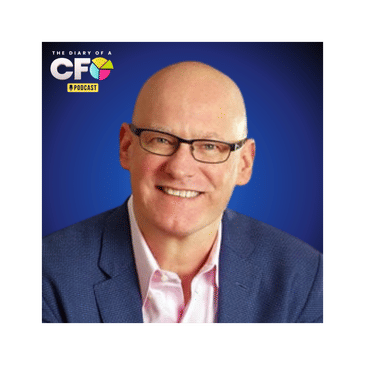
In this episode of The Diary of a CFO, Wassia Kamon sits down with Jack McCullough, founder of the CFO Leadership Council and senior contributor to the Forbes CFO Network, explains what organizations truly value in modern CFOs. Jack has served as CFO across high-growth startups and Fortune 500 companies and is the author of three books, including MBA for Lunch, released this week. Drawing on decades of executive and advisory experience, he breaks down how finance professionals can move beyond technical roles into enterprise leadership.
This episode is for controllers who want to break into the CFO seat, for current CFOs looking to raise their strategic impact, and for finance professionals navigating career transitions. Listeners will walk away with practical guidance on building influence, expanding business perspective, and positioning themselves for senior leadership roles.
Why This Episode Matters
If you are a controller who feels stuck, this episode shows what must change to move into strategic leadership.
If you are already a CFO, it clarifies what boards and CEOs now expect from the role.
If you are navigating a finance career transition, it offers concrete habits that increase long-term executive potential.
Key Takeaways
CREATE framework
Collaboration, resilience, empathy, agility, transparency, and empowerment now matter more than pure accounting skills.Why controllers get stuck
Heavy operational demands crowd out strategic work unless mentorship and cross-functional exposure are intentional.How to build strategic experience
Finance leaders must network beyond finance and gain firsthand insight into sales, marketing, and operations.Career habits that compound
Updating your resume regularly and investing genuinely in relationships builds credibility and long-term influence.
How the CFO Role Has Changed in 30 Years
Thirty years ago, most CFOs followed a narrow and predictable path from public accounting to controllership to the CFO role. Technical accounting excellence was the primary qualification, and leadership expectations were limited.
Today, accounting has become highly specialized, often led by Chief Accounting Officers, while CFOs are expected to focus on strategy, capital allocation, growth, and executive partnership. Modern CFOs must bring broad business insight, collaborative leadership, and the ability to influence across the organization.
Why Controllers Get Stuck Before the CFO Seat
Controller roles are demanding and execution-heavy, leaving little space for strategic thinking. Without exposure to enterprise-level decisions, many controllers struggle to demonstrate readiness for the CFO role.
Breaking this cycle requires intentional mentorship, visibility beyond finance, and active participation in cross-functional initiatives. Exposure to marketing, sales, and operations builds the perspective required to lead at the executive level.
How to Build Strategic Experience Beyond Accounting
Finance professionals aiming for senior leadership must step outside traditional finance boundaries. This includes building relationships across the organization, seeking mentors outside direct reporting lines, and learning how commercial and operational decisions are made.
Strategic credibility grows when finance leaders understand how the business actually runs, not just how it reports results.
Career Habits That Increase Your Odds of Becoming a CFO
Jack emphasizes two simple but powerful habits. First, update your resume every six months to track growth, skills, and accomplishments before opportunities arise. Second, invest genuinely in relationships, because people remember how you make them feel long after they forget technical details.
Influence, trust, and leadership presence often matter more than perfect credentials.
How to Build a Peer Network as a Finance Leader
After being denied entry into the Financial Executives Institute, Jack created the CFO Roundtable, which later evolved into the CFO Leadership Council. Today, it connects more than 2,500 senior finance executives globally.
This story highlights the importance of peer networks in accelerating leadership growth. Strong communities provide mentorship, shared learning, and perspective that no single role or organization can offer.
Resources mentioned
Guest: Jack McCullough, Founder of the CFO Leadership Council, author, and host of Secrets of Rockstar CFOs
Show: Secrets of Rockstar CFOs Podcast
Tools/Terms: CREATE framework (Collaboration, Resilience, Empathy, Agility, Transparency, Empowerment), Chief Accounting Officer, Cross-functional Mentorship
Subscribe to the Finance Executive Track newsletter for actionable insights to become the obvious choice for top finance roles and thrive once you get there
https://the-finance-executive-track.kit.com/signup
Download the free guide on AI prompts every finance leader needs:
https://www.wassiakamon.com/prompts
If you liked this episode, listen next to:
Learn more about Wassia Kamon and The Diary of a CFO at thediaryofacfo.com.
About The Diary of a CFO
The Diary of a CFO is a podcast about modern finance leadership, hosted by award‑winning CFO Wassia Kamon. The show is for current CFOs, emerging finance leaders, FP&A professionals, and founders who work closely with finance teams.
Each episode explores how CFOs and senior finance executives build high‑performing finance and FP&A teams, partner with CEOs, boards, and capital providers (banks, PE/VC, and impact lenders), and navigate growth, regulation, and transformation without burning out.
Full Transcript:
[00:00:00] Welcome back to the Diary of a CFO Podcast, the podcast where finance leaders share the lessons, challenges, and the wins that shaped their careers as well as their organizations. I'm your host, Wassia Kamon, and today I'm super delighted to have with me Jack McCullough. He is the founder of the CFO Leadership Council, a global community of over 2,500 senior financial executives.
[00:00:27] He has served as CFO for multiple organizations from high growth startups to Fortune 500 companies. Jack is the author of three books, including MBA for Lunch, which was just released this week. He is also a senior contributor to the Forbes CFO Network, the host of the Secrets of Rockstar CFO's podcast, and has been featured on the Wall Street Journal, Bloomberg Barron, CNBC, and so many other cool places.
[00:00:55] Welcome to the show, Jack. Wow, you sound, you make me sound a lot better than I actually am with [00:01:00] Thea. Great to be here. Thanks for having me. Of course. Of course. You're such a rockstar. So why don't you tell us about your career journey? What drew you to accounting in the first place, and what's the story behind how you found yourself in your current position?
[00:01:16] When I look back and you and I know each other a little bit and I was kind of like this at 18, and you, you know, you probably wouldn't think, boy, that's a guy that's gonna find a fulfilling career path in accounting. Right? Because I'm an extrovert and a bit of a clown and like people kind of didn't believe me that I was gonna major in accounting, but I took an accounting class in high school.
[00:01:36] I was pretty good at it. Mm-hmm. I liked it because what I liked about accounting is that. It's logical and it makes sense. I can follow it. And if you do, it's like solving a puzzle. Yes. But this puzzle's always solvable. You just have to keep trying to do it. And that actually does fit into my personality a little bit.
[00:01:56] So I studied accounting at Suffolk University, and then I went [00:02:00] into a few younger listeners, the Big eight accounting firms. There were once, eight of them I went for, it was a predecessor to what's now known as KPMG, its name. When I joined was Pete Marick and Mitchell. Then I worked there for three years, became a CPA good work experience, great company.
[00:02:16] It, it really wasn't for me, but, so I ended up working for a client, a company called Jensen Corporation. We were, it's pretty, uh, hot now, but it was considered an odd company in the day 'cause it was artificial intelligence. When people heard ai back then they were thinking Arnold Schwartzenegger and the Terminator movies and they, I'll be back, geez, I was gonna do that for you is better than mine.
[00:02:39] But you know, people thought that it was viewed as like a weird technology, so we never used it. It was called Realtime Expert Systems and then online intelligence solutions that the internet boom. But you know, it's a company I'm quite proud of. We were actually the very first AI company to be profitable.
[00:02:55] Yeah, that was kind of something, and we took the company public. We weren't the first to go public, but [00:03:00] you know, it is a typical IPO type of story. You know, went out at eight, peaked at 30, you know, ended up selling at two. So we, you know, but it was great ride. Really enjoyed it. And then I, uh, I was a controller there.
[00:03:14] I didn't think I would get a CFO job with the credentials I had. Maybe I would've, maybe I wouldn't have. But I decided to go back and get an MBA, which I Okay. Pursued at MIT Sloan. It's one of those things, the MBA made the world perceive me as a lot smarter than I was before I got it. Before I was just, you know, a, a guy who'd been a controller at a company nobody had heard of and a CPA.
[00:03:39] Mm-hmm. And suddenly, you know, I had an an MBA and I was treated like the w the whiz kid. It opened up doors and I became a CFO at a, at a company called Top Layer Networks. And along the way I, um, started a part-time CFO business and started doing the CFO. It was at the time we were calling it the CFO Roundtable.
[00:03:57] Then we actually started launching [00:04:00] chapters, including in your hometown of Atlanta. There were two groups in Atlanta at the time. There may still be for all I know, but called the CFO Roundtable. We were getting confused with them, so we changed the name to the CFO Leadership Council. I launched that in 2006.
[00:04:13] It was kind of a hobby between other things, but it's been my full-time job for a decade. Love do love what I do. Wow. So that's amazing. Wow. And I, I've been a member of the CFO Leadership Council for two years now, and when I joined, I wasn't A CFO, I was a controller and about a year and a half or so later, I became CFO.
[00:04:35] So. On every other podcast, people will hear me talk about the CFO Leadership Council. Maybe I should get an affiliate link or something, because this is so, so good. So when you started it, did you envision it being like more than what it became, like you said it started as a hobby. At which point did, did actually flip for you?
[00:04:55] I was a CFO at the time. I applied to join FEI Financial Executives [00:05:00] Institute, which is a mm-hmm. Great organization. For whatever reason I was denied membership, which yeah, I, and I was ouch. I was a CFO, you know, people joke, I'm the only CFO in the history of the organization that was denied membership.
[00:05:13] But I never really found out why. Probably someone just didn't like me. They didn't like, don't like bald people or something, I don't know. But, uh, there too many bald people in this group goes from here. Hopefully that wasn't the reason. You know, I did see, you know, I'd been, I'd attended the meetings and I liked them and I made some friends.
[00:05:31] So I did see the value of having a peer network. You know, the expression, if you can't beat 'em, join them. I reversed it. I said, if you can't join them, beat 'em. So I started my own. Wow. Yeah, we did. We didn't actually beat them. There's, they're thriving with thriving, so, and you know, we, I'm friends with all of them.
[00:05:46] They're friends with mine of me, so. Wow. So one rejection makes you go high gear. Okay, let me really. Turn this up and build it to where it is now. Yeah. It was like had they not rejected me, the CFO [00:06:00] Leadership Council simply wouldn't ever have existed. I would've had no reason to start a group if I was a member of a well-established, well-respected group.
[00:06:07] Right? FEI is a great organization. If I had any bitterness at the time for, you know, being denied membership, you know, I'm long over it. I don't think I was ever bitter as much as confused. But yeah, you know, that's what forced me to start this organization, which I, I kind of think you, you know, that they maybe.
[00:06:23] Wish I hadn't. I don't know. So mm-hmm. To have them for sure. So that's awesome. So what was that transition like? Like you were in your full-time role and then you started this leadership console. Now you really wanna get it, you really want to have this become a big organization. What was that transition like?
[00:06:41] Like how did you surround yourself or how did, how did it go? Yeah. You know, I did it for two years. I was a CFO at the time. I was a bit of a victim of my own success 'cause I, I had a, a good career as a CFO. I liked it. I liked my job, I liked my company. I liked the work I was doing and, you know, I was getting reasonably well [00:07:00] paid.
[00:07:00] So this was taking up a lot of my time. So after the second year, I told people that I'm not gonna continue it. And it didn't really, there was no entity that legally existed. It was just, I said the CFO round table. I paid for the food out of my own checks. I asked people to contribute 25 bucks to come, that type of thing.
[00:07:19] But they asked me not to do it, and I just said, look, it's, it's too much time. You're, you're welcome to do it if you, if you think it's that easy. But they said, why don't you start charging dues and hire somebody to do the administrative stuff? That way you can do the stuff that you like doing. Mm-hmm. And won't be that much of a burden.
[00:07:34] So I ended up doing that. I got an advisory board. I posted a job on Craigslist. Do you remember Craigslist? Yes. It, it may still be around. I don't know. But yeah, 15 bucks. It was the best 15 bucks I ever spent, and I hired a woman named Becky Blacker. I wanted to hire a mom because I had a good job that it was probably 10 to 15 hours a week, but you only had to leave the house four hours a month.[00:08:00]
[00:08:00] So I thought this was a good job for a stay at home mom, and this was like 2008 today. That's not a rare thing, but mm-hmm. Back then, you know, there weren't a co a lot of companies that were looking to hire Yes. Parents to work 10 hours a week, five away, and she's making pretty good money. 'cause I just said, I, I not doing this.
[00:08:21] For the money, but let's charge dues. We even got in a, a sponsor or two and I'll make enough to cover costs and you, you know, you, you can keep whatever they pay and you know, and it ended up like it was like 60 grand a year. So it was nice. Pretty good money for a part-time job and Yes. Yeah. So that worked out well.
[00:08:38] And then she wanted to take on more hours, so she launched the chapters in New York and Philadelphia. And, you know, they, uh, they all flourished a little bit. And then, uh, we just decided, uh, I would, uh, quit my job and give this a go. Wow. Impressive. Yeah, because what I like about the firm is first the questions that I see every day.
[00:08:59] I [00:09:00] was questions that I wouldn't even think about, right? So it allows me to stretch my thinking. I think I feel like I'm learning every day, even though there's no chapter meetings every day. So how did that chat or forum started? It's actually just a simple Google groups, but I just wanted a way for the members who weren't in the same cities to connect.
[00:09:22] Okay. I think at the time I started it, we may have had 12 cities at that 12 chapters, and it's eight to 12, somewhere in there. And they were like fiefdoms, you know? And I was like, these people would be friends and support each other and grow with each other. If there was a mechanism they could get to know each other.
[00:09:43] 'cause you know, they, they weren't gonna fly to Boston to attend meetings, right? Mm-hmm. They happen to be in Boston during a meeting. They might, or, you know, Bostonian's not gonna fly to Chicago to go to a meeting. That was kind of low cost, potentially big reward if it worked. And you know, now it's our most popular member benefit.
[00:09:59] And [00:10:00] you've been to like some of our conferences, right? And the, uh, publication CFO Brew, when they covered the conference, they said it set the world record for hugs at a financial event. We are not just a group of people that goes to the same events. It's actually a community. We like each other. When someone's looking for a job, people help them out.
[00:10:19] Mm-hmm. People read each other's resumes, they give each other leads, that sort of thing. And you know, that wouldn't have happened. Maybe the same number of people wouldn't have, would be coming to the conference. Probably not, but it wouldn't have happened without CFO Connect. 'cause they sort of kind of got to know each other a little bit over CFO connects like.
[00:10:38] Oh, well she is here. She helped me out with that problem three months ago. I gotta go say hi to her. So, yes. Yes. That's amazing. And so now that you, the, the, the chapters, the everything is booming, at what point did you starting writing books? Because, like, CFO then getting busy. I love your story because people told me you, you became a CFO and you launched a [00:11:00] podcast for COY.
[00:11:01] So I'm so grateful to be talking to somebody similar. At which point did you start work? Uh, writing the books? I actually had a presentation. It was getting good reviews. I was, it probably gave it, you know, 15 times or variations of it at the times I was calling it Habits of Highly Successful CFOs and people said, you know, it's good that you're public speaking, but you know, you can only.
[00:11:25] As a public speaker, you know, it's just not like I'm doing the Bruce Springsteen thing, you know, 60,000 people, but why don't you write a book about it? That way you can reach a broader audience and you know, you, you sort of have the knowledge. It's just a matter of finding an editor to help you do it, and a designer.
[00:11:41] Mm-hmm. I didn't feel like I could keep that name with the Covey people. They don't have a legal right to the name, but you know, clearly. Mm-hmm. I took it from Habits of Highly Effective People. Right. We sort of brainstorm. It's like what are your passions? And you know, one of them is rock and roll and I'm a headbanger.
[00:11:58] So they [00:12:00] said, what about secrets of rockstar CFOs? It sort of gives the same vibe, but reflects your own personality, so that that became a book. Then I wrote another one on the psychopathic CEO that was inspired. We had a FBI agent speak at one of our events. Her expertise was corporate psychopathy. Oh, wow.
[00:12:21] Yeah. I had worked for a guy that, I'll be nice. I'll assume that this is a PG format, so I won't, yes. But you know, I, I just thought he was obnoxious. I thought he was a lot worse than obnoxious, but I'll be polite. When she gave her a presentation, I had like one of those, you know, you could see the little light bulb go off, off of my head.
[00:12:37] It's like, oh my God. He was, he wasn't just obnoxious, he was a psychopath. Then she said, by a show of hands, how many people feel based upon the description, they may have worked for psychopath at some point in their careers. More than half the room, including me. I'm like, oh my gosh. But you know, I, and I kept in touch with her just 'cause I found it fascinating.
[00:12:56] Mm-hmm. And during COVID, she encouraged me to write a book. She's still with the [00:13:00] bureau. She's like, I can't really write a book when I'm with the Bureau, but clearly have an interest in it. You've got a track record and you've got an audience, so I'll introduce you to the right people. You know, it was probably a, probably a pretty good book.
[00:13:12] So. Oh wow. And then from then your third book, MBA for lunch. What was the story behind that one? Yeah, that was one. I got my MBA when I was in my twenties. I was not a CFO. I didn't have kids. I was married, but I don't wanna say it was easy to do 'cause I don't, I don't want to suggest that, but it's hard for somebody.
[00:13:32] It would be hard, and I don't know if your family situation, but if you have kids and you're a CFO, you have two kids. You could get a, an M, BA, but man, that would be at most the third most important thing in your life. And probably more like it took me seventh, right? Yeah. It took me eight years to do my MBA.
[00:13:50] Yeah. But you know, there was, um, two watershed moments in my mind. Anyway. One was six years ago, but Spencer Stewart, actually, I [00:14:00] don't think they did a survey. I just think they counted amongst the Fortune 500, and it was the first time that there were more MBAs than CPAs amongst the Fortune 500 CFOs, actually Fortune 5,000.
[00:14:12] Since I'm referencing them, I, all of them, the courtesy of getting it right, don't I? But, but that was like kinda weird and, you know, while it, it, you know, it's not like it's six to one or something like that. That gap's only widened a little bit, so, so the MBA apparently is the better credential for the CFO.
[00:14:26] Mm-hmm. And then I was actually presenting to the portfolio companies of a very well regarded private equity firm. And one of the people, one of the investors said, and there were like 40 CFOs, one of the investors said they wouldn't hire a CPA to be the CFO. Wow. Or they didn't value the credential. They said CPAs make great controllers.
[00:14:49] They make great chief accounting officers. Great respect for them. I don't value them as a CFO unless there's something else. About them, they would [00:15:00] totally discount the credential. I don't necessarily agree with that as a former CPA, you know, I, I learned a lot during that process that mm-hmm. That does help CFOs.
[00:15:09] But the point was they're looking for someone a little bit, you know, that they value strategic and they did say yes would, would take a CPA if they also had an MBA. But I just realized two things. One, you, you know, there are CFOs in their forties. Two young kids, whatever it might be. I don't mean to typecast CFOs, but mm-hmm.
[00:15:27] They're not gonna go back and get a full-time CPA and if they get a part-time, it's gonna be, you know, multiple years like you, but they need to have this knowledge. Mm-hmm. So what if I could look at what's being taught in modern MBA programs and distill it into something that you could read in an hour?
[00:15:43] I recommend people read it once or twice. It, it's probably a little bit more than an hour, but then just, you know, keep it as a reference guide. Because there are things that you, you know, I, I feel stupid, like the first chapters on Financial Concepts. I can't tell my readers to skip chapter one, but, you know, CFOs are reading this and I'm [00:16:00] explaining what EBITDA is.
[00:16:01] They're gonna be what? Why, why are you telling me the net present value formula? Don't you think? I know that I'm A CFO, but, uh, but you know, I couldn't do an MBA book and not include it and not have that. Yes. But if you're a CFO, skip chapter one. But that was kind of the, you know, behind it. I just wanted to give them a tool that would.
[00:16:18] I'm not remotely saying it can replace an MBA, but it gives you ways to solve problems and approach things that, you know, maybe you wouldn't have absent the book. So, wow. Thank you for the book. And one thing that stuck with me is the, the part where you said they, they already knew that they wouldn't hire a CPA for the role of CF.
[00:16:39] When you look at that, 'cause I saw the same studies for the longest time, CPAs were the natural CFOs. What do you think created that change in perception over time? Yeah, it's interesting 'cause when I became A CFO, the world just changed so much. My first CFO job was almost, gosh, suddenly made myself feel old.
[00:16:59] It was almost 30 years [00:17:00] ago, but we all had the same resume, bluntly, you know, it was, I worked in the tech space but was big eight accounting firm. Accounting manager controller, CFO. Mm. That was kind of bad. The other thing, it sort of a set, you know, is like 85% of us were white men and that was just, that was the reality back then.
[00:17:20] The business world has changed and the expectations of CFOs have changed and now that the job, it used to be I probably got the CFO job, I did have the MBA, and that absolutely helped. Mm-hmm. But if I weren't a good controller. I wouldn't have gotten the CFO job despite the MBA at the time. Maybe today, you know that.
[00:17:40] In fact, certainly today, you don't need to be a controller to get a CFO job. There are a lot of paths. Mm-hmm. The business world's gotten more complex and the CFO role has grown along with it. You know, um, people are looking for. Leadership qualities. They're looking for strategic thinkers. They're looking for people who are collaborative, [00:18:00] who understand broader business issues, so, and who are good communicators.
[00:18:04] I know plenty of CPAs who have all of those things, but they don't want people to attack the CFO job through a controller's lens or through a CPA's lens. They, that's part of it. That's great. You know, but there's the position chief accounting officer. That didn't exist at the start of my career that I know of.
[00:18:23] I, I never met a chief accounting officer until about 2015. Hmm. But accounting has become so specialized. If the business is complex, there's no way A CFO can be an accounting expert. When I graduated college, it was FAS B 86. Beginning of time to 1987, there were 86 of them. Now there's, you know, hundreds.
[00:18:43] Yeah. Wow. So, yeah. You know, it's just a different world and different expectations. Mm-hmm. In fact, I did, I, I can't call it a poll, it wasn't statistically valid, but I reached out to CFO customers. Mm-hmm. And by that I mean CEOs, [00:19:00] investors, board members, and other members of the C-Suite. What do you value in A CFO?
[00:19:07] It actually led itself to a nice little acronym, but what was interesting, almost nobody said finance or accounting skills and you know, maybe wow, the stakes, but it lent itself to an acronym. It's pretty easy to remember. So folks write this down, but it's a pencil and paper. But, um, create, and these were the sort of the formula for a good CFO.
[00:19:28] It's collaboration, resiliency, empathy. A is agility, uh, transparency and empowerment. And, you know, they didn't say empowerment for example, they said, you know, a good leader of their team, someone who can develop a world class finance team, you know, agility, the ability to react quickly to things. So I was able to take them.
[00:19:49] And like I said, there very little, a few people mentioned digital mastery. 'cause that relationship with the CIO and the all digital CFO is a myth, but. You can't be a good [00:20:00] CFO without some digital expertise. Right. But yes, you need a lot of skills. It's, it's a very complex job today. So whereas when, when I was in, it was just best accountant.
[00:20:09] Yes, yes. So what would you say controllers now, 'cause I came also from a controllership background, but I had a chance to work full-time in FPNA for a couple years, which helped me expand into, you know, business partnering, modeling, understanding scenario, becoming more strategic. But I feel the pain for a lot of controllers when they're told you're not strategic enough.
[00:20:32] And so that next step is not guarantee, if I can say. What would be your advice to them? First, I don't know that they're not strategic enough as much as they're in a, in a role that doesn't allow them to be strategic enough. Yes. 'cause like, like people who aren't controllers don't respect and appreciate how hard that job is and to lead a team and you know, if it's a complex business to.
[00:20:57] To produce accurate and timely financial [00:21:00] statements to make the trains run on time. That's so hard. I don't know a good CFO, you know, at a bigger company anyway, who hasn't said. They're, you know, they're at a loss without a good controller, they could not be a successful CFO if they didn't have somebody to make the trains run on time.
[00:21:17] I don't think that it's controllers who aren't strategic. I just think the role is demanding. And, you know, if you're, if you're faced with a decision to, you know, spend some time learning some strategic stuff, you know, partnering with the marketing group, or you're a public company and the books have to be closed by the fifth day of the following month, following at the end of the quarter.
[00:21:37] What you gonna do, right? It's not that, but there are ways you can expose yourself to some things. You know, find A CFO who wants to be a good mentor to you, your boss. Also, I recommend, and this is one of the things I love about you, is you and I have taken this commitment seriously. I, I think once you get to the CFO role, you owe it to be a mentor to the next generation of leaders, and I know that you take that very [00:22:00] seriously.
[00:22:00] Find A CFO or somebody who's a mentor that you don't work for. Find a CFO in a different but similar company. The other thing is, um, when I wrote my first book, one of the women I interviewed, she was a controller and her mentor was a VP of sales. You know, she was like 29, 30 at the time and kind of savvy, you know, I, we were both in our fifties when I interviewed her, but you know, if looking back I'm like, that was kind of, you know, you're a little bit ahead of the curve, but what was the thinking?
[00:22:29] And she said, you know, not in an arrogant way, but she said, I actually know. I knew the debits and credits better than my bosses did. She worked, she was a divisional controller. I won't say the company, but a hundred percent you've heard of it. You know, so they had a lot of divisions. She was a divisional controller and she aspired to be a divisional CFO.
[00:22:48] And you know, today she's A-C-F-O-D-C-F-O, but, uh, she said I wasn't gonna, you know, get, getting better at debits and credits and even some finance. That wasn't gonna get me the job, and [00:23:00] it wasn't gonna make me better in the job when I got it. So she thought if she could understand the business from the perspective of a customer, you know, why the customer is interested in this company, you know, what it means to be a customer, what we can do to support sales growth, I thought that would make me a better CFO when the time came.
[00:23:18] And, you know, again, I, I don't mean to be condescending to people with 30, but. That was pretty wise for 30-year-old, right? Yes, absolutely. Es especially back in, you know, say, you know, 1995, whenever this was, I'm not exactly sure, but there's a reason she's just remains as successful as a CFO as she's today, so, oh, yeah.
[00:23:39] Oh yeah. Thank you. That's so good. And, and 'cause I, I agree. I, I think for me, what helped me at some point was expanding my network beyond just people in finance and accounting. Because you do feel better. But then I, I started reaching out to people in supply chain, in marketing and that really helped stretch my thinking overall and spending more time with programs and sales.[00:24:00]
[00:24:00] Thank you so much for that advice. Thank you so much. Yeah, I'm glad to 'cause, like, you know, network with financial people, you'll just become a better controller. That's great. Controller. You can make good money as a controller. It's a, it's an important job. You know, there are some people, they, they want to be a controller and that's fantastic, but if you aspire to be an executive leader.
[00:24:19] You know, you do need to broaden that skillset and that network, so. So what would you say beyond just reaching out to people in other functions in that can say, what else can be done? Because I realized, especially when I was a controller, you only have so much time, so much spare time. What would you say are some of the ways you can elevate what you do or find ways to still connect with others?
[00:24:42] It's great if your boss feels like he or she has a stake in your career. So they're vested in your success. And there was another CFO that I interviewed for the book, but she's more of a smaller company, CFO. She's worked for a series of venture backed startups in the Boston area. And she told me at the [00:25:00] time she had like, there were 12 controllers who had worked for her during her career as a CFO.
[00:25:07] She boasted about the controllers the way Harvard, uh, boasted about its alumni. 'cause I think out of the 12, like nine of them were CFOs in the next job. She exposed them to things. She's like, she's upfront, look, I don't think you're gonna work here much more than three or four years. And if you do, maybe I failed you.
[00:25:28] Wow, your next job to be a CFO. And I brags not the word, but you know, she's, she, she takes a lot of pride and she still remains a mentor to them, but find a boss like that. She couldn't let the controller present at board meetings, but she did let the controller sit in, uh, with a little bit on the presentation that did two things for the controller.
[00:25:49] One, it exposed them to the dynamic of board meetings, how you mm-hmm. The thing is, you know, she, knowing her, she was probably pretty effusive in her praise and she's like, Hey, I just want to [00:26:00] introduce you to my controller. He's great. He helped me prepare all the package. This is the CFO in ex portfolio company.
[00:26:07] You know, she was helping him build her network. Some would argue to her own detriment, but she felt like I'm a good leader. I have a responsibility to help my team maximize their potential, if that means somewhere else. So be it. I can get another controller and I think I offer good package to recruit controllers and she's never had trouble finding a controller, even though a lot of other CFOs do.
[00:26:30] So, oh yeah. I mean, interviewing, I can only imagine interviewing for a person like that. You want to work for them, right? Because you're interviewing for the job, but really interviewing for the boss. Because they have so much say, uh, in the direction of a career. So that's inspiring. Can't wait to get your book.
[00:26:48] Well that one's in Secrets of Rockstar CFOs actually. Okay, so I have to catch up. Well, you know, my wife teases me and a lot of people tease me. 'cause if you've seen the book, it's. Yes. With a [00:27:00] leather jacket. Yeah. Yeah. It's 5,000 words, you know, it's, um, my wife says, it's not a book, it's a pamphlet. She's mean.
[00:27:07] Yeah. The, the latest one. She was telling her mother, oh, Jack's now written three books. One of them was good. Come on. Really. She didn't like my latest, so, uh, oh. Well, she liked the psychopathic CEO book, but which, okay. Yeah. I, I think it's the best of the three books. Not to, not to knock the one that I, I guess I'm supposed to be, uh, promoting.
[00:27:31] But, uh, you know, it's, it's a good solid book. But, you know, she is amazing. She, I can tell she's your right match. Oh yeah. Well, you know, I gave them, the first one came out. Again, it's pretty small. I gave it to like my sisters at Christmas. I mean, it wasn't the gift. I just was singing them at Christmas, so I gave them a copy.
[00:27:48] Mm-hmm. But I get back home, I get a picture from my sister. It's a picture of my book next to Atlas. Shrugged you, you know, which is huge. And it's like, which do you think was the greater [00:28:00] literary accomplishment? Come on. Really, really? You can't let me enjoy that. I'm a published author, huh. So, yes. Yes.
[00:28:09] Tough love. I'm sure they're so proud of you though, because Yeah, they are. Yes. So you've done so much, I mean, not only in the companies that you led, but also helping the next generation of leaders such as myself. So thank you so, so much. I do have two more questions for you. Okay. One, what's the best career advice you've ever received?
[00:28:29] It's an, I mean, a lot of people say, you know, follow your passion. I got that advice young. I was an accountant. You know that that's a little hard to do. You know, it's always, it's like find companies that you wanna work for that are interesting, do good things. But a little bit on the more practical side.
[00:28:48] Somebody told me, update your resume every three or every six months, even if you're not looking for a job because, and do it right. Don't just do it in [00:29:00] prefrontal, you know, spend a little bit of time doing it. And the reason is. If you've worked six months and you can't add an accomplishment or a skill that you developed or something like that to the resume, you're stagnating.
[00:29:12] Wow. So it's like, and this was my boss by the way. You know, I worked for him. He, so I, I do know why to leave. I don't want you to take it that way. But you know, if you can't think of something you've learned in the last six months. Let's think about that means, you know, because you're, you're growing, it's a fast-paced world.
[00:29:29] It's always changing. You need to keep up. You don't want to be like outdated by the time you're 35 years old. Right. You know, you mm-hmm. I'm gonna work 30 years after that. So I thought that was really, really terrific advice. So, absolutely. Wow. Will do. But it's so true because you, the years go by so quickly.
[00:29:48] The other day, my daughter, she's 11, she can say, oh mommy, I'm almost your height. I'm like, gosh, 11 years just went by. Yeah. And I can see how this, if you don't do it regularly, time will just pass [00:30:00] by and you've been stagnant and you don't even know it. Yeah. I turned 61 next month and I don't know how that's possible.
[00:30:08] You know, when I, when I was 30. 60 just seems so old. Mm-hmm. And now 30 seems so young. Isn't that funny? Yeah. I like to say that I'm 35 years old. I like that. So, yeah. So my little brother's like, cia, you do know. I'm like turning 36. I'm like, I don't care. I'm gonna be 35 for a long time. Long, long time. So, yeah.
[00:30:30] So good. My last question is, what's your favorite thing to do outside work? Well, you know, it's, it's, I, I'm the father, I think, you know, of two autistic adult sons. They take up my time. They don't have a lot of independence, so, and it's challenging. I mean, you know, being, being the father to two children like that, it's the hardest thing I've ever done.
[00:30:52] But I, you know, it's also, you know, the greatest joy just being with them is, mm-hmm. Probably it, if you're thinking more along the [00:31:00] lines of a hobby, I've slowed down a little bit, but I'm a bit of a workout warrior. I work out, you know, pretty intensely sometimes. Right now I'm in a period of not so intense.
[00:31:09] That's kind of the me time, right? Let's, let's go to the gym. I've recently tried to get current with modern music. Okay. My knowledge of pop music stopped sometime around U2. You know, I, I always ask, well, I know you too. Yeah. The 1987, that was like the, when people say, what's your favorite new band? I say, you too.
[00:31:34] Yeah. They're older than I am, but a couple of years ago, and my nephews and nieces teased me for my lack of knowledge of pop culture. So my niece asked what I thought of Taylor Swift dating Travis Kelsey, and I said, Travis Kelsey's gay. And they're like, what? I said, Taylor Swift, the country singer. I thought Taylor Swift was a guy and.
[00:31:59] Ouch. [00:32:00] They thought I was kidding, but I wasn't. So I just were like, boy, I'm really, I'm a, I'm worse than my parents. Were at the same age, you know? Uh, you know, my parents had some pretty good stuff. When, when, when, you know, when my mother and father were like 30, this little band. Mm-hmm. Liverpool, England, known as The Beatles came out.
[00:32:15] Well, they had some great music in their thirties and forties. I mean, they're more into Guy Lobato and, and Crosby. I'm like, I know less about modern music than my parents knew about my music. Mm-hmm. So I've been, uh, I've been listening. Ever heard of the Pretty Reckless, okay. Yeah, I've been listening to them and some other bands just trying to get caught up.
[00:32:33] They, um, pretty reckless. They're touring with a CDC right now. So, uh, A CDC is my favorite band. And so seeing the two of them together in conscious is gonna be pretty cool. So, oh, good for you. Good for you. Now I'm curious 'cause you know, getting better at working out is on my, I've been on my goal for the past, I don't know how many years.
[00:32:52] So what is less intense workout for you? Because I saw your starter pack on LinkedIn where you are like super big. The AI [00:33:00] generated a picture. What I think action figure. It was an action figure you shared on LinkedIn that was all muscled up. So I wonder now for you, what is less intense workout? What does it look like for you?
[00:33:11] Yeah, for the record, uh, since this is an audio thing, I am not built like Mr. America. I, I only wish, but you know, my, my core workouts, I just don't like cardio. I will work in some low impact cardio 'cause I know to do it. But generally I'm a yoga and weightlifting guy. Right now I'm, I'm doing, I, there's a program called Body Beast.
[00:33:34] It's a bodybuilding program. I am not, I'm not doing the diet of it, but it's, it's pretty intense. It's, it's basically nothing but late weightlifting, turning 60. I wanted to make sure that, you know, I was aging well. I found my old Body beast workouts from when I did the program when I was in my late forties, and I said, okay, my goal is I want to be able to outperform the 48-year-old version of myself, and [00:34:00] other than my legs, I can, I can, I'm.
[00:34:03] My chest down shoulders, I'm stronger than I was at 48. No. Nowhere near as strong as I in the legs, unfortunately. So Oh wow. That's impressive. But I'm not doing it like seven days a week, you know? I'm doing it. Mm-hmm. Four days and then I stretch the others. So, good for you. Good for you. Wow. Wow. Thank you so, so much.
[00:34:22] Any last words you wanna say for our listeners and the next generation of finance leaders? Yeah. Well, you know, I, I, you asked me the, the best advice that I got and mm-hmm. Had you asked me for two what I'd like to share with people. Mm-hmm. Really simple advice and, you know, there's a good chance your parents taught it, but just be nice to everybody you meet.
[00:34:44] You should just be nice anyway, right? It's the right thing to do, but it actually pays off in your career. If your name comes up in conversation as the potential CFO or something like that, people are not necessarily gonna going to remember whether or not you were [00:35:00] good at accounting or finance or anything like that.
[00:35:02] They're gonna remember that you were a nice person, that you were a good leader, that you were a good mentor. That you were a good business partner, that you were thoughtful and that you showed genuine interest in them. And that's not the reason to be nice, but it's a really nice career benefit of being nice.
[00:35:18] You know, it's, uh, nice guys. Don't finish last. Nice guys. Finish first. And that's it for today's episode of The Diary of. CFO. Thank you so much for tuning in. If you enjoyed the show, don't forget to like, review, subscribe, and share with others. Our website is the diary of a cfo.com. That's where you can find all the episodes, access all the guest profiles, see their bios and the social media links.
[00:35:45] It is also the place where you can apply to be a guest on the podcast. And have information about how you can sponsor the show. As always, if there is any topic you would like me to cover in the future, just email me at ask at the diary of a [00:36:00] cfo.com. Again, the email is ask at the diary of a cfo.com. See you soon.