
Executive Summary
Many CFOs are hired to be strategic, but their finance function remains transactional.
This article explains the “evolution gap” between a strategic CFO role and finance roles, processes, and systems still built for reporting and compliance.
It outlines how accounting, FP&A, treasury, and tax can shift toward decision support, and how workflows and platforms must change with them.
You will learn practical first steps to redesign your finance stack so the whole function supports a strategic CFO, not just the job description.
When the CFO Role Evolves but the Finance Function Does Not
In my first 90 days as a CFO, I saw a big gap between what people expected from me and what my finance team was actually designed to do.
Most conversations with the CEO, my peers, and the board were about strategy, growth, and risk.
Most of the work inside finance was about transactions, reconciliations, reporting, and compliance.
The CFO seat had clearly changed. The finance function had not (i.e. roles, skills, titles, org chart, systems, processes...).
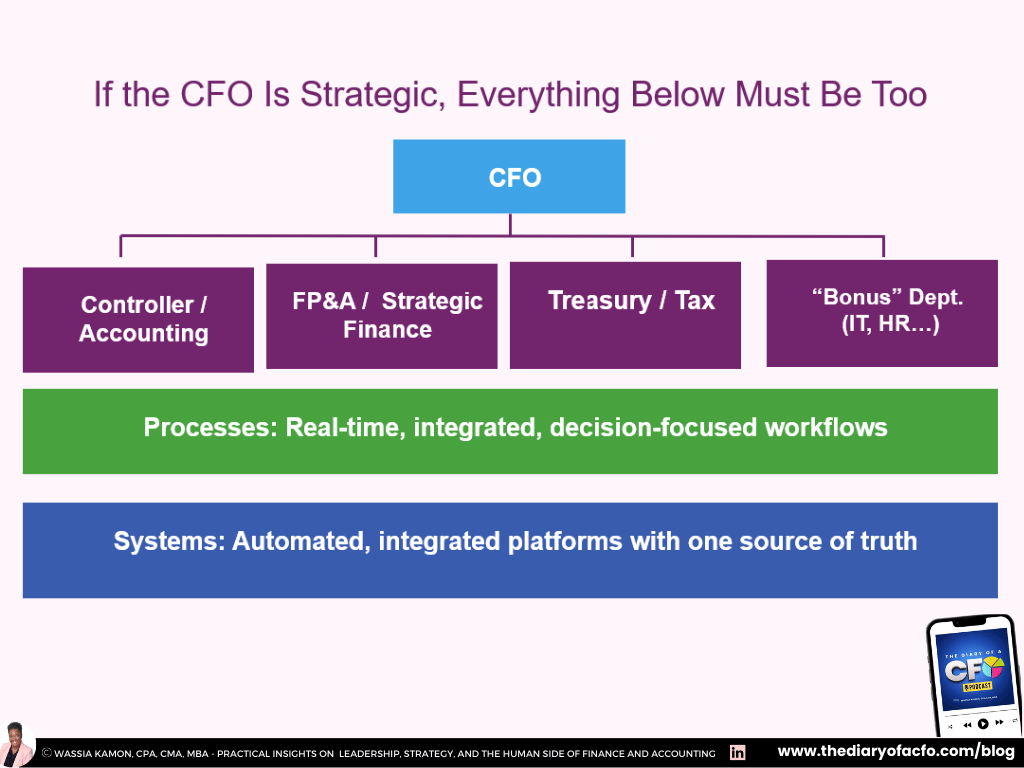
If the CFO is expected to be strategic, the rest of finance has to move in that direction too.
That is not just a role problem. It is also a process problem and a systems problem.
Until we update roles, workflows, and platforms, we keep asking one person to operate in the future while the rest of finance runs on a model built for the past.
If you want the longer backstory of how I ended up in the seat, I share more of that journey in my 15‑year path from staff accountant to CFO on The Diary of a CFO.
What happens when the CFO role evolves but the finance function stays transactional
When people say “we want a strategic CFO,” they usually mean someone who:
Helps shape strategy and capital allocation
Tells the story of performance and risk to the board and investors
Looks ahead, not just back
Leads or supports transformation across the business
But the teams around that CFO often work in a much narrower frame:
Accounting and controllership are buried in manual close activities
FP&A spends most of its time fixing or rebuilding spreadsheets
Treasury and tax are measured almost entirely on compliance and reporting
Processes are built around deadlines, not decisions
Systems are disconnected, so people spend hours just pulling and cleaning data
The result is a strategic role sitting on top of a tactical machine.
This is not about motivation or talent. It is about design.
Why so many modern CFOs feel stretched and their finance teams feel stuck
When the CFO role moves faster than the finance function, everyone feels it.
CFOs feel pulled in every direction. They are expected to:
Run board‑level conversations
Own the numbers
Lead change
Fix broken processes
Manage risk
At the same time, finance teams feel like they are always behind, always in fire‑drill mode, and rarely invited into the strategic discussion.
In my conversation with Tom Hood on The Diary of a CFO podcast, he described the modern CFO as the “co‑pilot with the CEO on the whole organization’s strategy.”
That description is exciting, but it also explains why so many CFOs feel stretched when their finance function is still built for a rear‑view‑mirror world.
You can listen to that discussion in “Why Every CFO Feels Stretched and What to Do About It” if you want to go deeper on this tension.
How every finance function can support a strategic CFO
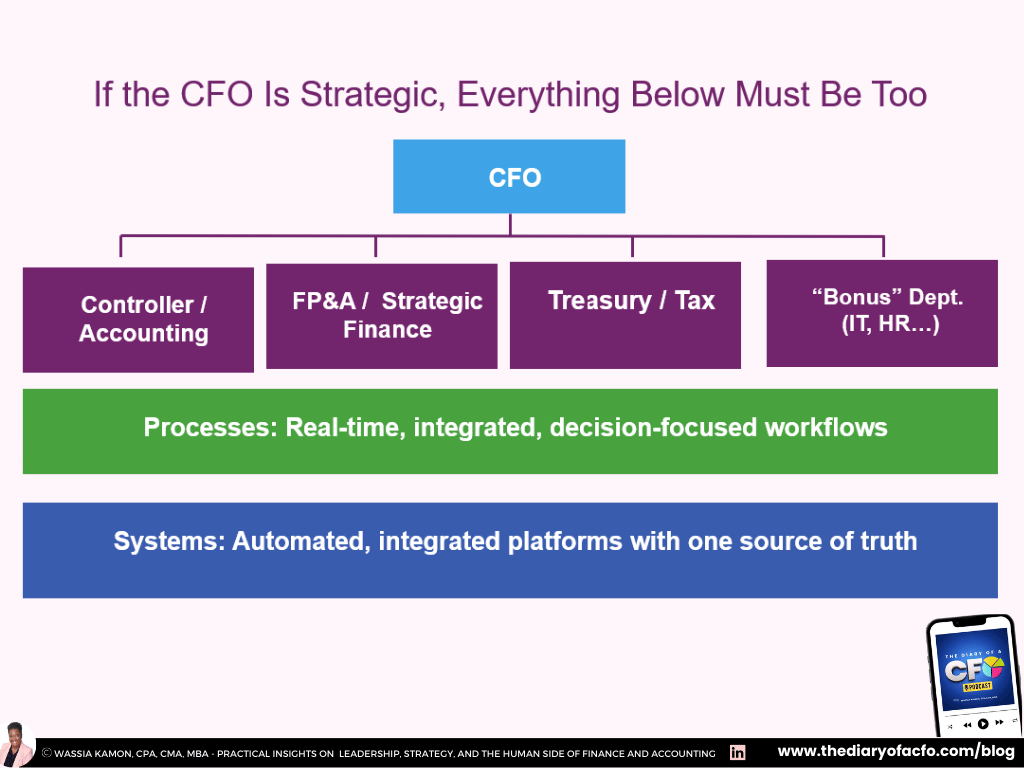
If the CFO is expected to be forward‑looking and strategic, each part of finance has to contribute more than clean transactions. The question for every function becomes: “What decisions do we help the CFO make better and faster?”
Accounts payable: from “paying bills” to shaping vendor strategy
Accounts payable sees vendor behavior and spending patterns before anyone else.
A more strategic AP function:
Spots concentration risk with certain suppliers and surfaces options.
Highlights early‑payment opportunities or term changes that improve cash.
Flags unusual spend trends that may signal waste or new needs.
Instead of only “we processed this many invoices,” AP can help the CFO talk credibly about working capital, vendor risk, and cost discipline.
Accounts receivable: from “collecting cash” to anticipating risk
Accounts receivable has a front‑row seat to customer health.
A more strategic AR function:
Groups customers by payment behavior, not only by region or size.
Raises the alarm when a historically reliable segment starts to slow payments.
Connects disputes or delays back to product, pricing, or service issues.
That gives the CFO and commercial leaders an early warning system, not just a past‑due report.
Staff and GL accountants: from “recording” to improving the engine
The people closest to journal entries and reconciliations know where the process is fragile.
A more strategic GL team:
Identifies recurring manual entries that point to a system or design gap.
Tracks where errors and adjustments cluster, and why.
Recommends small changes that reduce noise and speed up the close.
Their insight lets the CFO improve the quality of the numbers at the source, which matters far more than adding one more slide to a deck.
Controllers: from “policing” to performance insight
Controllers often carry the unofficial title of “police of the numbers.”
A more strategic controller:
Looks for unexpected movements in key metrics and brings a short list of hypotheses.
Connects close results to business drivers instead of just walking through line items.
Partners with FP&A to make sure the story in the forecast matches what is actually happening.
That turns the close into a learning cycle the CFO can use, not just a compliance milestone.
FP&A and strategic finance: from report factory to decision partner
FP&A is usually where people expect “strategy” to sit, but the team often spends most of its time rebuilding files.
A more strategic FP&A function:
Sets up recurring views that leadership actually uses to make trade‑offs.
Focuses analysis on questions like “Should we keep funding this?” rather than “What happened last month?”
Works with operating leaders to simulate scenarios and consequences before decisions are locked in.
This is where the CFO can spend less time fixing the forecast and more time deciding what to do with it.
Tax and compliance: from “deadline management” to risk and value
Tax and compliance can feel like pure cost centers.
A more strategic approach:
Monitors changes in rules that could materially affect the business model.
Looks for patterns in where penalties, late filings, or close calls happen and addresses root causes.
Brings forward ideas around credits, structures, or jurisdictions that support long‑term strategy, not just this year’s return.
The CFO then has a clearer view of both risk and optionality, instead of simply hearing “we filed on time.”
Payroll: from “processing pay” to workforce insight
Payroll touches both people and money every cycle.
A more strategic payroll function:
Highlights where overtime, temp use, or contractor reliance is persistent.
Translates that into simple views of “hidden headcount” and cost.
Surfaces mismatches between staffing levels and business priorities.
That helps the CFO and HR make better choices about hiring, restructuring, or redeploying people.
Treasury: from “cash admin” to capital strategy
Treasury is often seen as the place that moves money around.
A more strategic treasury function:
Brings a clear view of cash runway under different scenarios.
Evaluates banking relationships and fee structures against actual use.
Quantifies the cost or benefit of different funding and investment choices.
This lets the CFO talk to the CEO and board about “how much risk we can afford to take” in concrete terms.
If you want a visual, I first shared a condensed version of this idea, focused on accounting roles, in this LinkedIn post with the “How Every Accounting Role Supports a Strategic CFO” graphic. The article you are reading is the deeper dive behind that post.
How to close the gap with the Strategic Function Alignment Model™
Once you see the evolution gap between a strategic CFO role and a transactional finance function, the next question is: what do we change first?
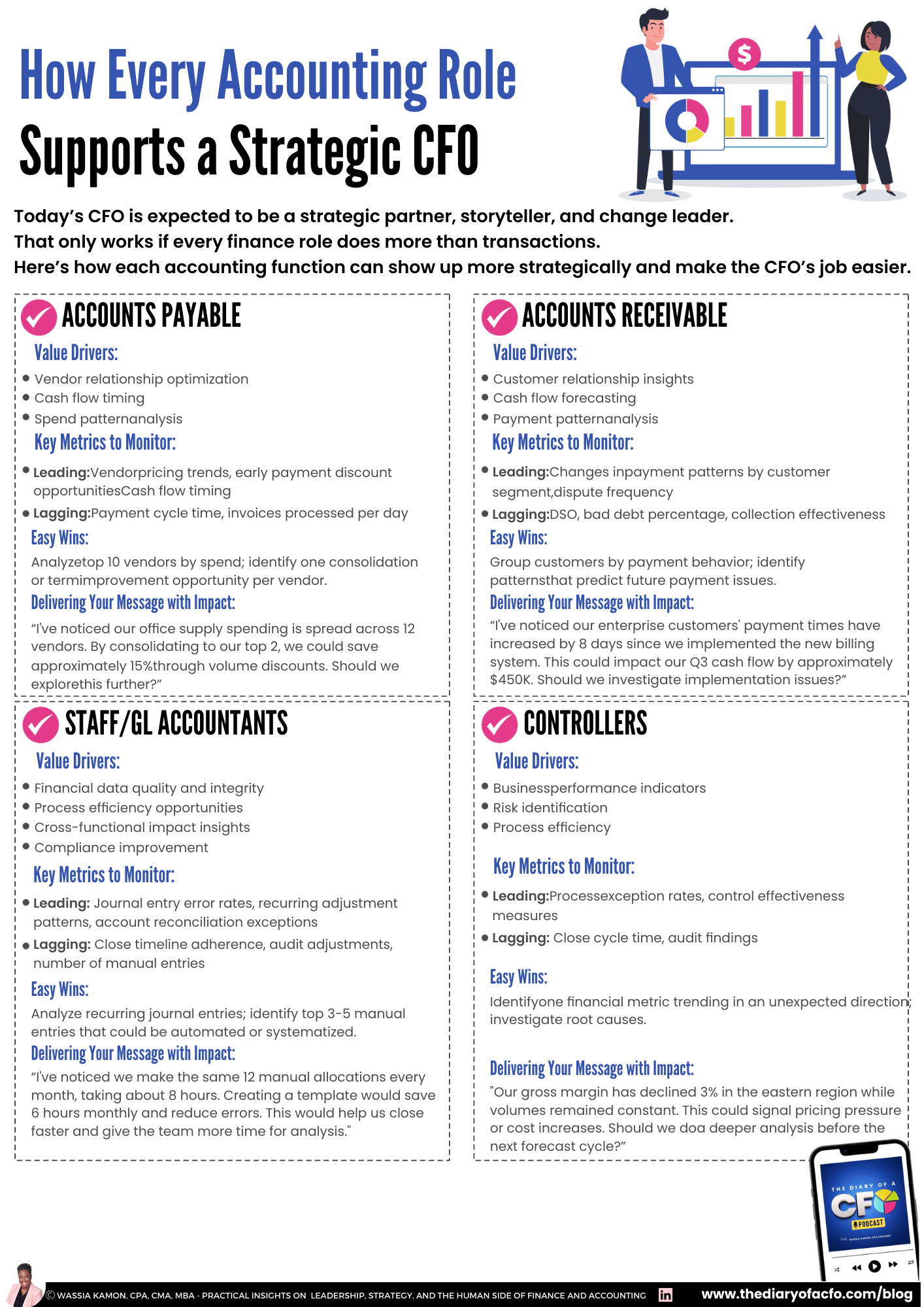
In practice, closing the gap comes down to aligning three layers of the finance function: people, processes, and systems.
I call this the Strategic Function Alignment Model™, which focuses on these three layers and how to optimize them for stakeholder impact, not just reporting.
Step 1: People
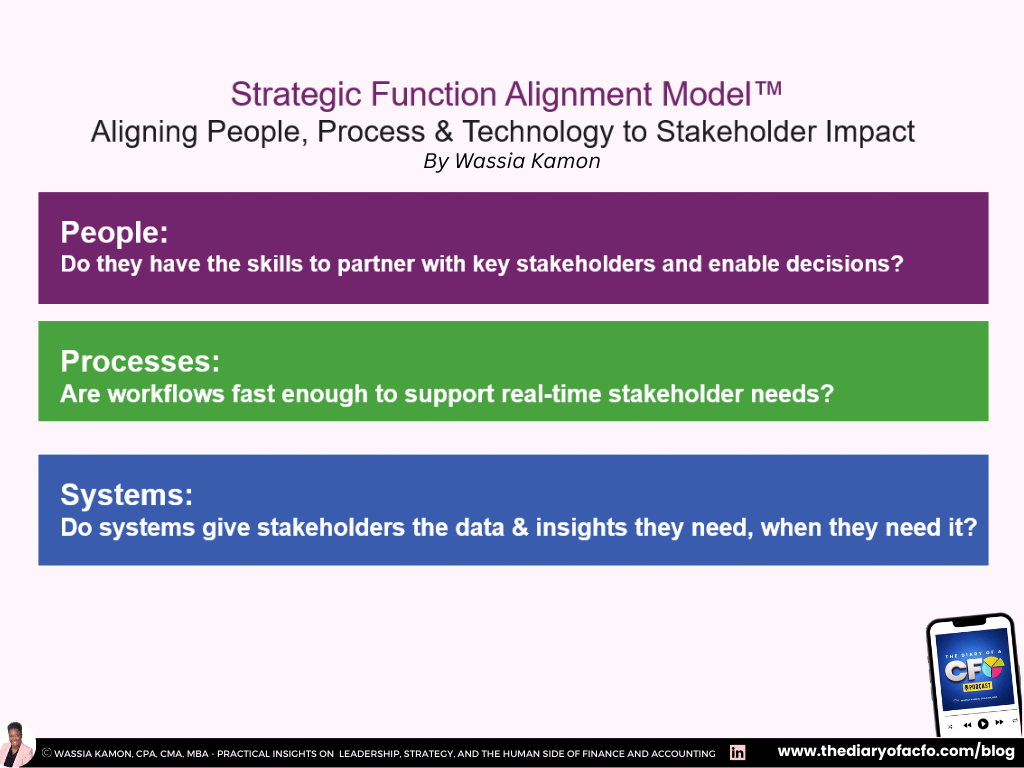
Do we have the right skills to partner and enable decisions?
Start with the team itself.
Do finance professionals in each role know how their work supports the CFO’s decisions, not only their tasks?
Can AP, AR, GL, FP&A, tax, payroll, and treasury translate numbers into clear options, risks, and trade‑offs for stakeholders?
Where are you still hiring and evaluating mainly for technical skills, without assessing business acumen and communication?
Closing the people gap might mean redefining roles, adjusting expectations, and investing in training and coaching so every function can show up as a partner, not just a processor.
Step 2: Processes
Are workflows fast enough to support real-time stakeholder needs?
Then look at how work actually flows.
Are your workflows designed around reporting deadlines, or around the decisions your CEO, business leaders, and board need to make?
How often does information arrive too late to change an outcome?
Which approvals, reconciliations, or analyses always feel like last‑minute fire drills?
Closing the process gap means simplifying and speeding up workflows so finance can support decisions while they are still live, not after the fact. That might include more frequent, lighter‑weight reviews, clearer decision rights, and earlier escalation when trends start to move.
Step 3: Systems
Do platforms give stakeholders the data and insights they need, when they need it?
Finally, look at the technology footing.
Do your core systems (ERP, CRM, payroll, planning tools) talk to each other, or is the team stitching them together in spreadsheets?
Can you quickly produce a reliable view of cash, margins, and runway, or does it require days of manual work?
Do stakeholders trust the data enough to act on it, or do they always ask for “one more version”?
Closing the systems gap does not always mean a massive transformation. Often it starts with better use of what you have, small integrations, cleaner master data, and simple dashboards that give a shared, consistent view of the truth.
When people, processes, and systems line up with the expectations for the CFO role, the function stops pulling the CFO back into the past. It starts helping them do the job they were actually hired to do.
Where to start if you want your finance function to be more strategic
If you recognize this tension, you can start with a small, focused shift:
Name the issue clearly.
Explain that expectations for the CFO role have moved, while roles, workflows, and systems are still built for a different job.Choose one place to improve.
For example, close process, forecast cycle, or cash visibility. Start where the pain is highest.Redefine success there.
Move from activity measures to decision measures. For instance, from “reports delivered on time” to “issues identified early enough to change the outcome.”Make one change and track it.
It might be a new review rhythm, a tweak to a role, or an integration that removes manual work. The goal is visible progress, not perfection.
Making your finance function more strategic should be one of the prerogatives of your first 90 days as a CFO to ensure long-term success.
The Bottom Line
At the end of the day, you cannot have a truly strategic CFO sitting on top of a purely transactional finance function.
When the people, processes and systems underneath the role are misaligned, the CFO spends more time chasing data than shaping decisions. The Strategic Function Alignment Model helps close that gap so every role in finance, from AP clerk to controller, contributes directly to business outcomes instead of just month end reports.
For more CFO conversations and leadership insights, explore the Episodes library.
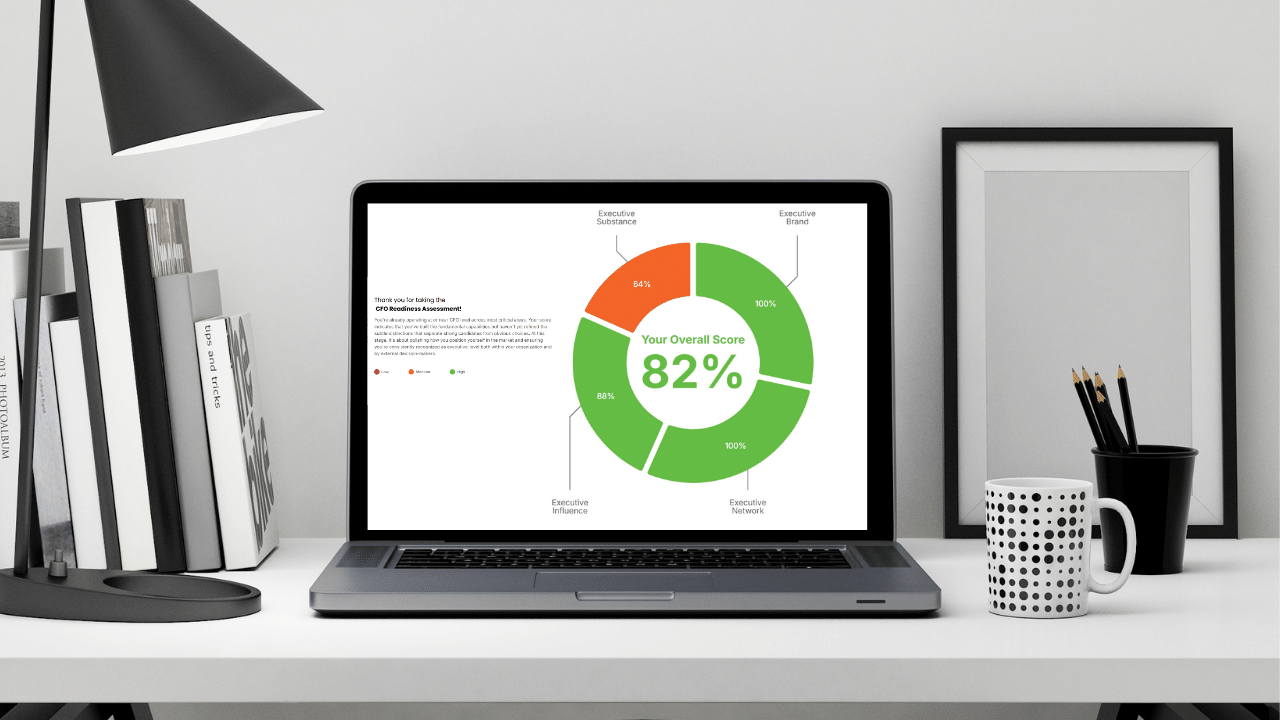
If you are wondering whether your own experience and finance setup are ready for a truly strategic CFO role, start with the free CFO Readiness Assessment. It will give you a structured view of where you are strong, where you have gaps, and what to focus on next in your development
FAQ: Common questions about strategic CFOs and finance functions
What is the difference between a strategic CFO and a traditional CFO?
A traditional view of the CFO focuses on reporting, compliance, and cost control. A strategic CFO still owns those responsibilities but spends more time on where the business is going: growth, capital allocation, risk, and transformation. The key difference is how much of the role is dedicated to forward‑looking decisions versus backward‑looking reporting.
How can accounting support a strategic CFO?
Accounting supports a strategic CFO by providing timely, accurate data and by highlighting patterns, exceptions, and risks instead of only posting entries. When AP, AR, GL, and controllers surface insights about cash, margins, and process issues, the CFO can make better decisions more quickly.
What are signs that my finance function is too transactional?
Common signs include constant manual work at month‑end, heavy spreadsheet use for basic reporting, limited time for analysis, and a sense that finance is always catching up. If most measures of success are about volume and speed of processing rather than quality of insight, the function is likely too transactional.
Where should I focus first if I want my finance team to be more strategic?
Pick one area that both hurts and matters, such as forecasting, working capital, or margin analysis. Clarify what decisions depend on that area, then adjust roles, workflows, and systems so those decisions can be made with better information and less manual effort.
Do I need new systems to make my finance function more strategic?
Not always. Sometimes better use of existing systems, modest integration, and cleaner data can unlock a lot of value. However, if basic questions are hard to answer or everything relies on manual spreadsheets, some level of system improvement will be necessary over time.
About The Author:
Wassia Kamon is a CFO and the host of The Diary of a CFO, where she interviews finance and business leaders on strategy, risk, and leadership. She writes about finance leadership and governance in small and mid-sized organizations, including what works, what breaks, and how leaders manage growth and complexity without burning out.